
Article: Perfume vs cologne: understand the key differences in 2026

Perfume vs cologne: understand the key differences in 2026
Most shoppers stand in the fragrance aisle wondering whether to buy perfume or cologne, often confused by conflicting advice and marketing jargon. This confusion costs you money and leads to disappointing purchases that don’t match your expectations. Understanding the fundamental differences between these two fragrance types empowers you to make confident buying decisions, especially when shopping for luxury scents at discounted prices. This guide clarifies concentration levels, scent profiles, longevity, pricing, and selection strategies so you can choose the perfect fragrance every time.
Table of Contents
- What Defines Perfume And Cologne: Fragrance Concentration And Composition
- Scent Profiles, Longevity, And Occasions: How Perfume And Cologne Differ In Use
- Price Comparison And Value: Luxury Scent Investment And Discounts
- Choosing The Right Fragrance: Factors To Consider And Expert Tips
- Discover Your Perfect Luxury Scent At Aromatick
- Frequently Asked Questions
Key takeaways
| Point | Details |
|---|---|
| Concentration matters | Perfume contains 20-30% fragrance oils while cologne has only 2-4%, affecting strength and duration |
| Scent characteristics differ | Cologne offers lighter, fresher notes ideal for casual wear; perfume provides richer, complex compositions |
| Longevity varies significantly | Colognes last 2-3 hours while perfumes can maintain their scent for 6-8 hours or longer |
| Price reflects concentration | Higher oil content in perfumes justifies premium pricing, but discounts make both accessible |
| Personal factors guide choice | Body chemistry, occasion, season, and lifestyle determine which fragrance type suits you best |
What defines perfume and cologne: fragrance concentration and composition
The core distinction between perfume and cologne lies in their fragrance oil concentration. Perfume contains 20-30% fragrance oils while cologne contains just 2-4%, creating vastly different scent experiences. This concentration difference affects everything from how the fragrance smells on your skin to how long it lasts throughout your day.
Perfume, technically called parfum or extrait de parfum, represents the most concentrated form of fragrance available to consumers. The high oil content creates intense, complex scent profiles that evolve beautifully over hours. Cologne, or eau de cologne, sits at the opposite end of the spectrum with minimal oil content diluted in alcohol and water. This lighter formulation produces subtle, refreshing scents that work perfectly for casual settings.
Many people mistakenly believe cologne is simply “men’s fragrance” while perfume is “women’s fragrance.” This gender association has no basis in fragrance chemistry. Both men and women can wear either type, and the terms strictly refer to concentration levels rather than target demographics. Some luxury brands even market the same scent composition in multiple concentration formats.
The concentration spectrum includes several categories beyond just perfume and cologne:
- Parfum (20-30% oil concentration)
- Eau de parfum (15-20% oil concentration)
- Eau de toilette (5-15% oil concentration)
- Eau de cologne (2-4% oil concentration)
- Eau fraiche (1-3% oil concentration)
Understanding these distinctions helps you decode product labels and compare options accurately. When you see parfum vs eau de toilette differences listed on fragrance bottles, you’re looking at concentration variations that dramatically impact your wearing experience.
Pro Tip: Test concentration by applying a small amount to your wrist and checking scent intensity after one hour. Perfumes should remain strong while colognes fade noticeably, helping you verify product authenticity before committing to a full bottle.
Scent profiles, longevity, and occasions: how perfume and cologne differ in use
The concentration differences create distinct scent profiles that suit different situations and preferences. Perfumes typically feature rich, layered compositions with pronounced base notes like amber, musk, vanilla, and sandalwood. These deeper elements anchor the fragrance and provide lasting power throughout the day. Colognes emphasize bright top notes such as citrus, herbs, and light florals that create an immediate fresh impression.
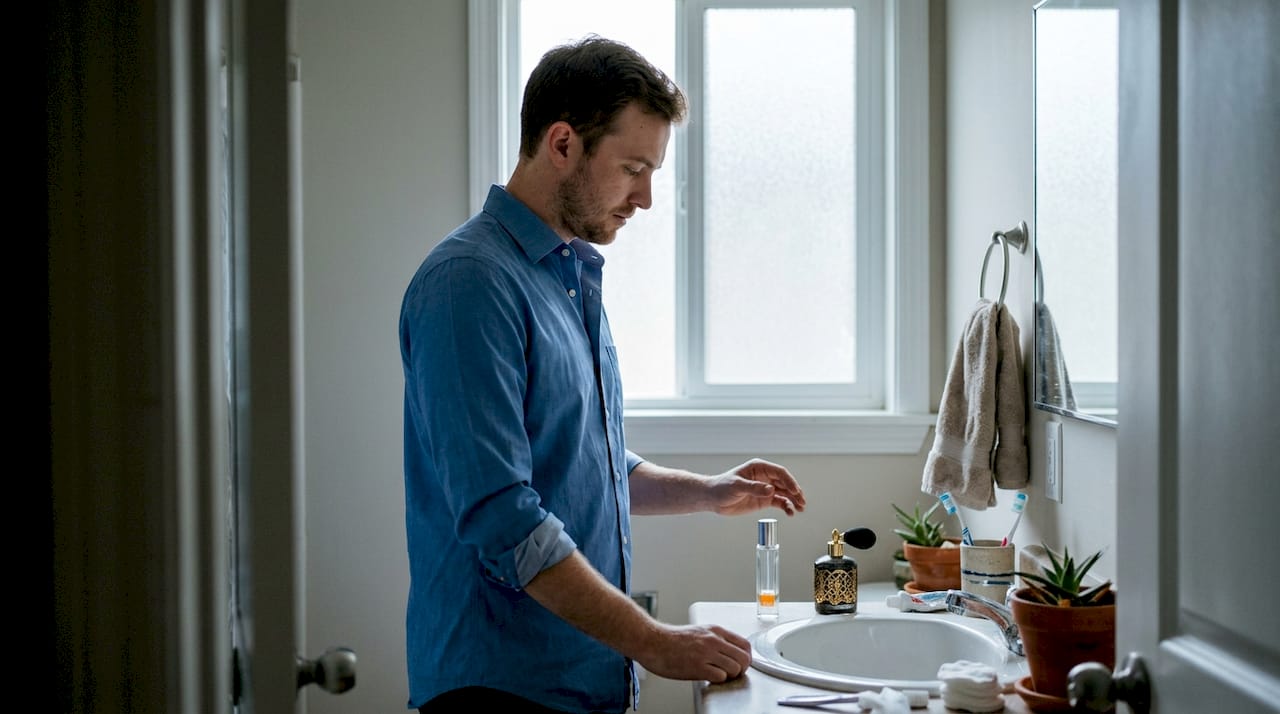
Colognes last a few hours while perfumes maintain their presence for 6-8 hours or more on your skin. This longevity difference stems directly from oil concentration, as fragrance molecules in higher concentrations evaporate more slowly. You’ll need to reapply cologne multiple times daily for continuous scent, whereas a single perfume application often carries you from morning through evening.
Climate and season significantly influence which fragrance type performs best. Hot, humid weather amplifies scent projection, making lighter colognes more appropriate to avoid overwhelming those around you. Cold, dry conditions diminish fragrance diffusion, where perfumes’ stronger formulations ensure you remain pleasantly scented. Consider these seasonal guidelines:
- Spring: Light eau de toilette or cologne with floral and green notes
- Summer: Fresh cologne with citrus and aquatic elements
- Fall: Medium concentration eau de parfum with spicy and woody notes
- Winter: Rich perfume with warm, oriental, or gourmand compositions
Occasion appropriateness extends beyond just formal versus casual settings. Professional environments often call for subtle colognes that won’t distract colleagues in close quarters. Evening events, dates, and special celebrations welcome perfumes’ dramatic presence and sophisticated complexity. Daytime casual activities benefit from cologne’s unobtrusive freshness that won’t clash with other scents you encounter.
“The right fragrance concentration transforms your scent from background noise into a memorable signature that enhances rather than overwhelms your presence.”
Your luxury cologne shopping guide should account for your daily routine and primary wearing contexts. Office workers might prioritize colognes for weekday wear and reserve perfumes for weekends. Those working from home or in creative fields enjoy more flexibility to wear stronger concentrations throughout the week.
Pro Tip: Layer a cologne over unscented lotion on pulse points to extend wear time by 2-3 hours. The moisturized skin holds fragrance molecules longer than dry skin, bridging some of the longevity gap between cologne and perfume without the intensity of higher concentrations.
Price comparison and value: luxury scent investment and discounts
Fragrance pricing reflects multiple factors beyond just concentration levels, though oil content remains a primary driver. Perfumes typically cost $80-$300 per ounce at retail, while colognes range from $40-$150 per ounce depending on brand prestige and packaging. The higher concentration in perfumes requires more raw materials and skilled perfumer expertise, justifying premium pricing structures.
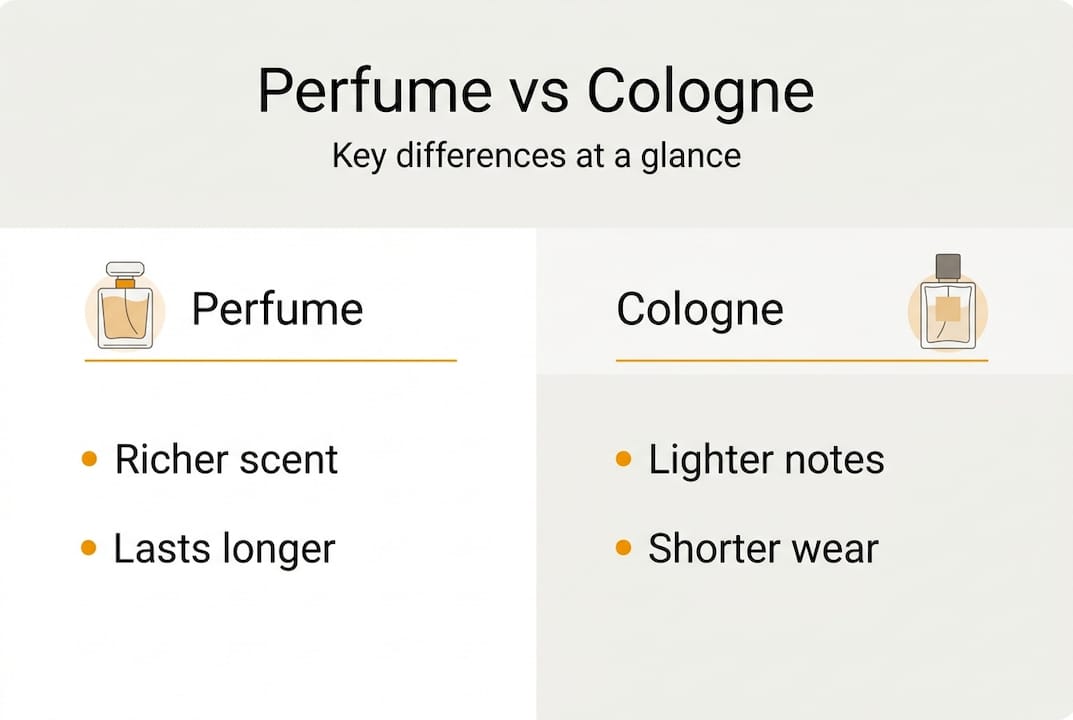
Brand positioning and packaging significantly impact final costs. Luxury houses invest heavily in distinctive bottle designs, marketing campaigns, and exclusive distribution channels that add substantial markups. Niche perfume brands often charge even more than mainstream designers due to limited production runs and rare ingredients. These factors sometimes matter more than actual concentration when determining shelf prices.
Discounted luxury perfumes and colognes provide excellent value without sacrificing authenticity when purchased from reputable sources. Discount retailers eliminate department store overhead and traditional retail margins, passing savings directly to consumers. You can access the same authentic fragrances at 40-60% below standard retail prices.
| Fragrance Type | Retail Price Range | Discount Price Range | Typical Bottle Size | Cost Per Wear |
|---|---|---|---|---|
| Cologne | $40-$150/oz | $20-$75/oz | 3.4 oz (100ml) | $0.50-$1.50 |
| Eau de Toilette | $60-$180/oz | $30-$90/oz | 3.4 oz (100ml) | $0.75-$2.00 |
| Eau de Parfum | $80-$250/oz | $40-$125/oz | 1.7 oz (50ml) | $1.50-$3.50 |
| Parfum | $150-$400/oz | $75-$200/oz | 1.0 oz (30ml) | $2.50-$6.00 |
Calculating cost per wear reveals surprising value propositions. A $100 cologne requiring three applications daily costs more over time than a $200 perfume needing just one spray. Consider these practical value factors:
- Longevity reduces reapplication frequency and extends bottle life
- Concentration affects how much product you use per application
- Seasonal rotation means you won’t finish any single bottle quickly
- Discounted pricing can make perfumes cost competitive with retail colognes
Smart shoppers recognize that paying more upfront for higher concentration sometimes delivers better long term value. A 1.7 ounce eau de parfum at $120 (discounted from $240) providing 200 wears costs $0.60 per use. A 3.4 ounce cologne at $60 (discounted from $120) offering 150 wears costs $0.40 per use but requires reapplication, potentially doubling actual cost.
Pro Tip: Purchase fragrances during major sale events like Black Friday, holiday promotions, or end of season clearances when discount designer & niche perfumes reach their lowest prices. Stock up on favorites or try new luxury scents at 50-70% off retail, maximizing your fragrance budget.
Choosing the right fragrance: factors to consider and expert tips
Your unique body chemistry interacts with fragrance molecules to create a scent experience that smells different on you than on anyone else. Skin pH, moisture levels, diet, and even medications influence how fragrances develop and project. This personal variation means you must test scents on your own skin rather than relying solely on how they smell in the bottle or on paper strips.
Occasion, season, and personal style create a framework for narrowing your fragrance selection. Professional settings demand restraint, pointing toward colognes or light eau de toilette formulations. Creative or social environments welcome bolder perfume choices that express personality. Your existing wardrobe and aesthetic preferences should align with fragrance character, whether that means minimalist fresh scents or dramatic oriental compositions.
Follow these steps for effective fragrance sampling and testing:
- Visit fragrance counters or request samples during slower shopping hours for personalized attention
- Spray test scents on different pulse points (wrists, inner elbows, neck) rather than layering multiple fragrances
- Wait 30-60 minutes for top notes to evaporate and middle notes to emerge before evaluating
- Wear test fragrances through a full day to experience base note development and longevity
- Take notes on how each scent makes you feel and how others respond to your presence
- Revisit favorites multiple times across different seasons before committing to full bottles
Expert workflows help shoppers narrow down niche perfumes or colognes suited to their style and budget through systematic evaluation. These frameworks prevent impulse purchases and ensure your fragrance collection serves your actual needs rather than collecting dust on your dresser.
Layering and mixing scents opens creative possibilities for personalization. Start with a scented body lotion or oil in complementary notes, then apply your cologne or perfume over top. Combine fresh cologne on your torso with richer perfume on pulse points for a custom scent profile that evolves throughout the day. Experiment with same brand fragrance families in different concentrations for harmonious layering.
Common mistakes drain your fragrance budget and lead to disappointing purchases:
- Buying based on bottle design rather than actual scent quality
- Testing too many fragrances in one session, causing olfactory fatigue
- Purchasing full bottles without wearing samples for at least a week
- Storing fragrances in bathrooms where heat and humidity degrade them
- Applying fragrance to dry skin instead of moisturized pulse points
- Ignoring concentration levels and wondering why scents don’t last
Pro Tip: Build a fragrance wardrobe with 3-5 scents in varying concentrations rather than searching for one perfect signature scent. Rotate between fresh colognes for daytime, sophisticated eau de parfums for evening, and special occasion perfumes for memorable events, matching your fragrance to your activities and mood.
Discover your perfect luxury scent at Aromatick
Now that you understand the essential differences between perfume and cologne, you’re ready to explore options that match your preferences and lifestyle. Aromatick offers authentic luxury fragrance discounts at Aromatick with savings up to 60% off retail prices on designer and niche scents. Our curated selection includes both perfumes and colognes for every occasion, backed by authenticity guarantees and expert reviews to guide your choices.
Whether you prefer the lasting intensity of perfume or the refreshing subtlety of cologne, our collection provides access to premium fragrances without the premium price tag. Free shipping, secure payments, and satisfaction guarantees ensure your shopping experience matches the quality of the scents you’ll discover.
Frequently asked questions
What is the main difference between perfume and cologne?
The primary difference lies in fragrance oil concentration, with perfume containing 20-30% oils compared to cologne’s 2-4%. This concentration gap creates distinct experiences in scent strength, longevity, and price. Perfumes deliver intense, long lasting fragrance while colognes offer lighter, shorter wear.
Can I wear cologne instead of perfume every day?
Yes, cologne’s lighter formulation works perfectly for daily wear, especially in warm climates or professional settings where subtle scent is preferred. You might choose perfume for special occasions, evening events, or when you need fragrance to last 6-8 hours without reapplication. Many people maintain both types in their collection for different situations.
Are discounted luxury perfumes authentic?
Discount retailers like Aromatick provide authentic luxury fragrances at lower prices by eliminating traditional retail overhead and buying directly from authorized distributors. Always verify seller credibility through customer reviews, return policies, and product guarantees. Authentic discounted perfumes smell identical to department store versions because they are the exact same products.
How do I decide between perfume and cologne for gifting?
Consider the recipient’s lifestyle, scent preferences, and typical occasions they attend when selecting between perfume and cologne. Perfume suits those who appreciate bold, long lasting fragrances and attend formal events regularly. Cologne works well for active individuals, professionals in close work environments, or anyone who prefers subtle, fresh scents for everyday wear.


Leave a comment
This site is protected by hCaptcha and the hCaptcha Privacy Policy and Terms of Service apply.