
Why Choose Designer Perfumes for Luxury
Finding the perfect scent at the right price can feel like a challenge when myths and confusion surround designer perfumes. For American fragrance enthusiasts watching their budgets, it is especially important to know what sets designer perfumes apart from mass-market alternatives. This guide unpacks the blending of art, chemistry, and history behind designer fragrances, highlights common misconceptions, and shows how to get genuine luxury for less without sacrificing quality.
Table of Contents
- Designer Perfumes Explained And Common Myths
- Types Of Designer Fragrances And Categories
- Signature Features And Scent Profiles
- Brand Reputation And Luxury Experience
- Cost, Accessibility, And Savings Versus Alternatives
- Risks, Authenticity Concerns, And Buying Smart
Key Takeaways
| Point | Details |
|---|---|
| Designer perfumes are unique | They combine art, chemistry, and history, crafted by master perfumers for quality and longevity. |
| Understanding concentration levels is crucial | Higher concentrations like Eau de Parfum typically offer better value due to longer-lasting scents. |
| Dispelling myths enhances purchasing decisions | Misconceptions about cost and ingredients can prevent consumers from enjoying affordable, quality fragrances. |
| Prioritize authenticity when purchasing | Buy from authorized retailers to avoid counterfeit products that can pose health risks. |
Designer perfumes explained and common myths
Designer perfumes are far more than just scented liquids in fancy bottles. These products represent a blend of art, chemistry, and history that dates back centuries. Understanding what makes them different from mass-market alternatives and separating fact from fiction helps you make smarter purchasing decisions, especially when shopping for discounted designer fragrances.
What Designer Perfumes Actually Are
Designer perfumes are liquid mixtures of aromatic compounds made from natural essential oils combined with synthetic ingredients. The concentration of these aromatic compounds determines the scent’s strength and how long it lasts on your skin. Unlike mass-produced fragrances, designer perfumes are created by master perfumers who spend years perfecting each composition.
The craft behind these scents connects to a rich history. Designer perfumes originated in the late 19th century alongside the development of synthetic fragrance ingredients, with legendary brands like Coty and Guerlain pioneering the industry. This heritage matters because it reflects decades of expertise and quality standards baked into every bottle.
Breaking Down Common Myths
Misunderstandings about designer perfumes often lead people to overpay or avoid them entirely. Here are the biggest myths holding budget-conscious shoppers back:
-
Myth: Designer perfumes are only for special occasions. This outdated notion ignores how perfumers like Estée Lauder democratized daily fragrance wear. You don’t need permission to enjoy a quality scent every single day.
-
Myth: Only natural ingredients matter. Many people believe synthetic ingredients are inferior, but this is simply untrue. Modern synthetics offer consistency, stability, and often better performance than natural oils alone. The blend of natural and synthetic components is what creates complex, long-lasting fragrances.
-
Myth: Designer perfumes cost too much. This belief prevents people from experiencing luxury they can actually afford. When purchased during sales or from discount retailers, designer fragrances often cost less than mass-market alternatives.
-
Myth: All expensive perfumes are better. Price alone doesn’t determine quality. A well-formulated designer fragrance at a discount beats an overpriced generic brand every time.
The real value of designer perfumes lies in their composition quality and proven staying power, not just the brand name or original retail price.
Concentration Matters More Than You Think
Designer perfumes come in different concentrations, and this affects both how much you’ll pay and how the scent performs:
- Eau de Cologne (3-5% fragrance) – Lightest concentration, shortest wear time (2-3 hours)
- Eau de Toilette (5-15% fragrance) – Most common type, good balance of price and longevity (4-6 hours)
- Eau de Parfum (15-20% fragrance) – Stronger scent projection, longer lasting (6-8 hours)
- Parfum/Perfume (20-30%+ fragrance) – Most expensive but lasts longest (8-12 hours)
Budget shoppers often overlook this detail. You might pay $35 for an Eau de Toilette instead of $90 for Parfum, but you could actually save money long-term by choosing the higher concentration. The scent lasts longer per application, so the bottle stretches further.
When you’re buying discounted designer fragrances, always check the concentration level. An Eau de Toilette at 50% off provides tremendous value compared to buying full-price cologne.
Why Designer Formulations Excel
Designer perfumes stand apart because their creators invest in quality raw materials and complex blending techniques. They combine multiple fragrance notes that unfold over hours, creating depth and complexity that single-note fragrances can’t achieve. This layering effect, perfected over decades, is what keeps you smelling fresh and interesting from morning through evening.
The science and artistry matter equally. Master perfumers study chemistry alongside creative composition, understanding how different molecules interact with your skin chemistry. This expertise results in fragrances that perform consistently across different people and climates, unlike cheaper alternatives that might smell completely different on different skin types.
Pro tip: When shopping for discounted designer perfumes, compare the concentration level and check the original price point—higher concentrations (Eau de Parfum versus Eau de Toilette) often provide better value despite seemingly higher initial costs, since they last longer on your skin.
Types of designer fragrances and categories
Designer fragrances come in multiple formats and styles, each offering different intensity levels and lasting power. If you’re building a fragrance collection on a budget, understanding these categories helps you choose the right type for each occasion and stretch your dollars further. What works for your morning commute differs from what you need for evening events, and knowing these distinctions prevents wasted money on the wrong concentration.
Fragrance Concentrations: The Foundation
The most important classification system divides designer perfumes by their aromatic compound concentration. This percentage directly affects how much you’ll pay, how strong the scent projects, and how long it lasts on your skin. Each concentration level serves different needs and budgets:
-
Parfum (20-30% fragrance) – The most luxurious and expensive option. One application lasts 8-12 hours. Best for special occasions or when you want maximum staying power from minimal product.
-
Eau de Parfum (15-20% fragrance) – Excellent balance of strength and value. Lasts 6-8 hours and offers noticeable projection. This is where many budget shoppers find their sweet spot.
-
Eau de Toilette (5-15% fragrance) – The most common format at retail outlets. Lasts 4-6 hours with moderate projection. Perfect for daily wear and excellent value when purchased at a discount.
-
Eau de Cologne (2-4% fragrance) – Light and refreshing, lasting 2-3 hours. Great for layering or when you want subtle fragrance without overwhelming presence.
-
Eau Fraiche (1-3% fragrance) – The lightest option, barely lasts 1-2 hours. Rarely marketed as designer fragrances but available in some niche lines.
Buying an Eau de Parfum at 40% off often costs less than full-price Eau de Toilette while delivering twice the longevity and value per application.
Scent Profiles and Style Categories
Beyond concentration, designer fragrances organize by scent family and style. These categories help you find fragrances matching your preferences and wardrobe:
-
Floral fragrances – The largest category, ranging from light florals (peony, rose) to heavier blooms (gardenia, tuberose). Works for any season and pairs with casual or formal wear.
-
Oriental or amber fragrances – Warm, sensual, and often spicy. Heavy on vanilla, amber, and musk. Best for evenings and cooler seasons when you want lasting presence.
-
Woody fragrances – Built on sandalwood, cedar, or vetiver. Often more gender-neutral despite traditional branding. Versatile for day or evening wear.
-
Fresh or citrus fragrances – Bright, energizing scents from lemon, bergamot, or grapefruit. Perfect for daytime, gym visits, and warm weather. Usually lighter concentrations (Eau de Toilette).
-
Fruity fragrances – Sweet and approachable, featuring berries, peach, or tropical notes. Appeals to people new to fragrance and works well for casual settings.
Designer Versus Niche: Understanding the Difference
Designer fragrances differ fundamentally from niche offerings. Designer fragrances come from established fashion houses and beauty companies with broad retail distribution. You find them at department stores, online retailers, and discount fragrance specialists. They’re created with mass appeal in mind, meaning the scent profiles tend toward crowd-pleasing rather than experimental.
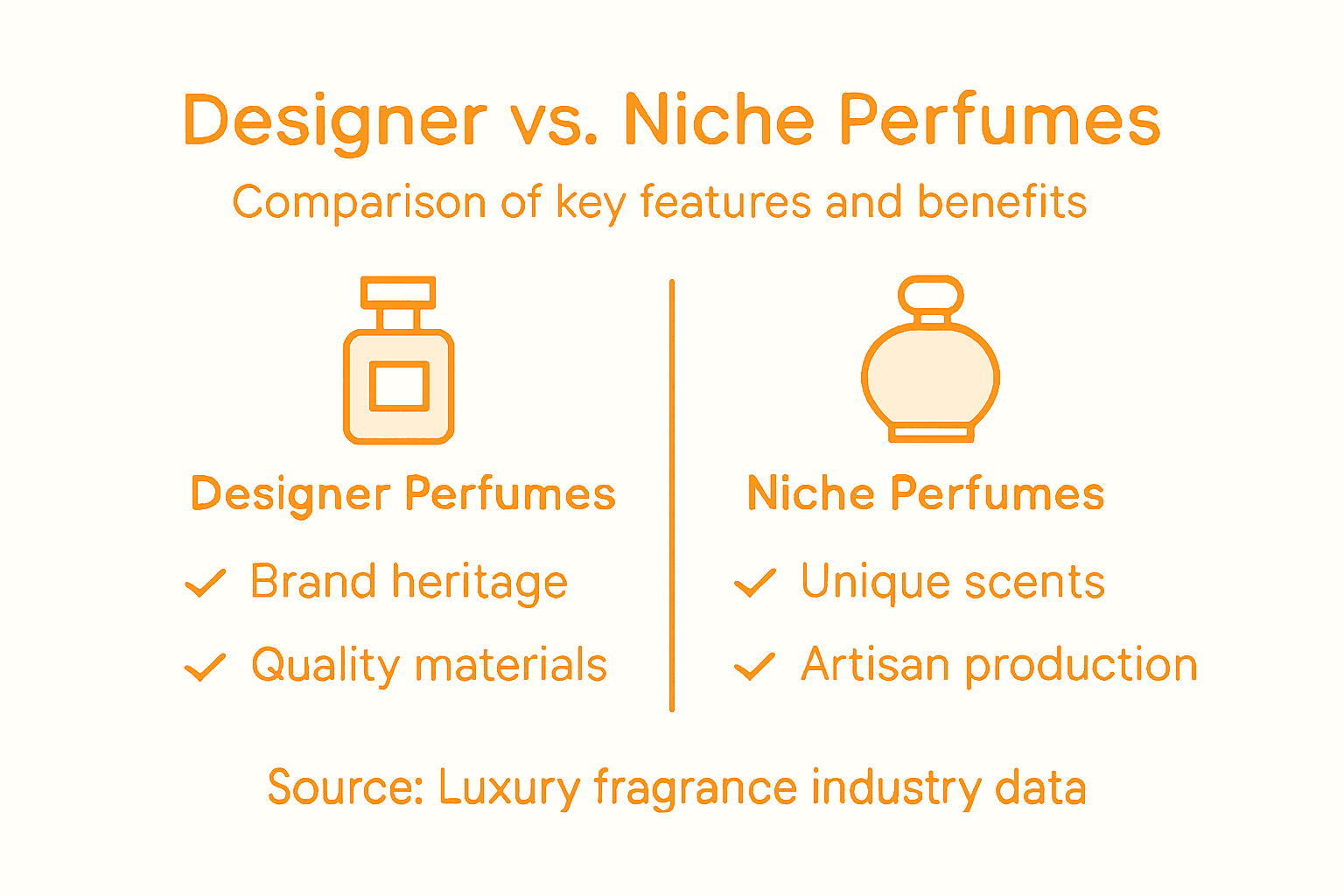
Niche fragrances, by contrast, come from smaller artisanal producers focused on exclusivity. They emphasize unique compositions, rare ingredients, and limited production runs. While niche fragrances offer exceptional quality, they typically cost more and have limited availability.
For budget-conscious shoppers, designer fragrances offer the best value proposition. You get quality formulations, proven scent profiles, and significant discounts when you shop strategically. The widespread availability means you can find the exact scent you want at multiple retailers, creating competition that benefits your wallet.
Building Your Collection Strategically
Understanding these categories lets you build a well-rounded fragrance wardrobe without overspending. A smart approach starts with one versatile Eau de Toilette for daily wear, then adds a signature scent in Eau de Parfum concentration for special occasions. From there, you can explore different scent families based on seasons and your lifestyle.
Budget shoppers benefit most from focusing on Eau de Toilette and Eau de Parfum formats. Skip the rarely-needed Eau de Cologne unless you specifically want ultra-light fragrance, and treat Parfum as an occasional splurge for truly special moments.
Pro tip: Compare concentration levels across discount retailers before purchasing—an Eau de Parfum on sale often beats full-price Eau de Toilette in both cost per wear and scent performance, making the higher concentration the smarter investment for your collection.
Signature features and scent profiles
Designer perfumes stand out because they’re engineered with precision and crafted with intention. Every successful designer fragrance combines multiple layers of aromatic notes, premium ingredients, and thoughtful composition that creates a complete sensory experience. Understanding what makes these scents special helps you appreciate what you’re buying and choose fragrances that truly match your personality and lifestyle.
The Architecture of Scent: Notes and Evolution
Designer perfumes follow a specific structural pattern built from three distinct note layers. These aren’t just mixed together randomly—they’re orchestrated to evolve on your skin over hours, creating a journey rather than a static smell.
Designer perfume composition features top, middle, and base notes that unfold in deliberate sequence. Here’s how this architecture works:
-
Top notes – The first impression lasting 5-15 minutes. These are volatile, light compounds like citrus, bergamot, or ginger that grab attention immediately. Budget shoppers sometimes misjudge fragrances by the top note alone, missing the full story.
-
Middle notes (heart notes) – The main character, lasting 3-5 hours. Floral, fruity, or spicy accords develop here, revealing the true identity of the scent. This is where brand signature typically shines.
-
Base notes – The foundation lasting 6-12+ hours. Rich, heavy molecules like sandalwood, amber, musk, and vanilla anchor the fragrance. These fixatives ensure longevity and give depth.
Think of it like a musical composition. The top note is the attention-grabbing opening, the heart note is the main melody, and the base note is the underlying harmony that ties everything together.
A well-designed fragrance pyramid means you’re experiencing three different scents in one application, which is why designer perfumes feel more complex than mass-market alternatives.
Premium Ingredients and Quality Markers
Designer perfumes distinguish themselves through ingredient selection. They combine natural essential oils with carefully chosen synthetics and fixatives to create scents that perform consistently and last longer.
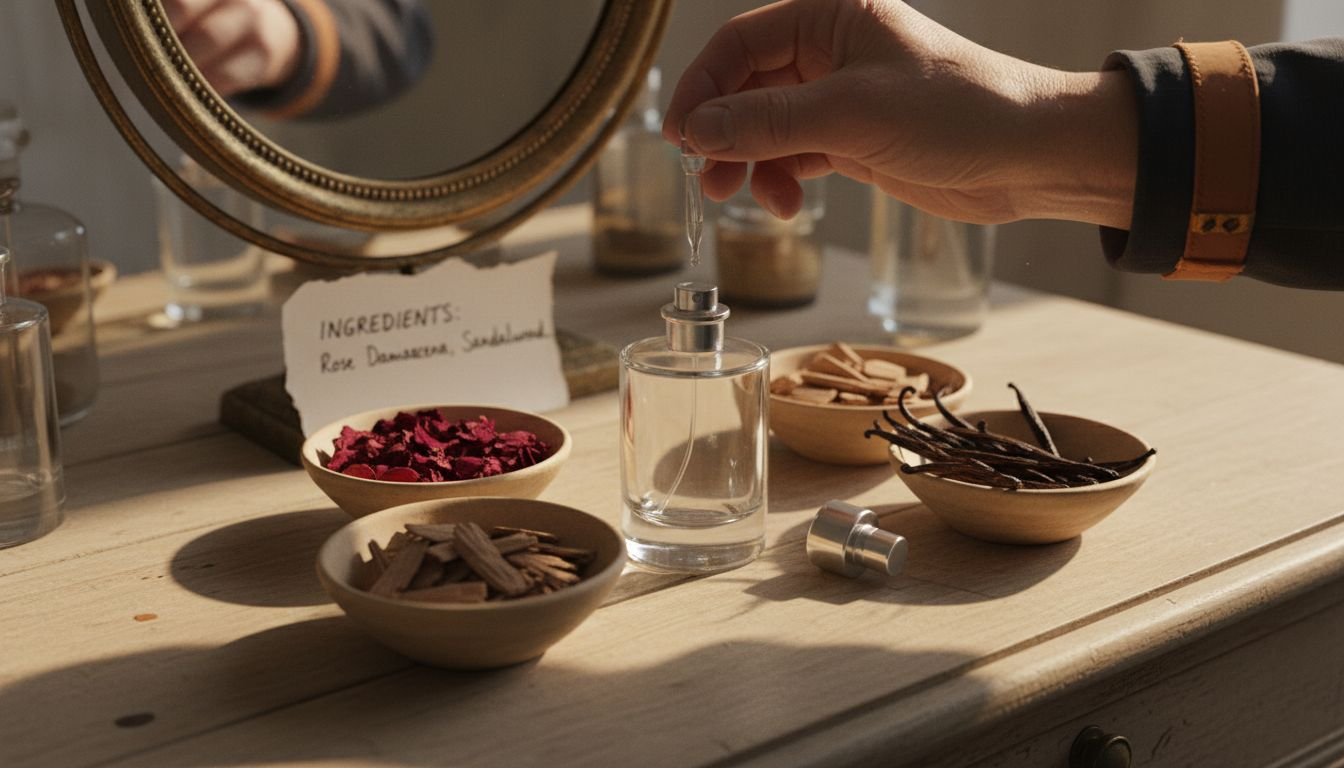
Natural ingredients include rose oil, sandalwood, jasmine, and vanilla, prized for their depth and richness. Synthetic ingredients offer advantages many people overlook—they provide consistency batch to batch, stability in various climates, and sometimes better performance than naturals alone. The best designer fragrances use both strategically.
Fixatives are the secret weapon in designer perfumery. These molecules anchor volatile top notes and extend longevity. Without proper fixatives, even expensive ingredients fade in minutes. Designer brands invest heavily in sourcing quality fixatives because they determine whether a fragrance lasts four hours or eight.
When comparing discounted designer fragrances, check the ingredient list. Fragrances listing specific ingredients like “iris root,” “oud,” or “Bulgarian rose” typically indicate quality formulation. Vague ingredient descriptions suggest cost-cutting compromises.
Brand Storytelling and Lifestyle Positioning
Designer perfumes carry more than scent—they carry narrative. Designer fragrance signatures are intentionally crafted to convey lifestyle and status, blending classic and modern accords that appeal across diverse markets.
Each designer house develops a recognizable olfactory signature. Some emphasize clean, fresh compositions appealing to minimalists. Others focus on sensual, warm accords for evening wear. This consistency means if you love one fragrance from a designer, you’ll likely appreciate their other creations.
Packaging and presentation reinforce this storytelling. Designer bottles feature thoughtful design, quality materials, and attention to detail. While you’re primarily buying the fragrance, the presentation creates a luxury experience that justifies the investment.
For budget shoppers, this matters. A discounted designer fragrance still carries brand credibility and the lifestyle positioning that makes it special. You’re buying the same fragrance as someone paying full price—just at a significantly lower cost.
Signature Scent Profiles and Universal Appeal
Designer fragrances typically occupy the middle ground between experimental and accessible. They’re sophisticated enough to feel premium but composed for broad appeal rather than niche specificity.
Common designer fragrance profiles include:
- Classic florals – Timeless appeal, work for any occasion, transcend seasons
- Warm orientals – Sensual and memorable, perfect for signature scents
- Fresh citrus – Versatile, energizing, suitable for professional environments
- Woody sophistication – Gender-neutral, complex, sophisticated
This balanced approach means designer fragrances rarely disappoint, even if they don’t blow your mind. You’re purchasing reliability alongside artistry.
Pro tip: Test the heart note evolution by applying fragrance in the morning and evaluating the scent’s development at midday—this reveals whether the middle note composition matches your preferences, which matters far more than the initial top note impression.
Brand reputation and luxury experience
When you buy a designer perfume, you’re purchasing far more than a fragrance. You’re investing in decades of heritage, proven craftsmanship, and a luxury experience that extends beyond the bottle itself. Brand reputation creates confidence in your purchase and delivers an intangible value that budget alternatives simply cannot match. Understanding this dynamic helps you appreciate why designer fragrances command their price—and why discounted designer options represent such exceptional value.
The Heritage Factor: Why History Matters
Designer perfume brands have cultivated reputations through decades of heritage and craftsmanship, creating an aspirational experience that goes far beyond the scent itself. When you wear a fragrance from a storied fashion house, you’re wearing the accumulated expertise of multiple generations of master perfumers. This isn’t marketing hype—it’s the reality of how luxury brands operate.
Consider what separates a 50-year-old fragrance house from a startup perfumer. That established brand has refined formulations through thousands of iterations, survived market trends, and built customer loyalty across decades. They’ve invested heavily in sourcing the finest ingredients, employing the most talented perfumers, and maintaining quality standards that newer competitors cannot yet match.
Buyers engage with designer perfumes not just for fragrance but for the status, history, and artistry embodied by the brand. When you apply a legendary designer fragrance each morning, you’re tapping into a legacy. This psychological component is real and valuable, even if it’s not technically the fragrance molecules themselves delivering the benefit.
For budget-conscious shoppers, this matters tremendously. A discounted designer fragrance retains all of this heritage value. You’re getting the same 30-year legacy at 40% off simply because you purchased during a sale rather than at the department store counter.
Brand reputation assures quality and consistency—two things you cannot assess by price alone, but which directly impact whether you’ll love wearing the fragrance six months from now.
Quality Assurance Through Brand Standards
Brand reputation is central to the luxury experience because known fashion houses leverage their aesthetic and prestige to assure quality and consistency. Established designer brands maintain rigorous quality control that protects their reputation.
Here’s what this means in practice:
-
Consistent formulation – Every bottle smells identical whether purchased today or five years from now. No mysterious batch variations that make you question what you’re wearing.
-
Ingredient sourcing standards – Designer brands maintain relationships with premium suppliers, ensuring natural ingredients meet specific quality thresholds and synthetic components perform precisely as designed.
-
Testing and refinement – New fragrances undergo extensive testing across different skin types, climates, and seasons before launch. Mistakes are costly when your brand reputation depends on consistency.
-
Transparency about concentration – Designer houses clearly label fragrance concentration because they stand behind their product performance claims.
-
Longevity guarantees – If a designer fragrance claims eight-hour wear, that’s tested and verified. Budget brands make vague promises. Designer brands back their claims.
This quality assurance costs money. Designer houses invest significantly in laboratory testing, quality documentation, and supply chain verification. When you buy discounted designer fragrances, you’re getting access to these quality standards at a fraction of the original retail markup.
Exclusivity and Iconic Releases
Designer perfume brands create desirability through strategic exclusivity and iconic fragrance releases. Limited editions, seasonal variations, and collaboration fragrances keep collections feeling fresh while maintaining brand prestige. This strategy differentiates designer perfumes in the luxury market segment and gives collectors something to aspire toward.
Think of iconic releases as cultural moments in fragrance. A legendary designer house dropping a new fragrance becomes an event. Fans wait for it, discuss it, and consider it a milestone in their fragrance journey. This cultural positioning costs nothing to produce but adds immense perceived value.
For budget shoppers, this creates opportunity. As new fragrances launch and gain attention, previous releases often get discounted. You can purchase last season’s limited edition designer fragrance at significant savings, gaining access to prestige and exclusivity that full-price purchasers also enjoy.
The Luxury Experience Beyond Scent
The luxury experience includes packaging, unboxing, presentation, and the story behind each fragrance. Designer bottles use quality materials, thoughtful design, and premium presentation that reinforce the luxury positioning. Opening a designer fragrance box should feel special.
This matters because fragrance is intensely personal and emotional. The luxury experience enhances the emotional connection to the scent. Every time you see that beautifully designed bottle on your shelf, you’re reminded of the luxury you own. This psychological reinforcement makes you appreciate the fragrance more deeply.
Discount retailers typically maintain the same packaging as full-price retailers. You’re not getting a stripped-down version—you’re getting the complete luxury experience at a lower price because the retailer has lower overhead costs than department stores.
Pro tip: When shopping for discounted designer fragrances, verify the packaging condition and seal integrity before purchasing—authentic designer fragrances arrive in pristine condition with proper boxes and seals, which confirms you’re getting the genuine luxury experience the brand intended.
Cost, accessibility, and savings versus alternatives
Designer perfumes occupy a unique position in the fragrance market. They cost more than mass-market alternatives but significantly less than niche or artisanal fragrances. Understanding this cost structure and where savings opportunities exist helps you make decisions that deliver genuine luxury without overpaying. The real question isn’t whether designer perfumes are expensive—it’s whether they offer better value than other options available to you.
The Price Breakdown: What You’re Actually Paying For
Designer perfumes tend to be more costly than mass-market fragrances due to ingredient quality, brand investment, and premium packaging. But this higher cost reflects specific value components that cheaper alternatives simply don’t offer.
When you pay full price for a designer fragrance, here’s where your money goes:
-
Raw ingredient costs – Premium essential oils, rare synthetics, and quality fixatives cost significantly more than budget ingredients. A single ounce of genuine Bulgarian rose oil costs 10-15 times more than synthetic rose compound.
-
Formulation development – Master perfumers spend months or years creating a single fragrance. This expertise and labor cost money that newer or budget brands skip.
-
Testing and quality assurance – Legitimate designer houses test fragrances across different skin types, climates, and seasons before launch. Budget brands skip this step.
-
Packaging and presentation – Designer bottles use quality glass, professional printing, and thoughtful design. This can represent 20-30% of the retail price.
-
Brand investment and marketing – Designer houses spend heavily maintaining their reputation, creating desire, and ensuring global distribution.
-
Retail markup – Department stores and traditional retailers add 100-200% markup on top of the brand’s wholesale price. This is where discount retailers create massive savings.
The critical insight here: much of what you pay at department stores goes toward retail overhead, not the fragrance itself. Discount retailers bypass this markup, delivering the same product at lower cost.
When you buy a discounted designer fragrance online, you’re eliminating the middle-man markup that represents 40-60% of the department store price—without sacrificing quality or authenticity.
Designer Versus Mass-Market: The Real Difference
Mass-market fragrances cost less because they use cheaper ingredients and simpler formulations. A budget fragrance might contain three core scent notes; a designer fragrance contains seven or more, creating complexity and longevity. This difference is noticeable within hours of application.
Consider longevity. A mass-market fragrance lasts 2-3 hours before becoming a skin scent. A designer Eau de Toilette lasts 4-6 hours; a designer Eau de Parfum lasts 6-8 hours or longer. Over a month, this means fewer applications and less product used. One $60 Eau de Parfum bottle might outlast three $20 mass-market bottles, making the designer fragrance actually cheaper per wear.
Scent consistency matters too. A mass-market fragrance might smell slightly different in summer versus winter due to simpler formulations that don’t account for temperature variations. Designer fragrances maintain consistent character across seasons because they’re engineered for stability.
For budget-conscious shoppers, this calculation changes everything. You’re not comparing $60 versus $20 bottles—you’re comparing cost per wear, and designer fragrances often win.
Here’s a quick comparison of designer, mass-market, and niche fragrances:
| Attribute | Designer Fragrances | Mass-Market Fragrances | Niche Fragrances |
|---|---|---|---|
| Typical Price Range | $40–$150 | $10–$40 | $120–$250+ |
| Ingredient Quality | High, mixed (natural/synthetic) | Moderate, mainly synthetic | Premium, often rare naturals |
| Scent Complexity | Layered and evolving | Simple and linear | Artistic and innovative |
| Longevity per Application | 6–12 hours | 2–4 hours | 8–16 hours |
| Availability | Department/online stores | Drugstores/grocery chains | Specialty boutiques/online |
| Return Policies | Standard, flexible | Standard, flexible | Often limited or none |
| Brand Reputation | Established, global | Commercial, variable | Exclusive, cult-followed |
Designer Versus Niche: Accessibility and Value
Designer perfumes are more accessible than niche alternatives, available in many retail locations and price points. Niche fragrances, while exceptional, often cost $100-200+ and require special ordering from boutiques.
Designer fragrances offer several advantages over niche options:
- Availability – You can find them at multiple retailers, creating price competition that benefits you
- Return policies – Major retailers accept returns; niche boutiques often don’t
- Sample availability – Designer brands provide samples and testers; niche houses rarely do
- Price negotiation – Discount retailers regularly offer 30-60% off designer fragrances
- Proven quality – Designer brands have decades of customer reviews; new niche makers are unproven
For someone building a fragrance collection on a budget, designer fragrances offer superior value compared to niche alternatives. You get quality approaching niche standards at a fraction of the price, especially when shopping during sales.
Strategic Savings Opportunities
Discount retailers create the biggest savings by operating with lower overhead than department stores. They buy inventory directly from brands or authorized distributors, eliminate expensive physical storefronts, and pass these savings to customers. This isn’t independent market or counterfeit stock—it’s the same authentic product at lower cost.
Additional savings strategies include:
- Off-season purchases – Designer houses discount previous season fragrances by 40-50% when new releases launch
- Flash sales – Online retailers offer time-limited discounts (24-48 hours) that can reach 50% off
- Loyalty programs – Some retailers offer points or cashback on purchases
- Bundle purchases – Buying multiple fragrances sometimes qualifies for additional discounts
- Eau de Toilette instead of Eau de Parfum – Both are legitimate, but Eau de Toilette costs 30-40% less
The key insight: savings don’t require compromising on quality or authenticity. You’re simply eliminating retail markup that doesn’t reflect the fragrance’s actual value.
Pro tip: Track your favorite designer fragrances using price history tools before purchasing—most designer fragrances go on sale within 4-6 months, so waiting for a price drop can save you $20-40 on a single bottle without any quality sacrifice.
Risks, authenticity concerns, and buying smart
The fragrance market’s booming discount sector attracts counterfeiters looking for easy profits. When you’re hunting bargains on designer perfumes, you need to understand the real risks and how to protect yourself. Buying smart means knowing what to look for, where to purchase safely, and how to spot red flags before your money disappears or a fake product arrives at your door.
The Counterfeit Problem: What You’re Up Against
The fragrance market faces significant risks from counterfeit and adulterated products, making authenticity crucial for both safety and quality. Counterfeit designer fragrances aren’t just cheap imitations—they’re often dangerous. Fake products can contain harmful ingredients, incorrect concentrations, or bacterial contamination from unsanitary manufacturing.
Counterfeiters typically operate in three ways. Some use cheap ingredients mixed to approximate the original scent’s top notes, creating fragrances that smell vaguely familiar but fade quickly. Others dilute legitimate fragrance with carrier oils, reducing concentration and longevity. The worst operators use harmful chemicals banned in legitimate cosmetics, creating products that can cause skin reactions or allergic responses.
The financial incentive is enormous. A $100 designer fragrance costs counterfeiters perhaps $5-10 to produce in an illegal operation. They sell it for $40-60 online, undercutting legitimate discount retailers while still earning massive margins. This is why counterfeit fragrances proliferate on unvetted marketplace platforms.
Here’s what makes this especially tricky: counterfeiters have become sophisticated. They replicate packaging, recreate bottles, and copy labels with impressive accuracy. Visual inspection alone cannot reliably identify fakes anymore. You need to verify authenticity through other methods.
Buying the cheapest designer fragrance available online is almost always a sign you’re purchasing a counterfeit—legitimate retailers maintain minimum price points to protect brand value and profitability.
Health and Safety Concerns
Many fragrances do not disclose full ingredient lists, creating risks of allergic reactions or exposure to irritants. With legitimate designer fragrances, companies test ingredients for safety and provide transparency about potential allergens. Counterfeit products skip this entirely.
Common health risks from fake fragrances include:
- Allergic reactions – Undisclosed ingredients can trigger contact dermatitis, hives, or breathing difficulties
- Skin irritation – Counterfeit formulations often contain irritating fillers or contaminants
- Chemical exposure – Some fakes use banned phthalates or other harmful chemicals to create scent longevity
- Bacterial contamination – Unsterile manufacturing conditions introduce bacteria that cause infections
- Unknown concentration – You don’t know actual fragrance percentage, making overdosing possible
Budget shoppers sometimes rationalize buying questionable products by thinking “it’s just fragrance.” But you’re applying this directly to your skin, often in sensitive areas like the neck and wrists. Your largest organ absorbs whatever chemicals you expose it to. A $20 fake isn’t worth a skin infection or allergic reaction requiring medical treatment.
Red Flags: What to Avoid
Before purchasing any discounted designer fragrance, check for these warning signs:
The table below outlines smart ways to verify authenticity and reduce risk when buying discounted designer perfumes:
| Verification Method | Impact on Safety | Practical Tip |
|---|---|---|
| Check batch code | Ensures trackability | Use official brand website |
| Inspect packaging | Reveals poor fakes | Look for perfect printing |
| Buy from authorized sellers | Protects investment | Consult brand’s retailer list |
| Compare market prices | Avoids counterfeit deals | Expect 30–50% off, not 80% |
| Use protected payment | Enables dispute/recourse | Avoid wire transfers |
- Prices dramatically below market rate – A fragrance that normally sells for $80 offered at $20 is almost certainly fake
- Sellers with no history or reviews – New sellers with zero feedback aren’t trustworthy sources
- Misspellings on packaging – Legitimate designer houses use perfect spelling and professional printing
- Inconsistent bottle appearance – Compare against official product photos; fakes often have slightly different labels or caps
- No seller information or return policy – Legitimate retailers provide clear contact information and guarantees
- Vague product descriptions – Real retailers describe concentration, volume, and batch codes; fakes avoid specifics
- Payment methods without protection – Wire transfers or cryptocurrency lack buyer protection
- Suspicious websites – Check domain registration and security certificates; fakes often use hastily created domains
Buying Smart: Verified Strategies
Protect yourself by following these essential practices:
-
Purchase from authorized retailers only – Brand websites list authorized sellers. If the retailer isn’t listed, they’re not authorized.
-
Verify seller reputation – Check reviews on multiple platforms, not just the seller’s own site. Look for verified purchase badges.
-
Check batch codes – Legitimate fragrances include batch codes printed on bottles. You can verify these through the brand’s website.
-
Examine packaging carefully – Legitimate designer fragrances have perfect printing, secure seals, and professional presentation.
-
Request authenticity guarantees – Reputable retailers guarantee authenticity or offer full refunds if products are fake.
-
Use secure payment methods – Credit cards and PayPal provide buyer protection; never wire money.
-
Compare prices across authorized retailers – Legitimate discounts typically range 30-50% off retail, not 70-80%.
Legitimate discount retailers like Aromatick operate transparently. They source from authorized distributors, maintain return policies, offer authenticity guarantees, and provide detailed product information. They’re slightly more expensive than counterfeiters but infinitely safer and actually save you money compared to buying fakes that disappoint or harm your skin.
Pro tip: Before purchasing from any online retailer, search their name plus the word “reviews” or “complaints” to see what actual customers report—counterfeit sellers often have patterns of complaints about fragrance quality or authenticity that legitimate retailers simply don’t experience.
Discover Luxury Designer Perfumes at Unbeatable Prices
Choosing designer perfumes means embracing quality, heritage, and a fragrance experience defined by craftsmanship and lasting scent layers. Yet the challenge many face is balancing the desire for authentic luxury with the fear of overspending or buying counterfeit products. You want premium ingredients, proven longevity, and the confidence that you are investing in a genuine signature scent without paying the full department store markup.
At Aromatick, we solve these key pain points by offering a curated selection of authentic designer fragrances, including iconic collections like Christian Dior Perfumes & Colognes 30-60% Off | Aromatick and Paco Rabanne Perfumes & Colognes 30-60% Off | Aromatick. Our platform prioritizes transparency about quality and authenticity so you can purchase with confidence, knowing you are getting exceptional value for your money with up to 60% off.
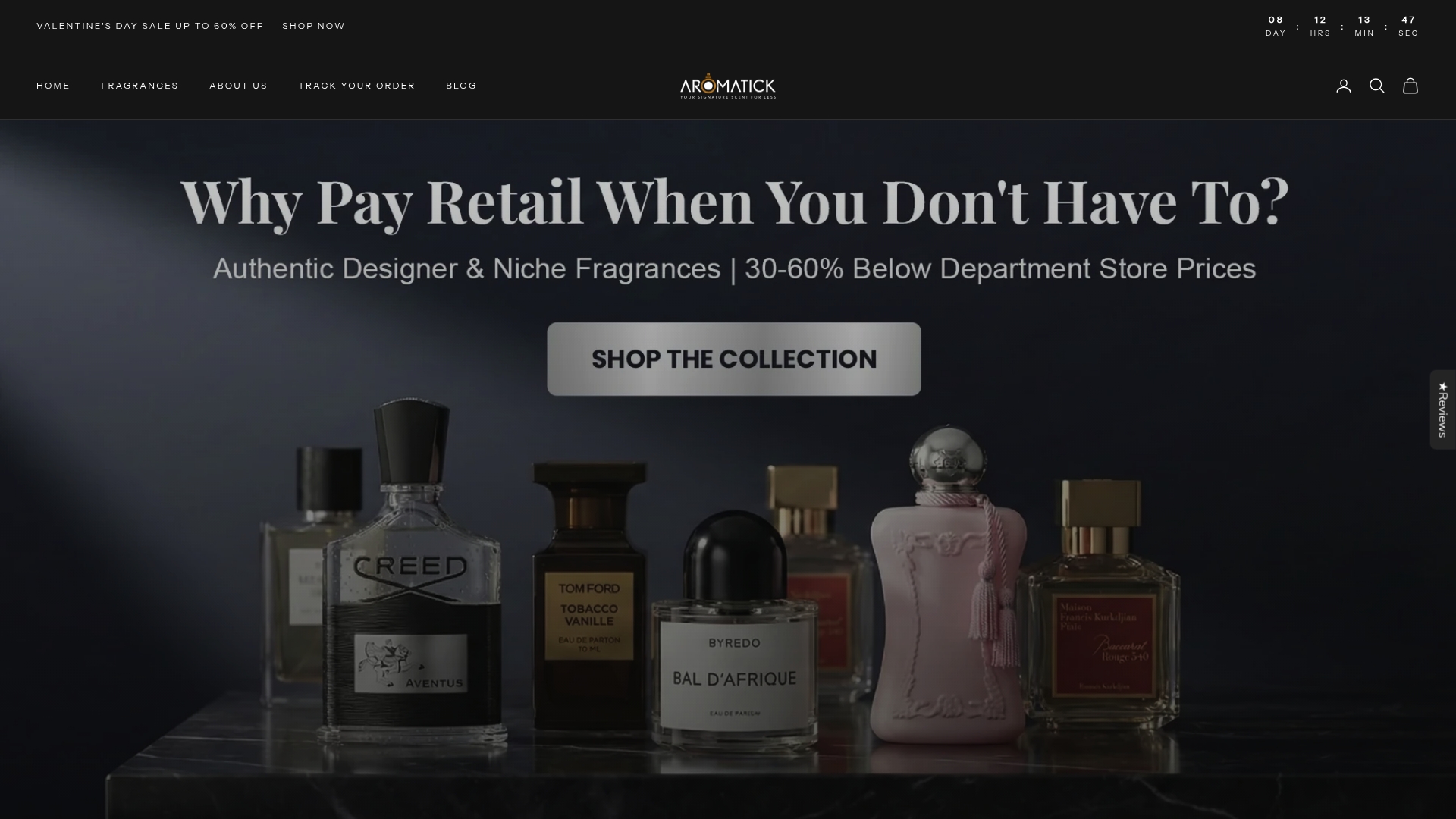
Experience the luxury of expertly crafted designer perfumes without compromise. Shop now at Aromatick and elevate your fragrance collection today. Don’t wait for the next sale; secure your signature scent with guaranteed authenticity and enjoy free shipping and secure payment options.
Frequently Asked Questions
What are designer perfumes made of?
Designer perfumes are liquid mixtures of aromatic compounds, including natural essential oils and synthetic ingredients, crafted by master perfumers to achieve complex scents.
How do I choose the right concentration of designer perfume?
Choosing the right concentration depends on your needs. Eau de Cologne is light and lasts 2-3 hours, Eau de Toilette offers moderate longevity (4-6 hours), while Eau de Parfum provides a stronger scent lasting 6-8 hours. Parfum has the highest concentration and lasts longer but is more expensive.
Are designer perfumes worth the price compared to mass-market alternatives?
Yes, designer perfumes typically offer better quality in terms of ingredient selection, complexity, and longevity, making them a more valuable purchase over time compared to mass-market options.
What should I look for to identify a high-quality designer fragrance?
Look for specific ingredient listings, perfect packaging, consistency in scent over time, and a fragrance structure with top, middle, and base notes. These indicators often denote a quality formulation.
Recommended
- 7 Examples of Luxury Scents for Affordable Elegance
- What Defines Luxury Perfumes: Key Markers Explained
- Why Buy Designer Perfumes: Quality, Value, and Authenticity
- Designer Perfumes Online: Authentic Luxury for Less
Buying Designer Fragrances the Smart Way
The real question isn't whether designer fragrances are worth it — it's how to wear the ones you love without paying full boutique price for a bottle you've never tested. At Aromatick every fragrance is 100% authentic and backed by our Authenticity Guarantee; we'd rather you find your signature than gamble on a blind buy.
That's why decants exist. A 5ml or 10ml decant is the same authentic juice, hand-poured into a travel size, so you can live with a scent for a week before deciding. Want to compare several at once? A fragrance discovery set lets you test designer crowd-pleasers side by side for a fraction of full-bottle prices.
Browse the full designer fragrance collection, explore designer & niche decants, or read our honest guide to the best place to buy authentic designer cologne online.

Leave a comment
This site is protected by hCaptcha and the hCaptcha Privacy Policy and Terms of Service apply.