
Article: Unlock the secrets to perfume longevity for lasting luxury
Unlock the secrets to perfume longevity for lasting luxury
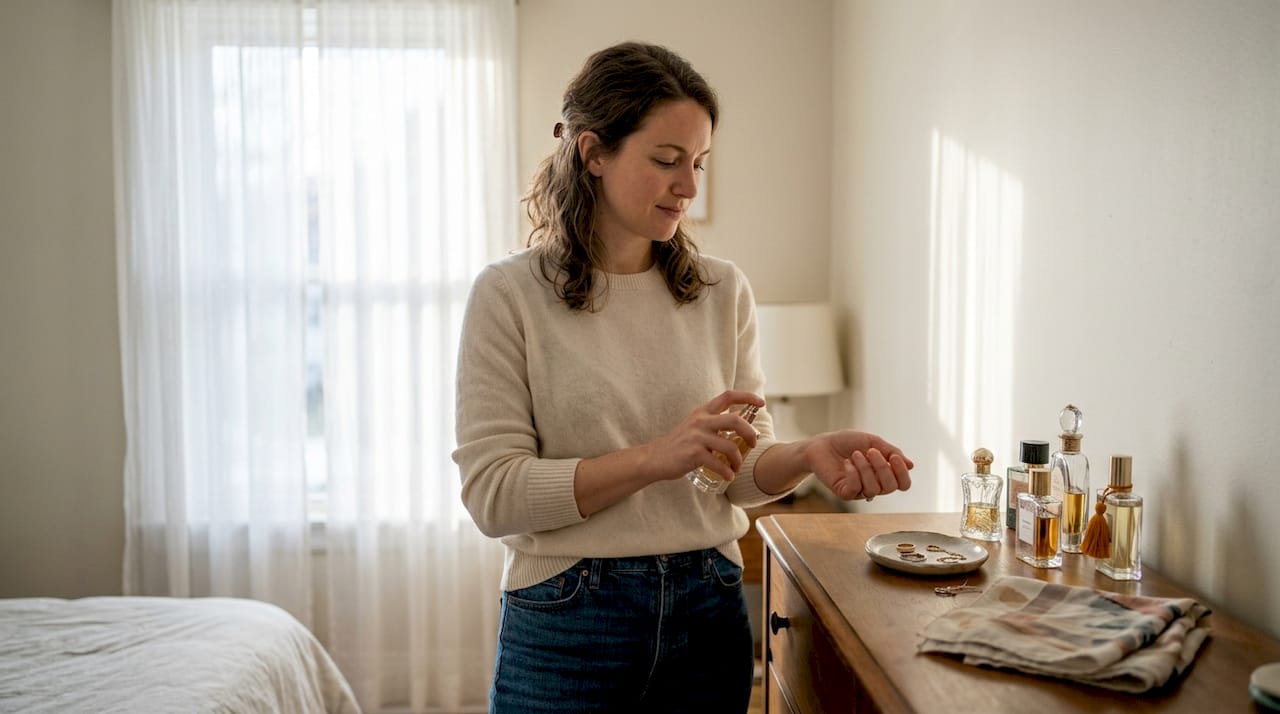
Many people assume that expensive perfumes always last longer on the skin, but this common belief overlooks the complex factors that truly determine fragrance longevity. The reality is that lasting power depends on fixative chemistry, application technique, storage conditions, and even your skin’s unique characteristics. Understanding these elements empowers you to enjoy luxury scents without overspending, making every spray count. This guide reveals the scientific insights and practical strategies that help fragrance enthusiasts maximize their perfume’s wear time while making smarter purchasing decisions.
Table of Contents
- Key takeaways
- What determines perfume longevity: science and fixatives
- How brands test and improve perfume lasting power
- Balancing longevity and scent evolution: why lasting power isn’t everything
- Practical tips to maximize your perfume’s lasting power
- Explore premium perfumes and expert fragrance advice
- Frequently asked questions
Key Takeaways
| Point | Details |
|---|---|
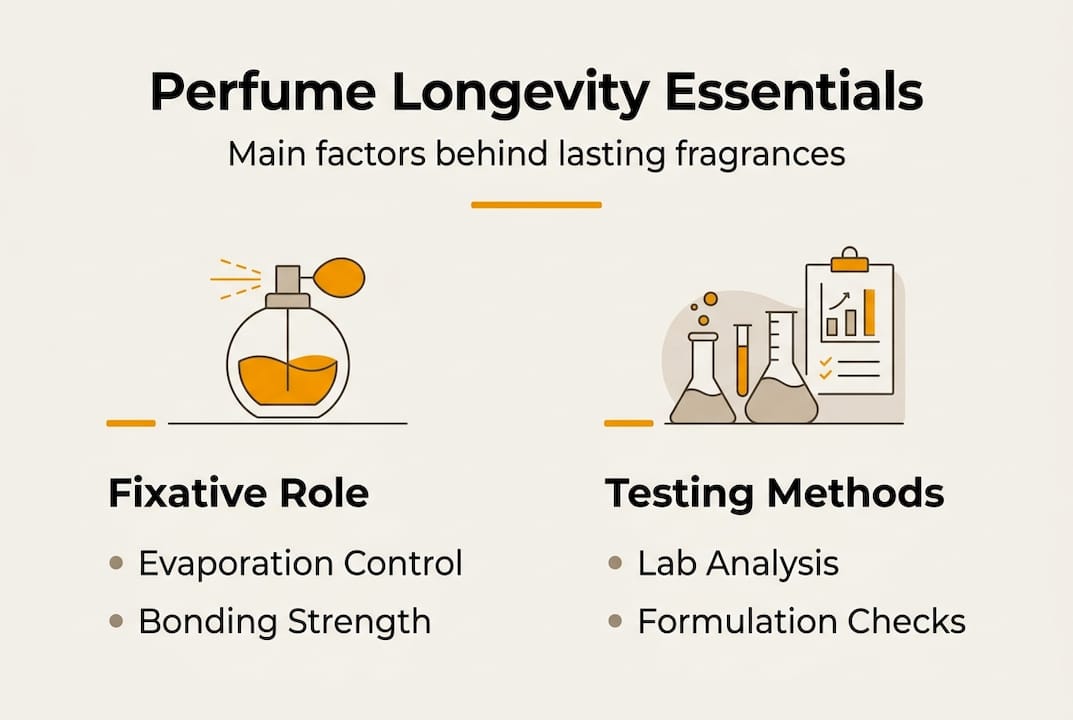
| Fixative role | Fixatives slow evaporation by forming bonds or matrices that hold scent molecules on the skin, extending wear. |
| Concentration impact | Higher fixative content in perfumes such as eau de parfum and extrait de parfum leads to about 6 to 8 hours of wear versus 3 to 4 hours for lighter formulations. |
| Testing and reformulation | Perfume houses use gas chromatography mass spectrometry to track how long components stay on skin and reformulate to improve longevity. |
| Practical tips | Proper storage and application techniques can significantly extend fragrance wear time and maximize value. |
What determines perfume longevity: science and fixatives
The secret to long-lasting perfumes lies in fixatives that slow evaporation, the unsung heroes of fragrance chemistry. These compounds work through hydrogen bonding and encapsulation, creating molecular interactions that prevent volatile scent molecules from escaping too quickly. Natural fixatives like benzoin resin have been used for centuries, while modern synthetic options include various musks and high-boiling solvents that offer consistent performance.
Fixatives typically make up 5 to 30 percent of fragrance oils, depending on the desired longevity profile. A perfume designed for all-day wear might contain 25 percent fixatives, while a lighter eau de toilette might use only 10 percent. Without these crucial ingredients, even the most expensive fragrances would fade within a couple of hours, leaving you disappointed and reaching for another spray.
The chemistry behind fixatives involves several mechanisms working together. Some fixatives form weak chemical bonds with other fragrance molecules, essentially holding them in place on your skin. Others create a semi-solid matrix that traps volatile compounds, releasing them slowly over time. High-boiling solvents evaporate at a much slower rate than alcohol, providing a stable base that keeps the fragrance composition intact throughout the day.
Pro Tip: When shopping for perfumes, look for fragrances labeled as “eau de parfum” or “extrait de parfum” rather than “eau de toilette.” These concentrations contain higher percentages of fixatives and fragrance oils, typically delivering 6 to 8 hours of wear compared to 3 to 4 hours for lighter formulations.
Understanding fixative chemistry helps you make informed decisions about fragrance purchases. A perfume with robust fixative content might cost more upfront but delivers better value through extended wear time. You’ll use less product per application and enjoy consistent scent projection throughout your day. This knowledge transforms how you evaluate perfumes, shifting focus from brand prestige to actual performance characteristics that matter for your lifestyle.
How brands test and improve perfume lasting power
Perfume houses rely on sophisticated gas chromatography-mass spectrometry testing to measure exactly how long fragrances last on human skin. This analytical technique separates and identifies individual fragrance molecules, tracking their concentration over time as they evaporate or absorb into the skin. Researchers collect skin extracts at regular intervals, typically every hour for 8 to 12 hours, creating detailed profiles of how each scent component behaves.
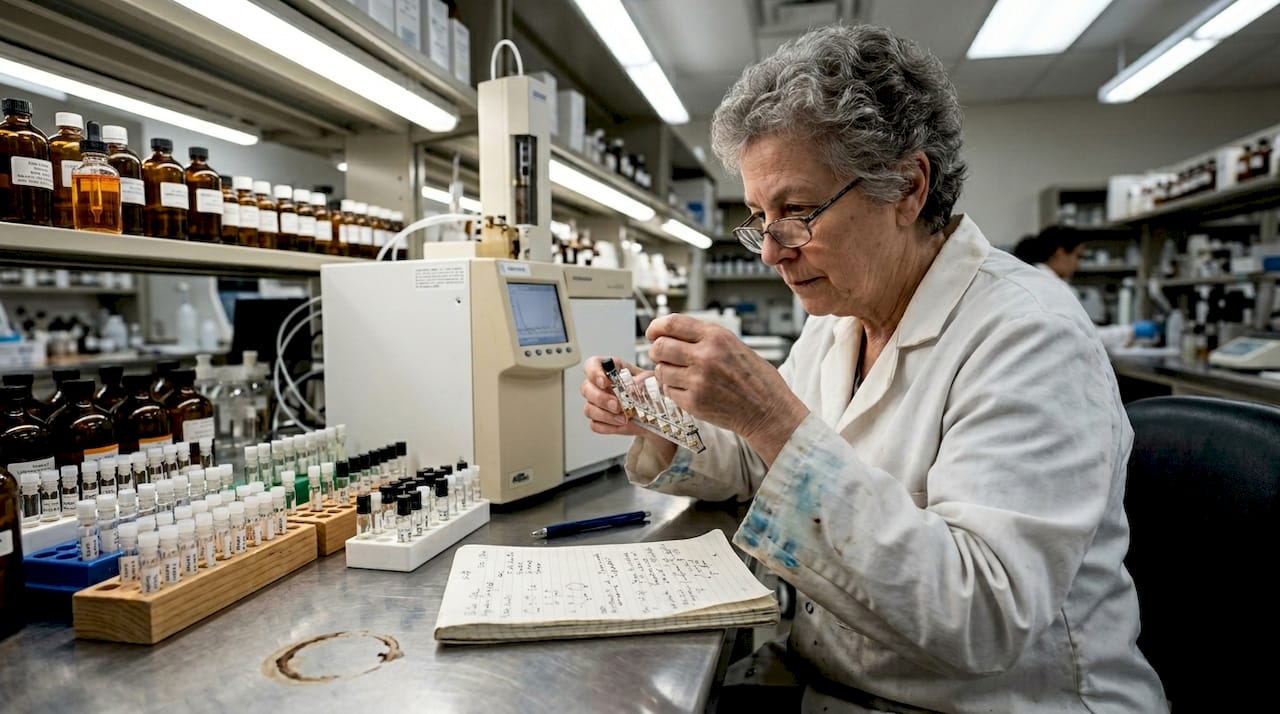
The testing process reveals fascinating insights about fragrance volatility and persistence. Top notes containing citrus or green elements usually disappear within 30 minutes, while heart notes last 2 to 4 hours. Base notes with fixatives can remain detectable for 8 hours or longer. This data guides perfumers in adjusting formulations to achieve specific longevity targets while maintaining the intended scent character.
| Testing Method | What It Measures | Typical Duration |
|---|---|---|
| GC-MS skin extracts | Molecular concentration over time | 8 to 12 hours |
| Blotter paper tests | Evaporation rate in controlled environment | 24 to 48 hours |
| Consumer wear trials | Real-world longevity and projection | 6 to 10 hours |
| Accelerated aging studies | Stability and degradation patterns | 3 to 6 months simulated |
Brands increasingly reformulate perfumes to enhance longevity and address sustainability concerns. The 2025 Creed Aventus reformulation demonstrates this trend, with reports indicating the updated formula lasts 2 or more hours longer than previous versions. These improvements often involve replacing natural ingredients with synthetic alternatives that offer better performance and lower environmental impact.
Reformulations spark heated debates among fragrance enthusiasts. Some collectors prefer vintage formulations with rare natural ingredients, while others appreciate modern versions that deliver consistent quality and extended wear. The shift toward synthetic musks and sustainable fixatives reflects broader industry changes, balancing regulatory requirements, ingredient availability, and consumer expectations for long-lasting scents.
Pro Tip: Before purchasing a reformulated fragrance, check recent reviews from 2025 and 2026 to understand how the new formula performs. Many fragrance reformulations in 2026 offer improved longevity while maintaining the signature scent profile you love.
Balancing longevity and scent evolution: why lasting power isn’t everything
Some perfumers and fragrance experts prioritize balanced scent evolution over maximum lasting power, recognizing that ultra-long-lasting fragrances can overwhelm in professional settings. A perfume that projects intensely for 12 hours might be perfect for a night out but inappropriate for a business meeting or intimate dinner. The art of perfumery involves creating compositions that develop gracefully, revealing different facets as hours pass.
This perspective challenges the “beast mode” mentality prevalent in online fragrance communities. While some enthusiasts celebrate perfumes that dominate a room for an entire day, professionals in corporate environments often prefer subtle scents that respect personal space. A fragrance that lasts 6 hours with moderate projection can be more versatile and sophisticated than one that screams for 10 hours.
“The finest perfumes tell a story through their evolution, not just their persistence. A fragrance that transforms beautifully over 6 hours offers more artistry than one that simply refuses to fade.”
Consumer preferences reflect this nuanced understanding. About 45 percent of shoppers prefer eau de parfum concentrations that balance duration with complexity, offering 6 to 8 hours of wear without overwhelming intensity. These formulations allow the wearer to experience the full range of top, heart, and base notes while maintaining appropriate projection for various social contexts.
The choice between extreme longevity and balanced development depends on your lifestyle and preferences. If you work long shifts or want a signature scent that lasts from morning to evening, high-fixative formulations make sense. However, if you enjoy changing fragrances throughout the day or value subtle sophistication, a perfume with moderate lasting power might suit you better.
Occasion also matters when evaluating longevity needs. A weekend fragrance for outdoor activities benefits from robust lasting power, while a work scent should fade gracefully by mid-afternoon. Understanding these distinctions helps you build a versatile fragrance wardrobe that serves different aspects of your life without relying solely on maximum duration as the primary quality metric.
Practical tips to maximize your perfume’s lasting power
Applying perfume to moisturized pulse points dramatically extends wear time because hydrated skin holds fragrance molecules more effectively than dry skin. Target areas where blood vessels sit close to the surface, including wrists, neck, behind ears, and inner elbows. The warmth from these pulse points gently diffuses the scent throughout the day, creating a personal fragrance cloud that moves with you.
Avoid the common mistake of rubbing your wrists together after applying perfume. This friction generates heat that breaks down fragrance molecules, particularly delicate top notes, causing the scent to fade faster. Instead, spray or dab the perfume and let it dry naturally. This simple change preserves the perfume’s intended composition and extends its lifespan on your skin.
Storage conditions profoundly impact perfume longevity and quality. Keep bottles away from direct sunlight, heat sources, and humid bathrooms. Temperature fluctuations and UV exposure degrade fragrance oils, altering their scent profile and reducing lasting power. A cool, dark closet or drawer provides ideal conditions that preserve your perfume’s original character for years.
Layering perfume with unscented lotion can increase longevity by 2 to 3 times, creating a moisture barrier that anchors fragrance molecules to your skin. Apply a thin layer of fragrance-free moisturizer to pulse points, wait 30 seconds for absorption, then spray your perfume. This technique works especially well for people with dry skin who struggle with fragrance retention.
- Apply perfume immediately after showering when skin is still slightly damp and pores are open.
- Spray fragrance on clothing and hair for extended projection, but test on inconspicuous areas first to avoid staining.
- Store perfumes in their original boxes to protect from light exposure and maintain optimal conditions.
- Use a gentle dabbing motion rather than spraying from far away to concentrate fragrance on pulse points.
- Reapply strategically at mid-day if needed, focusing on one or two pulse points rather than full respraying.
Pro Tip: Create a layering strategy using complementary scents from the same fragrance family. Start with a scented body wash, follow with matching lotion, then apply your perfume. This multi-step approach builds fragrance intensity gradually while extending overall wear time without overwhelming projection.
Your skin’s pH and oil production also affect how long perfumes last. Oily skin tends to hold fragrances longer than dry skin because the natural oils create a base that traps scent molecules. If you have dry skin, the moisturizing technique becomes even more critical for achieving satisfactory longevity. Understanding your skin type helps you adapt application methods for optimal results.
Consider investing in long-lasting perfume formulations designed specifically for extended wear. These perfumes contain higher concentrations of fixatives and base notes that anchor the fragrance throughout the day. While they might cost slightly more, the improved performance often justifies the investment through reduced product usage and consistent scent presence.
Explore premium perfumes and expert fragrance advice
Now that you understand the science behind perfume longevity, you’re equipped to make smarter fragrance choices that deliver lasting value. The knowledge of fixatives, application techniques, and storage practices transforms how you experience luxury scents, helping every bottle perform at its best.
Visit Aromatick’s curated collection to discover premium fragrances selected for quality and lasting power, all offered at up to 60 percent off department store prices. Our platform specializes in authentic designer and niche perfumes that combine sophisticated scent profiles with robust longevity, perfect for fragrance enthusiasts who refuse to compromise on either quality or value. Explore detailed layering guides and expert tips for wearing long-lasting perfumes that help you maximize every spray while building a versatile fragrance wardrobe suited to your lifestyle.
Frequently asked questions
What factors affect perfume longevity the most?
Fixative concentration has the biggest impact on how long a perfume lasts, with formulations containing 20 to 30 percent fixatives delivering 8 or more hours of wear. Skin chemistry, application method, and storage conditions also play significant roles. Moisturized skin holds fragrance molecules much longer than dry skin, while proper storage away from heat and light preserves the perfume’s original composition.
How can I make my perfume last longer with everyday habits?
Apply perfume to moisturized pulse points like wrists and neck, and avoid rubbing the application area to preserve fragrance molecules. Store bottles in cool, dark places away from bathrooms to prevent degradation. Layering with unscented lotion before applying perfume can boost longevity by 2 to 3 times by creating a moisture barrier that anchors scent molecules to your skin.
Do more expensive perfumes always last longer?
Higher price doesn’t guarantee longer-lasting scents because longevity depends on fixative content and formulation rather than cost alone. Some luxury perfumes prioritize balanced scent evolution and artistic expression over maximum duration. A well-formulated mid-priced perfume with quality fixatives can outlast an expensive fragrance designed for subtle, sophisticated development throughout the day.
Why do some perfumes last longer on certain people?
Individual skin chemistry, including pH levels and natural oil production, affects how fragrances interact with your body. Oily skin tends to hold perfumes longer because natural oils create a base that traps scent molecules. Dry skin allows fragrances to evaporate more quickly, which is why moisturizing before application helps everyone achieve better longevity regardless of their natural skin type.
Recommended
- Beyond the First Spray: How to Choose and Wear Long-Lasting Perfumes -
- How to Layer Fragrances Like a Pro: Secrets to Building Your Perfect
- Understanding the role of authenticity in perfumes
- How to recognize authentic perfumes: expert guide 2026
- Was macht Parfüm langanhaltend: 30 % längere Duftwirkung 2026 – Pure Parfüm


Leave a comment
This site is protected by hCaptcha and the hCaptcha Privacy Policy and Terms of Service apply.