

Understanding the role of authenticity in perfumes
Counterfeit and synthetic perfumes pose hidden health and environmental risks that most consumers never consider. From toxic chemicals like methanol to persistent synthetic musks that accumulate in ecosystems, fake fragrances threaten both personal safety and ecological balance. For fragrance enthusiasts and budget-conscious shoppers seeking luxury scents, authenticity in perfume matters beyond just quality. This guide explains how authenticity impacts perfume safety, composition, and consumer value, empowering you to make informed choices about the fragrances you wear.
Table of Contents
- Why Authenticity Matters In Perfumes
- How Authenticity Is Scientifically Verified
- Recognizing Authentic Perfumes And Avoiding Counterfeits
- Find Authentic Luxury Perfumes With Confidence
- Frequently Asked Questions
Key takeaways
| Point | Details |
|---|---|
| Safety assurance | Authentic perfumes guarantee regulated ingredients, while counterfeits contain dangerous chemicals like methanol and antifreeze. |
| Scientific verification | Technologies like GCxGC-TOF MS and HPLC enable precise chemical profiling to distinguish genuine from fake products. |
| Environmental impact | Synthetic musks in cheap perfumes persist in ecosystems and bioaccumulate, posing long-term ecological risks. |
| Purchase protection | Buying from authorized sellers prevents counterfeit exposure and protects your health and investment. |
| Recognition skills | Checking packaging details, batch codes, and trusted sources helps identify authentic fragrances. |
Why authenticity matters in perfumes
Authenticity in perfumes extends far beyond brand prestige or price point. It directly affects your health, environmental sustainability, and the quality of your fragrance experience. Understanding these connections helps you appreciate why authentic perfumes matter for both personal and ecological wellbeing.
Synthetic musks accumulate in the environment and resist natural breakdown processes. These compounds, commonly found in mass-produced fragrances, enter water systems and concentrate in living organisms through bioaccumulation. The persistence of these chemicals creates cascading effects throughout food chains, ultimately impacting human health through environmental exposure pathways.
Counterfeit perfumes present immediate dangers that authentic products never pose. Testing reveals toxic substances like methanol and antifreeze in fake fragrances, chemicals that can cause skin irritation, respiratory problems, and systemic toxicity. These dangerous additives exist because counterfeiters prioritize profit over safety, using cheap industrial solvents to mimic expensive fragrance oils.
Authentic perfumes undergo rigorous safety testing and ingredient regulation. Legitimate manufacturers follow international cosmetic standards that require toxicology assessments, allergen labeling, and quality control protocols. This regulatory framework protects consumers from harmful exposures while ensuring consistent product performance across batches.
“The difference between authentic and counterfeit perfumes isn’t just about smell. It’s about the invisible chemical burden you’re placing on your body and the environment every time you spray.”
Environmental sustainability increasingly drives authentic perfume formulation. Reputable brands invest in sustainable sourcing, biodegradable ingredients, and eco-friendly production methods. They also comply with regulations restricting harmful substances like certain synthetic musks, phthalates, and volatile organic compounds that contribute to air pollution and ecological damage.
Consider these health and environmental factors when evaluating perfume authenticity:
- Authentic perfumes list ingredients transparently, enabling informed choices for those with sensitivities
- Counterfeit products skip allergen testing, increasing reaction risks for sensitive individuals
- Regulated authentic fragrances avoid banned substances like nitro musks and polycyclic musks
- Environmental persistence of synthetic musks varies, with authentic brands favoring safer alternatives
- Skin absorption of unregulated chemicals in fakes can lead to systemic health effects over time
The economic impact of choosing authentic perfumes extends beyond individual purchases. Supporting legitimate manufacturers sustains ethical supply chains, fair labor practices, and research into safer fragrance technologies. Counterfeit purchases fund criminal networks and undermine innovation in sustainable perfumery.
Pro Tip: Check ingredient lists for specific musk compounds. Authentic luxury brands increasingly use natural musks or safer synthetic alternatives like Galaxolide replacements that biodegrade more readily than older persistent compounds.
How authenticity is scientifically verified
Scientific analysis provides definitive proof of perfume authenticity through sophisticated chemical profiling techniques. These methods detect subtle compositional differences that counterfeiters cannot replicate, offering objective verification beyond subjective smell tests or visual inspection.
GCxGC-TOF MS technology represents the gold standard for perfume authentication. This technique, short for two-dimensional gas chromatography with time-of-flight mass spectrometry, separates and identifies hundreds of volatile compounds in a single analysis. The two-dimensional separation creates a unique chemical fingerprint that captures the complete aromatic profile of authentic perfumes.
The power of GCxGC-TOF MS lies in its ability to detect trace components that define luxury fragrances. Natural essential oils contain dozens of minor constituents that contribute to complexity and depth. Counterfeiters typically use simplified formulas with fewer components, creating detectable gaps in the chemical profile. The mass spectrometry component identifies each compound with high precision, revealing substitutions or omissions that indicate fakery.
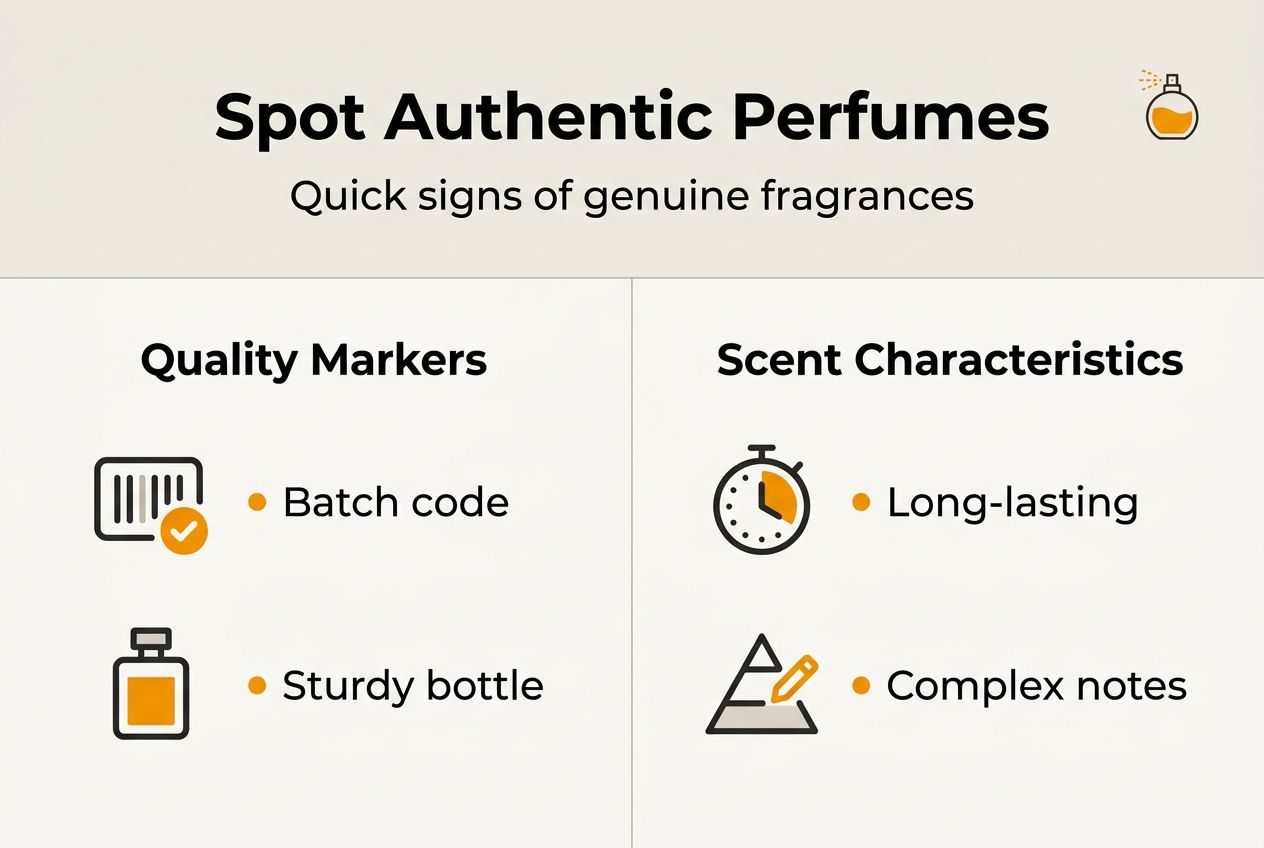
High-performance liquid chromatography combined with cluster analysis offers another powerful verification method. HPLC UV/VIS separates non-volatile perfume components like fixatives, colorants, and stabilizers that GC methods cannot detect. Cluster analysis then compares the chemical profile against authentic reference samples, calculating similarity scores that reveal batch consistency and detect counterfeits.
These analytical methods work by comparing multiple chemical dimensions simultaneously:
- Retention time patterns show how compounds separate during analysis, creating unique timing signatures
- Mass spectral data identifies specific molecules by their fragmentation patterns and molecular weights
- Relative abundance ratios between compounds reveal formulation proportions that counterfeiters rarely match
- Minor component profiles detect the presence or absence of trace ingredients essential to authentic formulas
The table below compares key authentication technologies and their applications:
| Technology | Primary Use | Detection Capability | Typical Analysis Time |
|---|---|---|---|
| GCxGC-TOF MS | Volatile compound profiling | Detects 500+ aromatic molecules | 45-60 minutes |
| HPLC UV/VIS | Non-volatile component analysis | Identifies fixatives and stabilizers | 30-45 minutes |
| NMR spectroscopy | Molecular structure verification | Confirms chemical authenticity | 15-30 minutes |
| Isotope ratio analysis | Origin verification | Traces natural ingredient sources | 60-90 minutes |
Understanding these verification methods helps consumers appreciate the complexity of authentic perfume formulation. A genuine luxury fragrance contains carefully balanced proportions of top, middle, and base notes, each contributing specific molecules to the overall profile. Recognizing authentic perfumes requires awareness that this chemical complexity cannot be easily duplicated.
Pro Tip: Authentic perfumes show consistent chemical profiles across different bottles from the same batch. If you purchase multiple bottles and notice significant smell variations, request laboratory verification or purchase from more reliable sources.
Advanced authentication also examines enantiomeric ratios in chiral molecules. Many fragrance compounds exist in mirror-image forms that smell different. Natural ingredients contain specific ratios of these enantiomers, while synthetic versions often show different proportions. This subtle distinction provides another authentication checkpoint that sophisticated analysis can detect.
Recognizing authentic perfumes and avoiding counterfeits
Practical recognition skills empower you to spot counterfeit perfumes before purchase, protecting both your health and wallet. While scientific analysis provides certainty, visual inspection and informed purchasing habits offer frontline defense against fakes.
Counterfeit distribution channels reveal important risk patterns. Testing on major marketplaces found that beauty products from unauthorized third-party sellers were consistently counterfeit or questionable. These platforms lack the supply chain controls that authorized retailers maintain, creating opportunities for fake products to reach consumers.
Packaging examination provides immediate authenticity clues. Inconsistencies in packaging and labeling signal potential counterfeits, including misaligned text, poor print quality, and incorrect fonts. Authentic luxury perfumes feature precise manufacturing with sharp graphics, consistent color reproduction, and flawless assembly.
Follow these steps to verify perfume authenticity before purchasing:
- Examine the cellophane wrap for tight, professional application without wrinkles or loose edges
- Check batch codes against manufacturer databases to confirm production legitimacy
- Inspect label printing for sharp text, correct spelling, and proper brand logo reproduction
- Verify box construction quality, including sturdy cardboard and precise corner folds
- Compare bottle weight and glass quality against known authentic samples when possible
- Test spray mechanism for smooth, consistent operation that produces fine mist
Smell and longevity differences often distinguish authentic from counterfeit perfumes. Genuine luxury fragrances develop through distinct phases as top notes evaporate, revealing middle and base notes over hours. Counterfeits typically smell harsh initially and fade rapidly because they lack the complex ingredient layering that creates lasting projection.
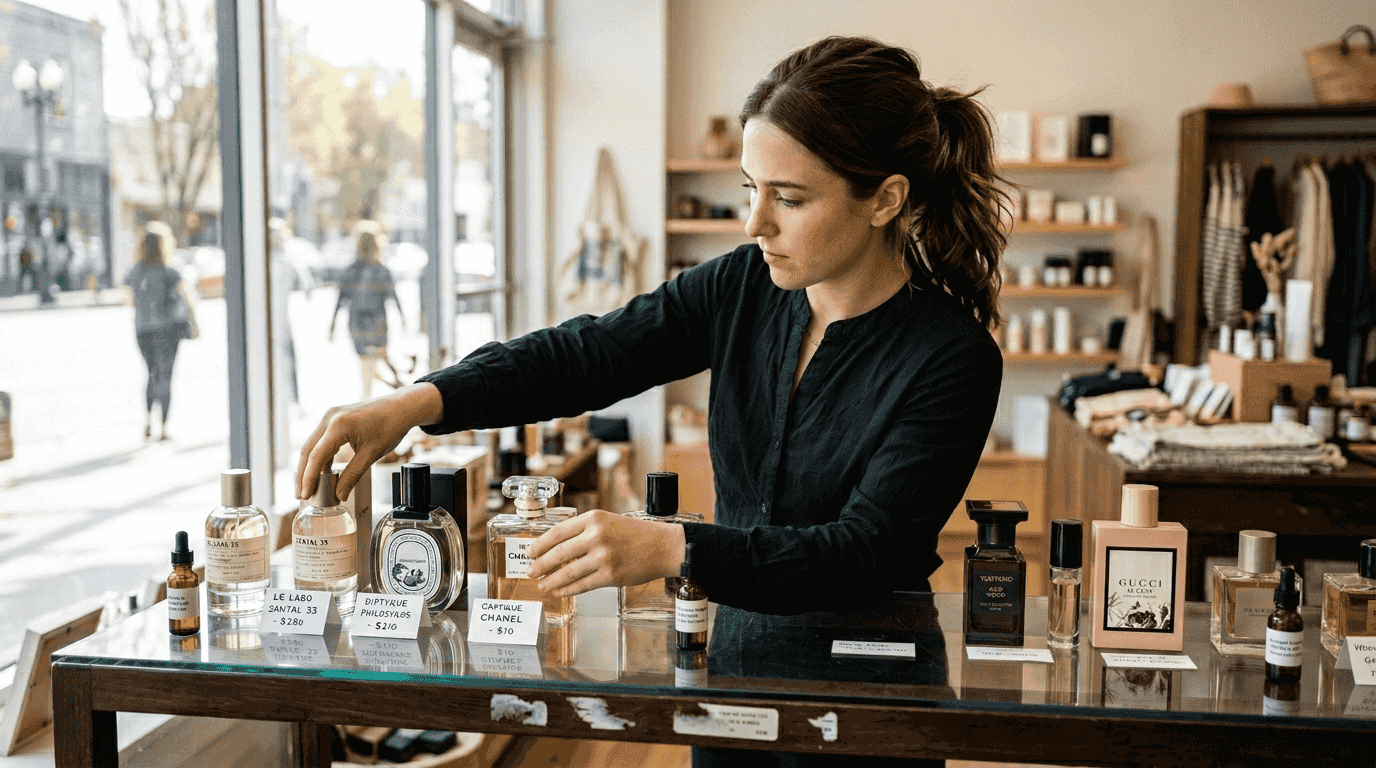
The comparison table below highlights key differences between authentic and counterfeit perfumes:
| Feature | Authentic Perfume | Counterfeit Perfume |
|---|---|---|
| Packaging quality | Flawless printing, tight cellophane, sturdy box | Blurry text, loose wrap, thin cardboard |
| Batch code | Verifiable through manufacturer | Missing, incorrect, or unverifiable |
| Liquid appearance | Clear or consistently colored, no particles | Cloudy, discolored, or contains sediment |
| Scent development | Evolves through distinct phases over 6-8 hours | Harsh opening, fades within 2-3 hours |
| Bottle construction | Heavy glass, precise assembly, quality atomizer | Light plastic feel, loose parts, poor spray |
| Price point | Discounted but reasonable for authentic product | Suspiciously low, often 70-80% below retail |
Purchasing exclusively from authorized retailers eliminates most counterfeit risk. Luxury fragrance shopping through verified channels ensures supply chain integrity from manufacturer to consumer. Authorized sellers maintain direct relationships with brands, receiving products through controlled distribution networks that prevent fake infiltration.
Finding authentic designer cologne online requires evaluating seller credentials carefully. Look for retailers who display authorization certificates, offer satisfaction guarantees, and maintain transparent business practices. Established online fragrance specialists typically provide better authenticity assurance than general marketplaces with multiple third-party sellers.
Pro Tip: Photograph packaging details, batch codes, and bottle construction when you receive a perfume. If authenticity questions arise later, these images provide evidence for returns or disputes with sellers.
Recognize Amazon seller scam red flags that indicate counterfeit risk. New sellers with limited feedback, prices dramatically below market rates, and vague product descriptions often signal fake products. Third-party fulfillment without Amazon’s direct involvement increases risk because the platform cannot verify product authenticity before shipping.
Price analysis helps identify suspicious deals. Authentic luxury perfumes carry production costs that prevent extreme discounting. While legitimate retailers offer 20-40% discounts through efficient operations, prices exceeding 60-70% off retail typically indicate counterfeits or diverted products with questionable storage conditions.
Find authentic luxury perfumes with confidence
Navigating the fragrance market safely requires partnering with retailers who prioritize authenticity verification and customer protection. After understanding how to recognize genuine perfumes and avoid counterfeits, the next step involves choosing where to make your purchases.
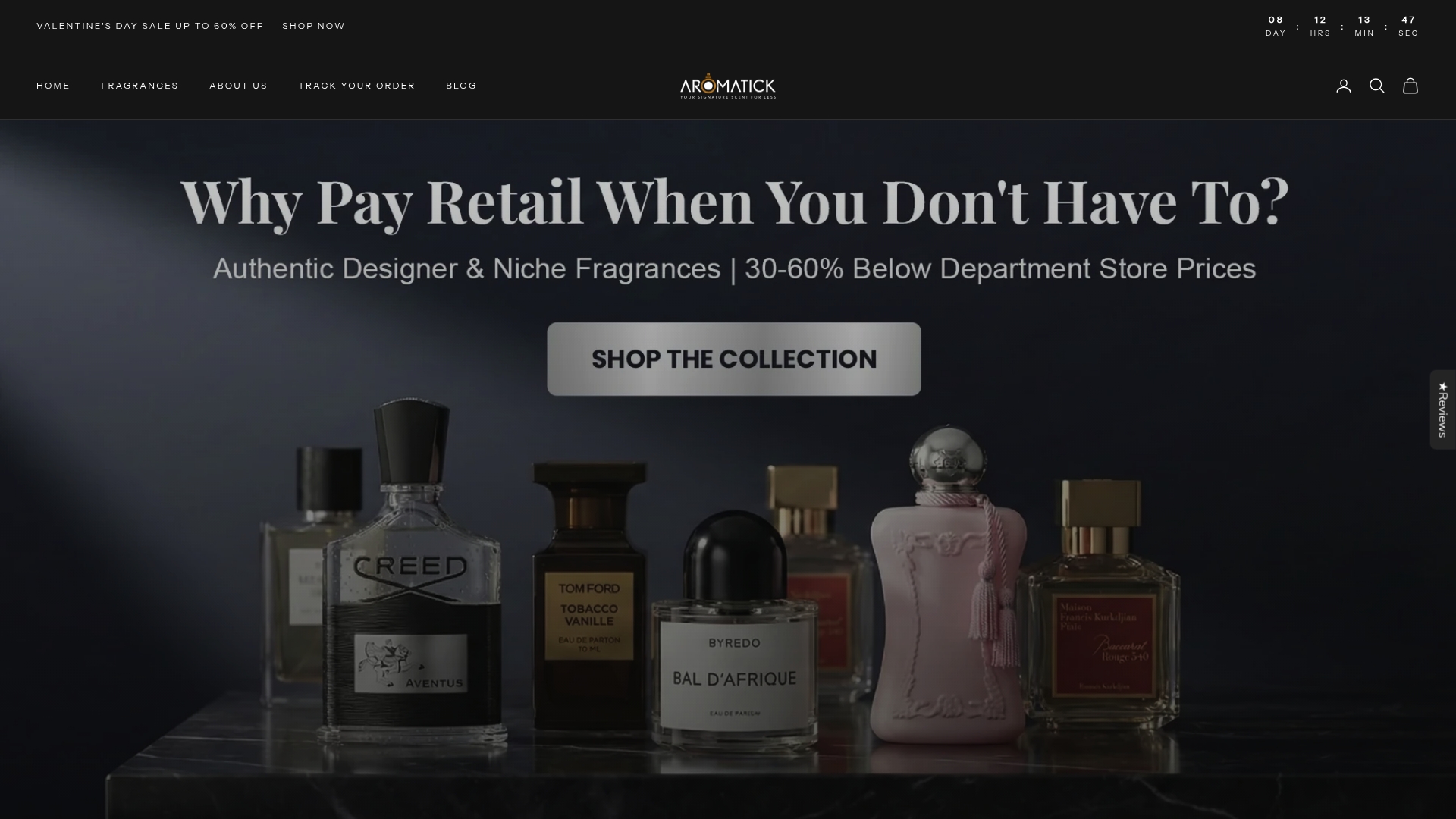
Aromatick specializes in delivering authentic designer and niche perfumes directly to fragrance enthusiasts who value both quality and value. Every bottle undergoes verification to ensure you receive genuine products that meet safety standards and deliver the luxury experience you expect. The platform combines expert curation with transparent sourcing, offering up to 60% off retail prices without compromising authenticity. Whether you’re building a signature collection or exploring niche fragrances, shop authentic luxury perfumes with confidence knowing each purchase supports ethical practices and sustainable fragrance access.
Frequently asked questions
What role do synthetic musks play in perfumes and their environmental impact?
Synthetic musks accumulate in the environment because they resist natural breakdown processes. These compounds persist in water systems and bioaccumulate in living organisms, concentrating through food chains. Many mass-market perfumes use these chemicals for cost efficiency, but authentic luxury brands increasingly favor biodegradable alternatives that minimize ecological harm while maintaining fragrance performance.
How can I verify if my perfume is authentic without laboratory testing?
Examine packaging quality for flawless printing, tight cellophane, and sturdy construction. Check batch codes through manufacturer websites to confirm legitimacy. Compare the scent development against known authentic samples, noting whether the fragrance evolves through distinct phases over several hours. Purchase only from authorized retailers who maintain direct brand relationships and offer satisfaction guarantees.
Why do counterfeit perfumes smell different from authentic versions?
Counterfeits use simplified formulas with fewer aromatic compounds to reduce production costs. Authentic luxury perfumes contain hundreds of carefully balanced ingredients that create complex scent profiles. Fakes typically lack the minor components that add depth and longevity, resulting in harsh opening notes and rapid fade times that authentic fragrances never exhibit.
Are discounted authentic perfumes safe to buy online?
Yes, when purchased from authorized retailers who source directly from manufacturers. Legitimate online fragrance specialists offer significant discounts by eliminating physical retail overhead while maintaining product authenticity. Authentic perfumes matter for safety, so verify seller authorization and look for transparency about sourcing practices before purchasing.
What health risks do counterfeit perfumes pose to consumers?
Counterfeit perfumes often contain toxic substances including methanol, antifreeze, and unregulated synthetic compounds. These chemicals can cause skin irritation, respiratory problems, allergic reactions, and systemic toxicity with repeated exposure. Authentic perfumes undergo safety testing and ingredient regulation that counterfeiters completely bypass, making fake fragrances dangerous to your immediate and long-term health.
How do authentic perfume brands ensure ingredient safety and quality?
Authentic brands follow international cosmetic regulations requiring toxicology assessments, allergen labeling, and batch testing. They source ingredients from verified suppliers, conduct stability studies, and maintain quality control throughout production. This regulatory compliance ensures consistent safety and performance that counterfeit operations never replicate, protecting consumers from harmful exposures.


Leave a comment
This site is protected by hCaptcha and the hCaptcha Privacy Policy and Terms of Service apply.