
Article: How authentic fragrances are verified: complete guide 2026
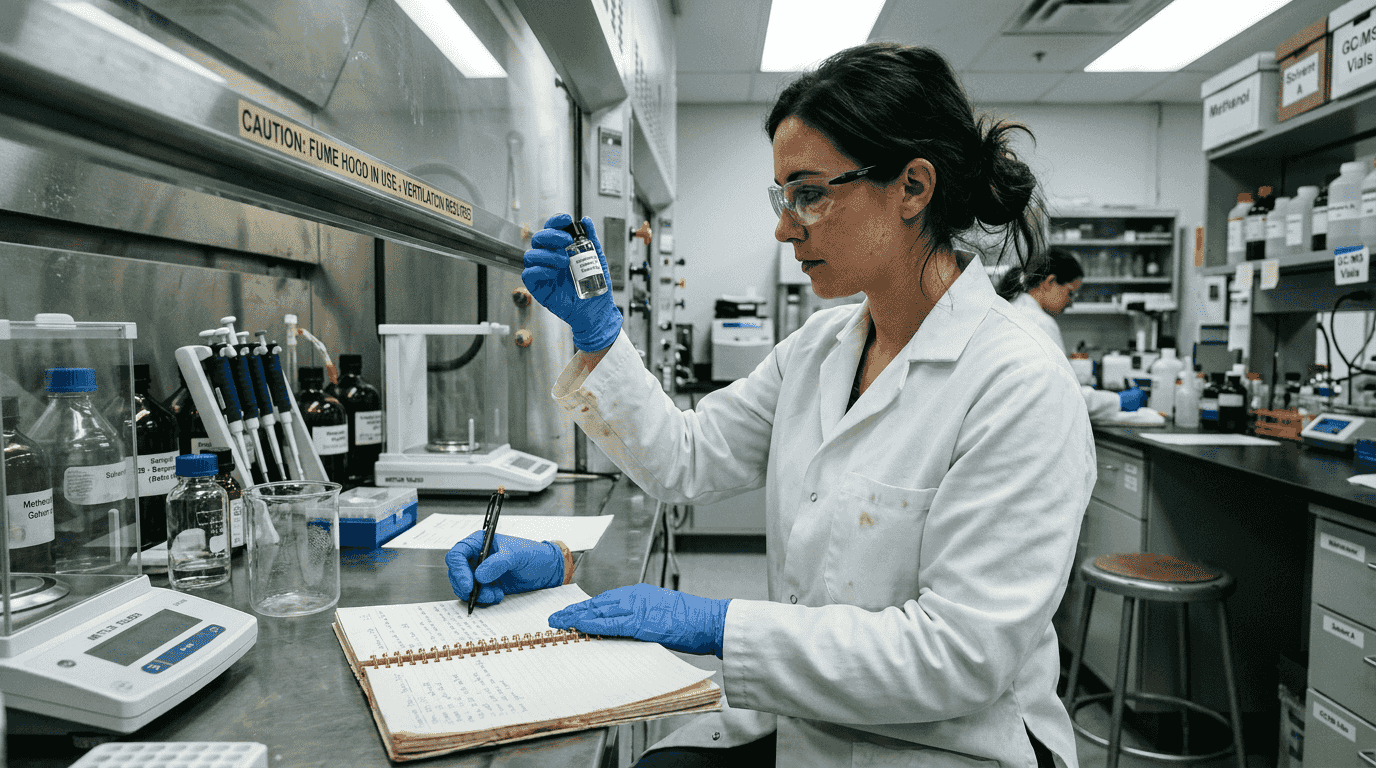
How authentic fragrances are verified: complete guide 2026
Counterfeit perfumes flood online marketplaces, with up to 15% of online fragrance sales involving fakes that pose real health dangers. These knockoffs contain unregulated chemicals that can trigger allergic reactions, skin irritation, or worse. For fragrance enthusiasts seeking luxury scents at reasonable prices, distinguishing genuine products from dangerous imitations feels overwhelming. This guide reveals the scientific methods, legal protections, and practical strategies that ensure you purchase only authentic fragrances, protecting both your health and investment.
Table of Contents
- Understanding Why Fragrance Authenticity Matters
- Scientific Methods To Verify Fragrance Authenticity
- Legal Protections Supporting Fragrance Authenticity
- Practical Tips For Consumers To Verify Fragrance Authenticity
- Explore Authentic Luxury Fragrances At Aromatick.com
Key takeaways
| Point | Details |
|---|---|
| Scientific verification | GCxGC-TOF MS technology analyzes chemical profiles to distinguish authentic fragrances from counterfeits with precision |
| Legal protections | Brands use trademark registration, trade dress rights, and false association claims to combat counterfeit products |
| Health risks | Fake perfumes contain unregulated solvents and allergens that cause skin reactions and respiratory problems |
| Consumer verification | Check packaging details, serial numbers, and purchase only from authorized retailers to avoid counterfeits |
| Professional testing | Laboratory authentication services provide definitive proof of fragrance authenticity when doubt exists |
Understanding why fragrance authenticity matters
Authentic fragrances represent more than luxury branding. They guarantee predictable chemical compositions that remain stable over time, delivering consistent scent profiles without unexpected reactions. Counterfeit fragrances can contain unregulated solvents, synthetic allergens, or even industrial-grade alcohol, creating immediate health dangers for users.
The quality and safety of authentic perfumes stems from rigorous testing protocols and regulated manufacturing standards. Legitimate brands invest millions in research, development, and quality control to ensure every bottle meets safety requirements. Counterfeiters skip these costly steps entirely, mixing cheap ingredients in unsanitary conditions without regard for consumer wellbeing.
Health risks from fake fragrances include:
- Severe allergic reactions from undisclosed synthetic compounds
- Chemical burns from industrial-grade alcohol concentrations
- Respiratory irritation from unregulated volatile organic compounds
- Long-term skin damage from toxic preservatives
Beyond personal safety, counterfeit products devastate brand integrity and consumer trust. When someone experiences a negative reaction to a fake product, they often blame the legitimate brand, damaging reputations built over decades. This erosion of trust affects the entire fragrance industry, making verification increasingly critical for both brands and consumers.
Authentic fragrances undergo extensive dermatological testing and comply with international safety regulations, while counterfeits bypass all quality controls to maximize profit margins.
The financial impact extends beyond individual purchases. Counterfeit operations fund organized crime networks, evade taxes, and exploit workers in dangerous conditions. Every fake perfume purchase inadvertently supports these harmful enterprises while denying legitimate businesses revenue they need for continued innovation and quality improvements.
Scientific methods to verify fragrance authenticity
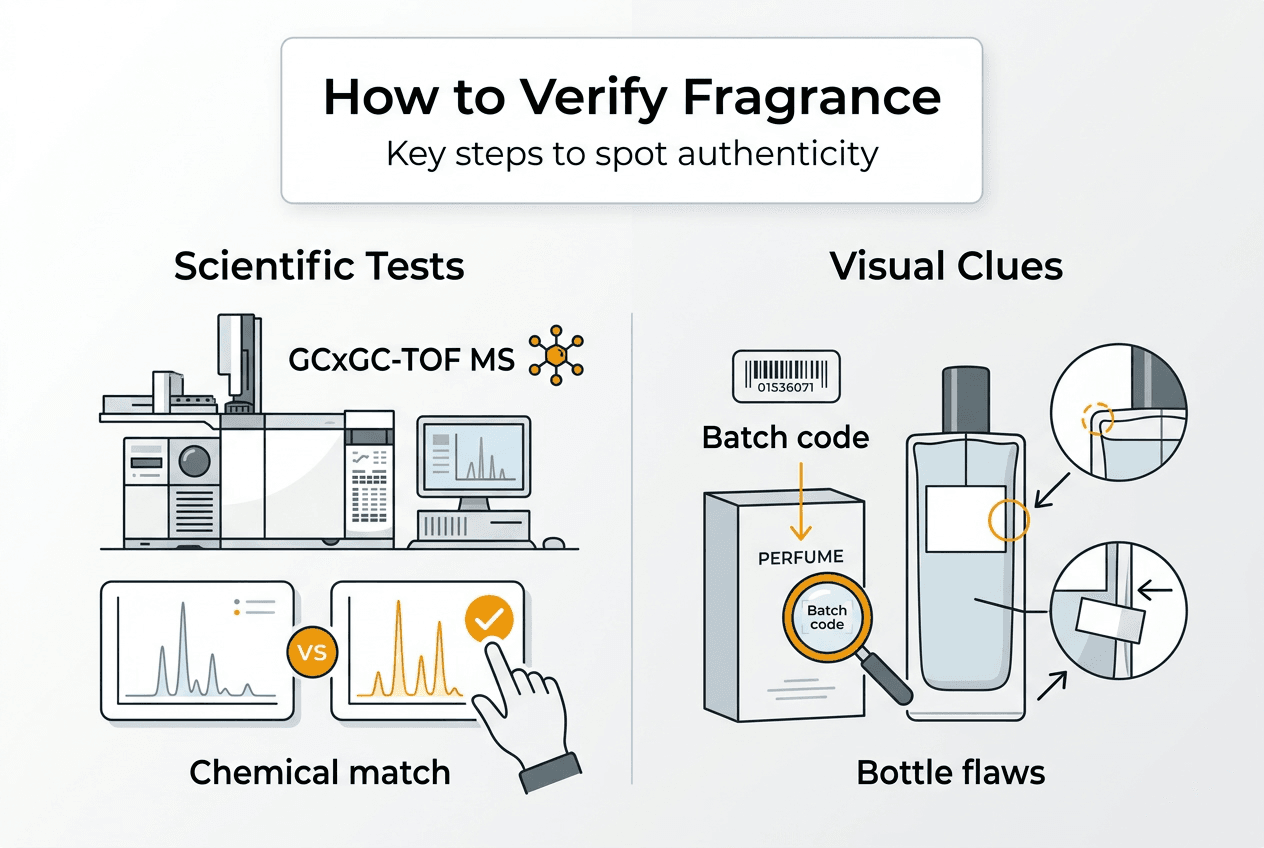
Modern laboratories employ sophisticated analytical techniques to definitively identify authentic fragrances. Authenticity verification of brand perfumes can be achieved using Gas Chromatography-Gas Chromatography-Time-of-Flight Mass Spectrometry (GCxGC-TOF MS), a powerful method that separates and profiles every volatile organic compound in a fragrance sample.
This two-dimensional separation technique works by first separating compounds based on boiling point, then further separating them by polarity. The time-of-flight mass spectrometer identifies each separated compound with extreme precision, creating a unique chemical fingerprint for every fragrance. Authentic products show consistent fingerprints matching reference standards, while counterfeits reveal compositional discrepancies immediately.
The GCxGC-TOF MS process involves:
- Sample preparation through headspace extraction to capture volatile compounds
- Primary separation column sorting molecules by volatility
- Secondary separation column refining compounds by chemical structure
- Mass spectrometry detection identifying each molecule’s exact mass
- Data analysis comparing results against authenticated reference samples
Pro Tip: Request certificates of analysis from retailers claiming to sell authentic fragrances, as legitimate distributors maintain documentation proving their products passed laboratory verification.
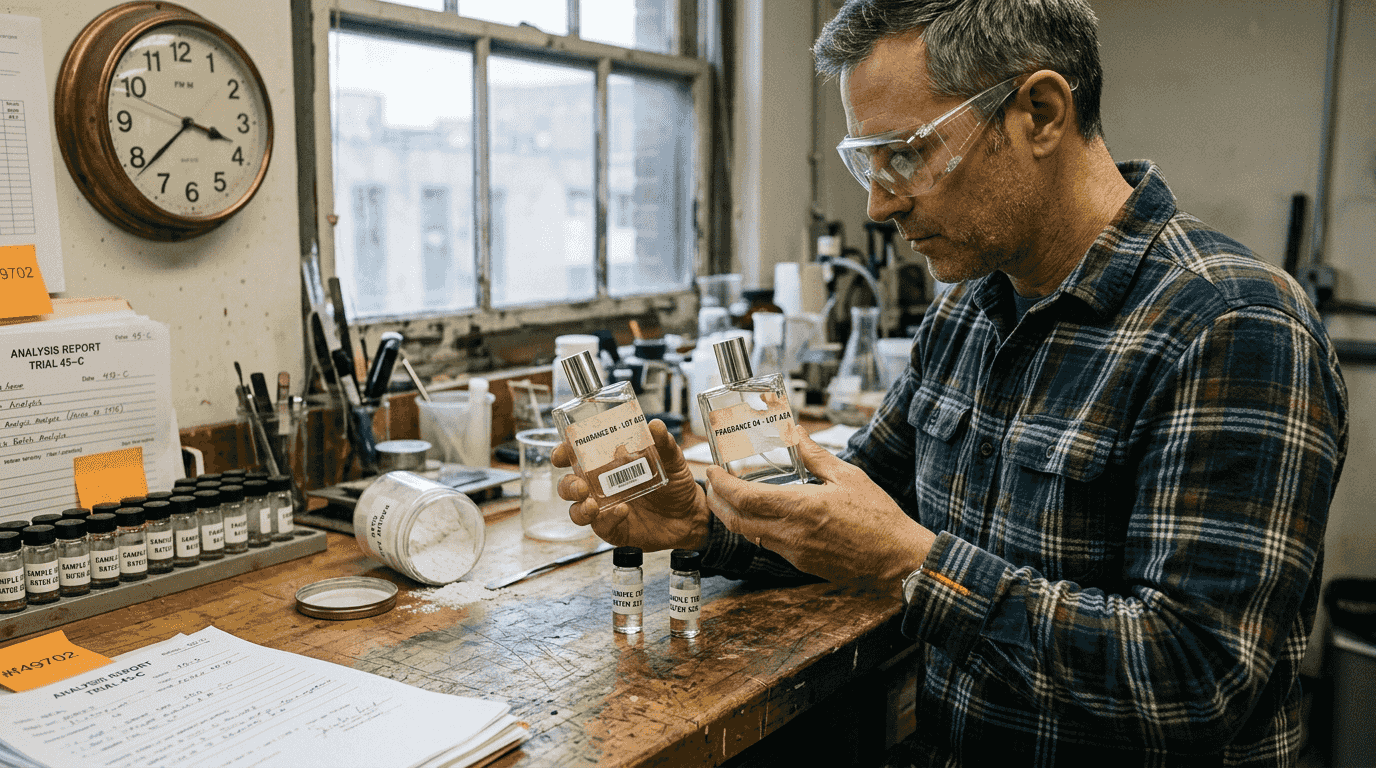
Chemical profiling reveals telling differences between genuine and counterfeit products. Authentic fragrances contain precisely measured ratios of natural extracts, synthetic aroma chemicals, and stabilizers. Fakes substitute expensive natural ingredients with cheap synthetics, creating profiles that initially smell similar but lack complexity and longevity.
| Component Type | Authentic Perfume | Counterfeit Perfume |
|---|---|---|
| Natural extracts | High-quality essential oils in precise ratios | Minimal or absent, replaced with synthetics |
| Aroma chemicals | Pharmaceutical-grade compounds meeting purity standards | Industrial-grade substitutes with impurities |
| Alcohol base | Specially denatured ethanol for cosmetic use | Industrial alcohol potentially containing methanol |
| Stabilizers | UV filters and antioxidants preventing degradation | Often absent, causing rapid scent deterioration |
| Allergen levels | Regulated and disclosed per IFRA standards | Uncontrolled, often exceeding safe limits |
Laboratories specializing in fragrance authenticity verification maintain extensive databases of authentic product profiles. When analyzing a questionable sample, technicians compare its chemical fingerprint against these references, identifying discrepancies that indicate counterfeiting. Even subtle variations in compound ratios or the presence of unexpected chemicals flag products as fake.
Understanding the role of authenticity in perfumes helps consumers appreciate why scientific verification matters. The complex interplay of hundreds of aromatic compounds creates the signature scents we love. Counterfeits cannot replicate this complexity without access to proprietary formulas and quality ingredients, making chemical analysis the definitive authentication method.
Legal protections supporting fragrance authenticity
Luxury fragrance brands deploy multiple legal strategies to protect their products from counterfeiting and maintain market integrity. Trademarking scent names strengthens brands’ position against copycat products, providing exclusive rights to specific fragrance identifiers that prevent competitors from creating confusion in the marketplace.
Trademark protection extends beyond simple name registration. Brands secure rights to distinctive bottle shapes, packaging designs, and even specific color combinations associated with their fragrances. These protections create legal barriers that counterfeiters must overcome, making it riskier and more expensive to produce convincing fakes.
Federal trade dress registration helps target lookalike products mimicking original bottle designs. Trade dress protects the overall visual appearance and aesthetic that consumers associate with specific brands. When counterfeiters copy distinctive bottle shapes or packaging layouts, brands can pursue legal action even without trademark infringement.
Key legal protections include:
- Trademark registration for fragrance names, logos, and distinctive packaging elements
- Trade dress rights protecting overall product appearance and packaging design
- Copyright protection for original artwork, marketing materials, and bottle designs
- Patent protection for unique bottle mechanisms or application systems
Pro Tip: Legitimate retailers display authorized dealer certificates and maintain direct relationships with brand manufacturers, providing legal recourse if authenticity questions arise.
False association claims under the Lanham Act address misleading imitation of packaging and marketing language. This legal tool allows brands to challenge products that create confusion about their origin, even when direct trademark infringement cannot be proven. Counterfeiters using similar fonts, color schemes, or marketing phrases face legal consequences under false association doctrines.
| Legal Protection | Primary Function | Application Against Counterfeits |
|---|---|---|
| Trademark | Protects brand names and logos | Prevents use of identical or confusingly similar names |
| Trade Dress | Safeguards product appearance | Stops lookalike packaging and bottle designs |
| False Association | Prevents misleading origin claims | Challenges deceptive marketing and packaging similarities |
| Copyright | Protects creative works | Defends against copied artwork and marketing materials |
These legal frameworks work together to create comprehensive protection systems. When brands discover counterfeit operations, they can pursue multiple legal claims simultaneously, increasing pressure on infringers and improving chances of successful enforcement. The combination of trademark, trade dress, and false association claims creates overlapping protections that make counterfeiting legally risky.
Understanding the benefits of buying designer perfumes from authorized sources means supporting these legal protections. Every legitimate purchase strengthens brands’ ability to invest in anti-counterfeiting measures, fund legal enforcement, and develop new authentication technologies. Consumers who prioritize authenticity contribute to a marketplace where quality and safety remain paramount.
Practical tips for consumers to verify fragrance authenticity
Smart shopping habits dramatically reduce counterfeit exposure risks. Examining packaging details before purchase reveals red flags that indicate fake products. Authentic fragrances feature flawless printing, properly aligned labels, and high-quality materials throughout their packaging.
- Inspect the cellophane wrapper for tight, professional wrapping without loose edges or wrinkles
- Examine box printing for crisp text, accurate colors, and perfect alignment of design elements
- Check the batch code and serial number, verifying they match between box and bottle
- Assess bottle quality, looking for smooth glass, precise cap fitting, and clean spray mechanisms
- Verify the seller’s authorization status through brand websites or customer service channels
- Compare the price against typical retail ranges, as deals significantly below market value signal counterfeits
Pro Tip: Photograph the batch code and packaging before opening, creating documentation useful for authenticity verification or potential returns.
Industry estimates suggest up to 15% of online fragrance sales involve counterfeit products posing health risks. This staggering percentage means roughly one in seven online perfume purchases could be fake. Protecting yourself requires vigilance about seller selection and willingness to walk away from suspicious deals.
Official retailers and authorized distributors provide the safest purchasing channels. These sellers maintain direct relationships with fragrance houses, ensuring every product comes from legitimate manufacturing facilities. Department stores, brand boutiques, and verified online retailers like those featured in luxury fragrance shopping guides offer authenticity guarantees backed by return policies.
Avoiding suspicious sources means recognizing common counterfeit distribution channels:
- Flea markets and street vendors lacking business licenses
- Social media sellers without verifiable business credentials
- Auction sites with sellers offering unusually large inventories
- Websites lacking contact information or physical business addresses
- Deals advertising prices 70% or more below retail value
Professional laboratory authentication services provide definitive verification when doubt exists. Several companies specialize in fragrance analysis, offering services ranging from basic visual inspection to comprehensive chemical profiling. While these services cost money, they provide peace of mind for expensive purchases and help build knowledge about authentic product characteristics.
Understanding tester bottles helps avoid confusion about legitimate products. Brands produce testers for retail display, packaging them in plain boxes marked “tester” or “demonstration.” These authentic products lack fancy packaging but contain identical fragrance formulations. However, individually decanted products sold in unmarked bottles almost always indicate counterfeiting or unauthorized distribution.
Explore authentic luxury fragrances at Aromatick.com
Finding verified authentic designer fragrances at accessible prices transforms the luxury fragrance experience. Aromatick.com specializes in genuine products from prestigious brands, offering discounts up to 60% without compromising authenticity or quality. Every bottle undergoes rigorous verification before reaching customers, ensuring you receive only legitimate fragrances.
Discover exceptional values on iconic scents like Christian Dior Homme cologne 75ml and Dior Homme cologne 4.2 oz, both authenticated and backed by satisfaction guarantees. The platform eliminates traditional retail overhead, passing savings directly to fragrance enthusiasts seeking luxury without premium department store pricing. Explore the complete collection at Aromatick.com and experience authentic luxury fragrances with confidence.
How can I visually spot counterfeit perfumes?
What packaging details reveal fake fragrances?
Examine printing quality closely, as counterfeits often show blurry text, misaligned graphics, or color inconsistencies. Authentic products feature sharp, professional printing with perfect color matching across all packaging elements. Check for spelling errors in product descriptions or ingredient lists, as legitimate brands maintain rigorous quality control over all printed materials.
How do bottle characteristics indicate authenticity?
Authentic bottles exhibit flawless glass quality without bubbles, seams, or rough edges. The cap should fit precisely with smooth threading and consistent resistance when twisting. Spray mechanisms on genuine fragrances deliver fine, even mists, while counterfeit sprayers often produce irregular streams or drips.
Is it safe to buy discounted perfumes from third-party sellers?
What risks come with unauthorized sellers?
Many heavily discounted perfumes from unknown third-party sellers are counterfeit products containing dangerous chemicals. These fakes bypass safety testing and quality controls, potentially causing allergic reactions or skin damage. Unauthorized sellers lack accountability and offer no recourse when problems arise.
Which sellers provide safe purchasing options?
Only buy from authorized retailers maintaining direct relationships with fragrance brands. Legitimate sellers display dealer certificates, offer return policies, and provide customer service supporting authenticity claims. Verified online platforms and established department stores guarantee genuine products backed by brand warranties.
What role does GCxGC-TOF MS testing play in authenticity verification?
How does this technology identify fake fragrances?
GCxGC-TOF MS provides detailed chemical profiles of fragrances, distinguishing authentic from counterfeit through comprehensive volatile compound analysis. This two-dimensional separation technique creates unique fingerprints for each fragrance, revealing compositional differences invisible to human senses. Laboratories compare test samples against authenticated reference standards, identifying discrepancies that confirm counterfeiting.
Why is chemical profiling more reliable than visual inspection?
Counterfeiters increasingly replicate packaging and bottles with convincing accuracy, making visual authentication insufficient. Chemical analysis reveals the actual fragrance composition, exposing cheap substitutes and dangerous additives that visual inspection cannot detect. This scientific approach provides definitive proof of authenticity or fraud.
Can brands legally stop counterfeit fragrances from being sold?
What legal tools protect authentic fragrances?
Brands use trademarks, trade dress, and false association claims to legally challenge counterfeit products. Trademark registration provides exclusive rights to fragrance names and logos, while trade dress protects distinctive packaging designs. False association claims under the Lanham Act address deceptive imitations creating marketplace confusion.
How effective are these legal protections?
Legal frameworks create significant barriers for counterfeiters, increasing operational risks and costs. Brands can pursue civil litigation, seek injunctions stopping sales, and request customs seizures of imported fakes. While enforcement challenges remain, especially with international operations, these legal tools substantially reduce counterfeit availability and protect consumer safety.

Leave a comment
This site is protected by hCaptcha and the hCaptcha Privacy Policy and Terms of Service apply.