
Why perfume prices vary: what drives designer & niche costs
TL;DR:
- Perfume pricing depends on concentration, ingredients, brand strategy, and packaging costs.
- Higher concentrations and rare ingredients significantly increase a fragrance’s cost.
- Buying from authorized resellers online can save money without sacrificing authenticity.
You’ve probably stood at a fragrance counter, staring at two bottles that look nearly identical, only to find one costs $45 and the other $450. Price isn’t always linked to quality in the perfume world, and that gap can feel baffling. The truth is, perfume pricing is shaped by a layered mix of formulation science, ingredient sourcing, brand strategy, and retail economics. Understanding these factors won’t just satisfy your curiosity. It will make you a sharper, more confident fragrance buyer who gets genuine value for every dollar spent.
Table of Contents
- Fragrance concentration: The backbone of perfume pricing
- Designer vs niche perfumes: What makes the price gap?
- The real impact of ingredients and sourcing on cost
- Beyond the bottle: Packaging, marketing, and distribution
- Our perspective: A smarter way to choose and spend
- Find authentic perfumes without overpaying
- Frequently asked questions
Key Takeaways
| Point | Details |
|---|---|
| Concentration matters | The higher the oil concentration, the more a perfume typically costs. |
| Niche vs designer | Niche perfumes use rare ingredients and small batches, leading to higher prices than most designer scents. |
| Packaging and marketing add up | Fancy bottles and big ad campaigns can dramatically increase perfume prices. |
| Smart shopping pays | Buying from trusted resellers or direct sources helps you access authentic scents at lower prices. |
Fragrance concentration: The backbone of perfume pricing
Before anything else, the amount of aromatic oil in a bottle directly determines its price. This is called fragrance concentration, and it’s one of the most misunderstood aspects of perfume shopping. Think of it as the ratio of pure scent to carrier liquid, usually alcohol or water.
Here’s a quick breakdown of the main concentration categories:
| Fragrance type | Concentration | Longevity | Typical retail price |
|---|---|---|---|
| Parfum (Extrait) | 20–40% | 8–12 hours | $150–$500+ |
| Eau de Parfum (EDP) | 15–20% | 6–8 hours | $80–$300 |
| Eau de Toilette (EDT) | 5–15% | 3–5 hours | $40–$150 |
| Eau de Cologne (EDC) | 2–4% | 2–3 hours | $25–$80 |
As the table shows, higher concentrations like Parfum (20–40%) cost significantly more than Eau de Toilette (5–15%) because they contain more aromatic compounds and last longer on the skin. A Parfum isn’t just a stronger version of an EDT. It’s a fundamentally richer formulation that requires more raw material per bottle.
This matters in practice. A small 30ml Parfum bottle can outlast a 100ml EDT because you need far fewer sprays per wear. So while the upfront cost is higher, the cost per use can actually be lower over time.
Understanding fragrance concentration types also helps you avoid one of the most common shopping mistakes: assuming every EDP is automatically worth more than an EDT. Formulation quality, ingredient caliber, and brand positioning all play a role too.
Pro Tip: Don’t let concentration labels alone guide your purchase. A well-formulated EDT from a respected house can outperform a poorly blended EDP in both longevity and scent quality.
Designer vs niche perfumes: What makes the price gap?
Once you understand concentration, the next big pricing variable is the type of brand behind the bottle. The fragrance world broadly splits into two camps: designer and niche. The price gap between them can be startling, and the reasons go well beyond snobbery.
| Category | Price range | Concentration | Production | Ingredient sourcing |
|---|---|---|---|---|
| Designer | $30–$150 | 5–20% | Mass-produced | Mostly synthetic, cost-optimized |
| Niche | $200–$1,000+ | 15–30% | Small-batch | Rare naturals, artisanal |
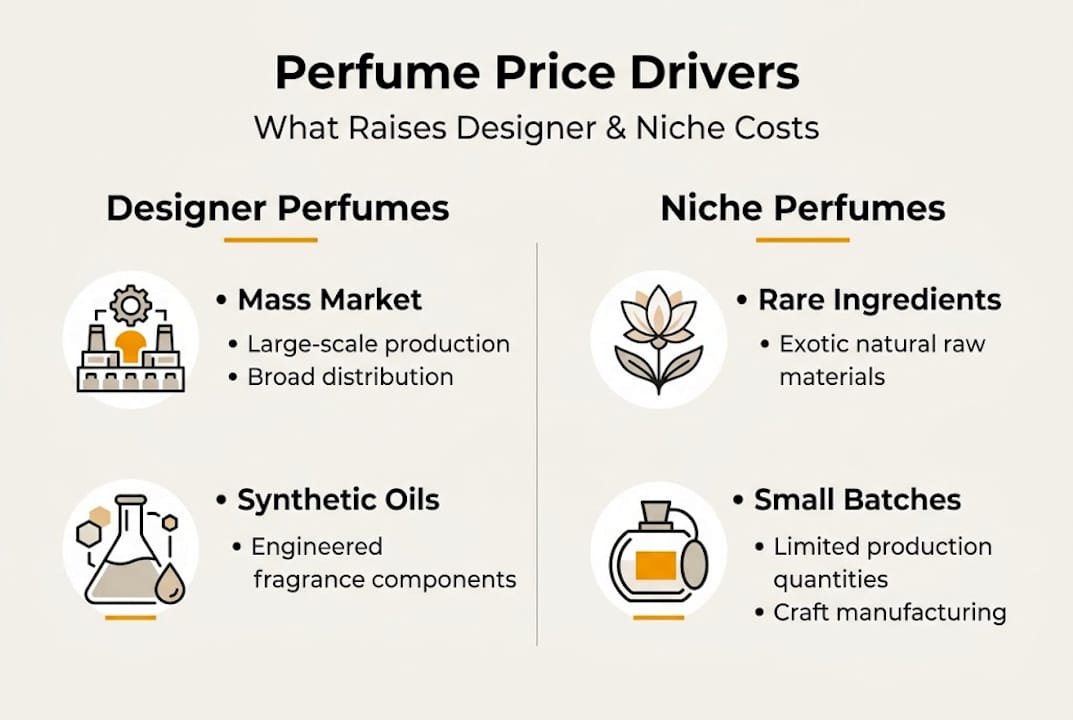
Niche perfumes use higher concentrations and rare ingredients, with small-batch production that contrasts sharply with the mass-market approach of designer houses. Designer brands produce millions of units annually, which lowers per-unit costs. They also invest heavily in celebrity endorsements and advertising, which you’re effectively paying for when you buy a bottle.
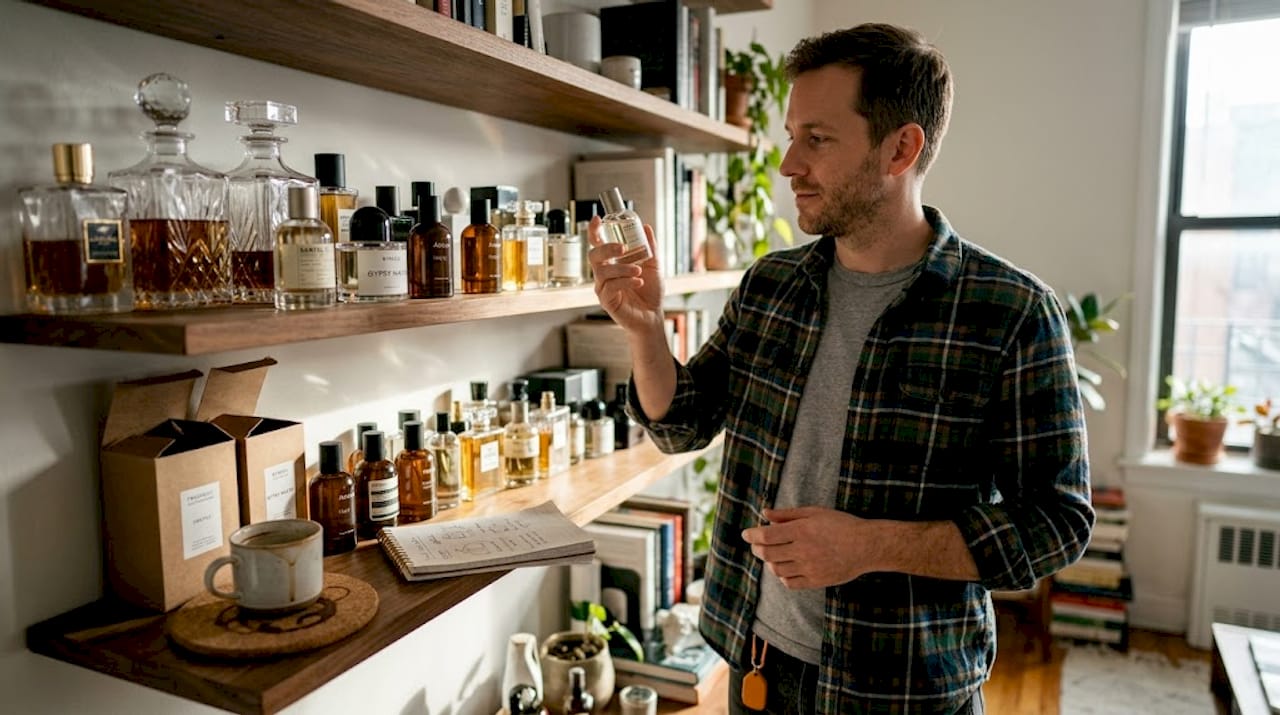
Niche houses, by contrast, focus on perfume uniqueness and creative expression. A master perfumer might spend years developing a single scent using rare oud from Laos or iris root from Florence. That creative investment, combined with limited production runs, pushes prices upward.
Key factors that most impact price when choosing between designer and niche:
- Production volume: Mass production lowers cost per unit; small batches keep costs high
- Ingredient rarity: Exotic naturals cost exponentially more than synthetic alternatives
- Marketing spend: Designer brands allocate significant budgets to advertising, which inflates retail price
- Perfumer reputation: Renowned niche perfumers command premium fees for their expertise
- Exclusivity positioning: Limited availability is a deliberate strategy that sustains high prices
If you want to understand the full picture of designer fragrance basics, it helps to recognize that neither category is universally superior. Some designer scents are genuinely excellent and offer strong performance at accessible prices. Some niche scents are overpriced experiments that don’t justify their cost.
The real impact of ingredients and sourcing on cost
Peel back the label on any expensive perfume and you’ll often find the real cost driver: the raw materials inside. Ingredients are where perfumery gets both fascinating and expensive.
Rare ingredients make up 40–60% of niche perfume production cost, and that figure alone explains a lot. Consider what goes into sourcing some of the most prized fragrance materials:
- Natural oud (agarwood): One of the most expensive raw materials in the world, sometimes priced higher per gram than gold. It requires infected aquilaria trees, which are increasingly rare.
- Bulgarian rose absolute: Harvested by hand at dawn during a narrow two-week window each year. It takes roughly 3.5 tons of petals to produce just one kilogram of absolute.
- Ambergris: A rare substance produced naturally by sperm whales. Ethically sourced pieces found on beaches can sell for thousands of dollars per gram.
- Iris root (orris butter): Requires iris rhizomes to be aged for three to five years before extraction. The resulting butter is labor-intensive and costly.
- Jasmine sambac absolute: Hand-picked at night when the flowers are most fragrant, making it extremely labor-intensive and expensive to produce at scale.
Beyond rarity, sustainability and ethical sourcing increasingly add to the price of premium fragrances. Brands that invest in fair-trade agreements with farmers, eco-friendly extraction methods, or certified organic ingredients absorb higher production costs, which flow through to the retail price.
“Ethical sourcing is no longer a niche concern in perfumery. It’s becoming a baseline expectation for consumers who want to know that their luxury purchase doesn’t come at a human or environmental cost.”
This shift toward transparency around perfume authenticity and ingredient integrity is reshaping how brands communicate value. Understanding what’s actually in your bottle, and why it costs what it does, is a powerful tool for smarter buying. And knowing where to find fragrance savings strategies without compromising on quality is equally important.
Beyond the bottle: Packaging, marketing, and distribution
Here’s something that surprises many fragrance buyers: the liquid inside the bottle is often not the most expensive part of what you’re paying for. Packaging, advertising, and the channel through which you buy can collectively account for a significant portion of the retail price.
Luxury packaging, think heavy crystal flacons, magnetic closures, and embossed outer boxes, can cost as much to produce as the fragrance itself. A designer house might spend $15–$30 per unit on packaging alone for a premium line. That cost gets passed directly to the consumer.
Marketing is another major line item. Celebrity-fronted campaigns, glossy magazine spreads, and prime retail floor space at department stores all carry enormous price tags. When you buy a well-advertised designer scent, a portion of what you’re paying funds the next campaign.
Non-fragrance costs to watch for when evaluating price:
- Bottle design and materials: Crystal, heavy glass, and custom shapes add significant cost
- Outer packaging: Elaborate boxes, ribbons, and inserts are costly to produce
- Celebrity endorsements: Multi-million dollar contracts are built into the retail price
- Retail markup: Department stores typically mark up fragrances by 50–100% over wholesale
- Import and distribution fees: International shipping, customs, and distributor margins add layers of cost
Direct-to-consumer models cut retail markups significantly, which is why buying online from authorized sources can yield the same authentic product at a noticeably lower price. Eliminating the department store middleman removes one of the biggest cost layers in the traditional fragrance supply chain.
Pro Tip: Look for reputable authorized resellers when shopping for authentic fragrances. You can often save on designer scents without any compromise on quality or authenticity.
Our perspective: A smarter way to choose and spend
After examining every layer of perfume pricing, one truth stands out clearly: the price tag is rarely the most reliable indicator of how much you’ll enjoy a fragrance. It reflects production costs, marketing investment, ingredient rarity, and distribution strategy. But none of those factors guarantee that a scent will work beautifully on your skin or bring you lasting satisfaction.
The myth that higher price always means better quality is one of the most persistent misconceptions in the fragrance world. Some designer scents genuinely outperform niche offerings in longevity and projection. Some mid-range EDTs smell extraordinary and last all day. The inverse is equally true: a $400 niche bottle can disappoint if the formula doesn’t suit your skin chemistry or personal taste.
The smartest approach is to focus on what actually matters to you: longevity, scent profile, authenticity, and value. Exploring hidden fragrance values often reveals that exceptional quality doesn’t always carry a premium price. The best fragrance decisions come from knowledge and curiosity, not from following trends or assuming that a bigger price tag means a better experience.
Find authentic perfumes without overpaying
Now that you understand what actually drives perfume prices, you’re in a far better position to shop with confidence. The knowledge that concentration, ingredients, packaging, and distribution all shape what you pay means you can evaluate any fragrance on its real merits.
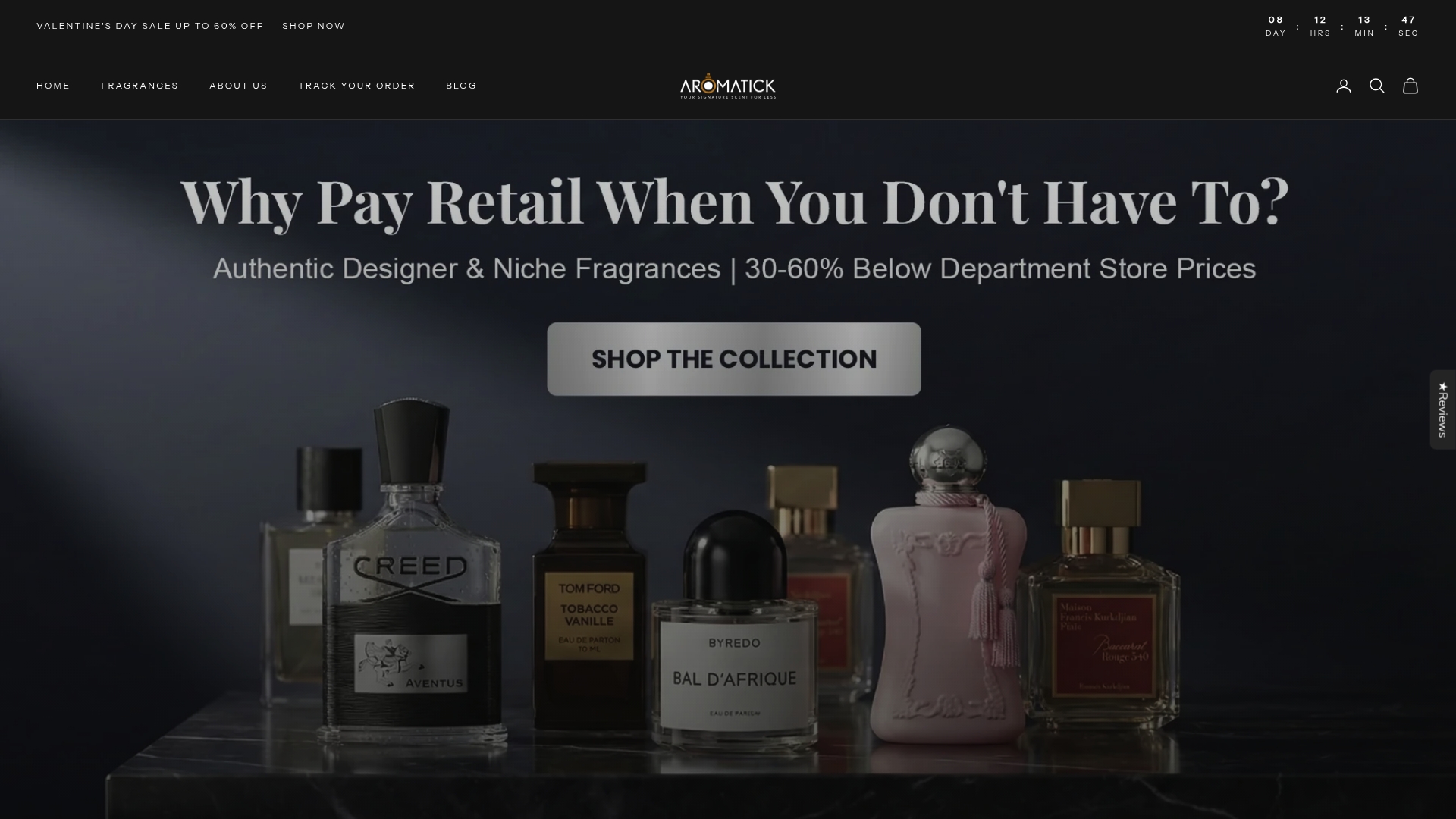
At Aromatick, we’ve built our entire platform around this idea. Our designer fragrance collection and niche fragrance collection feature 100% authentic products at up to 60% off traditional retail prices. By cutting out department store overhead, we pass real savings directly to you. You can also explore our affordable UAE scents for quality options that punch well above their price point. Every purchase comes with our authenticity guarantee, free shipping, and secure payment, so you can shop with total confidence.
Frequently asked questions
Is a more expensive perfume always higher quality?
No. Higher price often reflects marketing spend, packaging costs, or ingredient rarity rather than actual scent quality or how well it performs on your skin.
Why do niche perfumes cost so much more than designer brands?
Niche perfumes use rare ingredients and small-batch production methods, which drive up costs well beyond what mass-produced designer fragrances require.
How can I find authentic luxury fragrances for less?
Buy through trusted authorized resellers or curated discount collections. Direct-to-consumer models eliminate retail markups, giving you genuine products at significantly reduced prices.
Does ethical or sustainable sourcing impact perfume price?
Yes. Sustainable and fair-trade sourcing increases production costs, and those investments are typically reflected in the final retail price of the fragrance.


Leave a comment
This site is protected by hCaptcha and the hCaptcha Privacy Policy and Terms of Service apply.