
What Is an Aquatic Fragrance? The Marine Family Explained (2026)
Aquatic fragrances are the most-worn fresh scents on earth — the "clean," "just-showered," "smells like summer" colognes that anchor almost everyone's warm-weather rotation. But what actually makes a fragrance smell like the ocean, given that seawater has no real perfume-able scent? Here's what an aquatic is, the clever molecule behind it, and how to recognize the family.

What is an aquatic fragrance?
An aquatic (also called marine or oceanic) fragrance is a modern family designed to evoke water, sea breeze and ocean air. Rather than a specific ingredient, it's an effect — a cool, fresh, transparent quality built mostly from synthetic marine molecules, then dressed with citrus, herbs and clean woods. The family emerged in the late 1980s and exploded through the 1990s, defining the decade's fresh-and-clean aesthetic.
What does it smell like?
Aquatics smell fresh, clean and watery — like sea spray, rain, ozone or a cool breeze off the water. There's often a slightly melon-and-cucumber freshness (that's the marine molecule at work), usually lifted by bright citrus and grounded in a soft musky-woody base. The overall impression is crisp, airy and "just showered" — universally likable and effortless.
Calone: the sea in a molecule
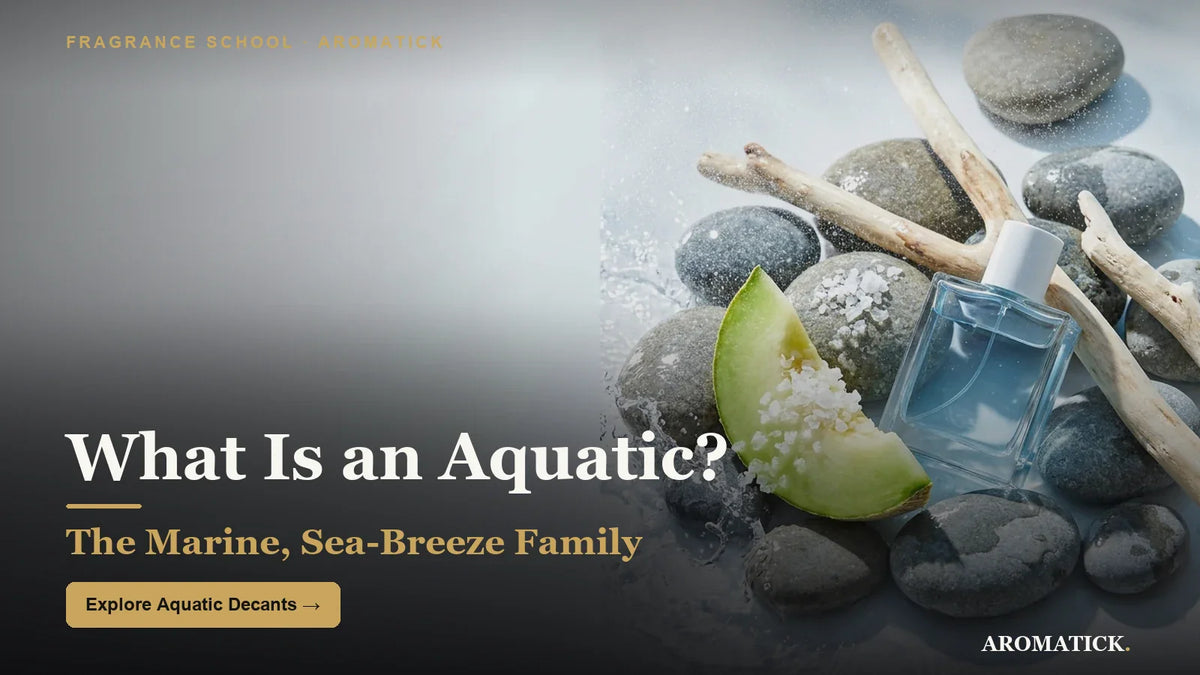
The secret behind most aquatics is a single synthetic material: Calone. First made by Pfizer in 1966, it has a remarkable smell — fresh, ozonic, and strongly reminiscent of sea water and melon. When perfumers began building whole compositions around it in the late 80s and early 90s — landmarks like Davidoff Cool Water (1988) and Acqua di Giò (1996) — the modern aquatic family was born. Today's aquatics often blend Calone with newer marine and ozonic molecules for a cleaner, more refined watery effect.
Types of aquatic
The family has several recognizable sub-styles:
- Classic marine — cool, salty, ozonic sea-water freshness (the Acqua di Giò template).
- Citrus-aquatic — bright lemon and bergamot over a watery base, extra crisp and summery.
- Green / fruity aquatic — marine notes woven with fig, coconut or melon for a lush, beachy feel.
- Aromatic-aquatic — water notes paired with lavender and herbs, blurring into the fresh-fougère world.
Aquatics to try (as decants)
The best way to learn the family is to smell its range — from lush green-aquatic to crisp marine. These decants all showcase the style:

JPG Le Beau Paradise Garden — green aquatic
A lush, beachy aquatic: salty coconut and green fig over mint and creamy woods. The fruity-green end of the family. Read our Paradise Garden review.
From $12.99 Shop the decant →
Prada Luna Rossa Ocean — aromatic aquatic
A crisp aromatic-aquatic: bright citrus and lavender over clean ambroxan and woods. Fresh, versatile and office-perfect. Read our Ocean review.
From $12.99 Shop the decant →
Rayhaan Ocean Rush — budget marine
A wallet-friendly classic marine: cool, salty ocean freshness with citrus and clean woods. A great low-risk way to try the family.
From $6.99 Shop the decant →Find your aquatic
Take the free 30-second scent quiz and we'll match you to fragrances (and decants) built on the notes and families you love — fresh aquatics included. No purchase, no card.
FAQ
What is an aquatic fragrance?
An aquatic (or marine) fragrance is one built to smell like water, sea air and ocean breeze — clean, fresh and airy. The effect comes largely from a synthetic material called Calone, discovered to have a striking sea-watermelon-ozone smell. The genre exploded in the 1990s and remains the go-to style for fresh, easy, warm-weather scents.
What does an aquatic fragrance smell like?
Fresh, clean and watery — like sea breeze, ocean spray, rain or a swimming pool in the best way. Expect cool, slightly melon-and-ozone marine notes, usually paired with bright citrus, aromatic herbs and clean musky-woody bases. Aquatics read crisp, transparent and 'just showered' rather than sweet or heavy.
What is Calone in perfume?
Calone is the synthetic molecule responsible for most aquatic fragrances. Introduced by Pfizer in 1966, it has an unmistakable fresh, ozonic, sea-water-and-melon smell. When perfumers began building scents around it in the late 1980s and 90s — starting with landmarks like Aramis New West and Davidoff Cool Water — the modern aquatic family was born.
When should I wear an aquatic fragrance?
Aquatics are the classic spring and summer, daytime choice — their cool, watery freshness is made for heat, the office and casual wear. They're clean, inoffensive and universally likable, which makes them ideal 'safe blind-buy' scents and go-to warm-weather signatures. Most lean fresh and versatile rather than sexy or nighttime.
What are examples of aquatic fragrances?
The archetype is Acqua di Giò, but the family is enormous. In our lineup, JPG Le Beau Paradise Garden (a green-aquatic coconut), Prada Luna Rossa Ocean (a fresh aromatic-aquatic) and Rayhaan Ocean Rush (a budget aquatic) all showcase the style. Louis Vuitton L'Immensité also uses water notes in a fresher-amber twist. Sampling a few as decants is the best way to learn the range.
The bottom line
An aquatic fragrance is the fresh, clean, watery family that defines warm-weather scent — built on the sea-and-melon smell of Calone and dressed with citrus, herbs and clean woods. Born in the 90s and led by Acqua di Giò, it spans lush green-aquatics, crisp marines and aromatic-aquatics, and remains the most versatile, likable style for daytime and heat. The best way to understand it is to smell it — try a green aquatic like Paradise Garden and a crisp one like Luna Rossa Ocean as decants.
Rodney Gallagher is the founder of Aromatick. Aromatick sells authenticated designer and niche fragrance decants — hand-poured from verified source bottles — so you can explore every fragrance family for a fraction of boutique pricing.

Leave a comment
This site is protected by hCaptcha and the hCaptcha Privacy Policy and Terms of Service apply.