

Gray Market Perfume: What You're Actually Buying and Why
Gray market perfume is almost always the real bottle, made by the real manufacturer, sold through a channel the brand never authorized. Buying it is generally legal in the United States under the first-sale doctrine, but you give up brand warranty support and inherit whatever storage history the bottle picked up before it reached you. The trade you’re making is price for certainty, and the size of that risk depends entirely on who you buy from.
TL;DR:
- Most gray market perfumes are genuine products sold outside authorized channels, but their storage conditions and handling before sale are often unknown.
- The primary risks involve inheriting bottles that have been improperly stored or subjected to heat and light, which can degrade the fragrance over time.
- Buying from established sellers with transparent return policies, batch code disclosures, and visible sourcing practices significantly reduces the chances of receiving a compromised product.
- Deep discounting, especially over 50%, should prompt further seller vetting, as it often indicates overstock liquidation or regional re-export rather than a safe deal.
- The main issue with gray market perfume is the potential damage to consumer trust, making transparent sellers who disclose source and authenticity claims more reliable choices.
Table of Contents
- What Gray Market Perfume Actually Means
- How a Bottle Ends Up on the Gray Market
- Authenticity, Storage, and the Warranty Gap
- A Practical Checklist for Buying Discounted Perfume
- Reading Community Reports the Right Way
- Why Trust Signals From the Seller Matter More Than the Bottle
- What Gray Market Sales Cost Authorized Retailers
- The Real Reason Gray Market Perfume Costs Less
- How the Gray Market Shapes What Shoppers Trust
- Why the Smartest Move Isn’t Avoiding Gray Market Perfume Entirely
- Where Aromatick Fits Into This
- Sources
What Gray Market Perfume Actually Means
Gray market fragrance, sometimes called a parallel import, is a genuine product sold outside the manufacturer’s approved distribution network. That’s the whole definition. It’s not a euphemism for fake, and it’s not stolen merchandise either. A bottle of Bleu de Chanel that left the factory in France, got sold to a duty-free distributor, then resold to an American discounter without Chanel’s blessing, is gray market. The scent, the juice, the box, all real.
This is a different animal from counterfeit or black market goods, which involve either fraudulent products or theft. Red Points draws that line clearly: gray market goods are authentic and often legal, while counterfeits are fabricated imitations regardless of where they’re sold. In the United States, the legal footing for gray market sales rests on the first-sale doctrine, which holds that once a manufacturer sells a product, it loses the right to control how that specific item gets resold. Sierra IP Law explains that this doctrine makes gray market purchases legal for consumers, but it also means brands owe you nothing once the item changes hands outside their network.
Brands fight this anyway, and their reasons are mostly economic:
- Selective distribution lets them control pricing tiers across regions and retail partners.
- Discounted gray market stock undercuts the margins their authorized boutiques and department stores depend on.
- Losing control over where a bottle ends up makes quality assurance and marketing messaging harder to manage.
How a Bottle Ends Up on the Gray Market
Perfume is small, light, expensive, and shelf-stable for years, which makes it one of the easiest luxury categories to divert. A few common paths explain most of the discounted stock you’ll find online.
- Duty-free and travel retail leakage. Airport shops and travel retailers buy huge volumes at wholesale rates, and some of that inventory gets resold domestically instead of carried onto a flight.
- Distributor overstock and liquidation. Regional distributors occasionally over-order, and unsold cases get liquidated to brokers rather than destroyed or returned.
- Regional re-exports chasing price spreads. Selinko’s analysis of parallel imports points to price differences between regions as a major driver, and brands are starting to deploy unit-level traceability like NFC tags to track where a bottle was meant to sell.
- Broker networks buying in bulk. Middlemen purchase closeout lots from multiple sources and redistribute them to online sellers who never touch the brand’s authorized supply chain.
You can often spot diverted stock before you buy it. Watch for duty-free bottle sizes that don’t match standard retail formats, packaging with foreign-language inserts, cellophane wrap that looks slightly off, or a price point far below what any authorized retailer offers.
Authenticity, Storage, and the Warranty Gap
Authenticity and quality are two separate questions, and conflating them is where most buyers get confused. A gray market bottle is very likely the genuine product. Whether it still smells the way the perfumer intended is a different matter entirely.
Batch codes tell you when and where a bottle was manufactured, nothing more. They don’t reveal how long it sat in a warehouse, whether that warehouse had climate control, or how many times it changed hands before reaching you. A batch code is a birth certificate, not a health record.

Fast fact: fragrance liquid degrades fastest at the top. Citrus and other volatile aliphatic notes oxidize first under heat and light exposure, so a bottle that’s been sitting in a hot storage container for a year can smell noticeably flatter and sweeter than one stored properly, even with an identical batch code.
The warranty gap is the other half of this equation. Brands typically decline to support products sold outside authorized channels, which Sierra IP Law confirms is standard practice across gray market categories, not just fragrance. That means:
- No brand customer service if the sprayer breaks or the bottle arrives damaged.
- No brand-backed authenticity guarantee if you have doubts after opening it.
- Your only recourse is the seller’s own return policy, which is why that policy matters more here than almost anywhere else in retail.
A Practical Checklist for Buying Discounted Perfume
Treat every discounted listing like it needs to earn your trust, not the other way around. This order matters because each step filters out a different category of risk.
- Check seller history first. A retailer that’s been operating for years with a visible track record carries far less risk than a marketplace account created last month.
- Confirm the return policy before you check out. Prefer sellers offering satisfaction guarantees or free returns; a seller unwilling to stand behind their own inventory is telling you something.
- Ask for batch code photos and packaging detail. Sealed boxes, consistent fonts, and matching cellophane are good signs; mismatched labeling is not.
- Skip gray market sourcing for limited editions or recently reformulated scents. Batch consistency matters most exactly where gray market supply chains are weakest at tracking it.
- Treat extreme discounts as a flag, not a bonus. If the price sits more than 50% below typical retail, ask more questions before buying, and lean toward established discounters with a documented history rather than an unfamiliar storefront.
Pro Tip: Cross-reference the batch code against the brand’s release history before you buy. If a “new” bottle carries a code from three or four years ago, ask the seller directly how it’s been stored, and read their return policy closely before you decide it’s worth the risk.
For a deeper walkthrough of vetting sellers specifically, this guide to fragrance discount site legitimacy breaks down red flags in more detail, and a return-policy primer from the dropshipping side of e-commerce explains why refund terms vary so much between resellers in the first place.
Reading Community Reports the Right Way
One bad review means one bad experience. A pattern across dozens of posts means something structural about how a seller operates. That distinction is the whole skill of reading community feedback well.
Reddit threads and Fragrantica forums are where fragrance buyers compare notes on specific sellers, often with photos of batch codes and packaging attached. A single complaint about a slow shipment doesn’t tell you much. Repeated reports of refused refunds, unresponsive support, or bottles that arrived clearly degraded do.
- Prioritize posts that include photos and batch-code details over vague complaints.
- Look for repeatable outcomes, like multiple buyers describing the same refund process or the same packaging inconsistency.
- Cross-check anything you read in forums against formal complaint records like BBB business profiles, which log dispute frequency and how sellers actually resolved them.
Community reports and BBB records answer different questions. Forums tell you what buying from a seller feels like. Complaint records tell you whether problems get fixed.
Why Trust Signals From the Seller Matter More Than the Bottle
The single biggest variable in a gray market purchase isn’t the perfume, it’s who you’re buying it from. A reputable discounter reduces almost every risk covered so far simply by operating transparently.
Look for a few concrete things when evaluating any seller, including Aromatick:
- Clear authenticity positioning and a stated discount range rather than vague “up to X% off” claims with no specifics.
- A published satisfaction guarantee and return policy you can read before checkout, not one buried in a support ticket.
- Fulfillment and shipping details that are easy to find, including how orders are packed and what happens if something arrives damaged.
- A curated catalog rather than an unlimited drop-shipped inventory, since curation usually signals the seller is vetting supply sources.
These signals map directly onto the checklist earlier in this piece. A seller that discloses its return policy and sourcing practices upfront has already cleared the first two hurdles a cautious buyer should check. For readers who want to see how authentication claims get verified in practice, this breakdown of fragrance authentication methods walks through the process in more depth.
What Gray Market Sales Cost Authorized Retailers
Every gray market bottle sold at a discount is a sale an authorized retailer didn’t get, and that math adds up faster than most shoppers assume.
Brands respond by tightening distribution agreements, auditing where product ends up, and in some cases restricting supply to distributors suspected of leaking inventory into gray channels. That’s part of why Selinko’s research into unit-level traceability tools like NFC tagging has gained traction. Brands want a way to trace a bottle back to its intended market without relying on batch codes alone, which can be duplicated or don’t specify allocation.
Authorized retailers absorb the pressure differently depending on size. A large department store chain can weather some gray market competition because it offers services diversion channels can’t, like personal shopping or in-store testing. Smaller boutiques and independent perfumeries feel it more directly, since their entire value proposition often rests on price parity with the brand’s suggested retail. The result is a fragrance market where legitimate price competition and unauthorized diversion get tangled together, and consumers rarely see the difference from the outside.
The Real Reason Gray Market Perfume Costs Less
The discount isn’t a trick. It reflects genuine cost advantages that build up at every step a bottle takes outside the authorized supply chain.
A brand’s authorized retail price bakes in marketing spend, boutique overhead, exclusive distribution fees, and a margin built for department store partners. Gray market sellers skip almost all of that. They buy overstock or re-exported inventory at wholesale rates that already reflect regional price differences, then resell without the marketing and retail infrastructure costs baked into the sticker price at Saks or a brand’s flagship counter.

Regional pricing spreads make this even more pronounced. A fragrance priced for a market with lower average incomes can be bought in bulk and re-exported to a higher-price market at a discount that still turns a profit for the reseller, a dynamic Selinko documents in detail. Add in liquidated overstock, where distributors just need inventory off their books before it ages further, and you get the deep discounts that make gray market listings look almost too good to be true.
None of this means every discount is safe. It means the discount itself isn’t the red flag, the seller’s practices around that discount are. A price 30% below retail from an established discounter with a real return policy is a very different purchase than an unverifiable 70% discount from an anonymous marketplace account.
How the Gray Market Shapes What Shoppers Trust
Every negative gray market experience, a degraded bottle, a refused refund, a suspicious listing, chips away at consumer confidence in discounted fragrance broadly, even when the seller responsible is a small operator with no connection to more established discounters. That’s the uncomfortable part of this market: bad actors create reputational damage that spreads across an entire category.
Brands know this too, and it’s part of why some have leaned into direct-to-consumer sales and tighter distribution audits rather than trying to litigate every gray market seller individually. It’s simply more efficient to control supply at the source than to chase down every diverted case after the fact.
For shoppers, the practical outcome is that discernment matters more than ever. A buyer who’s been burned once by a bad gray market purchase often assumes all discounted fragrance is suspect, which isn’t accurate but is an understandable reaction. The sellers who invest in transparency, clear authenticity claims, visible return policies, responsive support, are the ones actively rebuilding the trust that bad actors erode. That’s a meaningful distinction worth carrying into every purchase decision, not just the next one.
Why the Smartest Move Isn’t Avoiding Gray Market Perfume Entirely
The instinct to treat all discounted fragrance with suspicion is understandable, but it’s also the wrong lesson to take from this. The actual risk isn’t the gray market itself, it’s buying from sellers who won’t tell you where their stock comes from or what happens if something goes wrong.
Where conventional advice falls short is in treating “gray market” as a warning label rather than a supply chain fact. Plenty of guides tell readers to just buy from authorized retailers and skip the discount entirely, which is safe advice that ignores how much of the fragrance market actually moves through legitimate diversion channels. Statista’s data on fragrance e-commerce shows how large a share of fragrance sales now happens online, much of it through discount channels that operate on exactly this model.
What actually matters, based on everything the legal framework and the risk breakdown here point to, is prioritizing seller transparency over price alone. A seller’s return policy, batch-code disclosure, and track record tell you far more about your actual risk than the discount percentage does. Chase the discount, but vet the seller first. That order rarely fails you.
— Rodney
Where Aromatick Fits Into This
Aromatick was built around the exact problem this article walks through: getting a genuine bottle without gambling on an anonymous seller.
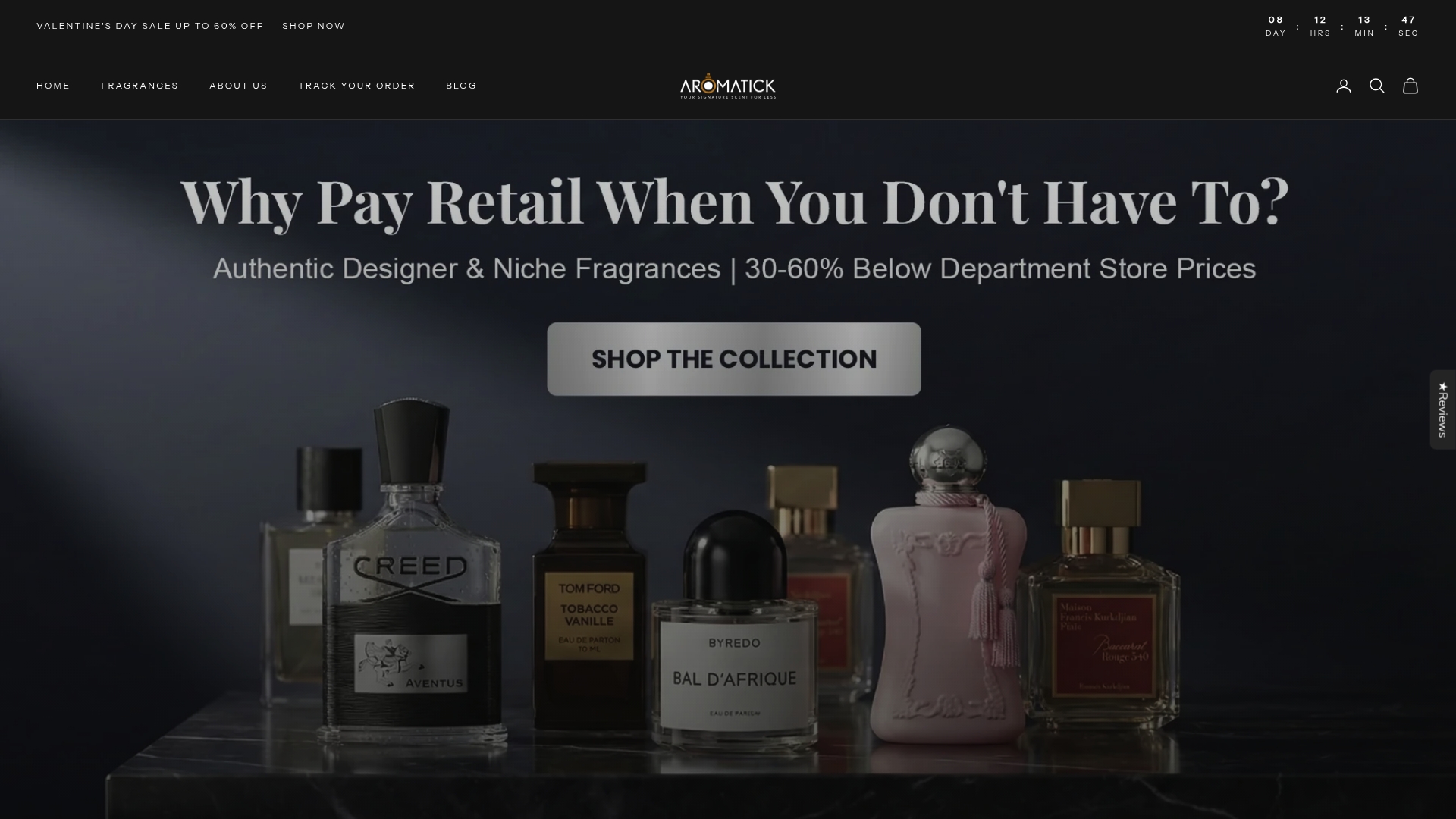
That combination is what separates a reputable discounter from the riskier corners of the gray market this article describes. If you’re a value-conscious shopper who wants the discount without giving up seller-level protections, Aromatick’s designer fragrance collection is a reasonable place to start, with dedicated pages for lines like Hugo Boss and niche houses like Initio Parfums Prives if you’re chasing something specific. Browse the collection that matches what you’re after, check the guarantee listed on the product page, and place the order once you’re satisfied with the terms.
Sources
- Gray Market Goods | Sierra IP Law
- What is the gray market, and is it legal? - Red Points
- Grey Market Perfume and Cosmetics: How Parallel Imports Undercut Regional Pricing - Selinko
- Grey Market Fragrances: Are They Actually Authentic? | Gush
- Fragrance e-commerce - Statistics and facts | Statista

Leave a comment
This site is protected by hCaptcha and the hCaptcha Privacy Policy and Terms of Service apply.