
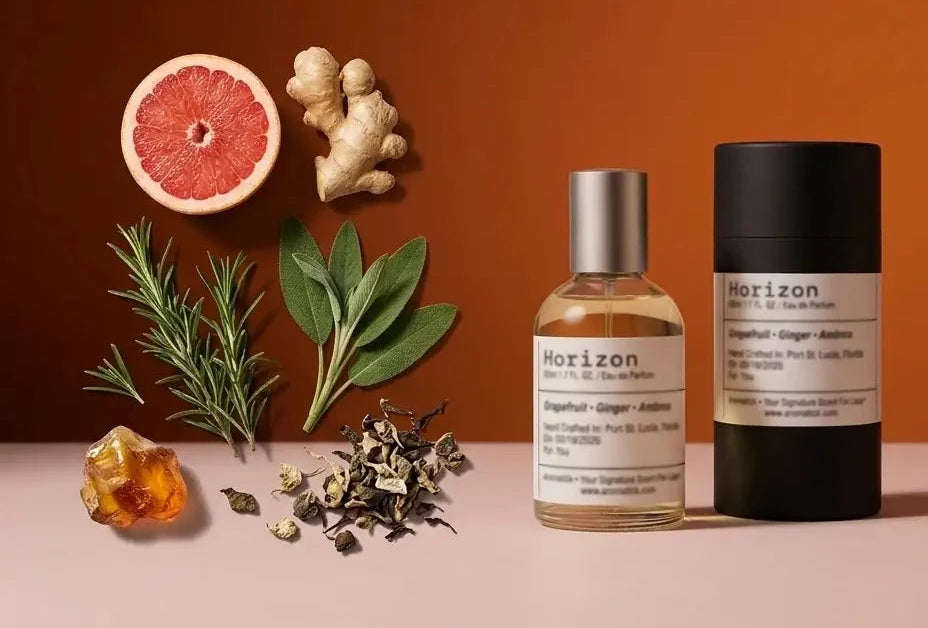
Parfum vs Eau de Toilette: Key Differences Guide 2026
Many people think all fragrances are essentially the same, just packaged differently. This misconception leads to confusion when choosing between parfum and eau de toilette at the fragrance counter. The truth is, these two fragrance types differ significantly in concentration, longevity, scent profile, and price. Understanding these distinctions helps you make informed decisions that match your lifestyle, budget, and scent preferences. This guide explores the key differences between parfum and eau de toilette, backed by expert insights and practical advice to help you choose the right fragrance for any occasion.
Table of Contents
- Understanding Fragrance Concentrations: What Sets Parfum And Eau De Toilette Apart
- Longevity And Scent Evolution: How Parfum And Eau De Toilette Perform On The Skin
- Price And Quality: Why Parfum Typically Costs More Than Eau De Toilette
- Practical Tips: Choosing And Applying Parfum And Eau De Toilette Wisely
- Explore Premium Parfum And Eau De Toilette Selections At Aromatick
- Frequently Asked Questions About Parfum Vs Eau De Toilette
Key takeaways
| Point | Details |
|---|---|
| Concentration differences | Parfum contains 20-40% perfume oils while eau de toilette has only 5-15%, creating distinct intensity levels. |
| Longevity gap | Parfum lasts 8-12 hours on skin compared to eau de toilette’s 2-4 hour wear time. |
| Price premium | Parfum costs more due to higher oil concentration and premium ingredients used in formulation. |
| Scent evolution | Parfum develops richer base notes over time while eau de toilette focuses on lighter top notes. |
Understanding fragrance concentrations: what sets parfum and eau de toilette apart
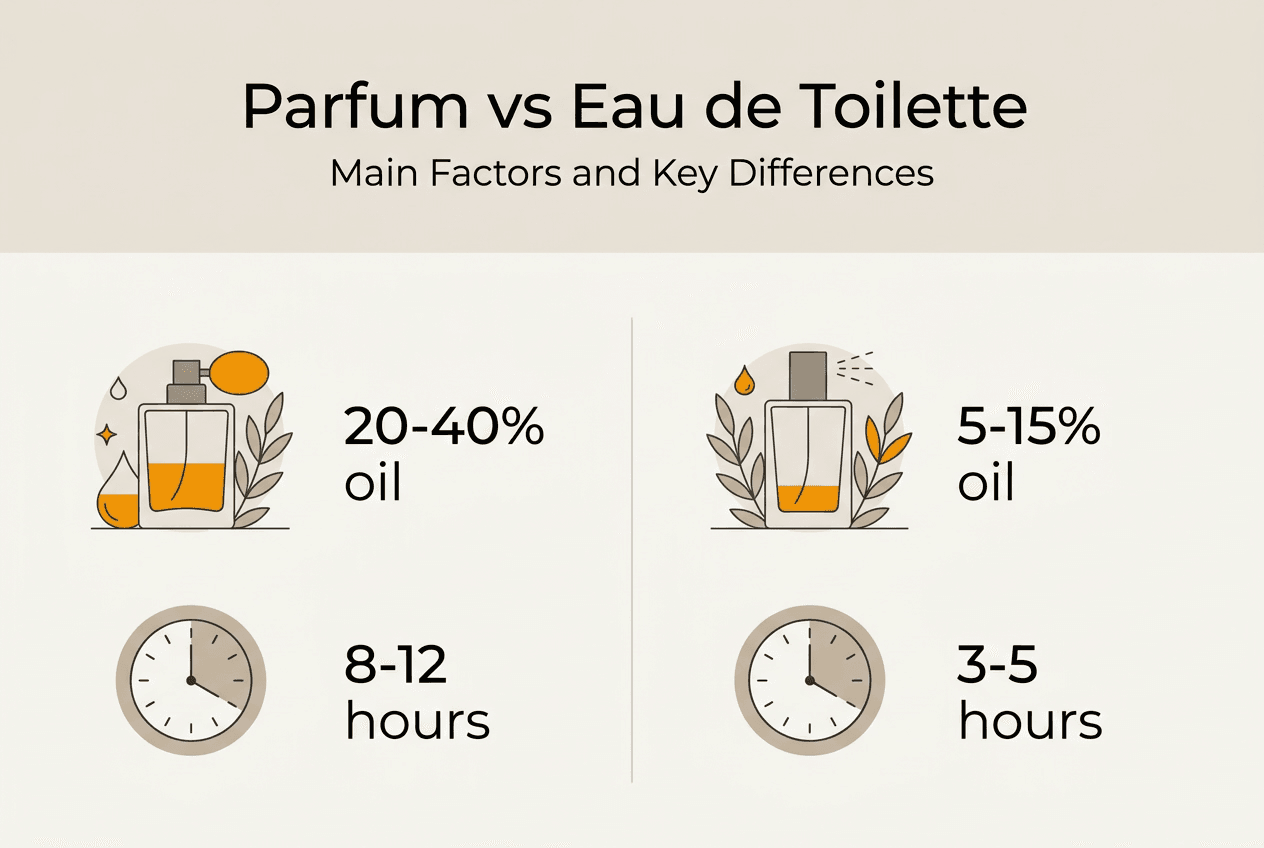
Fragrance concentration determines how much perfume oil exists in the final product compared to alcohol and water. This fundamental difference drives every other distinction between parfum and eau de toilette. Parfum contains 20-40% perfume oils while eau de toilette holds just 5-15%, making parfum significantly more concentrated and potent.
Higher concentration translates to stronger scent presence and extended wear time. When you apply parfum, you’re getting more actual fragrance molecules on your skin, which means the scent projects further and lingers longer throughout the day. Eau de toilette, with its lower concentration, offers a subtler presence that works well for casual daytime settings or warmer climates where heavy scents can feel overwhelming.
The concentration difference also affects how you should apply each type. A single spray of parfum on pulse points often suffices for all-day wear, while eau de toilette typically requires reapplication every few hours to maintain presence. This makes parfum more efficient despite its higher upfront cost.
Pro Tip: Apply parfum sparingly to avoid overwhelming those around you, as its potency can project strongly in enclosed spaces like offices or cars.
Many people confuse parfum with eau de parfum, another concentration level. Eau de parfum sits between the two at 15-20% concentration, offering a middle ground in intensity and price. When choosing and wearing long-lasting perfumes, understanding these concentration tiers helps you select the right strength for your needs.
Key concentration levels from strongest to lightest:
- Parfum (Extrait de Parfum): 20-40% oils
- Eau de Parfum: 15-20% oils
- Eau de Toilette: 5-15% oils
- Eau de Cologne: 2-5% oils
Longevity and scent evolution: how parfum and eau de toilette perform on the skin
Longevity represents one of the most noticeable differences between these fragrance types. Parfum lasts 8-12 hours on skin, while eau de toilette typically fades after 2-4 hours. This dramatic difference stems from the higher concentration of base notes and fixatives in parfum formulations.
Scent evolution unfolds differently across these concentrations. Parfum develops through distinct phases, starting with bright top notes, transitioning to heart notes, and settling into rich base notes that can linger for hours. The higher fragrance oil concentration leads to superior longevity and sillage, creating a more complex olfactory journey. Eau de toilette emphasizes volatile top notes that provide immediate impact but dissipate quickly, often before the base notes fully develop.
Sillage, the scent trail you leave behind, varies significantly between these types. Parfum creates a noticeable but intimate sillage that stays close to your body, while eau de toilette projects lighter and fades faster. This makes parfum ideal for evening events or intimate settings, while eau de toilette suits daytime office environments.
Several factors beyond concentration affect how long fragrance lasts on your skin. Skin type, application method, and environmental conditions all influence longevity and projection. Oily skin retains scent molecules longer than dry skin because oils trap and slowly release fragrance compounds. Dry skin absorbs fragrance quickly, causing faster evaporation.
Pro Tip: Apply parfum to pulse points like wrists, neck, and behind ears where body heat amplifies scent projection naturally without rubbing, which breaks down fragrance molecules.
Environmental factors also impact wear time:
- Heat accelerates fragrance evaporation, reducing longevity
- Humidity can enhance projection but may alter scent character
- Cold weather preserves fragrance longer but reduces projection
- Clothing fibers hold scent differently than skin
Understanding these variables helps you maximize your fragrance investment. When you need choosing and wearing long-lasting perfumes for special occasions, parfum delivers reliable all-day performance despite environmental challenges.
Price and quality: why parfum typically costs more than eau de toilette
Price differences between parfum and eau de toilette reflect fundamental production costs. Parfum costs more due to higher perfume oil concentration, requiring significantly more raw materials per bottle. A 30ml bottle of parfum contains roughly the same amount of actual fragrance oils as a 100ml bottle of eau de toilette.
Ingredient quality also drives pricing differences. Parfum formulations often incorporate rare or expensive natural materials like oud, ambergris, or precious florals that would overwhelm lighter concentrations. These premium ingredients create the rich, complex scent profiles that justify parfum’s luxury positioning. Pricing reflects expensive raw materials and the expertise required to balance such concentrated formulas.
| Fragrance Type | Oil Concentration | Typical Price Range (50ml) | Cost Per Wear |
|---|---|---|---|
| Parfum | 20-40% | $150-400 | $2-4 per day |
| Eau de Toilette | 5-15% | $50-120 | $1-2 per application |
Despite higher upfront costs, parfum often delivers better value over time. Since you need fewer sprays and reapply less frequently, a small bottle lasts months with daily use. Eau de toilette requires more liberal application and frequent reapplication, consuming product faster despite the lower price per bottle.
Several factors beyond concentration influence fragrance pricing:
- Brand prestige and marketing costs
- Packaging design and materials
- Distribution channel markup
- Limited edition or exclusive releases
- Perfumer reputation and artistic vision
- Ingredient sourcing and sustainability practices
When evaluating value, consider total cost of ownership rather than just bottle price. A $200 parfum lasting six months costs less per wear than a $60 eau de toilette lasting two months with twice-daily application. This math shifts fragrance shopping from impulse purchases to strategic investments in scents you truly love.
Practical tips: choosing and applying parfum and eau de toilette wisely
Selecting between parfum and eau de toilette requires matching fragrance type to your specific needs and circumstances. Follow these steps to make the right choice:
- Assess your daily routine and how long you need fragrance to last without reapplication opportunities.
- Consider your budget for both initial purchase and long-term replacement costs.
- Test fragrances on your skin for at least four hours to evaluate full scent development and longevity.
- Match concentration to occasion: parfum for evenings and special events, eau de toilette for casual daytime wear.
- Factor in climate and season, choosing lighter concentrations for heat and stronger ones for cold weather.
- Evaluate your scent preferences, selecting parfum for complex, evolving fragrances and eau de toilette for fresh, simple scents.
Application technique dramatically impacts fragrance performance regardless of concentration. Spray parfum sparingly on pulse points where blood vessels sit close to skin surface, generating warmth that diffuses scent naturally. Common pulse points include inner wrists, neck sides, behind ears, and inside elbows.
Avoid rubbing fragrance into skin after application, as friction breaks down scent molecules and alters the intended composition. Instead, let the fragrance dry naturally on skin for optimal development. Application method impacts longevity more than many realize, with proper technique extending wear time by hours.
Pro Tip: Apply perfume on pulse points immediately after showering while skin is still slightly damp, as moisture helps lock in fragrance molecules for extended wear.
Layering fragrances creates customized scent experiences and enhances longevity. Start with unscented or matching lotion to create a base layer that holds fragrance molecules. Apply eau de toilette first for immediate impact, then add a touch of parfum in the same scent family for depth and staying power. Explore layering fragrances guide for advanced techniques.
Proper storage preserves fragrance quality over time. Keep bottles away from direct sunlight, heat sources, and humidity, which degrade fragrance compounds. Store in cool, dark places like bedroom drawers or closets. Avoid bathroom storage where temperature and humidity fluctuate dramatically.
For practical examples, compare Azzaro Wanted eau de toilette with Dior Sauvage parfum to experience these concentration differences firsthand.
Explore premium parfum and eau de toilette selections at Aromatick
Now that you understand the key differences between parfum and eau de toilette, you can make informed choices when building your fragrance collection. Aromatick offers an extensive selection of authentic designer and niche fragrances at competitive prices, helping you access luxury scents without department store markups.
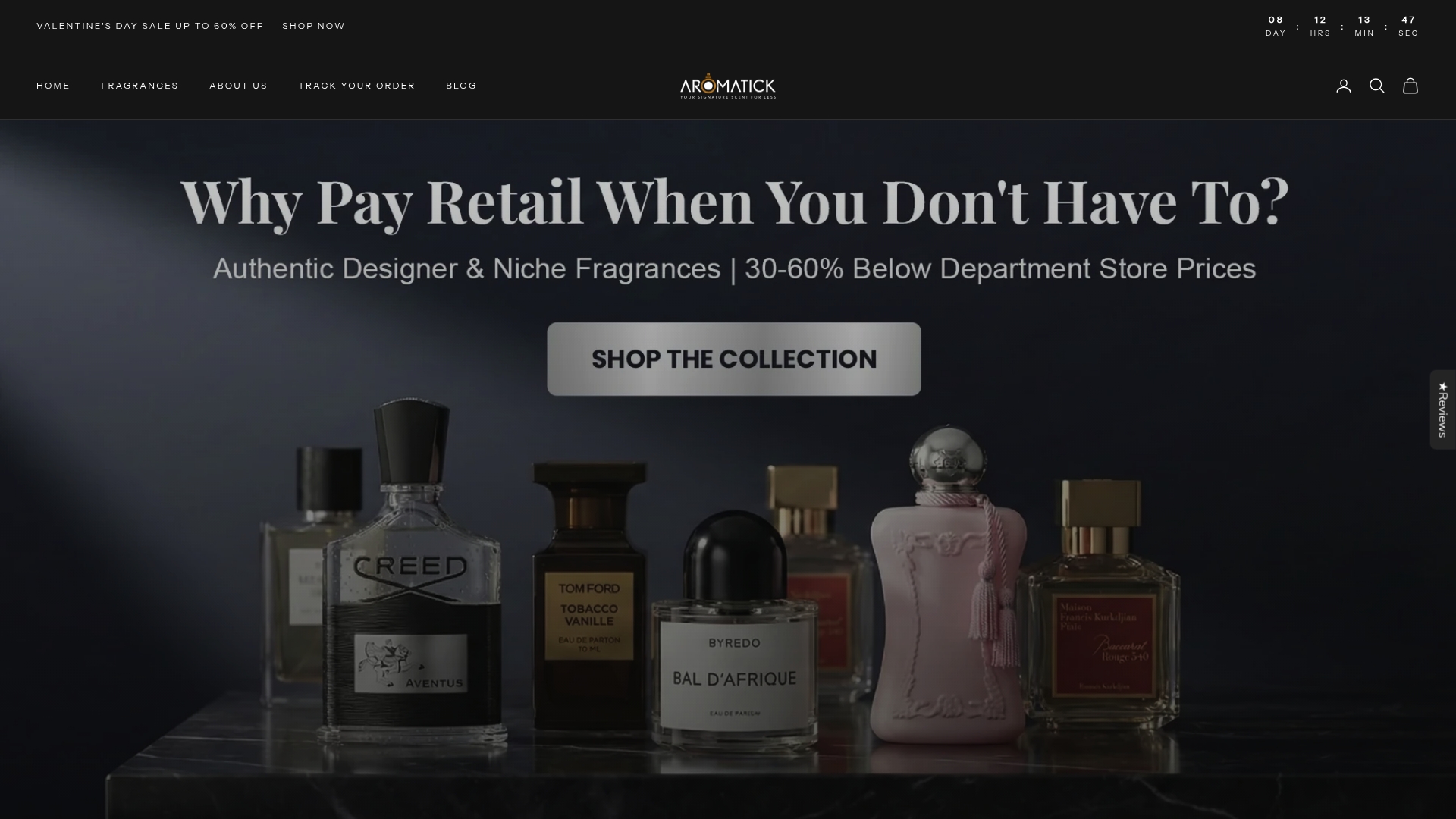
Our curated collection includes both parfum and eau de toilette concentrations from prestigious brands, allowing you to compare options and find the perfect match for your preferences and budget. Explore products like Dior Sauvage parfum for long-lasting intensity or Azzaro Wanted eau de toilette for fresh daytime wear. Every product comes with authenticity guarantees, free shipping options, and satisfaction promises that make fragrance shopping risk-free and enjoyable.
Frequently asked questions about parfum vs eau de toilette
Can parfum be worn daily or just special occasions?
Parfum works perfectly for daily wear when applied sparingly. Use one or two sprays on pulse points for office-appropriate presence. Reserve heavier application for evening events or special occasions when stronger projection suits the setting.
Is eau de toilette suitable for all skin types?
Eau de toilette suits all skin types but performs differently on each. Oily skin extends wear time naturally, while dry skin may require moisturizer application first to help fragrance adhere. Test on your specific skin type before committing to full bottles.
How should I store parfum to maintain scent quality?
Store parfum in cool, dark locations away from sunlight, heat, and humidity. Keep bottles in original packaging when possible, as boxes provide additional light protection. Avoid bathroom storage where temperature fluctuations degrade fragrance compounds over time.
Are parfum and eau de parfum the same thing?
Parfum and eau de parfum represent different concentration levels. Parfum contains 20-40% fragrance oils, while eau de parfum holds 15-20%. This makes parfum stronger and longer-lasting, though eau de parfum offers excellent performance at a lower price point.
Can layering eau de toilette and parfum enhance fragrance wear?
Layering different concentrations creates unique scent experiences and extends longevity. Apply eau de toilette first for immediate freshness, then add parfum to pulse points for depth and staying power. Ensure both fragrances share similar scent profiles to avoid clashing notes.
Does parfum work better in certain seasons or climates?
Parfum excels in cooler weather when its rich composition won’t feel overwhelming. Heat amplifies fragrance projection, making lighter eau de toilette more comfortable in summer or tropical climates. Adjust concentration based on temperature and humidity levels for optimal comfort.
Recommended
- EDT vs EDP: What’s the Real Difference? (A Collector Explains)
- Azzaro Wanted Eau De Toilette | 30-60% OFF Aromatick.com
- Types of Designer Scents: 45% Prefer Eau de Parfum in 2026
- How to recognize authentic perfumes: expert guide 2026
- Parfum vs. Eau de Toilette: Unterschiede 2026 erklärt – Pure Parfüm

Leave a comment
This site is protected by hCaptcha and the hCaptcha Privacy Policy and Terms of Service apply.