

Why Designer Scents Are Discounted Online: The Real Reason
TL;DR:
- Authentic designer fragrances are discounted online because surplus stock and regional import arbitrage move through the independent market at lower prices.
- Lower overhead for online discounters results in savings that are passed directly to consumers, unlike retail stores with high expenses.
Designer scents are discounted online because authentic products move through alternative distribution channels that carry far lower overhead than traditional retail stores. The price gap between a department store counter and a reputable online discounter like Aromatick, Fragrance Outlet, or FragranceNet is not a red flag. It reflects a well-established supply chain reality called the independent market, where genuine surplus stock reaches consumers at prices 20–50% below MSRP. Understanding why designer scents are discounted online turns a confusing pricing puzzle into a clear advantage for any fragrance shopper.
Why designer scents are discounted online: the channel cost gap
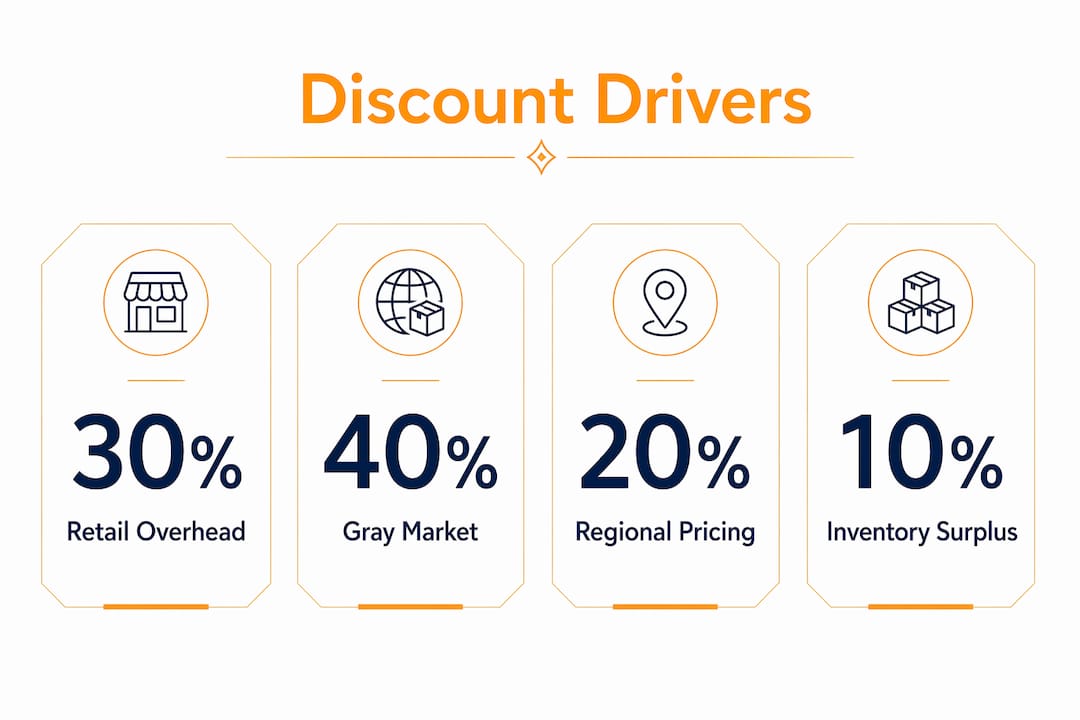
The single biggest reason online prices are lower is retailer overhead. A department store counter at Nordstrom or Macy’s carries costs that have nothing to do with the fragrance itself. Rent, trained sales staff, branded displays, in-store testers, and national advertising all get baked into the price you pay at the counter.
Online discounters operate without those costs. No physical showroom. No commissioned fragrance consultant. No prime retail real estate. Those savings pass directly to the buyer.
MSRP is a brand positioning tool, not a reflection of what a fragrance is actually worth on the open market. Luxury brands set a high MSRP to anchor consumer perception of prestige. The actual street price, meaning what the product sells for in competitive markets, is almost always lower. Here is how the cost structures compare:
- Department stores: High rent, staffed beauty counters, exclusive brand agreements, and in-store promotions all inflate the final price.
- Brand boutiques: Premium location costs and brand-controlled pricing maintain the luxury image but offer little room for discounts.
- Authorized online retailers: Lower overhead than physical stores, but still bound by minimum advertised price (MAP) agreements with brands.
- Independent market discounters: Source surplus stock outside official channels, carry no MAP obligations, and pass the full cost savings to consumers.
Pro Tip: When comparing prices across sites, check whether the retailer lists the MSRP alongside their price. A site that shows both is being transparent about the discount. That transparency is a strong signal of legitimacy.
What is the independent market, and why does it make fragrances cheaper?
The independent market is the legal trade of authentic products outside a brand’s official authorized distribution network. Independent market fragrances are not counterfeit. They are genuine products, manufactured by the same houses, filled with the same juice, and packaged identically to what you find at a department store counter.
The independent market operates on surplus from three main sources:
- Distributor overstock: Brands produce fragrances in large batches. When a distributor orders more than the market absorbs, the excess enters secondary channels at reduced prices.
- Discontinued lines: When a brand discontinues a scent, remaining inventory is sold off to discounters rather than destroyed. The fragrance is still authentic and often still excellent.
- Parallel importation: Regional price disparities allow distributors to source genuine fragrances from lower-priced markets and sell them in higher-priced ones. Differences in regional taxes, currency exchange rates, and distributor agreements make this both legal and profitable.
Parallel importation is particularly important for American consumers. A fragrance priced at the equivalent of $60 in a European market may carry an MSRP of $110 in the United States. A discounter who sources from that European distributor can sell it for $75 and still make a margin. You pay less. The fragrance is identical.
“Buying and selling independent market products is lawful and a stable part of the fragrance industry, practiced for decades by reputable retailers and savvy consumers alike.” — Independent Market Fragrances Explained
The independent market also serves a structural purpose for brands. It absorbs distributor surplus while brands maintain exclusive pricing in authorized channels. This protects the luxury image without leaving overproduced stock sitting in warehouses. It is a pressure valve the industry quietly relies on, even if brands rarely advertise that fact.
For a deeper look at how authenticity holds up through this process, the Aromatick guide on independent market fragrance authenticity walks through exactly what to check before you buy.
Why new fragrance releases don’t drop in price right away
New releases are the one category where online discounts are rare, at least initially. When a brand launches a new scent, demand is high and supply is tight. There is no surplus yet. Discounters have nothing to source.
New releases start near MSRP and only drift lower once supply stabilizes and overstock begins to accumulate. That process typically takes several months to over a year. The table below shows how pricing typically evolves after a new designer fragrance launch:
| Time after launch | Typical price vs. MSRP | What’s happening in the market |
|---|---|---|
| 0–3 months | 95–100% of MSRP | High demand, no surplus, no independent market stock |
| 3–6 months | 80–90% of MSRP | Early surplus appears, limited discounting begins |
| 6–12 months | 65–80% of MSRP | Supply stabilizes, discounters source more freely |
| 12+ months | 50–75% of MSRP | Full independent market activity, competitive discounting |
Seasonality also plays a role. Fragrance sales spike around the holidays and around Valentine’s Day. Prices tend to firm up during those windows and soften again in slower months like january or february. If you are not in a rush to own a specific new release, patience is genuinely rewarded with lower prices.
How to shop smartly for discounted designer fragrances online
Knowing why prices are lower is only half the equation. Shopping well means knowing how to find the best deal on a specific bottle without second-guessing authenticity.
- Compare across multiple reputable discounters. Price leadership rotates across discounters weekly and by fragrance. On a $100 bottle, the spread between the cheapest and most expensive reputable site commonly runs $20–$40. Checking three or four sites before buying takes two minutes and can save real money.
- Set price alerts. Tools like Google Shopping and browser extensions such as Honey or CamelCamelCamel (for Amazon listings) track price history and alert you when a specific fragrance drops. This is especially useful for fragrances that are still close to MSRP but trending downward.
- Check the seller’s authenticity guarantee. Reputable discounters like Aromatick offer explicit authenticity guarantees. If a site does not state clearly that products are genuine, that is a reason to look elsewhere.
- Understand what a realistic discount looks like. Authentic designer fragrances on reputable platforms sell for 20–50% below MSRP. A discount of 70–80% on a current, in-demand fragrance is a warning sign. Counterfeits are priced to look like extraordinary deals.
- Read the product listing carefully. Legitimate discounters specify bottle size, concentration (Eau de Parfum vs. Eau de Toilette), and whether the item is a tester or retail box. Vague listings are a red flag.
Pro Tip: Tester bottles are a legitimate way to buy designer scents cheap. They contain the same fragrance as retail versions but come in plain or unboxed packaging. Reputable sites label them clearly, and they typically sell at an additional 10–20% below the already discounted retail price.
For a practical breakdown of how to find the best deals, this guide to perfume discounts online covers price tracking strategies in detail.
Key takeaways
Designer scents are discounted online because independent market distribution, lower retailer overhead, and regional pricing arbitrage combine to bring authentic fragrances to consumers at prices well below MSRP.
| Point | Details |
|---|---|
| MSRP is not the real price | Brands set MSRP for prestige positioning; street prices run 20–50% lower through legitimate channels. |
| Independent market means authentic, not fake | Surplus stock, discontinued lines, and parallel imports are genuine products sold outside official channels. |
| New releases take time to discount | Prices only drop after supply builds and surplus enters the independent market, typically 6–12 months post-launch. |
| Compare multiple discounters | Price leadership rotates weekly; checking several reputable sites can save $20–$40 on a single bottle. |
| Authenticity guarantees matter | Shop with discounters who explicitly guarantee genuine products and provide clear product details. |
The independent market is the best-kept secret in fragrance shopping
I have spent years watching fragrance shoppers pay full retail at department store counters for bottles they could have bought for half the price from a reputable discounter. The frustrating part is that the hesitation is almost always about authenticity, and that concern, while understandable, is based on a misreading of how the industry actually works.
The independent market is not a loophole or a gray area in any ethical sense. It is a functioning part of the global fragrance supply chain. Brands overproduce. Distributors hold surplus. Regional price differences create arbitrage opportunities. Discounters buy that surplus and pass the savings on. The fragrance in the bottle is identical to what you would find at a Nordstrom counter.
What I find most interesting is that brands are quietly fine with this arrangement. The independent market absorbs excess inventory without forcing brands to publicly discount their own products, which would damage the luxury image they work hard to maintain. Everyone benefits. The brand protects its prestige. The discounter makes a margin. The consumer gets a genuine fragrance at a fair price.
My honest advice: stop treating MSRP as the benchmark for value. It is a marketing number. The real benchmark is what reputable discounters charge for the same authenticated product. Once you internalize that, buying designer perfumes online stops feeling risky and starts feeling like the obvious choice.
— Rodney
Explore authentic designer fragrances at up to 60% off
Aromatick sources genuine designer and niche fragrances through the same independent market channels described in this article, which means you get the real thing at prices that reflect actual supply chain economics rather than department store overhead.
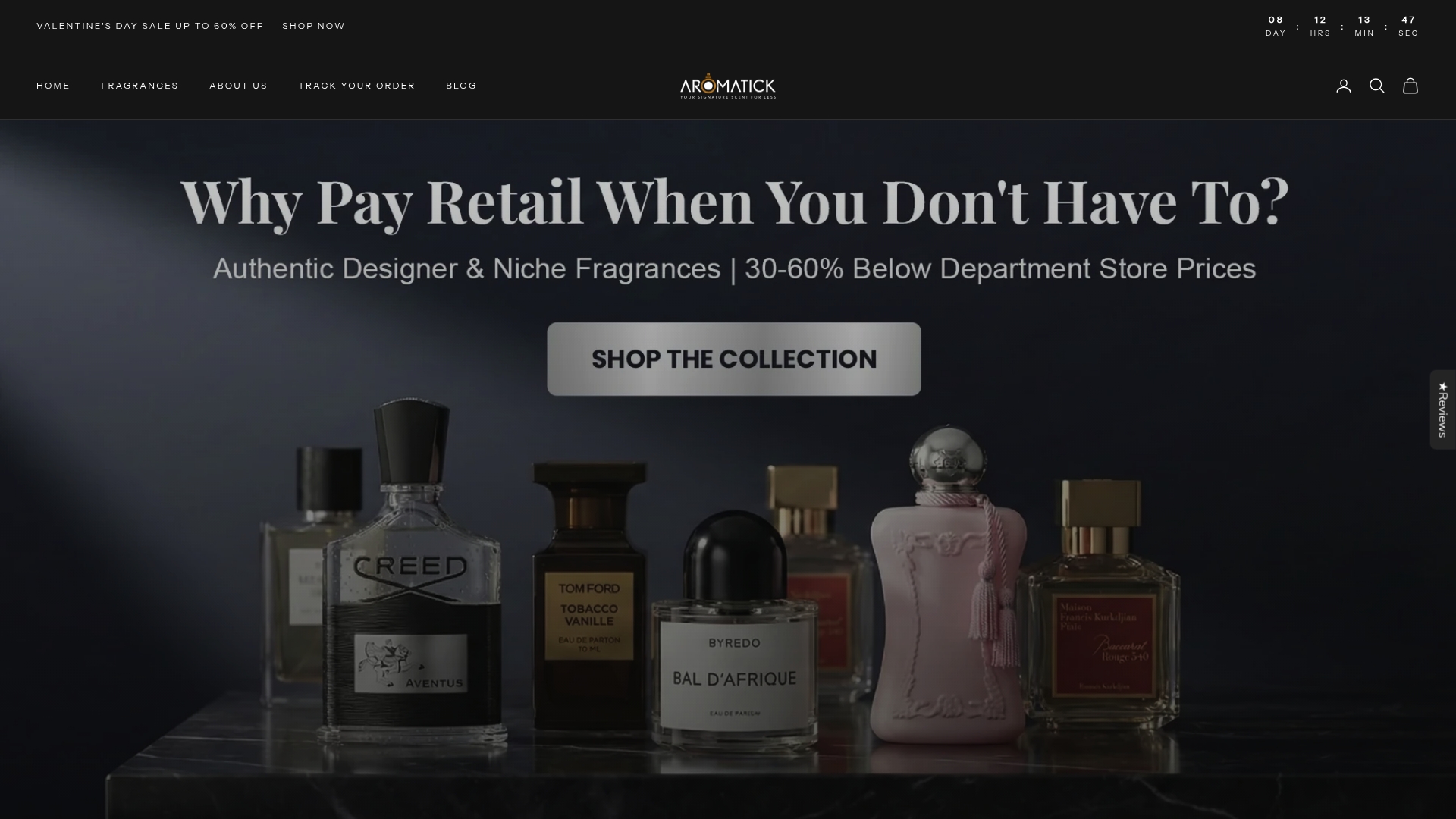
The designer fragrance collection at Aromatick includes hundreds of authentic perfumes and colognes for men and women, discounted 30–60% off MSRP. Brands like Hugo Boss are available through the Hugo Boss collection, and fragrance enthusiasts looking for something beyond mainstream designer releases can explore the niche fragrance collection for authenticated luxury at accessible prices. Every order ships free, and every product comes with Aromatick’s authenticity guarantee.
FAQ
Are discounted designer fragrances online authentic?
Yes. Reputable online discounters source authentic products through the independent market, which includes distributor surplus, discontinued stock, and parallel imports. Buying independent market fragrances is legal and has been standard industry practice for decades.
Why is the same perfume cheaper online than at a department store?
Online discounters carry far lower overhead than physical retail stores. No rent, no staffed counters, and no in-store marketing costs mean the savings transfer directly to the consumer, often 20–50% below the department store price.
How do I know if an online fragrance deal is too good to be true?
Authentic discounts on reputable sites typically run 20–50% below MSRP. A current, in-demand fragrance listed at 70–80% off is a strong indicator of a counterfeit. Always buy from sites that explicitly guarantee authenticity and provide full product details including size and concentration.
Why can’t I find a new release discounted right away?
New releases start near MSRP because initial demand is high and no surplus exists yet. Discounts appear after supply stabilizes and overstock enters secondary channels, which typically takes 6–12 months after launch.
What is a fragrance tester, and is it worth buying?
A tester is the same fragrance as the retail version, produced for display or sampling purposes, and sold in plain or unboxed packaging. Reputable discounters label them clearly, and they typically cost 10–20% less than the already discounted retail bottle, making them one of the best ways to buy designer scents cheap.

Leave a comment
This site is protected by hCaptcha and the hCaptcha Privacy Policy and Terms of Service apply.