
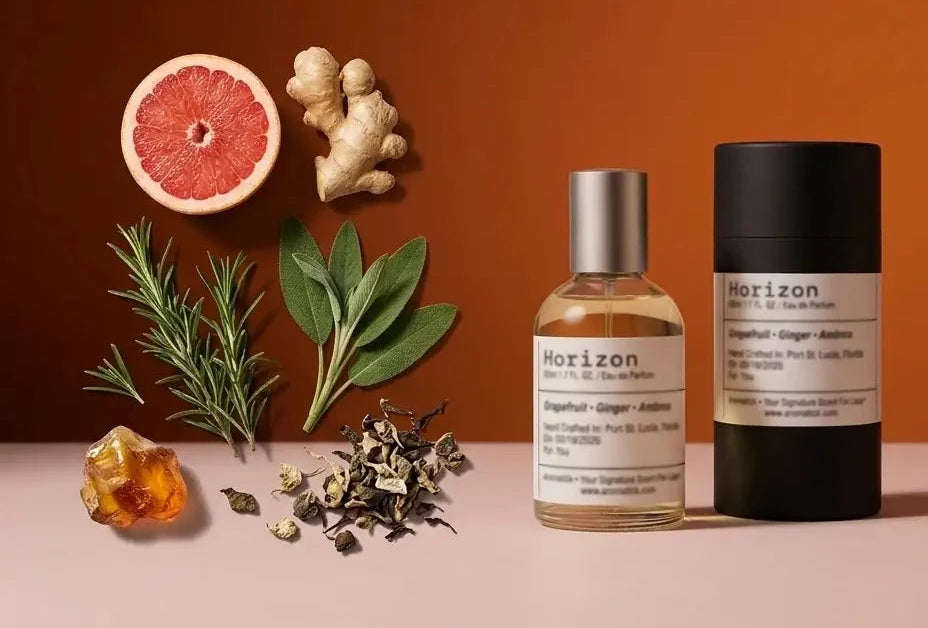
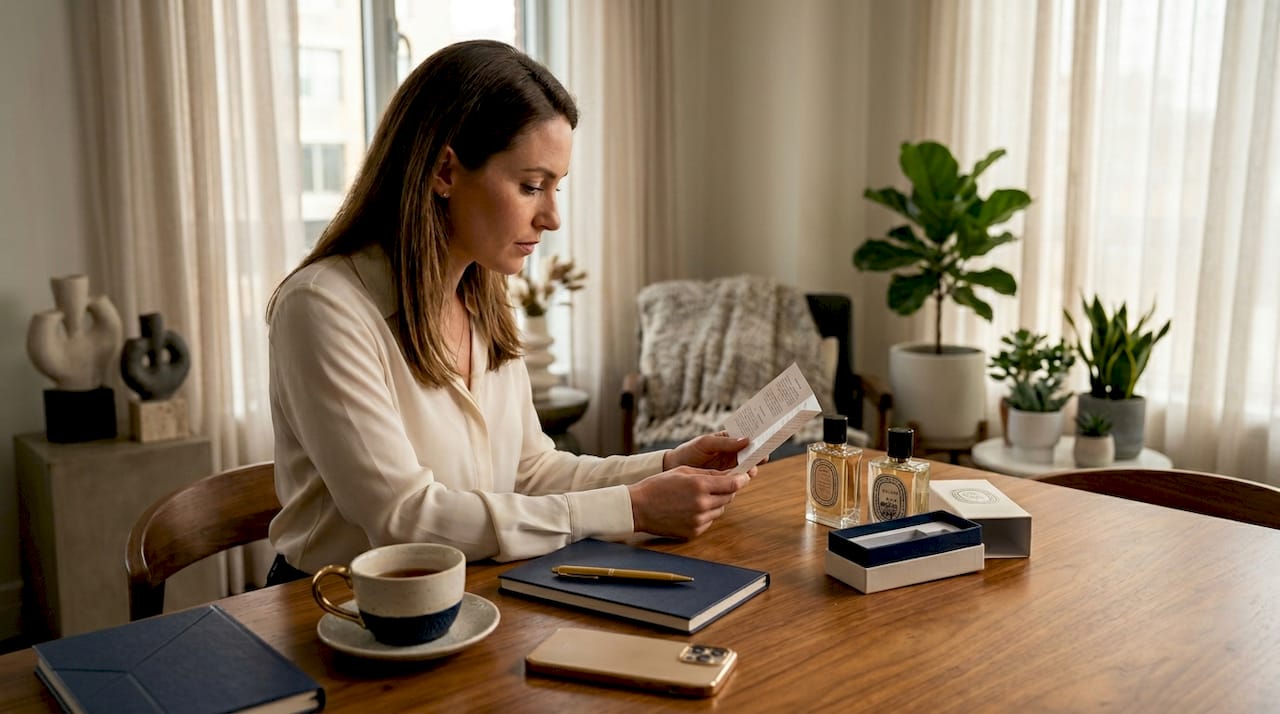
Your Luxury Perfume Buying Checklist for 2026
TL;DR:
- A luxury perfume buying checklist provides a framework for evaluating authenticity, notes, and skin testing to ensure a deliberate purchase. Testing on skin for 4-6 hours and limiting sample sessions help accurately assess a fragrance’s development and personal fit. Authenticity verification through batch codes and packaging ensures genuine products, whether purchasing from designer or niche brands.
Buying a luxury perfume should feel exciting. Too often, it becomes overwhelming. The choices are endless, the marketing is loud, and the risk of spending $200 on a scent that smells nothing like you expected is very real. A structured luxury perfume buying checklist changes that. It gives you a framework to evaluate authenticity, understand fragrance notes, test properly, and match a scent to your personal style before you commit. This guide walks you through every step, so your next purchase feels deliberate and satisfying rather than rushed or regrettable.
Table of Contents
- Key takeaways
- 1. Luxury perfume buying checklist: start with concentration
- 2. Evaluate fragrance notes as a structure, not a single impression
- 3. Understand how your skin chemistry affects the result
- 4. How to test luxury perfumes before buying
- 5. Matching fragrance families to your personal style
- 6. Designer vs. niche: comparing your options
- 7. Verifying authenticity: a non-negotiable step
- 8. Making the final purchase with confidence
- My honest take on buying luxury perfumes
- Explore authentic luxury fragrances at Aromatick
- FAQ
Key takeaways
| Point | Details |
|---|---|
| Check concentration first | EDP and extrait last significantly longer than EDT; match concentration to your longevity needs. |
| Test on skin, not paper | Skin chemistry transforms a fragrance; always wear it for several hours before deciding. |
| Limit testing sessions | Testing more than 3-4 fragrances at once leads to olfactory fatigue and poor judgment. |
| Verify authenticity before buying | Authorized retailers and batch code checks protect you from convincing counterfeits. |
| Samples save money | Trying minis and decants before buying a full bottle prevents costly buyer’s remorse. |
1. Luxury perfume buying checklist: start with concentration
The first item on any luxury perfume buying checklist is understanding fragrance concentration. It determines how long a scent lasts, how far it projects, and how much you actually need to apply.
Eau de Toilette (EDT) typically contains 5 to 15 percent fragrance oil and lasts around 3 to 4 hours. Eau de Parfum (EDP) runs stronger. EDP lasts 6 to 8 hours on skin and projects more richly. Parfum and extrait de parfum sit at the top, with 20 to 30 percent oil concentration for the deepest, most complex sillage. If you want a scent that carries through a full workday or evening without reapplication, EDP or extrait is where to look.
Pro Tip: If you are new to buying high-end perfumes, start with an EDP before committing to an extrait. The price difference is meaningful, and the longevity gap may not matter to your lifestyle.
2. Evaluate fragrance notes as a structure, not a single impression
Most people smell a perfume, like the opening burst, and buy it immediately. That is a mistake. Quality perfumes have evolving notes that change over hours, moving through top, heart, and base phases. Cheap or synthetic fragrances stay flat. Real luxury does not.
Top notes are what you smell in the first 5 to 15 minutes. They are usually bright and volatile, often citrus, light florals, or green accords. Heart notes emerge after that and carry the character of the fragrance. Base notes are the foundation. Warm, woody, musky, or resinous materials that linger on your skin for hours. Experts agree that scent structure matters more than any single marketing claim or dominant note. When you evaluate a perfume, you are judging the whole arc, not just the first impression.
3. Understand how your skin chemistry affects the result
This point gets overlooked constantly. The same perfume will smell genuinely different on two people. Skin pH, moisture level, and even diet all influence how fragrance molecules interact with your body. A creamy, warm musk that smells lush on one person may turn flat and powdery on another.
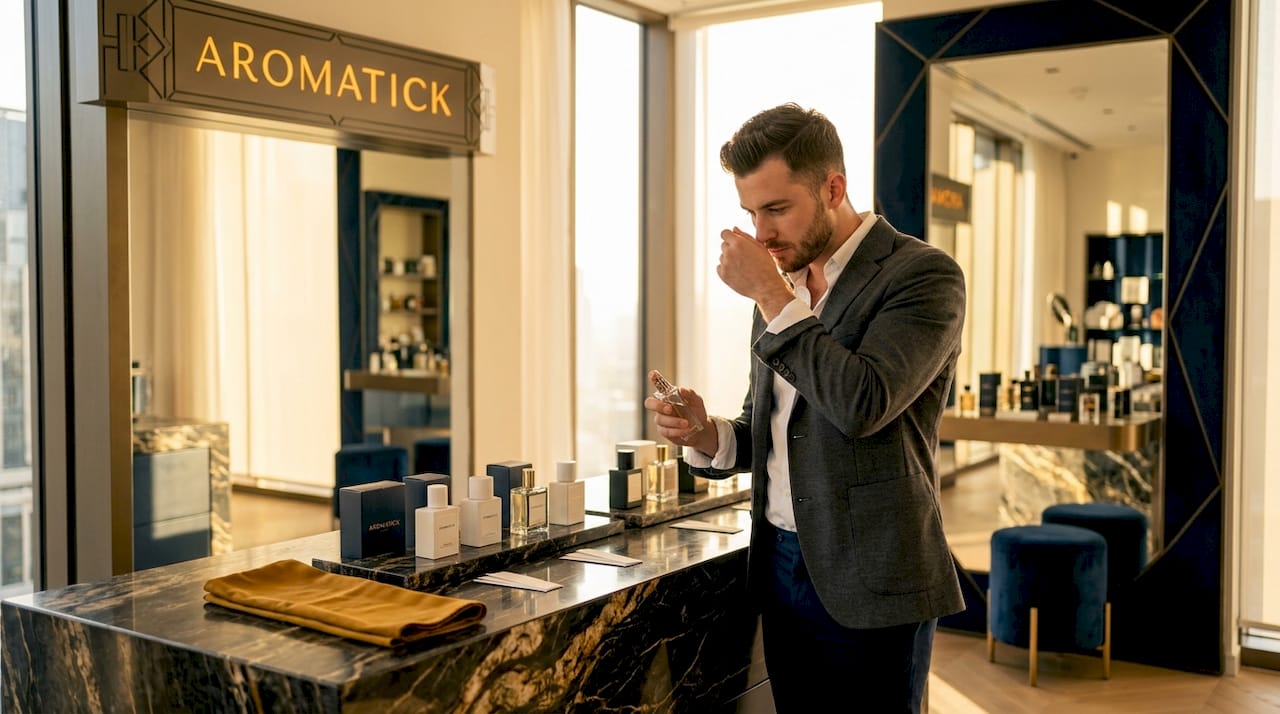
This is why sampling on paper is nearly useless as a final test. Paper tells you what the fragrance contains. Your skin tells you what you will actually wear. The only reliable method is application on clean, unscented skin followed by real time in the real world, not just a sniff at the counter.
4. How to test luxury perfumes before buying
Testing is a skill, and most people do it wrong. Follow these steps to get an accurate read on any fragrance.
- Apply to clean, unscented skin. Fragrance-free body wash before you go shopping removes competing scents that would distort the result.
- Spray on pulse points and let it dry naturally. Rubbing wrists after application crushes top notes and disrupts fragrance development. Spray and walk away.
- Wait 4 to 6 hours. Waiting the full development period before judging a scent is the most important testing rule most buyers ignore. What you love at hour one may bore you at hour four. What seems unremarkable at first may bloom into something exceptional.
- Limit testing to 3 or 4 fragrances per session. Olfactory fatigue sets in quickly after too many samples, making every scent blend into the same indistinct blur.
- Reset your nose with coffee beans or plain air. Coffee beans are a common tool in fragrance counters. A few slow sniffs clear your palate between samples.
- Take notes. Write down your impressions at the 15-minute mark, the 1-hour mark, and the 4-hour mark. Building a personal fragrance profile this way gives you a reference you can return to rather than relying on memory.
Pro Tip: Wear a shortlisted fragrance on a normal day before buying. Temperature, movement, and even stress affect how a scent performs, and you want to know how it behaves during your actual life, not a quiet department store.
5. Matching fragrance families to your personal style
Fragrance families act as a scent map, helping you narrow choices by mood, projection, and wearability rather than guessing in the dark. Here are the major families and who tends to connect with them:
- Floral: Rose, jasmine, peony, iris. Romantic, classic, and broadly wearable. The most popular family globally.
- Woody: Sandalwood, cedar, vetiver, oud. Grounded, warm, and often associated with quiet authority.
- Oriental/Amber: Vanilla, benzoin, labdanum, resins. Rich, sensual, and built for evenings or cold weather.
- Fresh/Citrus: Bergamot, lemon, grapefruit, marine accords. Clean, energetic, and suited to warm climates and active days.
- Gourmand: Caramel, chocolate, tonka, coffee. Edible and comforting, popular in niche perfumery.
- Aromatic/Fougère: Lavender, herbs, coumarin. Traditional masculine territory, though increasingly gender-neutral.
- Spicy/Chypre: Cinnamon, pepper, oakmoss, patchouli. Complex and distinctive, favored by people who want an immediate signature.
Season and climate shape which family performs best. Heavy orientals and thick woods feel suffocating in summer heat. Fresh and green accords can feel thin and fleeting in cold weather. Matching the family to the season is not a rule, but it is a reliable guide.
6. Designer vs. niche: comparing your options
When buying high-end perfumes, one of the first forks in the road is choosing between designer and niche. Both can be exceptional. They serve different priorities.
| Criteria | Designer | Niche |
|---|---|---|
| Price range | $80 to $300+ | $150 to $600+ |
| Availability | Widely available | Limited distribution |
| Scent complexity | Accessible, broadly appealing | Often unconventional, layered |
| Longevity (EDP) | 5 to 8 hours average | Often 6 to 10 hours |
| Authenticity risk | Moderate (heavy counterfeiting) | Lower (less incentive to fake) |
| Exclusivity | Low to moderate | High |
Designer houses like Chanel, Dior, and Tom Ford produce excellent fragrances backed by skilled perfumers. Their goal is broad appeal, which means the scents are refined but rarely challenging. Niche houses such as Initio Parfums Privés, Maison Francis Kurkdjian, or Amouage prioritize artistic expression. They use rare, unusual materials and push the structure further. If you want to smell like everyone else at a party is not wearing the same scent, niche is usually the answer.
7. Verifying authenticity: a non-negotiable step
Counterfeit luxury fragrances are a serious problem. Some fakes are convincing enough to pass a visual inspection. The way to protect yourself is systematic, not instinctive.
Authorized retailers and batch code verification are your two most reliable tools. Sites like CheckFresh and BeautySleuth let you enter a batch code from the bottle and confirm the production date and legitimacy. Packaging tells a story too. Authentic bottles have precise engravings, evenly applied labels, and tight spray mechanisms. Fakes often feel light, have misspelled text, or show uneven printing. Check Aromatick’s guide on spotting authentic scents for a complete breakdown of the visual and olfactory red flags to watch for.
8. Making the final purchase with confidence
You have tested, compared, and verified. Now comes the final decision. A few practical steps make this moment much less stressful.
- Most retailers do not accept returns on used fragrances. Read the return policy before you buy, especially online.
- Luxury perfumes range from $100 to $500 and above, and price does not always mean better quality. A $130 fragrance can outperform a $400 one on your skin.
- Use sample sets, travel sizes, and decants as a low-risk first step with any new brand or house.
- Store your perfumes away from direct light, heat, and humidity. A cool, dark drawer or cabinet preserves the fragrance oil and extends the life of the bottle considerably.
- Buy from sellers with transparent authenticity policies and clear sourcing. Aromatick’s guide to safe luxury perfume purchases walks through how to evaluate discount retailers without sacrificing confidence.
Pro Tip: If a deal seems too good to be true on a full bottle of a high-demand fragrance, trust that instinct. Steep discounts from unknown sellers are the most common entry point for counterfeits.
My honest take on buying luxury perfumes
I have watched a lot of people make the same mistakes. They smell something on a friend, buy the full bottle immediately, and then discover it smells completely different on their own skin. Or they chase whatever fragrance is trending on social media that month and end up with something that feels borrowed rather than personal.
What I have found, after years of working with fragrance enthusiasts and casual buyers alike, is that patience separates the satisfied buyers from the regretful ones. The people who take a sample home, wear it twice, sleep on it, and then decide almost always end up happier with their purchase. The people who buy on impulse at the counter, flattered by the packaging and the salesperson’s confidence, often end up with a beautiful bottle that sits unused.
My other strong opinion: stop treating gender labels as a buying filter. Some of the most beautiful florals I have recommended have gone to men who connected deeply with them. Some of the most compelling woods and leathers have resonated far more with women than with men. The fragrance family and your skin chemistry matter. The label on the box does not.
Niche perfumery is worth exploring, but do not let the prestige of obscurity drive the decision. I have seen people buy expensive niche fragrances specifically because no one else would recognize them, only to realize the scent did not actually make them feel anything. Buy what resonates with you. That is the only criterion that matters on day 30 of wearing it.
— Rodney
Explore authentic luxury fragrances at Aromatick
If this checklist has clarified what you are looking for, Aromatick is a practical next step. The site carries a curated selection of authentic designer and niche fragrances at discounts of 30 to 60 percent off retail, with no compromise on authenticity.
Whether you are building your first serious collection or adding a specific scent you have already tested and loved, Aromatick’s designer fragrance collection covers the major houses at prices that make a full bottle feel accessible. If you are drawn to the niche side after reading this guide, the niche fragrance collection includes distinctive options for men and women across every major fragrance family. For women specifically looking for signature scents, the women’s designer perfume collection brings together some of the most sought-after releases with full authenticity guarantees.
FAQ
What does a luxury perfume buying checklist include?
A luxury perfume buying checklist covers fragrance concentration, note structure evaluation, skin testing protocols, authenticity verification, and budget strategy. It helps buyers make deliberate decisions rather than impulse purchases.
How long should you test a perfume before buying?
Wait 4 to 6 hours after applying a perfume to clean skin before making a final decision. This allows the full arc of top, heart, and base notes to develop and gives you an accurate picture of how the scent wears on your body.
How can you tell if a luxury perfume is authentic?
Verify batch codes on databases like CheckFresh, buy from authorized retailers, and examine packaging for precise printing, consistent labeling, and quality bottle construction. Authentic fragrances also have clearly evolving scent structures rather than flat, one-dimensional smells.
Is an EDP better than an EDT for luxury perfumes?
EDP offers stronger longevity and projection, typically lasting 6 to 8 hours, making it the better choice for most buyers who want all-day wear. EDT is lighter, more affordable, and suited to warm climates or casual daytime use.
What is the difference between designer and niche perfumes?
Designer perfumes aim for broad appeal and are widely available, while niche perfumes prioritize artistic complexity and use more unusual materials. Niche options tend to be less counterfeited and more distinctive, but both categories can deliver outstanding quality at their respective price points.

Leave a comment
This site is protected by hCaptcha and the hCaptcha Privacy Policy and Terms of Service apply.