
Fragrance Shopping Tips 2026: Buy Smarter, Not More
TL;DR:
- Smart fragrance shopping in 2026 involves a four-step buying process: identifying scent family, occasion, concentration, and testing on skin. This structured approach reduces buyer regret and helps build a versatile fragrance wardrobe suited to climate and lifestyle. Verifying authenticity and using sampling protocols ensure satisfaction and value in every purchase.
Smart fragrance shopping in 2026 is defined by a four-step buying framework: scent family, occasion, concentration, and wear testing. Buyers who skip any one of these steps routinely spend $150 on a bottle they stop wearing within a month. The global fragrance market now includes thousands of niche and designer options, making random browsing a reliable path to regret. These fragrance shopping tips 2026 cut through that noise with a structured, experience-backed approach that protects your budget and sharpens your taste.
1. Start with your scent family before anything else
The five main fragrance families are fresh, floral, woody, gourmand, and oriental. Knowing which family appeals to you eliminates roughly 80% of irrelevant options before you spend a dollar. This is the single most efficient move in any perfume buying strategy.
Each family suits different personalities and contexts. Fresh scents (citrus, aquatic, green) work well in warm weather and professional settings. Florals range from light and powdery to rich and heady, covering everything from office wear to formal evenings. Woody and oriental families tend to project more and last longer, making them better suited to cooler climates and evening wear.
- Fresh: Clean, citrus, aquatic. Best for daytime, warm weather, and office use.
- Floral: Light to rich. Versatile across occasions depending on intensity.
- Woody: Sandalwood, cedar, vetiver. Strong projection, ideal for fall and winter.
- Gourmand: Vanilla, caramel, tonka. Warm and cozy, best for casual or evening wear.
- Oriental: Spicy, resinous, amber-heavy. Long-lasting, suited for evenings and cold climates.
Pro Tip: Start with a discovery set that spans at least three families. Wearing each for a full day reveals which family fits your skin chemistry and lifestyle before you commit to a full bottle.
2. Match concentration to your longevity needs
Fragrance concentration determines how long a scent lasts and how far it projects. Choosing the wrong concentration for your setting is one of the most common and most avoidable mistakes in perfume buying.
The three main types break down clearly:
- Eau de Toilette (EDT): Lighter, fresher wear lasting 3–5 hours. Best for daytime, casual use, and warm weather.
- Eau de Parfum (EDP): Deeper and longer-lasting at 6–8 hours. Suits work environments and evening outings.
- Parfum (Extrait): The most concentrated form, lasting 8+ hours with strong projection. Reserved for special occasions or cold-weather wear.
Pricing correlates directly with concentration. Parfum costs more per milliliter than EDT, but the longevity often means fewer applications per day. For buyers focused on value, an EDP frequently hits the best balance between cost, longevity, and versatility. A common misconception is that higher concentration always means better quality. Concentration reflects intensity and wear time, not the quality of the formula.
3. Understand occasion before you shop
Occasion matching is the second filter that narrows your choices after scent family. A fragrance that performs beautifully at a Saturday dinner can feel aggressive in a Tuesday morning meeting. Buying without this context leads to bottles that sit unused.
Think in four categories: daytime casual, professional, evening social, and formal or special events. Daytime and professional settings favor lighter, cleaner scents with moderate projection. Evening and formal occasions support richer, more complex fragrances with stronger sillage. Seasonal occasion also matters. A heavy oud-based oriental worn in a humid July office is a different experience than the same scent worn at a winter gala.
Pro Tip: Map your fragrance needs against your actual weekly schedule. If 70% of your week is office-based, prioritize clean, moderate-projection EDTs before investing in evening-wear Parfums.
4. Test on skin, not on paper
Fragrance drydown is the scent remaining after several hours on skin, and it matters far more than the first spray. Top notes are designed for immediate impact. They fade within 20–30 minutes, leaving the heart and base notes to define the actual wear experience.
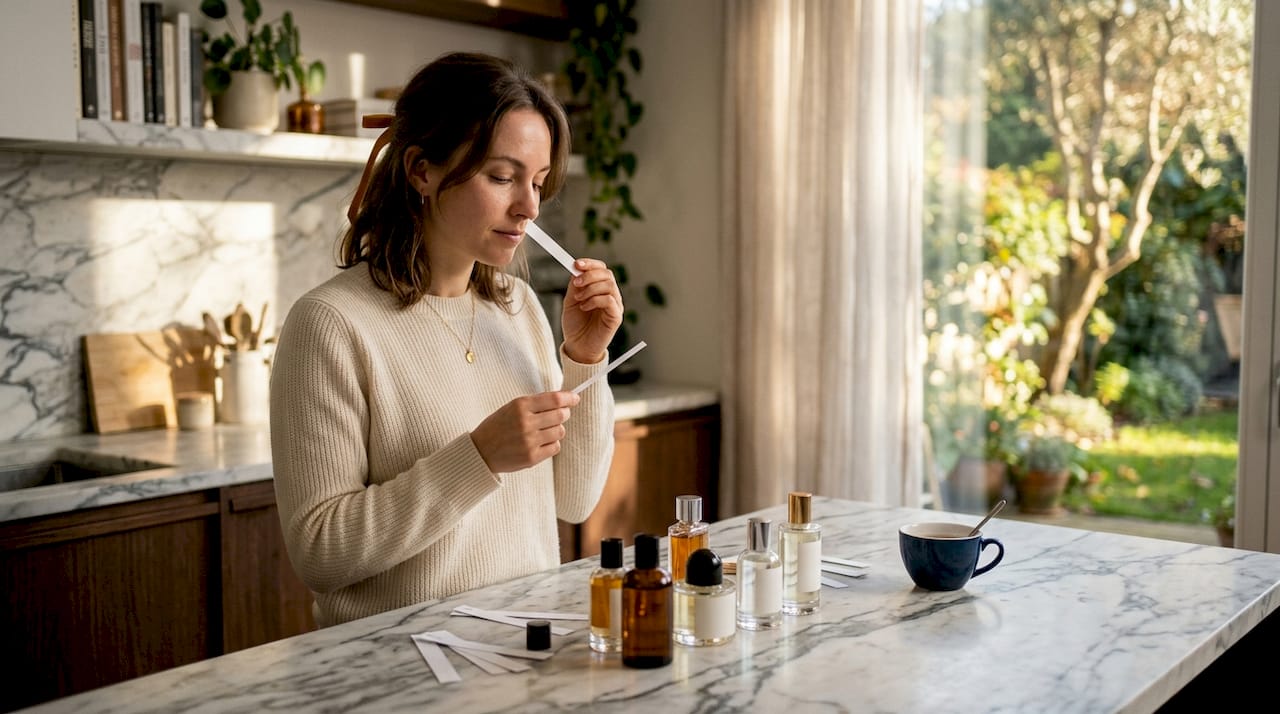
Paper strips only capture top notes. Skin chemistry, body temperature, and natural oils all alter how a fragrance develops. Two people wearing the same perfume can smell noticeably different after two hours. This is why wear testing on your own skin is non-negotiable before buying a full bottle.
The recommended sampling protocol is straightforward:
- Spray on clean, unscented skin (wrist or inner elbow).
- Do not rub. Rubbing breaks down the molecular structure and distorts the drydown.
- Check at 30 minutes, 2 hours, and 4–8 hours.
- Test in the environment where you plan to wear it (office, outdoors, evening).
- Repeat on a second day before deciding.
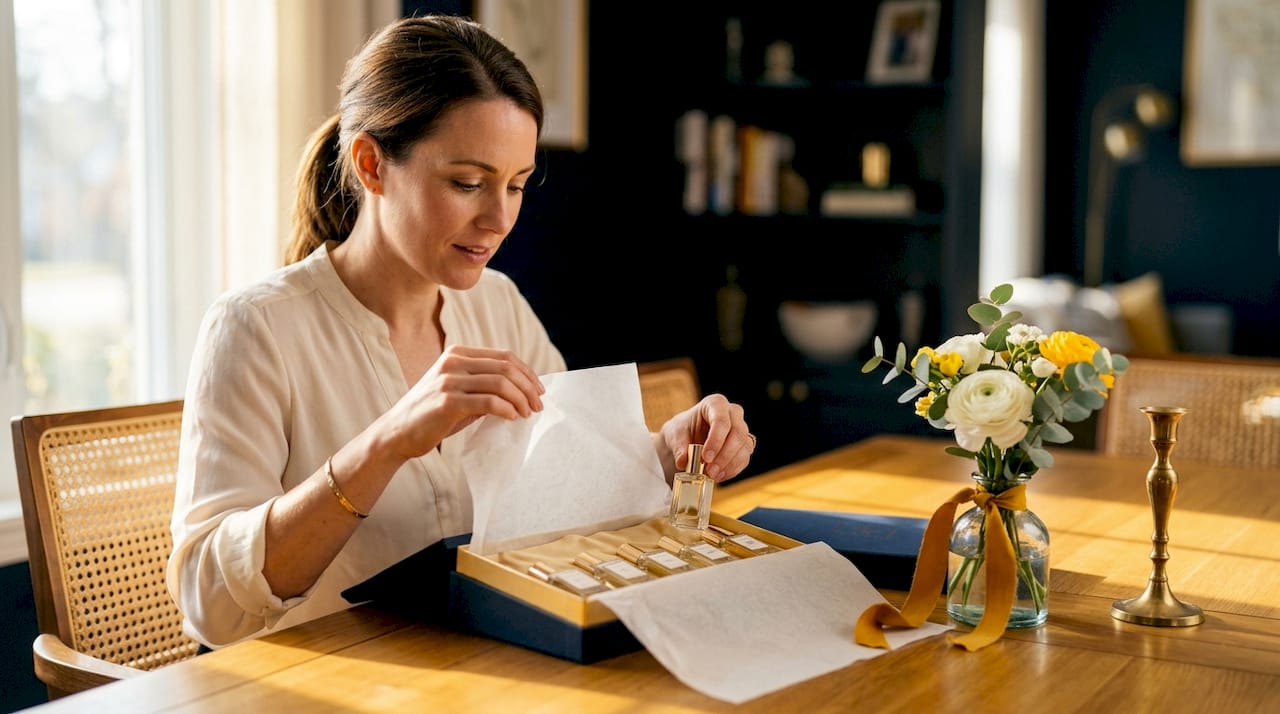
Discovery sets and decants typically cost $5–$25, compared to full bottles ranging from $90–$300. That cost difference makes sampling the most financially sound step in any fragrance purchase.
5. Apply the 70-point blind buy safety rule
Blind buying, purchasing a full bottle without sampling, carries real financial risk. The 70-point blind buy rule offers a structured way to manage that risk. Only buy blind if a fragrance scores 70 or higher across three criteria: performance (longevity and projection), versatility (occasion and season range), and compliment potential (based on reviews and community feedback).
Below that threshold, always sample first. Community fragrance forums and review platforms provide detailed performance data that feeds directly into this scoring. A fragrance with glowing reviews for longevity but poor versatility scores might rate 65, making it a sample-first candidate rather than a blind buy.
This rule works especially well for niche fragrances, where prices are higher and return policies are less forgiving. Applying it consistently prevents the most expensive category of buyer regret.
6. Factor climate and season into every purchase
Climate directly affects how a fragrance behaves on skin. Heat increases volatility, which amplifies projection and can make heavy scents overwhelming. Cold reduces projection, requiring deeper, more resinous formulas to achieve the same presence.
| Season | Recommended families | Concentration |
|---|---|---|
| Summer | Fresh, light floral, aquatic | EDT |
| Spring | Floral, green, light woody | EDT or EDP |
| Fall | Woody, spicy, warm oriental | EDP |
| Winter | Oriental, resinous, gourmand | EDP or Parfum |
Humidity adds another variable. High humidity amplifies sillage, meaning a fragrance that projects moderately in dry conditions can become intrusive in a humid environment. Travelers should pack lighter concentrations for tropical destinations and richer formulas for cold, dry climates.
- In summer heat, apply EDT to pulse points rather than clothing to control intensity.
- In winter, apply Parfum to skin rather than fabric for better warmth-activated diffusion.
- In humid coastal climates, reduce application by one spray to avoid over-projection.
7. Verify authenticity before every purchase
Safe fragrance shopping requires verifying seller reputation, comparing prices logically, and budgeting for samples to reduce blind buy risks. Counterfeit fragrances are a real market problem, particularly for high-demand designer and niche bottles.
Key authenticity checks:
- Batch codes: Every authentic bottle carries a batch code on the box and bottle. Cross-reference it with a batch verification tool.
- Pricing logic: If a $250 niche fragrance is listed at $60 with no explanation, treat it as a red flag. Legitimate discounts from authorized retailers typically range from 20%–60% off retail.
- Seller transparency: Authorized retailers list their sourcing clearly. Look for return policies, authenticity guarantees, and customer service contact details.
- Packaging quality: Authentic fragrances have consistent font, tight cellophane wrap, and no spelling errors on the box.
Budgeting for samples before committing to full bottles is both a financial and an authenticity strategy. Sampling from a trusted seller confirms both the scent and the product’s legitimacy before you spend at full-bottle prices.
8. Build a wardrobe, not a signature scent
Fragrance shoppers in 2026 act like editors, focusing on seasonal fit, versatility, and skin chemistry rather than chasing a single signature scent. Building a functional fragrance wardrobe is the approach that delivers the most satisfaction over time.
A practical starting wardrobe covers four slots: one fresh or light floral for daytime and warm weather, one woody or spicy EDP for cooler months and evenings, one clean or aquatic option for professional settings, and one richer oriental or gourmand for special occasions. This four-bottle structure handles most situations without overlap or waste.
Chasing trends or buying based on hype alone fills a shelf with bottles that don’t fit your life. The most common buyer error is seeking one perfect fragrance rather than building a versatile collection that adapts to climate and occasion. A wardrobe approach eliminates that trap entirely.
Key Takeaways
The most effective fragrance buying strategy in 2026 combines scent family identification, concentration matching, rigorous skin testing, and climate awareness to maximize satisfaction and minimize wasted spend.
| Point | Details |
|---|---|
| Test on skin, not paper | Drydown over 4–8 hours reveals the true scent, not the first spray. |
| Match concentration to occasion | EDT for daytime and warm weather; EDP or Parfum for evenings and cold climates. |
| Use the 70-point rule for blind buys | Only skip sampling if a fragrance scores 70+ on performance, versatility, and compliment potential. |
| Build a four-slot wardrobe | Cover daytime, professional, evening, and seasonal needs before buying beyond four bottles. |
| Verify authenticity every time | Check batch codes, pricing logic, and seller transparency before purchasing online. |
Why I stopped chasing the perfect perfume
I spent three years buying bottles based on hype and top-note impressions at counters. The result was a shelf of expensive fragrances I wore twice. The turning point was accepting that no single fragrance covers every context, and that skin chemistry makes every review only partially relevant to your own experience.
What actually changed my buying habits was testing in real conditions. I started wearing samples to work, to the gym, and on weekends before committing. I noticed that two fragrances I nearly dismissed on paper strips became favorites after a full day on skin. The reverse was also true. A highly rated niche fragrance I blind-bought at $220 smelled like pencil shavings on my skin after two hours.
Climate was the other revelation. I live somewhere with hot, humid summers and cold winters. The same woody oriental I love in december becomes suffocating in july. Building a seasonal wardrobe rather than forcing one fragrance year-round made every scent I own feel intentional and well-used. The must-have fragrances guide for 2026 helped me think through seasonal slots more systematically.
The advice I’d give anyone starting out: buy fewer bottles, sample more aggressively, and treat your fragrance collection like a capsule wardrobe. Every bottle should earn its place.
— Rodney
Authentic fragrances at real discounts, backed by Aromatick
Applying these buying strategies works best when you have access to authentic products at prices that leave room for sampling and experimentation.
Aromatick carries a wide selection of authentic designer fragrances at 30%–60% off retail, sourced directly to eliminate the overhead costs of traditional retail. Every bottle is genuine, and the platform backs purchases with authenticity guarantees, free shipping, and secure payment options. For shoppers ready to build a niche fragrance wardrobe, Aromatick’s curated collections make it straightforward to apply the four-slot wardrobe approach without overpaying. Browse by occasion, scent family, or concentration to put these tips into immediate practice.
FAQ
What is the best way to test a fragrance before buying?
Spray on clean skin and assess the drydown at 30 minutes, 2 hours, and 4–8 hours. Discovery sets and decants costing $5–$25 make this practical before committing to a full bottle.
How do I choose between EDT and EDP?
EDT lasts 3–5 hours and suits daytime and warm weather. EDP lasts 6–8 hours and works better for evenings, cooler climates, and longer events.
What is the 70-point blind buy rule?
Only purchase a fragrance without sampling if it scores 70 or higher across performance, versatility, and compliment potential. Below that threshold, always sample first to avoid regret.
How does climate affect which fragrance to wear?
Heat increases volatility, making heavy scents overwhelming, while cold reduces projection and favors deeper, resinous formulas. Matching your fragrance to your climate is as important as matching it to your personal taste.
How many fragrances should a beginner own?
A four-bottle wardrobe covering daytime, professional, evening, and seasonal needs handles most situations. Start there before expanding, and use sampling to fill each slot deliberately.

Leave a comment
This site is protected by hCaptcha and the hCaptcha Privacy Policy and Terms of Service apply.