
How to Store Perfumes and Preserve Scent Quality
TL;DR:
- Proper perfume storage involves keeping bottles in cool, dark, and dry conditions to preserve scent quality and extend lifespan. Storing bottles upright in original boxes within a stable environment prevents oxidation, light damage, and hydrolysis, which degrade fragrances over time. Regular handling habits, such as recapping immediately and avoiding bathroom storage, further protect the perfume’s integrity.
Effective perfume storage is defined as keeping fragrances in cool, dark, and dry conditions with minimal temperature fluctuation and limited oxygen exposure to maintain their original scent and extend their lifespan. Knowing how to store perfumes correctly is the difference between a fragrance that lasts years and one that turns flat within months. Most fragrances remain stable for 12–36 months after opening when stored properly. That window shrinks fast with poor habits. The core principle is simple: stable, protected conditions preserve the delicate aromatic compounds that give each perfume its character.
What are the ideal conditions for perfume storage?
The single most important factor in preserving fragrance is controlling the environment around the bottle. Perfume is a complex mixture of aromatic molecules, alcohol, and fixatives. Each of those components reacts to heat, light, humidity, and air in ways that degrade scent quality over time.
Temperature
Cool, stable temperatures protect fragrance molecules from breaking down. The ideal range sits around 55–70°F (12–21°C). Avoid storing perfumes near radiators, heating vents, or sunny windowsills. Fragrance molecule breakdown starts with the most volatile top notes, particularly citrus and florals, which are highly sensitive to heat. Losing those top notes changes how a perfume opens on your skin.
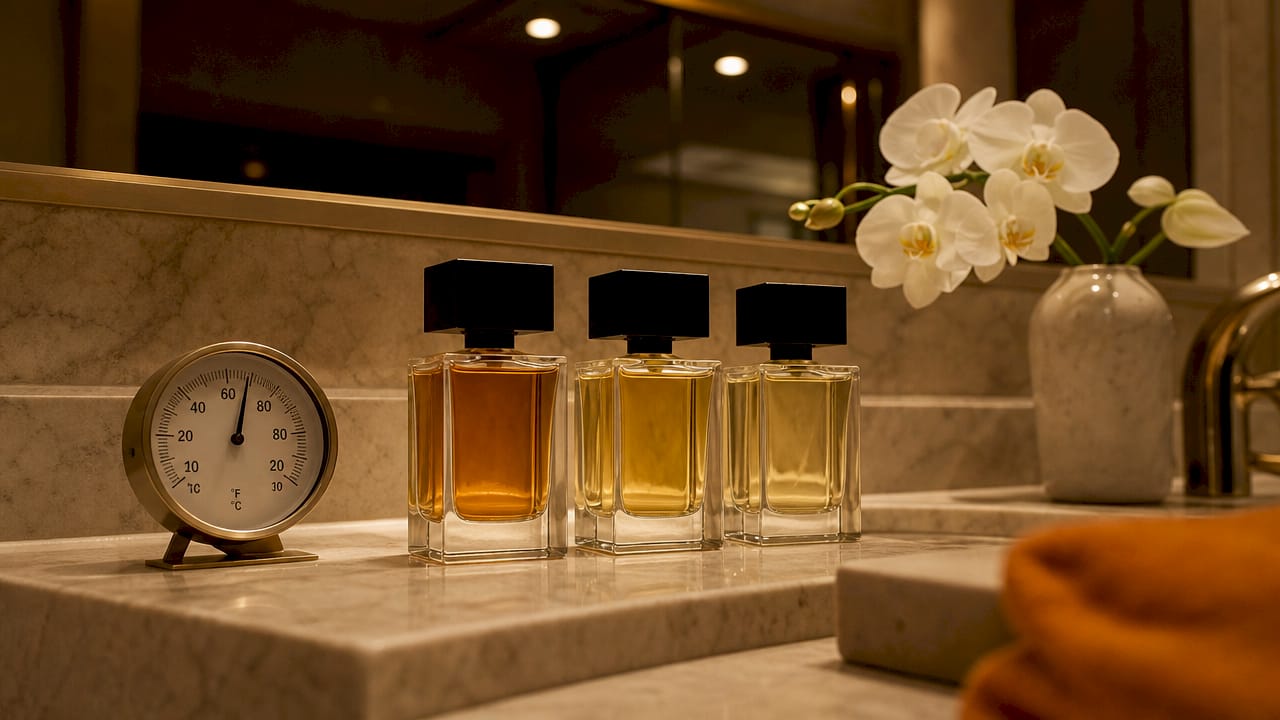
Temperature fluctuations are just as damaging as sustained heat. A bottle that cycles between warm and cool repeatedly will age faster than one kept at a consistent temperature. A bedroom closet or drawer maintains far more stable conditions than a bathroom shelf.
Light exposure
UV light is one of the fastest ways to ruin a fragrance. Direct sunlight breaks down the chemical bonds in aromatic compounds, altering both color and scent. Original packaging offers vital protection against UV light and temperature changes. Cardboard boxes are not just decorative. They act as a physical barrier that extends scent integrity for long-term storage.
If you have already discarded the box, store the bottle inside a closed drawer or opaque container. Colored glass bottles offer some UV protection, but clear glass provides almost none.
Humidity and air exposure
High humidity triggers a chemical process called hydrolysis, where water molecules react with fragrance compounds and break them apart. Improper storage in humid bathrooms causes degradation within 3–6 months. That is a significant loss for a quality fragrance. Low humidity environments, like a bedroom or a dedicated storage cabinet, protect the scent from this reaction.
Air exposure causes oxidation, which is a separate but equally damaging process. Keeping the cap tightly sealed after every use limits the amount of oxygen that contacts the liquid. Even a small gap in the seal allows oxidation to accumulate over time.
Pro Tip: Keep perfumes in their original boxes inside a cool bedroom drawer. This single habit addresses temperature, light, and humidity all at once.
How should you handle and position perfume bottles?
Proper physical handling matters as much as the storage environment. The way you hold, position, and recap a bottle affects how long the fragrance inside stays true to its original character.
-
Store bottles upright. Keeping a bottle upright prevents the liquid from making prolonged contact with the cap fittings, which can degrade rubber seals and cause slow leakage. An upright position also reduces the surface area of perfume exposed to any air pocket inside the bottle.
-
Replace the cap immediately after use. Every second the bottle sits open, oxygen enters and begins the oxidation process. Make recapping an automatic habit, not an afterthought.
-
Never shake the bottle. Shaking perfume bottles introduces oxygen and accelerates scent oxidation. Perfume does not need to be mixed before use. Shaking is one of the most common and avoidable mistakes collectors make.
-
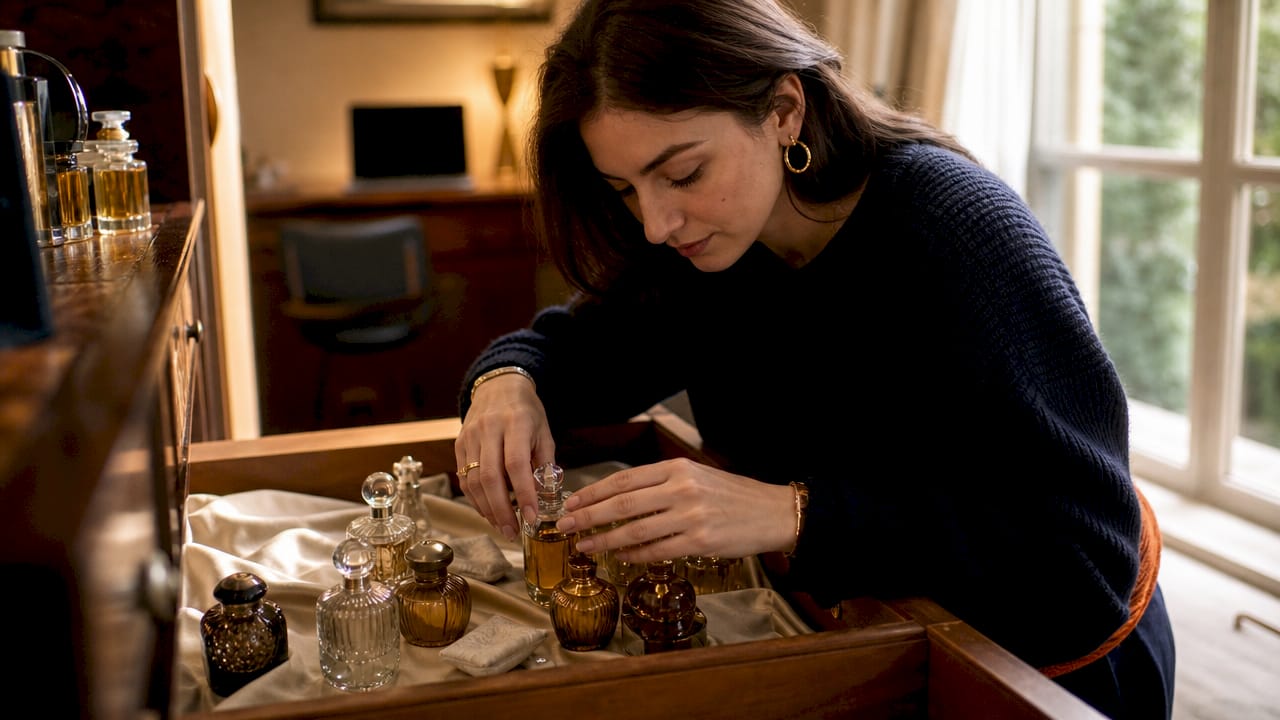
Keep bottles in their original boxes. Original boxes shield perfume bottles from both UV light and physical damage. For collectors and regular users alike, preserving the box is worth the extra shelf space.
-
Use travel atomizers with spray mechanisms. Travel bottles with spray atomizers are preferable to bulb atomizers because their airtight seals minimize oxidation during transit. Decanting into a small spray atomizer for travel protects your main bottle from repeated opening and temperature changes on the road.
Pro Tip: For partially used bottles, consider decanting the remaining perfume into a smaller bottle to reduce the air-to-liquid ratio inside. Less air means slower oxidation.
Common storage mistakes and how to avoid them
Most fragrance damage is preventable. The mistakes below account for the majority of premature scent deterioration.
-
Storing perfumes in the bathroom. Experts describe the bathroom as a graveyard for fragrances. Bathroom environments accelerate fragrance breakdown due to extreme temperature swings and humidity from shower steam. Even a well-sealed bottle degrades faster in that environment.
-
Displaying bottles on a vanity or windowsill. A perfume collection arranged on a sunny vanity looks appealing but ages quickly. Vanity displays and sunny windows cause faster fragrance aging compared to stable, cool storage. The visual appeal is not worth the scent loss.
-
Leaving bottles unsealed. Not replacing the cap tightly after use is one of the most common errors. Even a loose cap allows enough air exchange to noticeably affect scent quality within weeks.
-
Using the freezer. Extreme cold can harm fragrance composition by causing certain aromatic compounds to crystallize or separate. The freezer is too cold and too prone to temperature cycling when opened and closed repeatedly.
-
Ignoring partially used bottles. Opened bottles contain air that speeds up oxidation. Finishing a bottle within 12 months of opening is recommended to get the best performance. If you cannot finish it, decanting into a smaller vessel reduces the air space significantly.
Perfume storage is often overlooked but drastically influences how a fragrance ages and performs. Consistent care is the single most effective tool for extending fragrance life.
What are practical storage options for a perfume collection?
Organizing multiple bottles requires a system that maintains ideal conditions across all of them. The good news is that the best storage solutions are straightforward and inexpensive.
| Storage option | Pros | Best for |
|---|---|---|
| Closed bedroom drawer | Dark, stable temperature, low humidity | Everyday bottles and opened fragrances |
| Original box in cabinet | UV protection, physical protection | Long-term storage and collectors |
| Dedicated cosmetic fridge | Consistent cool temperature | Warm climates or large collections |
| Silica gel packets in storage | Absorbs excess moisture | Humid environments |
| Travel spray atomizer | Airtight seal, portable | Decanting for travel use |
Closed drawers or cabinets in bedrooms provide the most practical everyday solution. They block light, maintain stable temperatures, and keep humidity low without any special equipment. Returning each bottle to its spot immediately after use builds the habit of consistent protection.
Silica gel packets are a low-cost addition to any storage drawer or cabinet. They absorb excess moisture and help maintain the dry conditions that prevent hydrolysis. Replace them every few months to keep them effective.
Fridge storage can help preserve perfumes in warm climates, but it requires precautions. Seal bottles in airtight bags to prevent food odors from contaminating the fragrance. Never use the freezer. Allow the bottle to return to room temperature before applying, since cold perfume does not project as well on skin.
Pro Tip: Label each stored bottle with the date you opened it. This makes it easy to prioritize which fragrances to use first and helps you track how long each one has been open.
For a deeper look at how retailers approach fragrance care, Aromatick’s guide on preserving fragrance quality covers the principles behind protecting scent from purchase to last spray.
Key takeaways
Proper perfume storage requires cool, dark, dry, and stable conditions combined with consistent handling habits to preserve scent integrity and extend fragrance life.
| Point | Details |
|---|---|
| Control the environment | Store perfumes at 55–70°F in low humidity, away from direct light and heat sources. |
| Keep original packaging | Cardboard boxes block UV light and temperature swings, extending scent life significantly. |
| Handle bottles correctly | Store upright, recap immediately, and never shake to minimize oxidation. |
| Avoid the bathroom | Humidity and temperature swings in bathrooms degrade fragrance within months. |
| Prioritize opened bottles | Use opened bottles within 12 months and decant partials to reduce air exposure. |
What I’ve learned about storing perfumes the right way
The most effective storage system is almost always the simplest one. After years of working with fragrances, the collectors and enthusiasts who get the most out of their bottles are not the ones with elaborate refrigeration setups. They are the ones who consistently put their bottles back in the drawer, keep the caps on, and leave the original boxes intact.
There is a tendency to overthink this. People chase the perfect storage temperature or invest in specialized cabinets when the real gains come from eliminating obvious mistakes. Stop storing perfumes in the bathroom. Stop leaving bottles on a sunny windowsill because they look nice. Those two changes alone will extend the life of most collections noticeably.
Trusting your nose over expiration dates is advice I stand behind completely. A perfume that smells sharp, sour, or flat has degraded regardless of what the label says. Your senses are the most reliable quality check you have.
Original boxes are genuinely undervalued. Beyond aesthetics, they provide critical UV and physical protection. If you care about authentic perfume integrity, keeping the box is part of respecting the product. Collectors especially should treat the box as part of the fragrance, not packaging to discard.
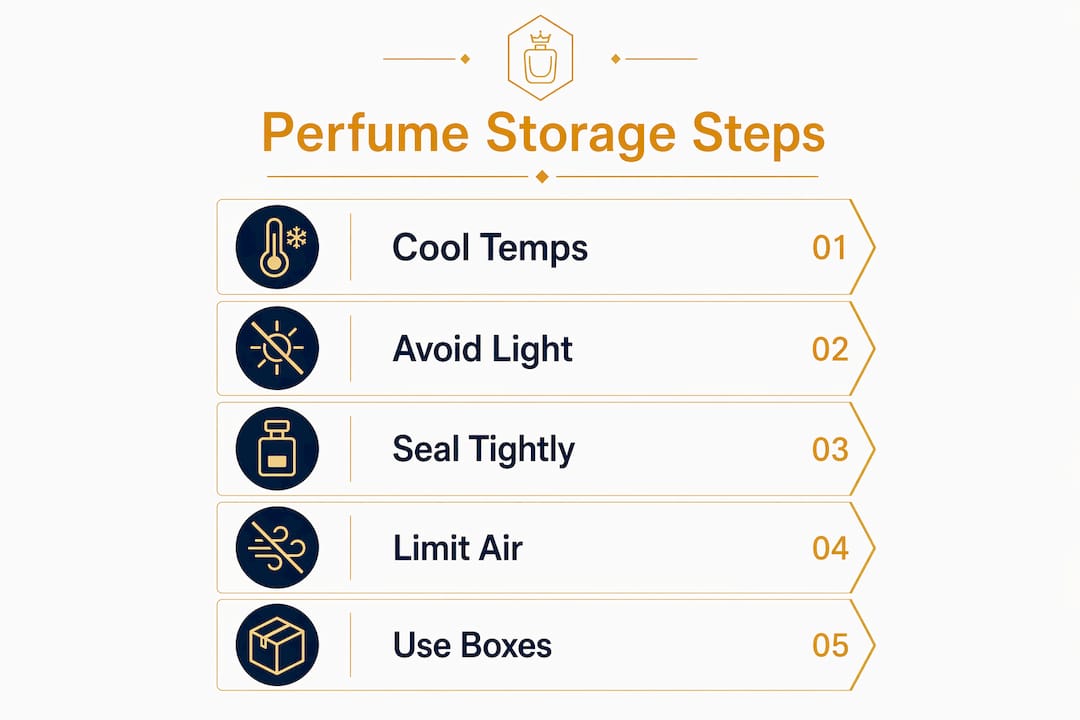
Simplicity and consistency beat complexity every time. Cool, dark, dry, upright, and sealed. That is the entire system.
— Rodney
Aromatick’s collection of authentic fragrances worth preserving
Proper storage only pays off when the fragrance inside the bottle is genuinely worth protecting. Aromatick offers a curated selection of authentic designer perfumes at up to 60% off retail prices, covering both classic designer names and niche houses.

Every bottle from Aromatick is a genuine product, which means the aromatic compounds inside respond exactly as the perfumer intended when stored correctly. Pairing a quality fragrance with the right storage habits is how you get the full value from every purchase. Browse Aromatick’s women’s designer fragrances and niche fragrance collection to find scents that reward careful storage with years of consistent performance.
FAQ
How long does perfume last when stored properly?
Most fragrances remain stable for 12–36 months after opening when kept in cool, dark, and dry conditions. Unopened bottles stored correctly can last several years beyond that.
Where is the best place to store perfume at home?
A closed bedroom drawer or cabinet is the best everyday option. It provides stable temperature, low humidity, and no light exposure, which are the three conditions that matter most.
Can you store perfume in the refrigerator?
Yes, with precautions. Seal the bottle in an airtight bag to block food odors, never use the freezer, and allow the bottle to reach room temperature before applying. A dedicated cosmetic fridge set to a stable cool temperature works best.
Does shaking a perfume bottle damage it?
Shaking introduces oxygen into the bottle and accelerates oxidation, which degrades scent quality over time. Perfume does not need agitation before use.
How do you know if a perfume has gone bad?
Trust your nose. A perfume that smells sour, sharp, or noticeably different from when you first opened it has degraded. Color changes, such as a darker or cloudy appearance, are also signs of deterioration.

Leave a comment
This site is protected by hCaptcha and the hCaptcha Privacy Policy and Terms of Service apply.