
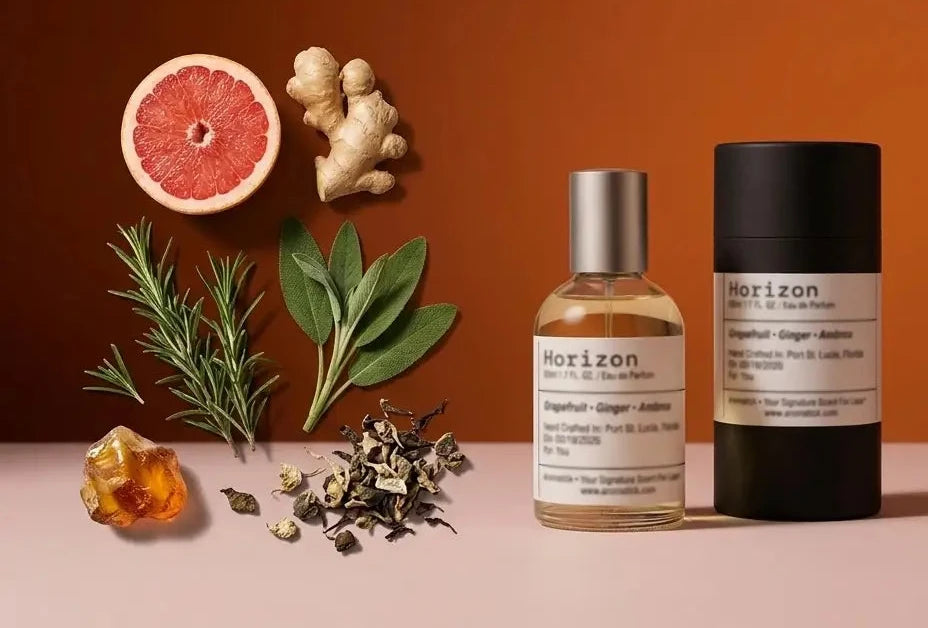

How to Use Decants: Apply, Test and Store Perfume Samples
A fragrance decant is a small portion of perfume moved from a full bottle into a travel-ready vial or atomizer, and you use it exactly like the bottle it came from. Hold it a few inches from clean skin, spray once or twice, and judge the scent over several hours instead of the first minute. This guide covers how to wear and test a decant, how to refill an atomizer yourself, how to keep a vial fresh, and how to take one through airport security.
TL;DR
- Spray a decant 4 to 6 inches from clean, lightly moisturized skin, and test one fragrance per wearing so the scents do not blur together.
- Judge a fragrance across a full day: the opening, the heart, and the dry-down tell you different things.
- If you decant yourself, use a clean, dry glass atomizer, a syringe or funnel, and label the vial with the name and date right away.
- Store decants cool, dark, upright and tightly closed. Windowsills, cars and steamy bathrooms shorten a scent’s life.
- Small vials fit the TSA’s 3.4-ounce carry-on limit, which makes decants easy to travel with.
Table of Contents
- What a decant is, and what it is not
- How to use a decant, step by step
- What the atomizer is for
- Decanting perfume yourself
- How to store a decant
- Traveling with decants
- Common problems and how to fix them
- Our perspective
- Try a fragrance before you commit
- Decants for gifts and for collections
- FAQ
- Sources
What a decant is, and what it is not
A decant is perfume taken from a retail bottle and placed in a smaller container. A brand sample, by contrast, is filled and sealed by the perfume house or its authorized contractor. A decant is filled outside that production chain, so the quality of the result depends on who did the filling and how clean their process was.
That is the reason to care about where a decant comes from, and the reason handling matters when you fill your own. A decant from a transparent seller who verifies the source bottle is a reliable way to live with a fragrance before committing to 3.4 ounces or more of it.
The formats also serve different jobs:
| Format | Typical use | Best for |
|---|---|---|
| Brand sample vial | A quick first impression | Narrowing a long list |
| Decant | Several wearings over days or weeks | Deciding whether to buy a full bottle |
| Travel spray | Carrying and refilling | Daily use on the go |
If you have ever bought a full bottle on the strength of ten minutes in a department store, you already know why the middle row matters. A decant gives you enough liquid to wear a scent through a workday, a hot afternoon and a cold morning.
(One note on a common mix-up: a wine decanter is a different object entirely. Perfume decanting has nothing to do with aerating liquid, and everything to do with portioning it.)
How to use a decant, step by step
Most decants arrive in one of two forms: a spray vial or atomizer with a pump, or a splash vial with a screw cap or dab stopper. The first is simpler. Here is a routine that gets the most out of either.
- Start with clean, dry skin. Fragrance sits better on moisturized skin, and an unscented lotion is a good base because it does not compete with the perfume. Skip your own scented body products on test days.
- Check the nozzle. Give a new atomizer a priming spray or two away from your body. Pumps often need a few presses before they deliver a steady mist.
- Hold it 4 to 6 inches away. Close spraying soaks one spot, while a bit of distance spreads the mist evenly.
- Start with one or two sprays. Wrist, inner elbow or the side of the neck are the usual spots, because warmer skin helps a scent open. Do not rub your wrists together, which can flatten the top notes.
- Wait. Smell it after 10 minutes, one hour, three hours and at the end of the day. Write short notes if you like.
- Wear it again on another day. Skin chemistry, weather and mood change how a scent reads. A fragrance you like on one wearing and love on the third is a strong candidate.
For a splash vial, remove the stopper, tip the vial against your fingertip for a moment, and dab the pulse points. A little goes a long way, so start smaller than you think you need.
Testing a fragrance properly
The single biggest mistake with a decant is spraying three scents on one arm and deciding in a few minutes. Your nose fatigues quickly, and layers of overlapping scents become unreadable.
A better method:
- One scent per wearing. Wear a single decant per day when you can.
- Use both arms at most. Two fragrances at once is the limit, one on each wrist, and only for a first comparison.
- Test in real conditions. Wear it to work, to dinner, outside in the weather you will actually wear it in.
- Check projection and longevity. Projection is how far the scent travels from you. Longevity is how long it lasts. Note whether people notice it, and whether you can still smell it at the end of the day.
- Pay attention to the dry-down. This is the final stage, after the top and heart notes have settled. It is what you will smell most of the time you wear the fragrance.
If you shop by a long list of candidates, our own guide to the role of perfume sampling before you buy explains how to organize the process from first impressions to a final pick.
How many decants does a trial need?
A 2 ml vial often gives roughly 20 or more sprays depending on the atomizer, enough for a few wearings. If you are torn between two similar scents, a larger decant gives more room to wear them across different weather and occasions. Treat the vial as a measured trial rather than a splurge: when it is nearly empty and you are reaching for it anyway, that is your answer.
What the atomizer is for
An atomizer is a refillable pump spray. It turns liquid perfume into a fine mist, so you can carry a small amount in a bag without the weight or risk of a full bottle. When you use a decant in an atomizer, you get three things:
- A fine, even spray instead of the uneven dab or pour of an open vial.
- Portability. Atomizers are small and sealed, so they go in a pocket, gym bag or carry-on.
- Less exposure to air. A closed pump keeps the liquid from evaporating or oxidizing as it would in an open container.
Glass atomizers are generally preferred for their inertness: glass does not react with fragrance ingredients the way some plastics can. In practice, that is a good reason to choose glass for anything you plan to keep for more than a few weeks.
Decanting perfume yourself
If you want to move perfume from your own bottle into an atomizer, for travel or for a gift, the method depends on how the bottle is built. This is one area where care pays off: a clean transfer protects the scent, and a sloppy one wastes it.
What you need
- A clean, dry glass atomizer or vial
- A needle-free syringe, a pipette, or a glass or steel funnel
- Isopropyl alcohol or perfumer’s alcohol for cleaning
- A label and a pen
- Paper towels, and a well-ventilated space away from flames and heat
Clean the tools with alcohol, then let them dry completely. Leftover water can cloud or dilute the perfume, and tools that have been in the kitchen should not be used for perfume at all.
The three common methods
1. Bottom-fill atomizer on the original nozzle. If the sprayer lifts off the bottle safely, a bottom-fill atomizer can be placed over the original nozzle tube. Press the pump gently and steadily, so the liquid is drawn in rather than forced.
2. Spray into a vial or funnel. If the nozzle stays put and will not come off, spray directly into a vial or funnel held to the nozzle. It is quick, but it wastes a little as mist, so it suits small samples better than large transfers.
3. Syringe, pipette or funnel. For screw-top or splash bottles, a syringe, pipette or funnel gives the most control. Draw slowly to avoid bubbles and pour gently.

For spray bottles, do not pry the nozzle off with force. A damaged collar can leak or break the bottle, and some sprayers are crimped on and are not meant to come off.
Safety while you work
Perfume is alcohol-based and flammable, so keep decanting away from flames and heat, and ventilate the area. If perfume gets in your eyes, rinse with plenty of clean water. If you have sensitive skin, nitrile gloves help. If irritation continues after rinsing, see a doctor or an eye care professional.
Work quickly but without rushing. Less time open means less contact with air and light, both of which speed up oxidation and dull the scent.
Label it immediately
Put the fragrance name and the date on the vial the moment you fill it. Labeling a decant immediately avoids mix-ups and lets you track how old the portion is. Once you have five similar-looking vials, nobody remembers which is which.
How to store a decant
A decant is more exposed than a boxed bottle, so storage matters more. Store decants cool, dark, upright and tightly closed, and avoid windowsills, cars and steamy bathrooms.
Practical tips:
- A drawer or closet works well. A small box for your vials keeps light out.
- Keep the cap on when you are not spraying, and make sure it clicks or screws on fully.
- Do not leave a decant in a gym bag or the car. Heat swings are the fastest way to flatten a fragrance.
- Use older vials first, and note any change in color or smell. A noticeably sour or off smell means the decant has turned.
We go deeper on this in our guide on how collectors store perfume decants for travel, daily use, and U.S. law, including what to know before you ship or carry them.
Traveling with decants
Decants are popular with travelers because small vials slip easily under the TSA’s liquids rule. The 3-1-1 rule allows containers of 3.4 ounces (100 ml) or less in your carry-on, all inside a single quart-size clear resealable bag. A 5 ml or 10 ml atomizer clears the limit by a wide margin.
Two habits help:
- Put the vials in the quart bag before you reach the checkpoint, so you are not sorting them at the belt.
- Wrap glass in a soft pouch or a sock inside your bag. Glass vials can crack under pressure, especially thin ones.
Check the TSA’s own page before you fly for the current screening rules, since procedures can change.
Common problems and how to fix them
The sprayer will not mist. Prime it with several firm presses. If it still clogs, the nozzle may have dried perfume in it. Rinse the tip gently with a little alcohol and let it dry.
The scent seems weaker than the bottle. Noses fatigue fast, and a decant that has been stored warm can lose punch. Give your nose a break by smelling coffee beans or fresh air, and try again on a different day.
It smells different on you than on paper. This is skin chemistry, and it is the reason to test on skin, not only on blotters. Your skin’s dryness, warmth and natural oils change how notes open.
Leaking from the cap. Check that the cap is fully closed, and keep the vial upright. A bag that rolls around will push liquid past a loose cap.
Our perspective
We built the decant side of Aromatick for one reason: a fragrance is too personal to buy on a description. Notes lists and reviews help, but the only reliable test is wearing it for a full day on your own skin, and that is what a decant lets you do.
Full bottles can cost a lot, and when a scent turns out wrong, the money is already spent. A decant of a fragrance you are curious about is a smaller risk, and it fits what we stand for: authentic, batch-verified fragrances at 30 to 60 percent below retail, with the freedom to try before you commit to a full bottle.
Our advice is simple. Use a decant the way you would use the real thing: on clean skin, one fragrance at a time, over several days. Store it well, label it, and let the dry-down make the decision. When a vial is finished and you wish you had more, that is the signal to move to a full bottle.
Rodney
Try a fragrance before you commit
If you are ready to try the method above, our decants let you wear designer and niche fragrances in a smaller format before choosing a full bottle. You can browse designer perfumes and colognes, or start from our home page to see men’s, women’s and niche fragrances alongside decants. We offer free shipping on qualifying U.S. orders and a satisfaction guarantee.
If you are still comparing where to buy, our guide to where to buy authentic perfumes online lists what to check before you order.
Decants for gifts and for collections
Decants work for more than testing. A few ways readers use them:
- Gifts. A set of three or four decants lets someone sample a house or a style without guessing at one bottle.
- Rotation. Collectors keep small decants of seasonal scents so they can switch without opening many large bottles.
- Travel. A 5 or 10 ml atomizer replaces a bulky bottle for a weekend trip.
- Layering experiments. With tiny amounts, you can try two scents together without risking a full bottle on a combination that clashes.
When you choose a gift, start from the person’s habits. Someone who wears fresh citrus in summer may like a woody or aromatic option, and a decant set lets them find out. Our guide to the role of decanting in perfumes goes into the practice in more detail.
FAQ
How many sprays should I use from a decant?
Start with one or two sprays, then add a third if you cannot smell the scent after an hour. Strong, concentrated fragrances often need fewer sprays than light colognes. Overspraying can also make you nose-blind to your own perfume, so it seems to fade when it has not.
Can I spray a decant on clothes?
You can, and some people do for longevity, but perfume can stain delicate fabrics such as silk. For testing, use skin, since a scent changes with your body’s warmth. If you spray fabric, try a hidden spot first and keep the vial about six inches away.
How long does a decant last?
It depends on the fragrance and on storage. Kept cool, dark, upright and tightly closed, a decant should stay pleasant for a good while, and a label with the fill date helps you track its age. If the scent turns sour or sharp, or the color changes noticeably, stop using it.
Can I take decants on a plane?
Yes, in a carry-on if each container is 3.4 ounces (100 ml) or smaller and all fit in one quart-size clear bag. Small atomizers are well under the limit. Check the TSA’s current guidance before you travel.
What is the best way to refill an atomizer?
Use a clean, dry glass atomizer with a bottom-fill design if your bottle’s nozzle lifts off. Otherwise use a syringe, pipette or funnel. Work in a ventilated space away from flames, move slowly, and label the finished atomizer with the name and date.
Sources
- Decanting Perfume for Beginners: Safe and Clean | WhatScent
- Dear Fragrantica: What is a Decant and How Can I Make One?
- How to Decant Perfume into an Atomizer: A Definitive Guide
- Everything You Need to Know About the TSA 3-1-1 Rule

Leave a comment
This site is protected by hCaptcha and the hCaptcha Privacy Policy and Terms of Service apply.