
The Role of Decanting in Perfumes: A Full Guide
TL;DR:
- Decanting allows users to sample, transport, and build their fragrance collections more affordably and flexibly. Proper handling and storage are essential to preserve the scent quality and prevent oxidation or degradation. It offers access to rare or niche fragrances that are often unavailable through official samples, enhancing perfume exploration for enthusiasts.
Decanting in perfumery is defined as transferring fragrance from a full-size bottle into smaller, portable containers for sampling, travel, or collection management. The role of decanting in perfumes goes well beyond simple convenience. It gives you access to expensive or rare scents at a fraction of the cost, protects your primary bottle from repeated exposure to air, and lets you build a flexible fragrance wardrobe without committing to full bottles. Whether you are a seasoned collector or someone curious about a new scent, understanding what a perfume decant is and how to handle one correctly changes how you experience fragrance entirely.
What are the main benefits of decanting perfumes?
Decanting delivers real, measurable advantages for anyone who takes fragrance seriously. Typical decants range from 1ml to 10ml, giving you enough product for multiple wears and the chance to observe how a scent develops on your skin over days or weeks. That kind of extended testing is simply not possible with a single department store spritz.
The practical benefits break down clearly:
- Cost efficiency. Decants save money by delivering multiple wears at a fraction of a full bottle price. A 5ml decant of a $400 niche fragrance like Initio Parfums Privés Atomic Rose lets you wear it a dozen times before deciding whether it deserves a permanent spot in your collection.
- Portability. A 2ml vial fits in any pocket or carry-on bag. Full 100ml bottles do not pass TSA liquid rules without checked luggage.
- Scent rotation without overspending. Decants allow experimenting with fragrance layering and daily rotation without buying multiple full bottles. You can wear a woody oud in the morning and a clean aquatic in the afternoon without a second thought.
- Reduced bottle exposure. Every time you open a full bottle, you introduce oxygen. Keeping a decant for daily use protects the original from repeated air contact.
- Zero waste. You buy only what you need. If a scent does not work on your skin, you have not lost $200 on a bottle you will never finish.
Pro Tip: Before purchasing any full bottle over $150, test it through a decant for at least three separate wears across different weather conditions. Fragrance behaves differently in heat, cold, and humidity.
How does decanting affect fragrance quality and longevity?
Fragrance quality after decanting depends entirely on how the transfer is handled and how the decant is stored afterward. Experts describe proper decanting as fragrance stewardship, not just a mechanical transfer. That framing matters because it shifts your mindset from casual pouring to deliberate preservation.
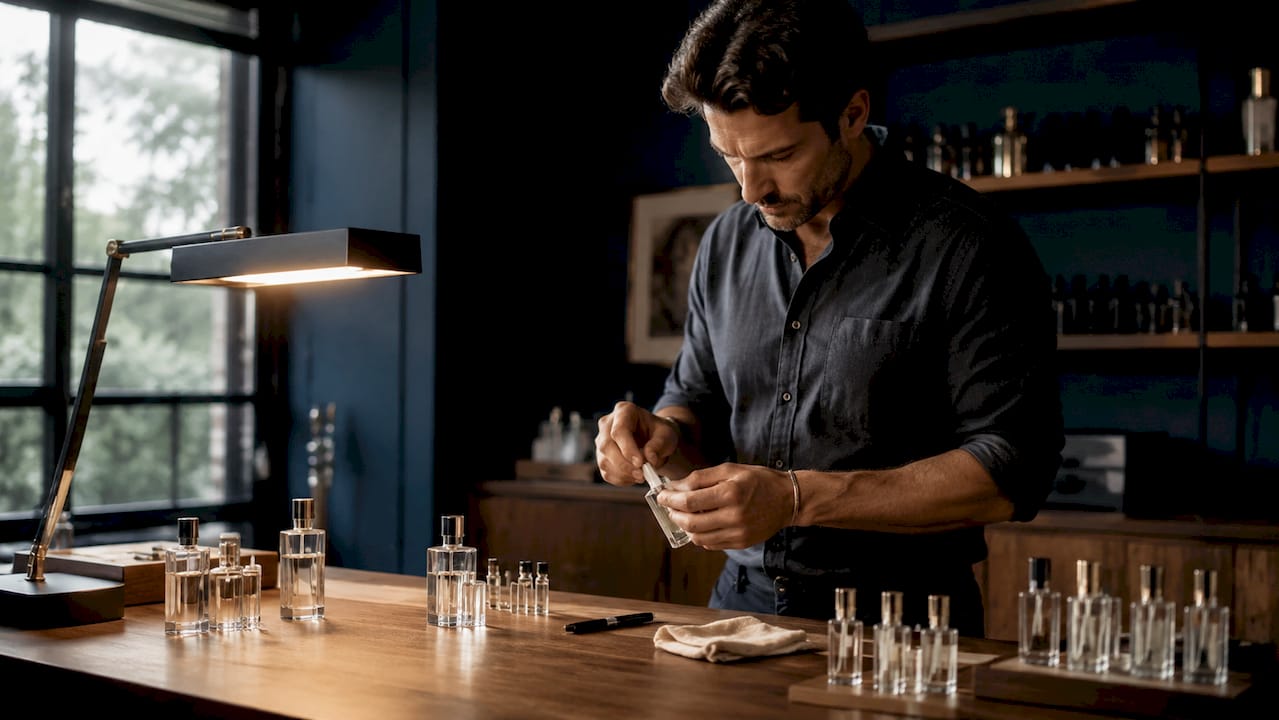
The core chemistry is straightforward. Perfume molecules degrade through three main pathways: oxidation from air contact, photodegradation from UV light, and hydrolysis from heat and moisture. Decants are more susceptible to oxygen, heat, and light exposure than original bottles, which shortens their shelf life if stored carelessly. The reason is structural. Decant vials have thinner glass and smaller seals, meaning the barrier between your fragrance and the environment is less robust than a factory-sealed bottle.
Storage conditions that protect decant quality:
- Temperature: Store between 60°F and 70°F. Avoid bathrooms, windowsills, and car gloveboxes.
- Light: Keep vials in a drawer, box, or opaque pouch. UV light breaks down aromatic compounds faster than almost any other factor.
- Air exposure: Fill vials as close to the top as possible to minimize the air-to-liquid ratio inside the container.
- Stability: Avoid locations with frequent temperature swings. A bedroom drawer or a dedicated fragrance cabinet works well.
Decants require more stringent storage controls than retail bottles due to fragile seals and higher oxidation risk. This is not a reason to avoid decanting. It is a reason to store them correctly. For detailed guidance on protecting your full collection, Aromatick’s resource on fragrance storage conditions covers the full picture.
Pro Tip: Label every decant with the fragrance name, brand, and the date you filled it. Scent memory is unreliable after six months, and knowing the fill date helps you prioritize which decants to use first.
What methods and tools work best for safe decanting?
Safe, effective decanting requires the right tools and a clean, controlled process. Only glass or high-grade chemical-resistant containers should be used. Plastic reacts with ethanol over time, distorting the fragrance profile in ways that are subtle at first and obvious within weeks. Glass vials and high-quality aluminum atomizers are the standard choice among serious collectors.
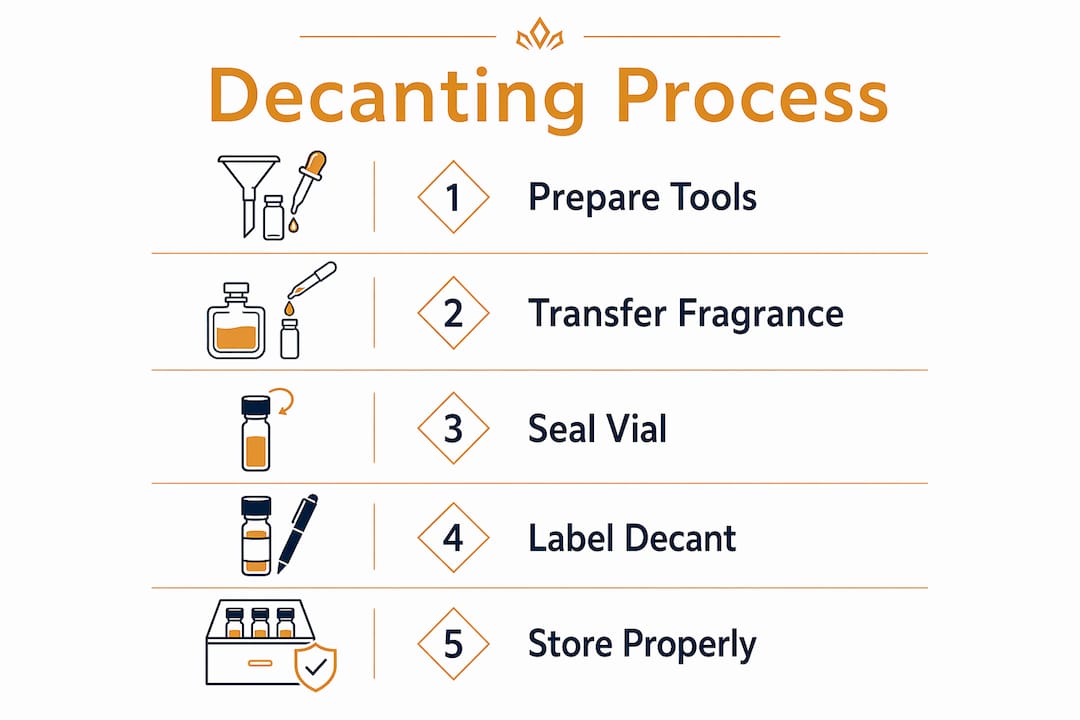
Follow these steps for a clean, contamination-free transfer:
- Sanitize all tools. Rinse glass vials and funnels with isopropyl alcohol and let them dry completely before use. Any residue from a previous fragrance will contaminate your decant.
- Work on a cool, stable surface. Decanting should be done away from heat, sparks, or open flame because perfume is ethanol-based and highly flammable. A kitchen counter near a gas stove is not the right location.
- Remove the atomizer pump carefully. Most spray-top bottles allow the pump to be unscrewed or gently pried off with a flat tool. Do not force it. Broken pump mechanisms introduce plastic fragments into the fragrance.
- Use a small funnel or syringe. A 1ml or 3ml syringe gives you precise control over the amount transferred and minimizes spills. Spills mean wasted fragrance and a flammable surface.
- Fill vials close to the top. Leaving minimal air space reduces oxidation inside the decant container.
- Seal immediately and label. Cap the vial right after filling. Write the fragrance name, concentration (EDP, EDT, or parfum), and fill date on the label.
Pro Tip: If you are decanting a vintage or collector’s bottle, consider wearing nitrile gloves. Skin oils transferred to the bottle neck or stopper can degrade the seal over time.
Decants vs. brand samples: what is the actual difference?
The distinction between a perfume decant and an official brand sample is one that confuses many buyers. They are not the same product, and understanding the difference protects you from both overpaying and buying something inauthentic.
| Feature | Perfume Decant | Official Brand Sample |
|---|---|---|
| Source | Third-party transfer from a genuine retail bottle | Produced directly by the manufacturer |
| Size range | Typically 1ml–10ml, flexible | Usually 1ml–2ml, fixed |
| Price | Varies by seller; often more affordable per ml | Often free or low cost from counters |
| Availability | Wide, including discontinued and niche scents | Limited to current catalog |
| Formulation | Identical to the full bottle it came from | May differ slightly from retail formula |
| Authenticity risk | Present if seller is unverified | Minimal when sourced directly from brand |
Decants provide access to rare, discontinued, or niche fragrances that brands simply do not sample. Many Middle Eastern houses and independent niche perfumers have no physical retail presence in the United States and offer no official samples. A decant from a trusted source is often the only way to test these scents before committing to a full bottle purchase.
The authenticity risk is real but manageable. Buy decants only from sellers who can verify the source bottle. If a decant price seems too low for the fragrance it claims to contain, treat that as a warning sign. Aromatick’s guide on spotting authentic perfumes gives you a clear checklist for verifying what you are buying.
Proper decanting requires clean, sanitized tools and hygienic methods to prevent contamination. A reputable decant seller follows these standards consistently. That is the baseline you should expect.
Key takeaways
Decanting is a disciplined practice that protects fragrance integrity, reduces cost, and expands access to scents that would otherwise require a full-bottle commitment.
| Point | Details |
|---|---|
| Decanting defined | Transferring fragrance into smaller vials enables testing, travel, and collection flexibility. |
| Glass containers only | Plastic reacts with ethanol and distorts scent; always use glass or chemical-resistant vials. |
| Storage is critical | Cool, dark, stable environments prevent oxidation and extend decant shelf life significantly. |
| Decants vs. samples | Decants offer more size flexibility and access to niche scents that brands do not officially sample. |
| Safety first | Work away from heat and open flame; perfume is ethanol-based and flammable during transfer. |
Decanting as a ritual, not just a transfer
I have been handling fragrances long enough to know that most people underestimate what happens between the bottle and the vial. The first time I watched someone decant a vintage Guerlain Mitsouko using a kitchen syringe over a gas burner, I understood why so many decants smell “off” within a few months. It was not the fragrance. It was the process.
The mistake I see most often is treating decanting as a purely mechanical task. You pour, you seal, you move on. But fragrance molecules are genuinely delicate. Aromatic compounds like linalool, citral, and musks oxidize at different rates. A decant that smells perfect on day one can shift noticeably by month three if the container was not filled properly or the storage environment fluctuates.
What I have found actually works is building a small ritual around it. Clean tools, a cool surface, a label with the date. It takes an extra two minutes. Those two minutes are the difference between a decant that lasts 18 months and one that smells like a shadow of itself by summer.
The other thing worth saying: decants have genuinely changed how people build fragrance collections. Before the decant community grew, you either bought blind or you did not buy at all. Now you can wear a scent from Initio Parfums Privés or Fragrance World for two weeks before spending serious money. That is a meaningful shift in how fragrance is experienced and purchased. If you want to understand how longevity factors into that decision, Aromatick’s piece on choosing long-lasting perfumes is worth reading alongside this one.
— Rodney
Explore authentic fragrances at Aromatick
If decanting has sparked your interest in exploring new scents without the full-bottle commitment, Aromatick is built for exactly that. The platform offers authentic designer and niche fragrances at discounts of 30–60% off retail, making it practical to test and collect without overspending.
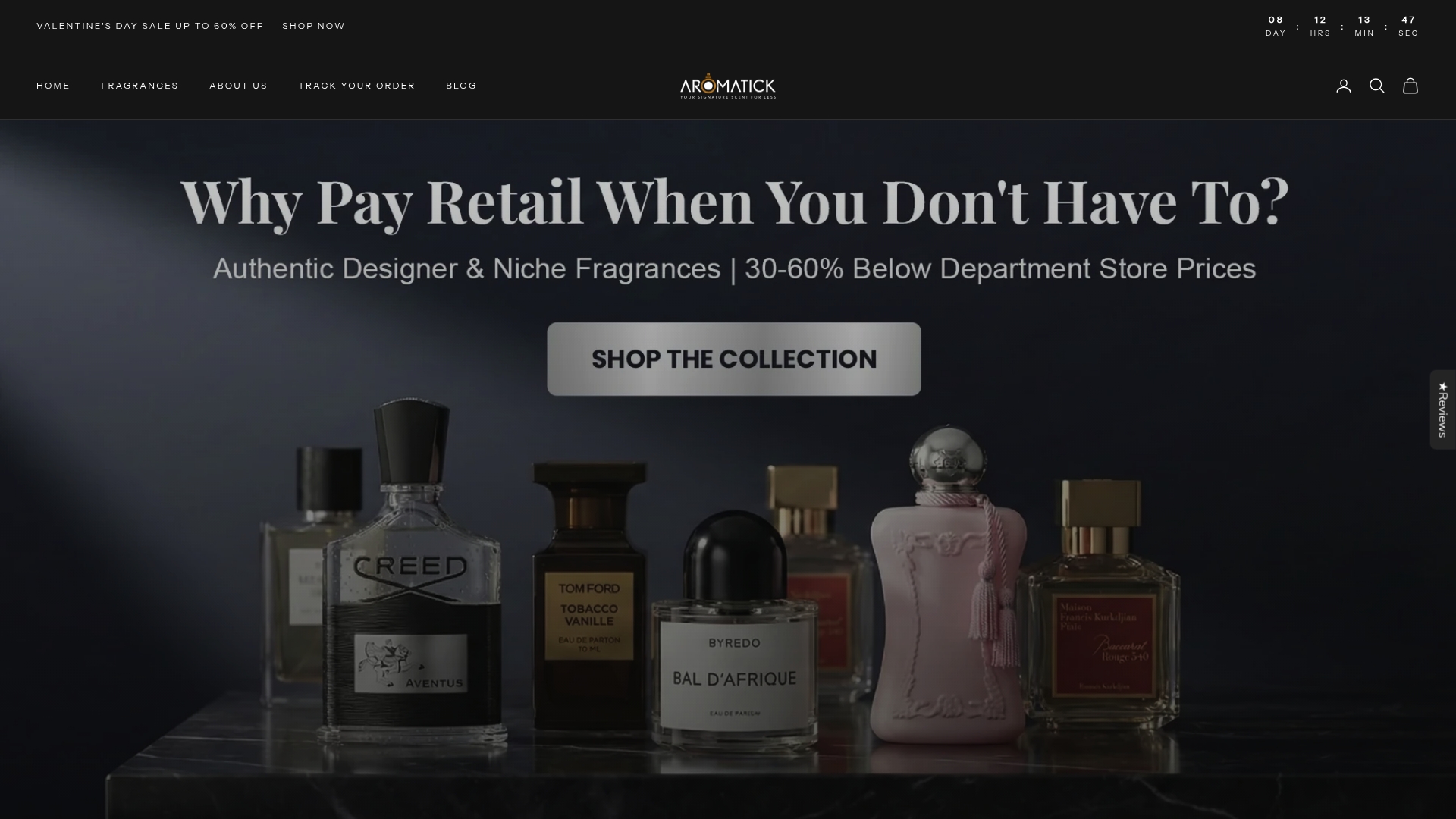
From well-known designer houses to hard-to-find niche fragrance collections, every bottle on Aromatick is verified authentic. That matters especially when you are sourcing scents for decanting, because the quality of your decant is only as good as the bottle it came from. Browse the full designer fragrance collection and find your next scent to explore, wear, and share.
FAQ
What is a perfume decant?
A perfume decant is a small portion of fragrance transferred from a full retail bottle into a smaller container, typically ranging from 1ml to 10ml. It allows you to test a scent over multiple wears before purchasing a full bottle.
Does decanting change how a perfume smells?
Decanting itself does not alter the scent if done correctly with clean glass containers. Poor storage or plastic vials can cause the fragrance to shift over time due to oxidation or chemical interaction with the container material.
How long does a decant last before it degrades?
A properly stored decant in a glass vial kept in a cool, dark environment can last 12–24 months without significant scent change. Heat, light, and air exposure accelerate degradation considerably.
Are decants the same as official brand samples?
No. Decants are third-party transfers from genuine retail bottles, while brand samples are produced directly by the manufacturer. Decants typically offer more size flexibility and access to discontinued or niche scents that brands do not officially sample.
Is decanting perfume safe to do at home?
Yes, with proper precautions. Work on a cool surface away from open flames or heat sources, since perfume is ethanol-based and flammable. Use sanitized glass tools and seal containers immediately after filling.

Leave a comment
This site is protected by hCaptcha and the hCaptcha Privacy Policy and Terms of Service apply.