
The Real Role of Perfume Sampling Before You Buy
TL;DR:
- Perfume sampling on skin provides a complete scent experience, crucial for choosing the right fragrance. It reduces purchase risks by allowing extended wear and comparisons, preventing impulse buys. Using proper technique and cautious patch testing ensures safety, especially for sensitive skin, making sampling essential for confident fragrance buying.
Most people smell a perfume on a paper strip, decide they like it, and spend $150 on a bottle they stop wearing within a month. The role of perfume sampling goes far beyond that three-second sniff test at a department store counter. A fragrance changes dramatically as it dries down on your skin, and what you smell in the first thirty seconds is only a fraction of the full story. This guide covers why sampling matters, how to do it correctly, what formats are available, and how to turn those test experiences into purchases you will actually love.
Table of Contents
- Key takeaways
- The role of perfume sampling in confident buying
- How to sample perfumes effectively
- Safety considerations when sampling
- Sampling formats compared
- Turning sampling into confident purchase decisions
- My honest take on fragrance sampling
- Explore authentic fragrances at Aromatick
- FAQ
Key takeaways
| Point | Details |
|---|---|
| Skin testing is non-negotiable | Paper strips reveal only part of the scent; wear fragrances on skin for the full picture. |
| Sample one fragrance per day | Testing multiple scents in one session causes olfactory fatigue and distorts impressions. |
| Know your sampling formats | Decants, curated boxes, and online samplers each serve different testing goals. |
| Keep a fragrance journal | Writing down impressions over multiple wear days reveals patterns you would otherwise miss. |
| Safety starts with sampling | Sensitive skin consumers should use samples to gauge personal tolerance before committing to a full bottle. |
The role of perfume sampling in confident buying
Buying a full bottle of fragrance without sampling it first is like buying a couch without sitting on it. The stakes are real. A quality designer or niche fragrance can cost anywhere from $80 to $400, and scent is one of the most personal sensory experiences there is. The importance of fragrance testing is not just financial. It is about finding something that feels right to you, on your skin, in your life.
Here is what sampling actually does for the buying process:
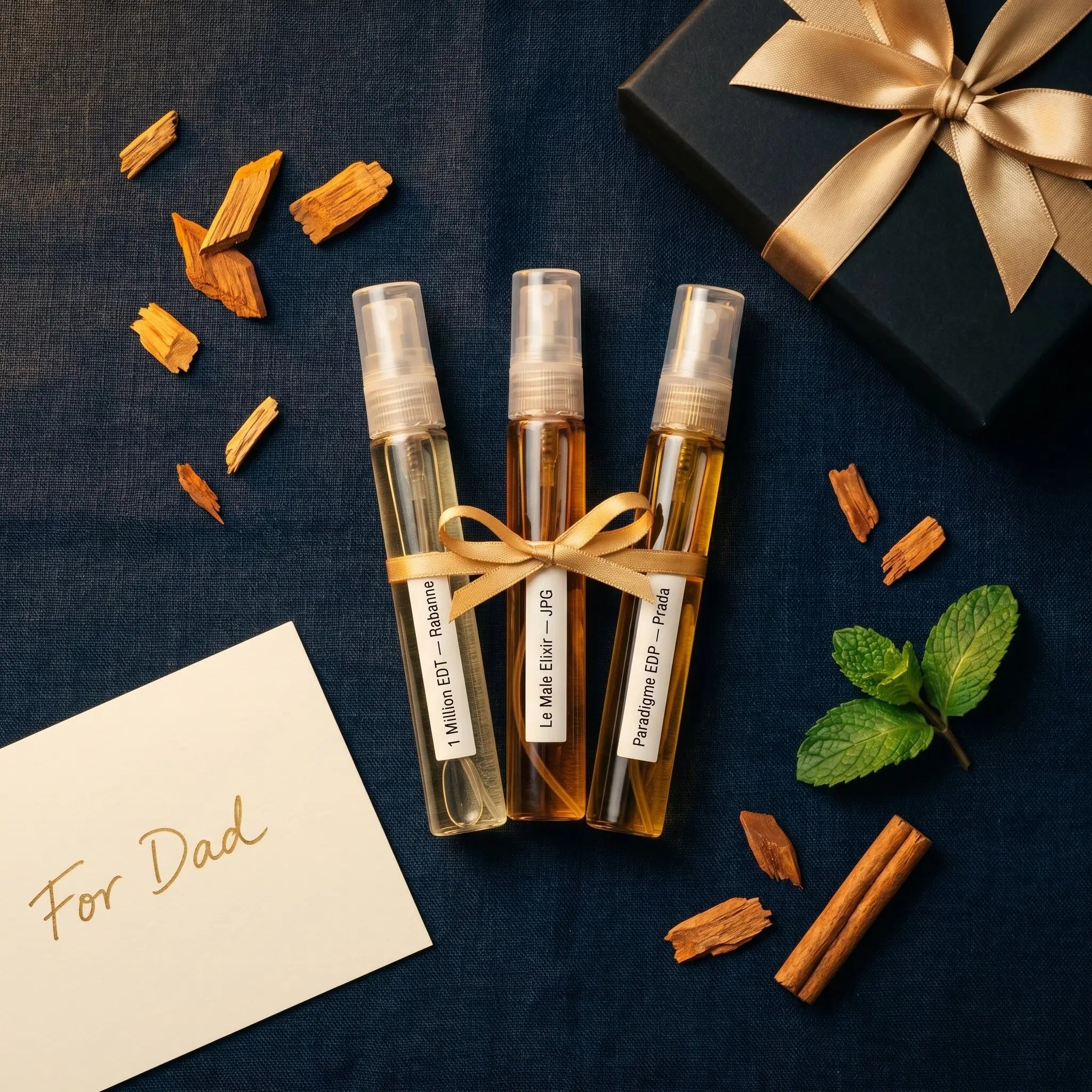
- Reduces purchase risk. A 2ml sample provides 15 to 20 sprays, which is enough for three to five complete testing days. That is enough time to know whether a fragrance suits you before investing in a full bottle.
- Enables scent comparison. Sampling lets you explore multiple fragrance families side by side. You might discover that you thought you liked florals but actually gravitate toward woody musks when you wear them back to back over a week.
- Reveals longevity and sillage. Some fragrances open with a bold, attention-grabbing blast and fade within two hours. Others whisper at first and deepen beautifully over six hours. You only learn this through extended wear, not a counter test.
- Exposes your skin chemistry. Skin pH, moisture levels, and even diet affect how a fragrance smells on you versus someone else. A scent that smells like powdery rose on one person can read as sharp and medicinal on another.
Sampling serves as both an educational journey and a conversion driver, turning casual browsers into confident buyers by reducing risk and building an emotional connection to a scent over time. That is the difference between a regrettable impulse purchase and a bottle you reach for every day.
Pro Tip: If you are new to fragrance, start sampling within a single family, such as fresh aquatics or warm orientals, before branching out. This builds your scent vocabulary faster and makes comparisons easier to evaluate.
How to sample perfumes effectively
Technique matters more than most people realize. You can have access to the best fragrances in the world and still walk away with a completely wrong impression if you are not sampling them correctly. Quick sniffs or paper strips reveal only about 30% of the fragrance experience, which means most people are making expensive decisions based on incomplete information.
Here is a practical method that actually works:
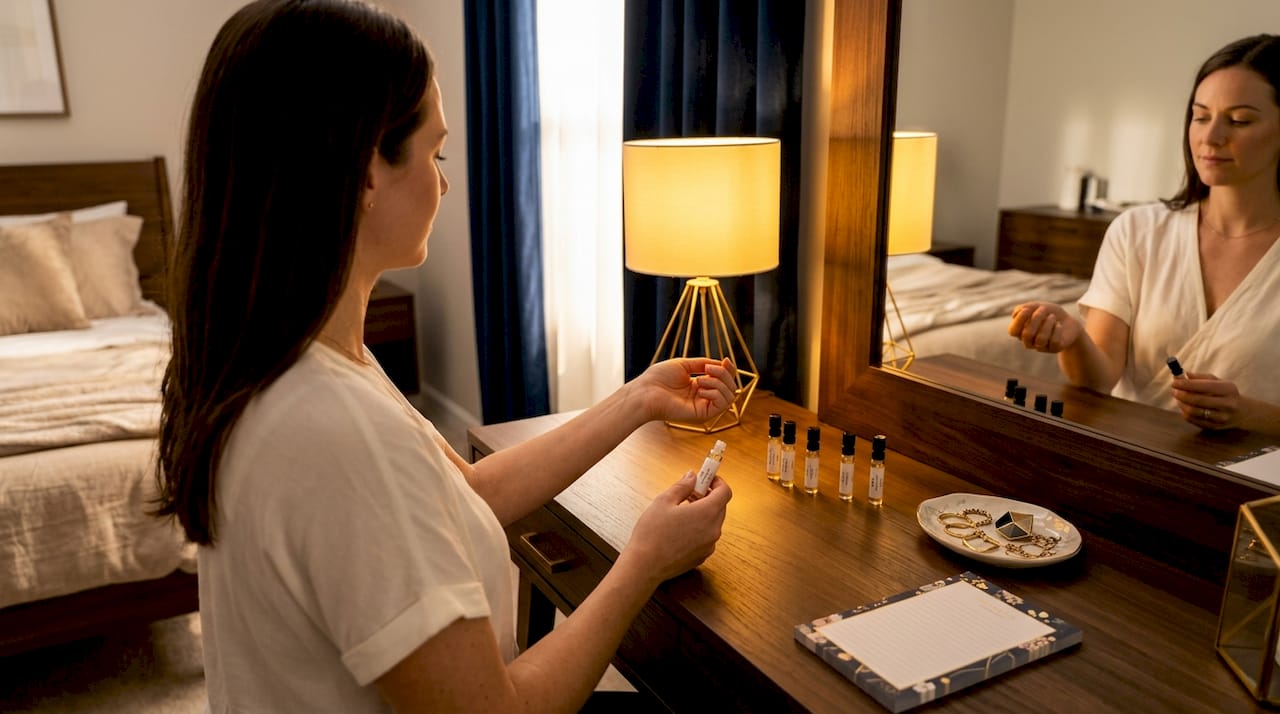
- Apply to bare skin, not clothing. Spray or dab one to two times on a pulse point, such as the inner wrist, inner elbow, or the base of the neck. Fabric does not interact with fragrance the same way skin does, and you miss the evolution entirely.
- Wear it for at least four to six hours. Ideally, wear the same fragrance for a full day across multiple days. The top notes you smell in the first fifteen minutes are just the opening. Experience the full fragrance pyramid by waiting for the heart and base notes to develop before forming an opinion.
- Test one fragrance per day. Consumers should test no more than three to four fragrances per session to avoid olfactory fatigue, but one per day is even better for accurate impressions. When your nose is fatigued, every fragrance starts to smell the same or simply “like perfume.”
- Reset your senses between tests. Step outside for fresh air, smell unscented skin on your inner arm (a spot with no fragrance applied), or sniff coffee beans. These palate-cleansing techniques are standard practice among fragrance buyers.
- Write down your impressions immediately. Note the opening, the dry-down, how it performed in different temperatures, and how it made you feel. Documenting impressions over several days helps you understand scent development and recognize whether your initial reaction holds up.
Pro Tip: Wearing a sample during a specific type of day, such as a work day, a casual weekend, or an evening out, tells you far more about fit and occasion than any abstract “season” or “occasion” descriptor on a product page.
If you want a deeper breakdown of at-home testing methods, testing fragrances at home gives you a structured, practical approach that removes the guesswork.
Safety considerations when sampling
Fragrance is not universally harmless. Fragrances are complex mixtures that can cause skin irritation, which is precisely why sampling before committing to daily use makes so much sense for anyone with sensitive skin or known allergies.
The International Fragrance Association (IFRA) sets global safety standards for fragrance formulations. IFRA Standards provide a risk-based framework with ingredient concentration limits that govern how fragrances are formulated across product categories. This matters because it means every compliant fragrance you buy has been reviewed for safety at the formulation level.
However, there is an important nuance here:
IFRA compliance is a formulation-level standard, not a personal skin guarantee. Individual sensitization can still occur even within compliant products, meaning your own reaction is the only definitive test.
What this means in practice:
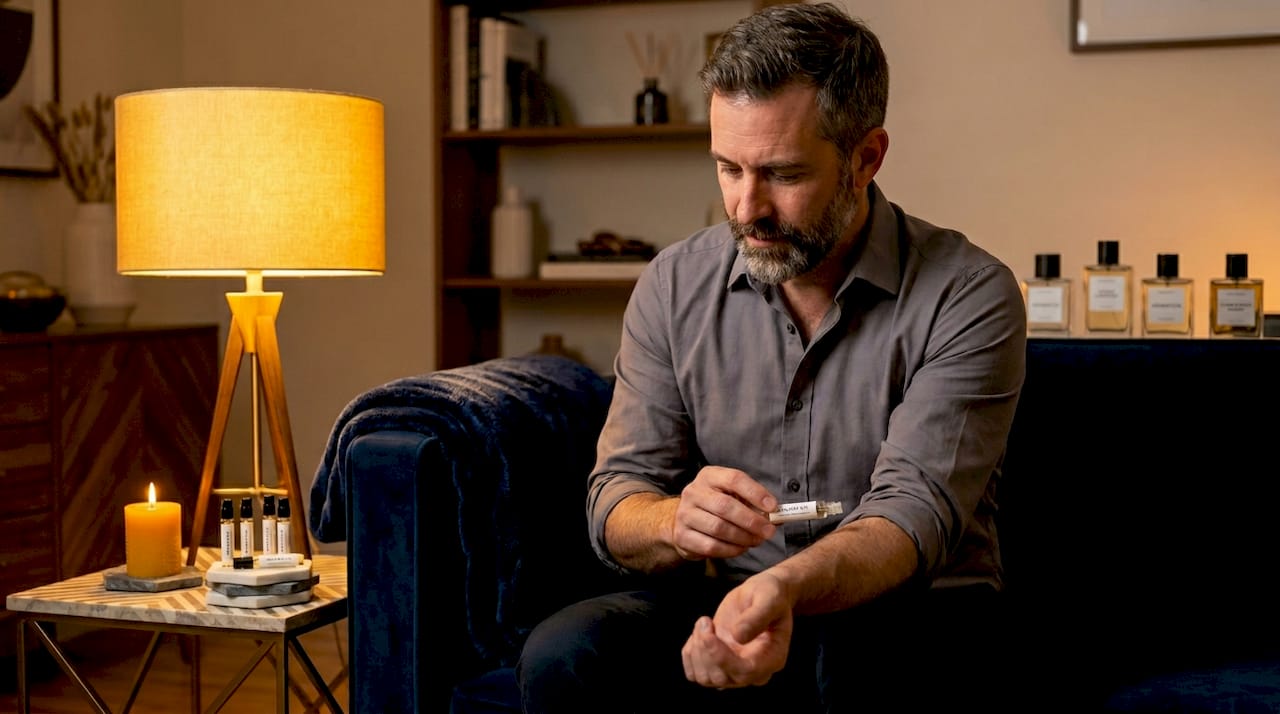
- Patch test a new sample on the inner arm before full-body application, especially if you have eczema, rosacea, or a history of fragrance sensitivity.
- Stop use immediately if you notice redness, itching, or irritation. Do not push through thinking it will settle.
- Transparency and ingredient reporting empower you to check for known allergens before sampling, particularly the 26 fragrance allergens listed under EU cosmetics regulation.
- Avoid spraying directly onto broken or sunburned skin.
The benefits of perfume samples for sensitive consumers are particularly strong. A small decant lets you control exposure gradually and stop testing at the first sign of a reaction, long before you have invested in a full bottle you cannot use.
Sampling formats compared
Not all sampling options are equal. The format you choose affects how much you learn, how quickly, and at what cost. Understanding your options helps you sample smarter.
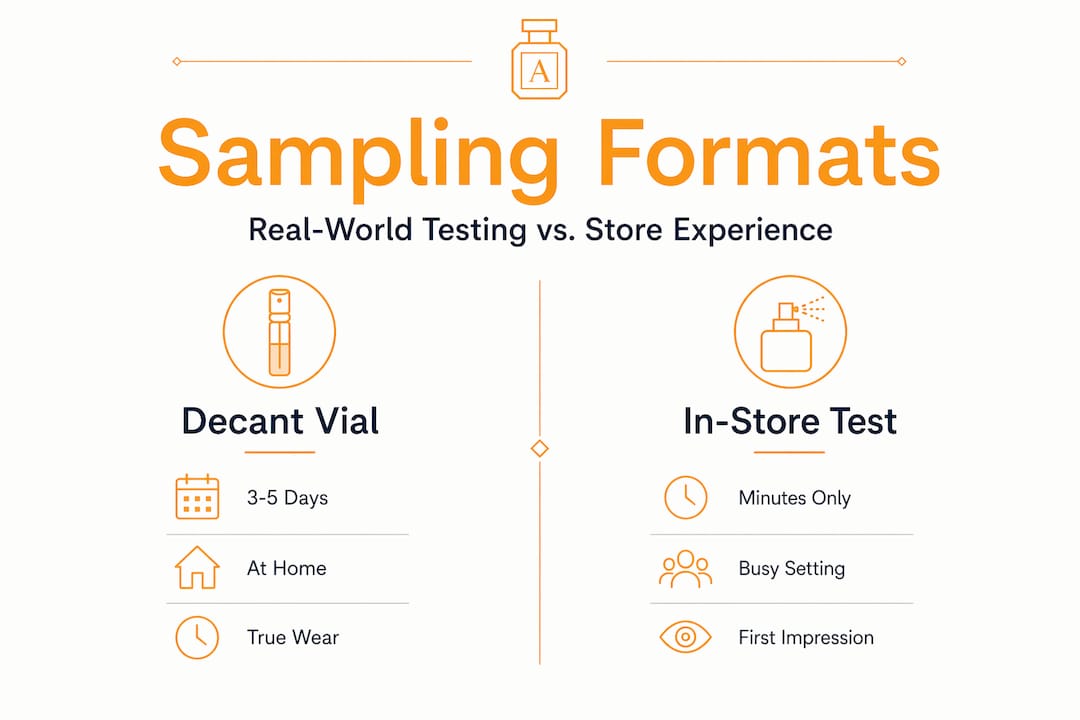
| Format | Cost | Testing quality | Best for |
|---|---|---|---|
| In-store test | Free | Low (limited time, rushed) | Initial shortlisting only |
| Paper strips | Free | Very low (no skin chemistry) | Getting a basic scent direction |
| Decants (1ml to 5ml) | Low ($3 to $15) | High (multi-day skin wear) | Deep evaluation of specific fragrances |
| Curated sample boxes | Medium ($20 to $50) | High (themed, systematic) | Exploring a family or style |
| Online samplers | Low to medium | High (tested in real life) | Accessing niche or international releases |
Decants are the practical backbone of smart fragrance buying. A small vial gives you enough product for real-world testing across multiple occasions. The decanting economy lowers purchase risk, builds fragrance literacy, and has been shown to increase customer lifetime value because buyers who sample thoroughly end up purchasing more confidently and more often.
Curated sample boxes take this a step further by organizing multiple fragrances around a theme, such as winter orientals, summer aquatics, or gender-neutral musks. This approach supports a more systematic role of scent discovery, giving your nose context and comparison points rather than isolated impressions.
For rare, niche, or discontinued scents, fragrance communities and secondary decant markets are genuinely valuable. They give you access to hard-to-find bottles that you cannot walk into a store and test, which is especially relevant as more niche houses build their distribution exclusively through online channels. You can also check out expert fragrance comparisons to narrow down which samples are worth tracking down first.
Turning sampling into confident purchase decisions
Sampling without a system is just collecting opinions. To actually use your testing experience to buy well, you need a light structure.
- Keep a fragrance journal. After each wear, write three things: what the scent reminded you of, how it performed (projection, longevity), and when you would wear it. Patterns emerge quickly. You might realize you consistently rate fresh citrus high in summer but reach for your woody amber notes on cold days.
- Understand the fragrance pyramid. Top notes are what you smell immediately and they last 15 to 30 minutes. Heart notes emerge after that and define the fragrance’s character. Base notes are the foundation that lasts for hours. If you only ever evaluate the top notes, you are missing the bulk of what you are actually buying. Learn more about fragrance notes explained to speed up your ability to read and evaluate a fragrance properly.
- Recognize olfactory fatigue. When you stop being able to smell your own fragrance, it does not mean it has worn off. Olfactory adaptation is your nose filtering out constant stimuli. Step away from the scent and return after 20 minutes. If you are evaluating multiple samples, give your nose a genuine break between each one.
- Check for sample-to-purchase credits. Some retailers apply sample costs toward the purchase of a full bottle. This makes the benefits of perfume samples financial as well as experiential.
- Trust your own nose over online reviews. Reviews and guides like step-by-step fragrance selection are useful for narrowing down options, but they cannot tell you how a fragrance will smell on your skin or fit your life. Your extended sample test is the final word.
Pro Tip: Give a fragrance at least three separate wear days before deciding it is not for you. First impressions with fragrance are frequently misleading, and what seemed overwhelming or flat on day one often becomes a favorite by day three.
My honest take on fragrance sampling
I spent years walking out of stores with bottles I barely used, all because I made decisions based on a few seconds at a counter. The first time I wore a sample for a full day and tracked my impressions across three different settings, I realized how much I had been missing.
The biggest shift was not just wearing samples longer. It was testing one at a time with intentional space between them. When you stop rushing, you stop confusing novelty with preference. What I noticed after a few months of systematic sampling was that my taste narrowed in a genuinely useful way. I stopped buying broadly across categories and started investing in things I knew I would reach for.
Where I see people go wrong is over-sampling. Testing five or six fragrances a day creates a kind of noise where nothing stands out and everything blurs together. The fragrance buying community calls this olfactory fatigue, but honestly it is more like decision fatigue. Your brain just gives up on forming real opinions.
Decants from fragrance communities changed how I accessed niche and discontinued scents. Before that, getting your nose on a rare Arabic oud or a Japanese cedar fragrance meant hoping your city had the right boutique. The fragrance education resources available today combined with access to decants has genuinely leveled the playing field for serious fragrance buyers.
Patience is the actual skill. Not nose training, not vocabulary, not knowing what a chypre is. Just giving yourself enough time with a scent before you decide.
— Rodney
Explore authentic fragrances at Aromatick
If this guide has you ready to start sampling seriously, Aromatick makes that easier than it should be.
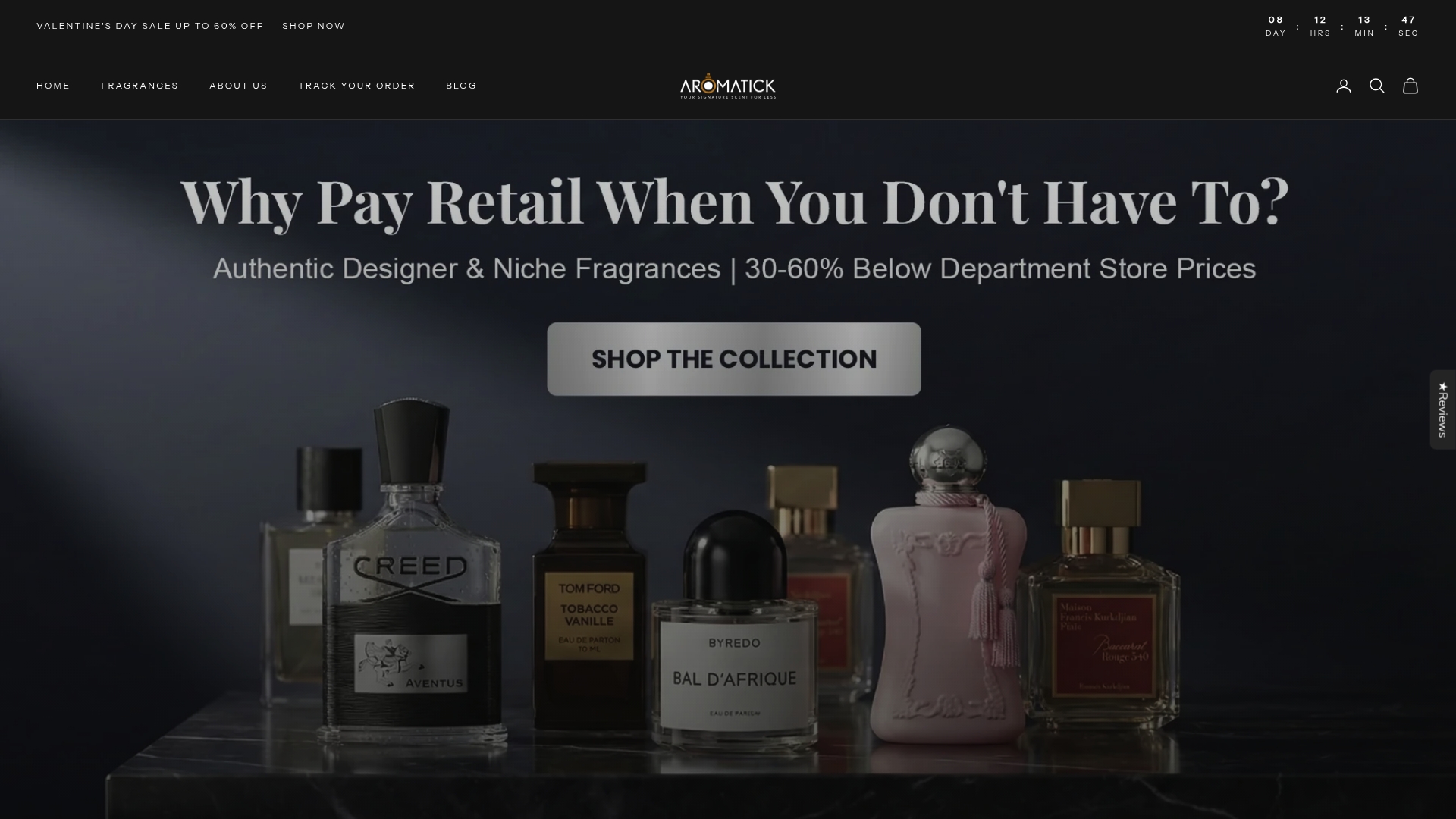
At Aromatick, you will find authentic designer fragrances at 30 to 60% off retail pricing, across every major category, from crowd-pleasing classics to hard-to-find niche releases. The platform is built around transparency, genuine products, and pricing that lets you explore more without the financial pressure that usually turns sampling into a gamble. For those drawn to distinctive, boutique scents, the niche fragrance collection is a strong place to begin your discovery journey. Free shipping, satisfaction guarantees, and secure payments are all standard, so your focus stays on finding the right scent.
FAQ
What is the role of perfume sampling before buying?
Perfume sampling lets you experience how a fragrance develops on your skin over time, covering all three phases of the scent pyramid, before committing to a full-sized purchase. It reduces financial risk and helps you find fragrances that genuinely fit your skin chemistry and lifestyle.
How long should you wear a perfume sample?
Wear a sample for at least four to six hours on bare skin, ideally across multiple days, to experience the full fragrance from top through base notes. Quick sniff tests reveal only a fraction of the complete scent experience.
How many perfumes can you sample in one session?
Testing no more than three to four fragrances per session is recommended to avoid olfactory fatigue, which distorts your ability to accurately evaluate each scent. Testing one fragrance per day delivers the most reliable impressions.
Are decants a good way to sample fragrances?
Yes. A 2ml decant typically provides 15 to 20 sprays, enough for three to five full days of wear testing. Decants are affordable, portable, and give you the same depth of testing as owning a full bottle temporarily.
Is fragrance sampling safe for sensitive skin?
Sampling is actually the safest approach for sensitive skin consumers because it lets you test your personal reaction before using a product daily. Patch test each sample on the inner arm first, and stop immediately if irritation appears, since IFRA compliance does not guarantee individual skin tolerance.

Leave a comment
This site is protected by hCaptcha and the hCaptcha Privacy Policy and Terms of Service apply.