

Niche Fragrance Storytelling: What It Really Means
TL;DR:
- Niche fragrance storytelling emphasizes creating perfumes around a specific narrative or emotion. It prioritizes artistic concept and personal expression over commercial trends, producing complex scents with meaning. Consumers connect deeply with these stories, which influence purchase decisions and loyalty.
Niche fragrance storytelling is defined as the deliberate practice of building a perfume around a specific narrative, emotion, or artistic concept rather than around mass appeal or commercial trends. This approach, also called olfactory storytelling in perfumery circles, treats scent as a medium for personal expression. Brands like Maison Francis Kurkdjian and Nishane have made this practice central to their identity, creating fragrances that reflect individuality and experience rather than simply smelling pleasant. Understanding what is niche fragrance storytelling means understanding why a perfume can feel like a memory, a place, or even a piece of music.
What is niche fragrance storytelling and how does it work?
Niche fragrance storytelling is the process of creating a scent where the narrative comes first. The concept, emotion, or inspiration drives every decision, from ingredient selection to bottle design. This is fundamentally different from how most mainstream perfumes are made.
In mainstream perfumery, fashion houses treat fragrance as a brand extension. A celebrity name or a designer logo sells the bottle. The scent itself is often secondary to the marketing. Niche brands reject this model entirely. As Maison Francis Kurkdjian and Nishane leaders have stated, their goal is bringing the perfumer’s vision to the center, using scent as a vehicle for personal identity rather than brand promotion.
The story behind niche fragrances shapes the actual chemistry of the perfume. A niche perfumer working from a brief about a rain-soaked library in Istanbul will choose different raw materials than one chasing a bestseller trend. The narrative is not marketing copy added after the fact. It is the architectural plan the perfumer follows from the first formula draft.
How niche perfumes differ from mainstream scents
The differences between niche and mainstream perfumery go deeper than price. They reflect two entirely different philosophies about what a fragrance is supposed to do.
| Feature | Niche Perfumery | Mainstream Perfumery |
|---|---|---|
| Primary driver | Artistic concept or story | Commercial appeal and trend |
| Perfumer role | Named artist, creative lead | Often anonymous contractor |
| Ingredient sourcing | Rare, high-quality, story-driven | Cost-controlled, standardized |
| Distribution | Selective, specialty boutiques | Mass retail, department stores |
| Consumer goal | Identity expression | Broad likability |
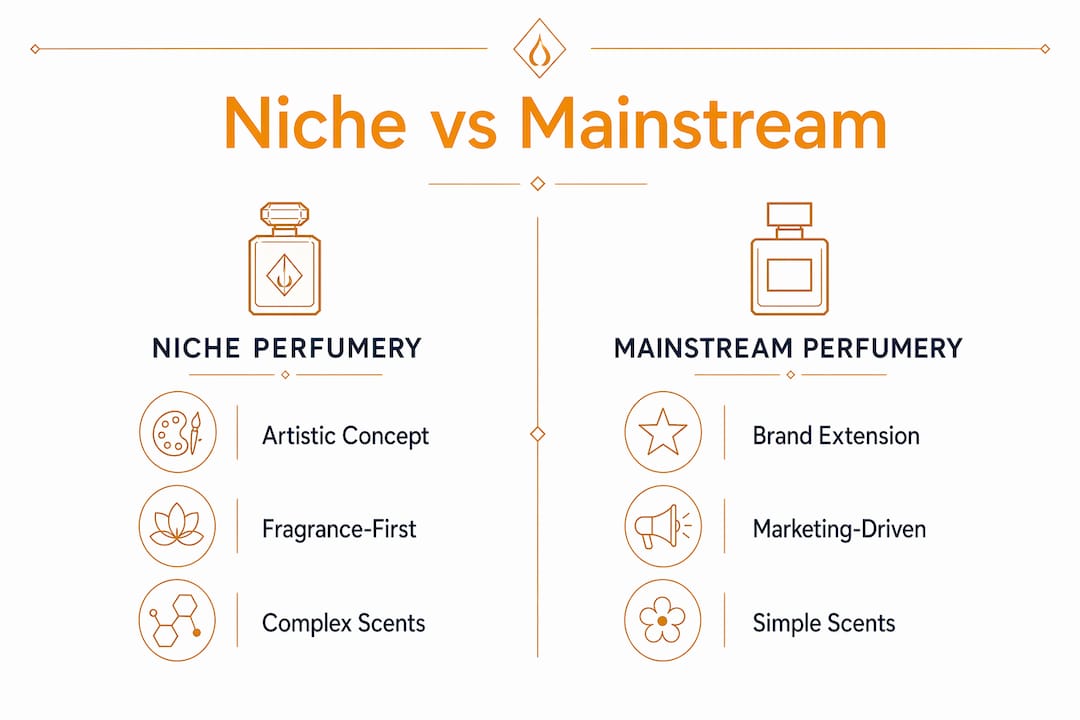
Niche brands operate on a fragrance-first business model. Every resource goes toward the scent itself. Mainstream houses, by contrast, allocate enormous budgets to advertising, celebrity contracts, and retail placement. The fragrance budget shrinks accordingly.
The creative freedom in niche perfumery also produces more complex scent architecture. Niche perfumers regularly use rare ingredients like oud, orris root, or natural ambergris at concentrations that would be cost-prohibitive in mass production. These ingredients carry their own stories. Oud from Laos smells different from oud from Bangladesh, and a skilled perfumer uses that specificity intentionally.
Inspiration sources also differ sharply. Mainstream briefs often read like trend reports: “fresh, clean, approachable, unisex.” Niche briefs read more like creative writing. They reference specific artworks, historical periods, or personal memories. That difference in starting point produces a fundamentally different finished product.
How storytelling shapes the consumer experience
Storytelling in niche perfumery does more than make a fragrance interesting. It gives consumers a framework for understanding what they are smelling and why it matters to them.
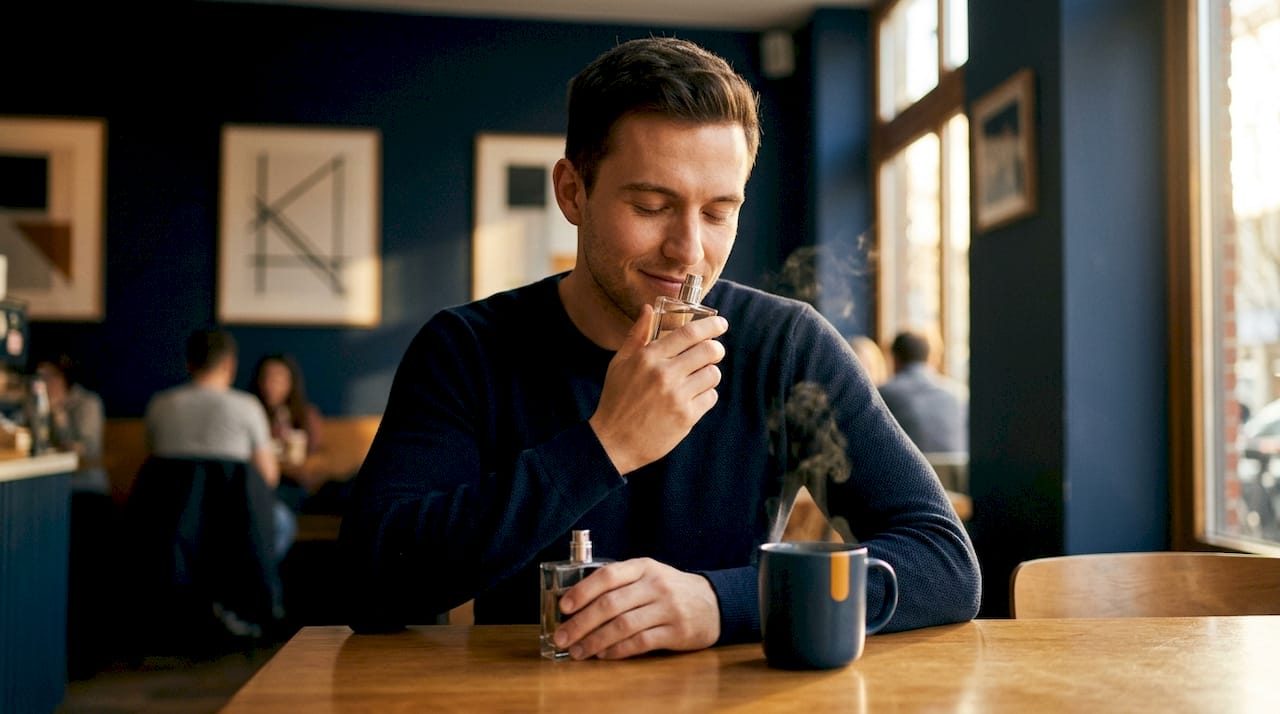
A well-crafted niche perfume narrative acts as a “North Star” for the consumer. It guides emotional connection and helps people articulate why a scent resonates with them. This is especially valuable when buying online, where you cannot smell before purchasing. A compelling story fills that sensory gap by creating anticipation and context.
The emotional dimension of niche perfume narrative also connects to personal memory and identity. Marc Chaya of Maison Francis Kurkdjian describes perfume as an “impulse of life” that helps wearers express personality beyond words. When a scent carries a story about solitude, adventure, or sensuality, the wearer borrows that story and makes it their own.
Consumers increasingly seek this kind of depth. After years of isolation, people look for scents with a clear point of view, something that reflects their individuality rather than blending into a crowd. Niche storytelling answers that demand directly.
- Emotional resonance. A story gives the wearer a reason to feel something specific when they spray the fragrance.
- Memory anchoring. Scent is the sense most directly linked to memory. A narrative gives that memory a richer context.
- Identity expression. Wearing a niche fragrance with a strong story signals something about who you are and what you value.
- Brand loyalty. Consumers who connect emotionally with a story return to the brand. Maison Francis Kurkdjian reported 140% growth in a nine-year-old scent by deepening storytelling and education rather than launching new products.
Pro Tip: Before buying a niche fragrance online, read the brand’s creative brief or perfumer interview first. Understanding the story before you smell the scent changes how your brain processes the fragrance when it arrives.
Real storytelling techniques used by niche perfume houses
The creative processes behind niche perfume narratives are more varied and rigorous than most people realize.
- Non-olfactory briefs. Nishane’s creation process begins with books, poetry, or art rather than scent references. The perfumer receives an emotional and artistic concept, then translates it into fragrance language through dozens of formula revisions.
- Minimalist storytelling. Escentric Molecules takes the opposite approach. Perfumer Geza Schön argues that storytelling is sometimes about what isn’t smelled. By stripping a fragrance to a single aroma molecule, the brand invites the wearer’s own skin chemistry to complete the story. The wearer becomes a co-author.
- Cultural and geographic anchoring. Nishane draws on cultural and historical inspirations rooted in Istanbul and Ottoman heritage. Ingredient choices reflect geography directly. A fragrance about the Bosphorus uses aquatic and resinous materials that evoke that specific body of water.
- Iterative development. A single niche fragrance can go through 30 or more formula revisions before the perfumer and brand agree the scent matches the story. This level of refinement is rare in mainstream production, where speed to market takes priority.
- Artistic collaboration. Some niche houses commission original artwork, poetry, or music to accompany a fragrance launch. The scent and the art tell the same story through different senses.
Common misconceptions about niche fragrance storytelling
The word “niche” carries no legal definition in the fragrance industry. Any brand can use it. This creates real confusion for consumers trying to find authentic niche perfumes with genuine storytelling behind them.
Price is the most common false signal. A $400 bottle is not automatically niche. Luxury packaging, celebrity licensing, and limited-edition marketing all inflate prices without adding artistic depth. True niche identity comes from a fragrance-first business model, named perfumer attribution, and selective distribution through specialty retailers rather than mass-market department stores.
- High price does not equal niche. Many designer flankers cost as much as genuine niche fragrances but follow a commercial brief.
- Luxury packaging is not storytelling. A beautiful bottle tells you about the brand’s design budget, not its creative vision.
- Celebrity names signal mainstream, not niche. Niche houses build identity around the perfumer, not a famous face.
- Selective distribution matters. True niche brands choose where they sell carefully. Finding a fragrance at every airport duty-free is a red flag.
Pro Tip: Check whether the brand names its perfumer prominently. If the perfumer’s identity is hidden or absent, the brand is likely prioritizing marketing over artistry. Named perfumers are a reliable marker of genuine niche storytelling.
How to engage with niche fragrance storytelling as a consumer
Connecting with the story behind a niche fragrance takes a little more effort than picking up a bottle at a department store counter. The reward is a much deeper and more personal relationship with the scent you wear.
- Read before you smell. Visit the brand’s website and read the creative brief, perfumer notes, or founder interviews before sampling. Context changes perception.
- Sample deliberately. Order samples or visit a specialty retailer. Wear a fragrance for a full day before deciding. Stories reveal themselves slowly, the same way a novel does.
- Follow content creators who specialize in niche perfumery. Reviewers on YouTube and fragrance forums like Fragrantica provide deep dives into the story and composition of specific scents. Their analysis adds layers to your understanding.
- Explore back catalogs. New launches get the most attention, but older fragrances from houses like Maison Francis Kurkdjian often carry the richest stories. Brands that focus on education over novelty reward curious consumers who dig deeper.
- Build your own olfactory story. Pay attention to which scents trigger memories or emotions for you personally. Over time, your fragrance collection becomes a record of your own experiences and identity.
The niche perfume selection process rewards patience. Rushing it means missing the narrative entirely.
Key Takeaways
Niche fragrance storytelling works because the narrative drives every creative decision, from ingredient sourcing to formula development, producing scents that carry genuine emotional and artistic weight.
| Point | Details |
|---|---|
| Story comes first | In true niche perfumery, the concept or emotion precedes the formula, not the other way around. |
| Niche is not a legal term | Any brand can claim “niche,” so consumers must evaluate perfumer attribution, distribution, and creative focus. |
| Storytelling builds loyalty | Maison Francis Kurkdjian grew a nine-year-old scent by 140% through education and storytelling rather than new launches. |
| Minimalism is also storytelling | Escentric Molecules proves that stripping complexity can be as powerful a narrative as layering rare ingredients. |
| Consumers co-create the story | A niche fragrance’s story is completed by the wearer’s skin chemistry, memory, and personal identity. |
Why storytelling is the soul of niche perfumery, not just the marketing
I have spent years around fragrance, and the single biggest mistake I see curious buyers make is treating the story as decoration. They read the brand copy, find it poetic, then ignore it the moment the bottle arrives. That is backwards.
The story is the instruction manual for how to wear the fragrance. When Nishane tells you a scent is rooted in Ottoman hammam culture, that is not a sales pitch. It is telling you to wear it close to the skin, in warm spaces, where the steam and heat will open the resins and woods the perfumer chose for exactly that environment. The story and the chemistry are the same thing expressed in two different languages.
Where I have seen storytelling fail is when brands use it to compensate for a fragrance that simply does not perform. A beautiful narrative cannot fix poor longevity or a thin sillage. The story provides the architecture, but wearability determines whether anyone actually keeps wearing it. The best niche fragrances deliver both: a story that earns your attention and a scent that earns a permanent spot in your collection.
My honest advice is to approach niche fragrance the way you approach a book you genuinely want to read, not one you feel obligated to finish. If the story does not move you, the fragrance probably will not either. But when the story and the scent align, the result is something no mainstream perfume can replicate.
— Rodney
Authentic niche fragrances at Aromatick
Aromatick carries a curated selection of authentic niche fragrances from houses that put storytelling at the center of their creative process. Every bottle on the platform is genuine, sourced directly to eliminate the authenticity concerns that plague gray-market fragrance retail.
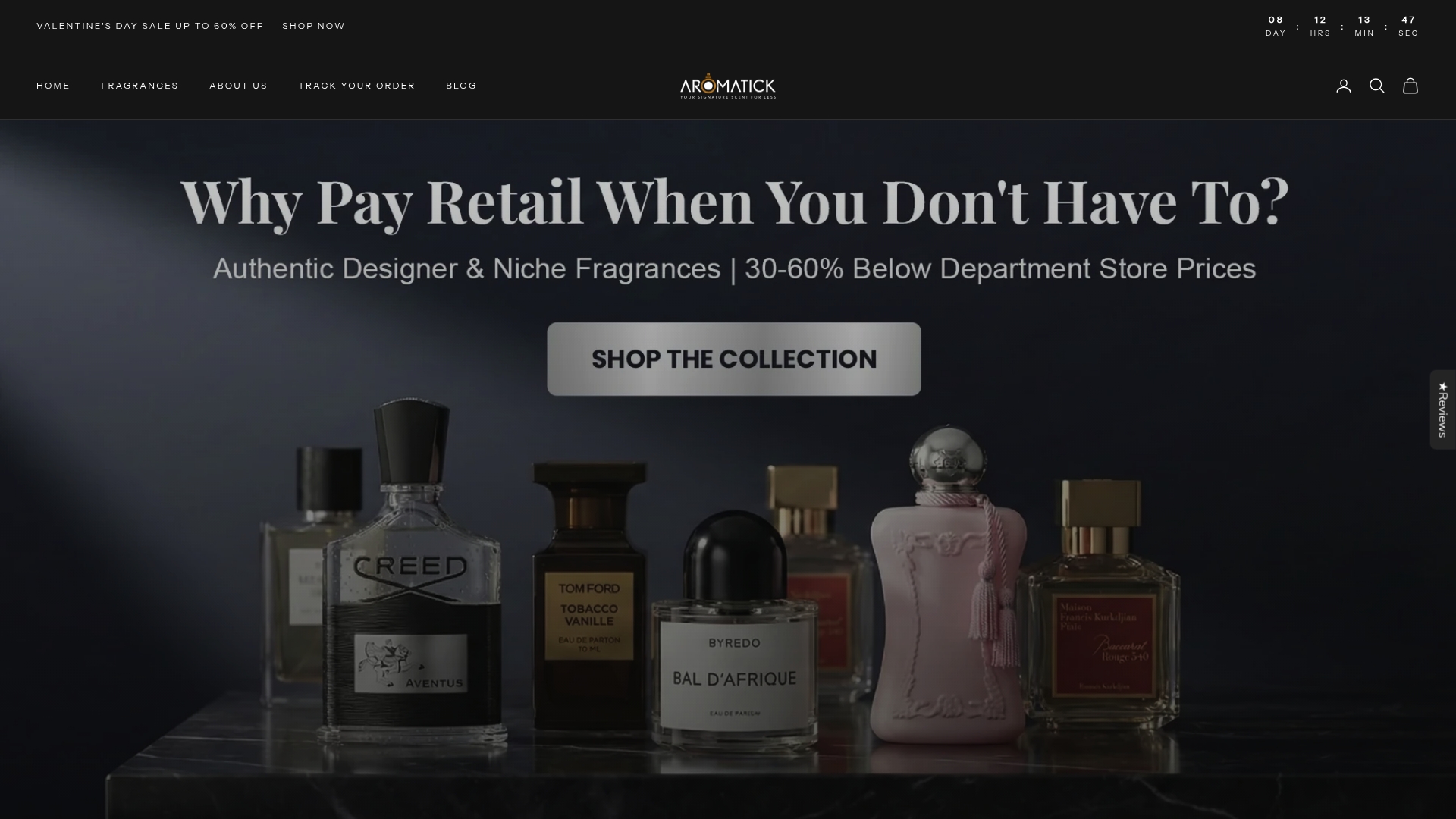
If you are ready to move beyond generic department store scents, Aromatick’s niche collection is the right place to start. The platform offers up to 60% off retail pricing, with free shipping and a satisfaction guarantee, so exploring a new fragrance story carries no financial risk. Brands like Initio Parfums Privés are available through Aromatick’s Initio collection, giving you access to some of the most narrative-driven perfumes available today at prices that make serious collecting realistic.
FAQ
What is niche fragrance storytelling in simple terms?
Niche fragrance storytelling is the practice of building a perfume around a specific narrative, emotion, or artistic concept rather than around commercial trends. The story shapes the ingredients, the formula, and the wearer experience from the very beginning.
How is olfactory storytelling different from regular perfume marketing?
Olfactory storytelling drives the actual creation of the scent, while regular perfume marketing adds narrative after the product is finished. In true niche perfumery, the story and the chemistry are developed together.
Can a high-priced fragrance still not be niche?
Yes. Price alone does not define a niche fragrance. True niche brands are identified by a fragrance-first business model, named perfumer attribution, and selective distribution rather than by retail price or packaging quality.
Why do niche brands focus on back catalog fragrances instead of new launches?
Deepening the story around existing fragrances builds stronger consumer loyalty than constant new releases. Maison Francis Kurkdjian demonstrated this by achieving 140% growth on a nine-year-old scent through education and storytelling rather than novelty.
How do I start connecting with niche fragrance stories as a beginner?
Read the brand’s creative brief and perfumer notes before you sample the scent. Wearing a fragrance with its story already in mind changes how you perceive and remember it, making the connection far more personal and lasting.

Leave a comment
This site is protected by hCaptcha and the hCaptcha Privacy Policy and Terms of Service apply.