
Why niche fragrance brands are so popular: A guide for scent lovers
TL;DR:
- Nearly half of consumers under 45 now use fragrance as a means of self-expression, reshaping the perfume industry towards small, creative niche brands. These brands focus on storytelling, unconventional ingredients, and community recommendations, differentiating themselves from mass-market designer brands. Authenticity verification and informed shopping are crucial for finding quality fragrances at fair prices, regardless of a brand’s niche or designer status.
Nearly half of consumers under 45 now use fragrance as a form of self-expression, and that single fact has quietly rewritten the rules of the perfume industry. The brands winning shelf space in 2026 are not always the ones with the biggest advertising budgets or the most recognizable celebrity faces. Increasingly, they are small, focused houses with distinctive creative identities, unusual ingredients, and stories worth telling. This guide explains exactly why niche fragrance brands have captured so much attention, how to tell a genuine niche brand from a marketing imitation, and what all of this means for you as a scent lover who wants quality without paying department store prices.
Table of Contents
- How scent became self-expression: The shift behind niche’s rise
- What makes a brand ‘niche’ — and why the details matter
- Why the internet and small communities boost niche popularity
- Niche vs. designer: Quality, value, and smart shopping
- Why chasing ‘niche’ can distract from what actually matters
- Find authentic niche and designer perfumes for less
- Frequently asked questions
Key Takeaways
| Point | Details |
|---|---|
| Self-expression drives demand | More buyers want unique scents that reflect their personality, making niche brands appealing. |
| True niche means authenticity | Real niche brands prioritize creative identity, limited distribution, and craftsmanship. |
| Digital communities fuel growth | Online micro-communities and transparency help niche scents earn trust and popularity. |
| Quality isn’t label-guaranteed | Both niche and designer scents vary by release, so research and verify before buying. |
| Shop smart for real savings | Use sourcing best practices to find genuine niche and designer perfumes at discounts. |
How scent became self-expression: The shift behind niche’s rise
For most of the twentieth century, fragrance was a status signal. You wore a name you recognized, one that communicated wealth or taste in a way others could immediately decode. That logic still exists, but it no longer dominates the market the way it once did.
Today, 45% of under-45 consumers use fragrance specifically to express their identity, not to follow a trend or signal a brand affiliation. That is a meaningful shift. It means a growing segment of buyers is asking a very different question at the point of purchase. Instead of “What does this brand say about me?” they are asking “Does this scent actually feel like me?”
Gen Z and Millennials are driving this change most visibly. Both generations grew up with social media, which gave them direct access to fragrance communities, reviewer channels, and micro-influencers who speak in detail about scent construction, longevity, and projection (how far a fragrance radiates from the skin). That exposure built a more educated buyer who values nuance over name recognition.
Several specific factors have accelerated this shift:
- Story-driven branding: Niche houses often build their entire identity around a single concept, a place, a memory, or a material. That specificity creates emotional resonance that mass-market launches rarely achieve.
- Unconventional scent profiles: Where designer houses often favor crowd-pleasing formulas, niche brands experiment with raw materials like oud (a dark, resinous wood), iris root, or smoke. These profiles attract buyers who want something genuinely different.
- Discovery and sample sets: The rise of niche perfume discovery sets has lowered the barrier to entry. Buyers can now try five or ten scents for the price of one full bottle, making exploration feel low-risk and genuinely enjoyable.
- Community-driven recommendations: Online forums, fragrance rating platforms, and YouTube channels have replaced the department store counter as the primary place where people learn about new scents.
For shoppers who want to navigate this landscape confidently, following niche perfume selection tips from experienced enthusiasts can save significant time and money while helping you find scents that actually match your preferences.
What makes a brand ‘niche’ — and why the details matter
The word “niche” gets used loosely, and that looseness creates real confusion for buyers. Understanding what the term actually means helps you shop with more confidence and avoid paying a premium for something that does not deliver on the promise.
A true niche perfume house is built around fragrance as its primary creative output, not as an extension of a fashion label, cosmetic line, or celebrity brand. These houses typically employ perfumers with significant creative freedom, maintain small and carefully curated portfolios, and distribute selectively rather than flooding every department store counter in the country.
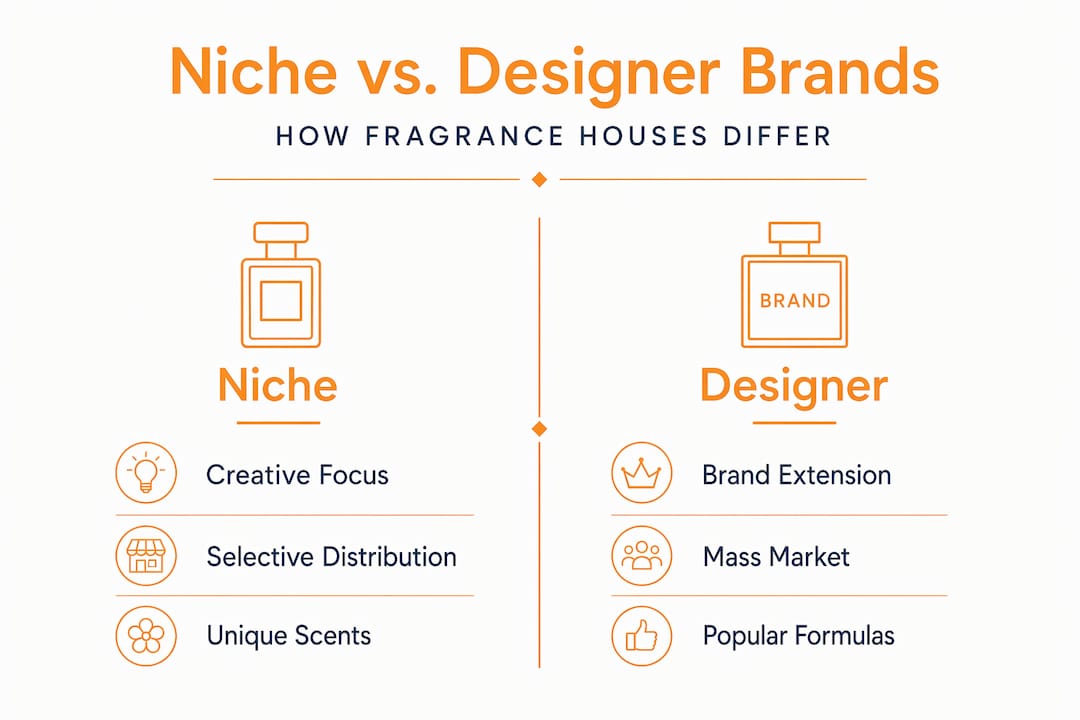
Here is how niche and designer brands generally compare across key dimensions:
| Factor | Niche brands | Designer brands |
|---|---|---|
| Primary focus | Fragrance as core creative product | Fragrance as brand extension |
| Portfolio size | Small and curated (often 10 to 50 scents) | Large and broad (often 100 or more) |
| Distribution | Selective: specialty boutiques, direct-to-consumer | Wide: department stores, duty-free, online mass retail |
| Development logic | Perfumer-led, concept-driven | Market research and trend-driven |
| Price point | Higher retail, but reflects ingredient quality | Variable, often inflated by marketing overhead |
| Creative risk | High: unusual materials, abstract concepts | Lower: proven commercial formulas |
The problem is that “niche” has become a marketing label that some brands apply without meeting the underlying criteria. A fragrance released by a large conglomerate under a boutique-sounding name is not the same as a scent produced by an independent house with a genuine creative vision.
When evaluating whether a brand is truly niche, look beyond the packaging and ask these questions:
- Who owns the brand, and is it part of a larger conglomerate?
- How many fragrances does the house produce, and do they share a coherent creative identity?
- Where is the product sold, and is distribution genuinely selective?
- Can you find traceable batch codes and clear production information on the bottle?
For guidance on verifying authentic fragrances, checking batch codes against independent databases is one of the most reliable methods available to buyers today.
Pro Tip: Before purchasing any fragrance labeled as niche, look up the batch code on a free verification site like checkfresh.com or checkcosmetic.net. These tools tell you the production date and confirm whether the code is consistent with legitimate manufacturing. A missing or unverifiable code is a red flag, regardless of how attractive the bottle looks.
Why the internet and small communities boost niche popularity
Even the most beautifully crafted fragrance needs an audience. The internet has been the single most important factor in giving niche brands access to buyers who would never have encountered them through traditional retail channels.
Digital channels reward specificity, and niche communities yield higher trust and conversion than broad influencer campaigns. That insight explains a great deal about why small fragrance houses have been able to compete with brands that outspend them by a factor of ten or more on traditional advertising.
“The internet rewards specificity. Smaller, more focused communities generate deeper trust and stronger purchasing decisions than mass-market influencer campaigns ever could.” — Nicole Parlapiano, as cited in Time
Here is how the digital dynamic plays out in fragrance specifically:
| Factor | Niche fragrance communities | Mainstream fragrance marketing |
|---|---|---|
| Trust level | High: peer reviews, detailed analysis | Lower: paid promotion, aspirational imagery |
| Influencer type | Micro-influencers and enthusiasts with deep knowledge | Mega-influencers with broad but shallow reach |
| Content depth | Notes breakdowns, longevity tests, comparisons | Lifestyle imagery, celebrity endorsement |
| Buyer outcome | Informed, confident purchase | Impulse or status-driven purchase |
| Community loyalty | Strong: members return and recommend | Weaker: brand loyalty tied to trend cycles |
For buyers navigating this environment, vetting your sources matters as much as vetting the product itself. Here is a practical process for doing that:
- Check the reviewer’s track record. Look for reviewers who acknowledge both strengths and weaknesses in fragrances. Anyone who only posts positive reviews is likely working from a promotional angle.
- Cross-reference across platforms. A fragrance that receives consistent praise on multiple independent platforms (dedicated fragrance forums, YouTube, and review aggregators) is more likely to deliver on expectations than one with reviews concentrated on a single channel.
- Look for community consensus on longevity and projection. These two factors are the most commonly misrepresented in marketing copy, and real-world community feedback is far more reliable.
- Verify the seller before the scent. A great fragrance from an unreliable seller is still a risk. Use authentic scent shopping tips to evaluate sellers by their return policies, customer feedback history, and product photo quality before committing.
- Join at least one dedicated fragrance community. Active communities share knowledge about new releases, counterfeit warnings, and discount opportunities that you simply will not find through mainstream retail channels.
Niche vs. designer: Quality, value, and smart shopping
Now that you understand the landscape, here is the honest truth that many fragrance articles avoid: niche does not automatically mean better. Quality varies by brand and release, not by the label attached to the bottle. Some designer releases use exceptional raw materials and sophisticated construction. Some niche releases are overpriced and underwhelming.
What niche does tend to offer is a higher likelihood of creative ambition and ingredient transparency. That is worth something, but it is not a guarantee of a scent you will love or a product that will last on your skin.
Practical differences and similarities between niche and designer fragrances include:
- Concentration and longevity: Many niche houses release fragrances as Extrait de Parfum (the highest concentration, typically 20 to 40% aromatic compounds), which can mean longer wear time per application. Designer houses offer this tier too, but it is less common in their standard lines.
- Ingredient quality: Niche houses are more likely to use higher-cost natural materials like real rose absolute, aged oud, or rare musks. Designer houses often substitute with high-quality synthetics that perform well but differ in character.
- Price per wear: A niche bottle at $300 that lasts 12 hours per application may actually cost less per wear than a designer bottle at $150 that fades within 3 to 4 hours. Do the math before assuming the cheaper bottle is the better value.
- Resale and longevity of production: Niche houses sometimes discontinue beloved fragrances without warning, while major designer houses tend to maintain flagship scents for decades. This matters if you want a reliable long-term signature scent.
When shopping for discounted niche or designer fragrances, authenticity verification requires checking seller reputation, product identifiers, and packaging details, because the label alone is never enough. Trusted resources on buying discounted perfumes consistently emphasize this point.
For budget-conscious shoppers, resources covering luxury scents savings tips and niche perfume expert tips can help you identify the best value opportunities without compromising on authenticity.
Pro Tip: Always insist on a return window when buying a discounted fragrance online, even if you are confident in the seller. A legitimate retailer offering authentic products will stand behind them. No return policy is a warning sign worth taking seriously.
Why chasing ‘niche’ can distract from what actually matters
Here is a perspective that years of watching the fragrance market develop has made clear: the pursuit of the niche label can become its own trap.
We have seen buyers spend significant time and money chasing fragrances simply because they carry a boutique name or appear on a “must-have niche” list, only to find that the scent does not resonate with them personally. Meanwhile, they overlook genuinely excellent designer releases or lesser-known niche houses that would have been a perfect match. The label became the goal, and the actual experience of wearing the fragrance became secondary.
The word “niche” is sometimes used too loosely in retail and should not be your final criterion for quality or authenticity. A fragrance that moves you, that feels right on your skin, that draws compliments and makes you reach for it every morning, is worth more than any label. That is the real standard.
The most experienced fragrance enthusiasts we have encountered share a common trait: they are not loyal to a category. They are loyal to quality, creativity, and personal connection. They wear a classic designer flanker alongside an obscure niche release without any sense of contradiction, because they have learned to evaluate what is actually in the bottle rather than what is printed on the box.
Our recommendation is this: use the niche category as a starting point for exploration, not as a destination in itself. Follow expert perfume selection tips to build a structured approach to sampling and evaluating fragrances across both categories. Confirm authenticity through traceable codes and reputable sellers. And then trust your nose. It is the only instrument that actually matters.
Find authentic niche and designer perfumes for less
You do not need to pay full retail to experience genuinely great fragrances, whether you are drawn to niche houses or iconic designer releases.
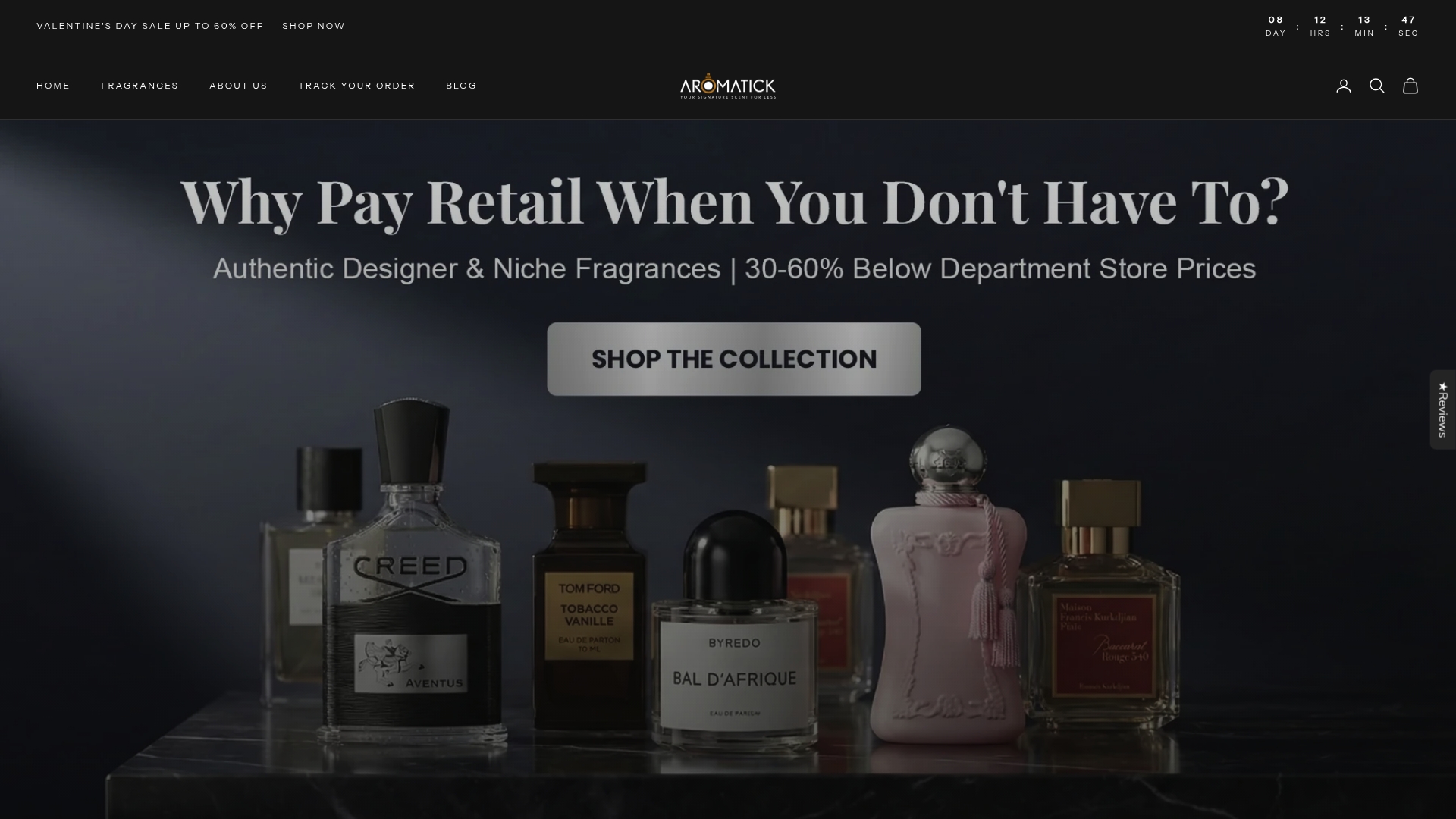
At Aromatick, we source and verify authentic fragrances directly, cutting out the overhead costs that inflate department store prices by up to 60%. If you want to explore the world of niche perfumery, our Initio niche fragrances collection is an excellent starting point, featuring one of the most respected independent houses in contemporary perfumery. For designer lovers, our designer perfume deals collection covers iconic releases at prices that make building a wardrobe of scents genuinely accessible. Women looking for their next signature can browse our curated women’s perfume collection for options across both categories. Every product comes with our authenticity guarantee, free shipping, and a clear return policy.
Frequently asked questions
Are niche fragrances always better than designer ones?
Not always. Quality varies by brand and release, so the label itself is not a guarantee of superior quality or a better experience on your skin.
How can I tell if a discounted niche perfume is authentic?
Check batch codes against independent verification tools, review seller reputation carefully, examine packaging for inconsistencies, and always confirm there is a valid return window. Disciplined sourcing checks are your best defense against counterfeits.
Why do younger shoppers prefer niche brands?
Many younger consumers use scent as self-expression, and niche brands offer personalization, unusual scent profiles, and discovery experiences that mass-market releases rarely provide. 45% of under-45 consumers specifically use fragrance to express their identity.
Does ‘niche’ on a bottle mean it’s a true niche perfume?
No. The label can be applied loosely or misleadingly. A true niche house is defined by its creative focus, selective distribution, and independent identity, not by what appears on the packaging.
What makes niche perfume shopping online safer?
Buy from retailers with clear authenticity guarantees, insist on high-resolution product photos and visible batch codes, and prioritize sellers with strong return policies. Careful sourcing checks significantly reduce the risk of receiving a counterfeit or mislabeled product.

Leave a comment
This site is protected by hCaptcha and the hCaptcha Privacy Policy and Terms of Service apply.