
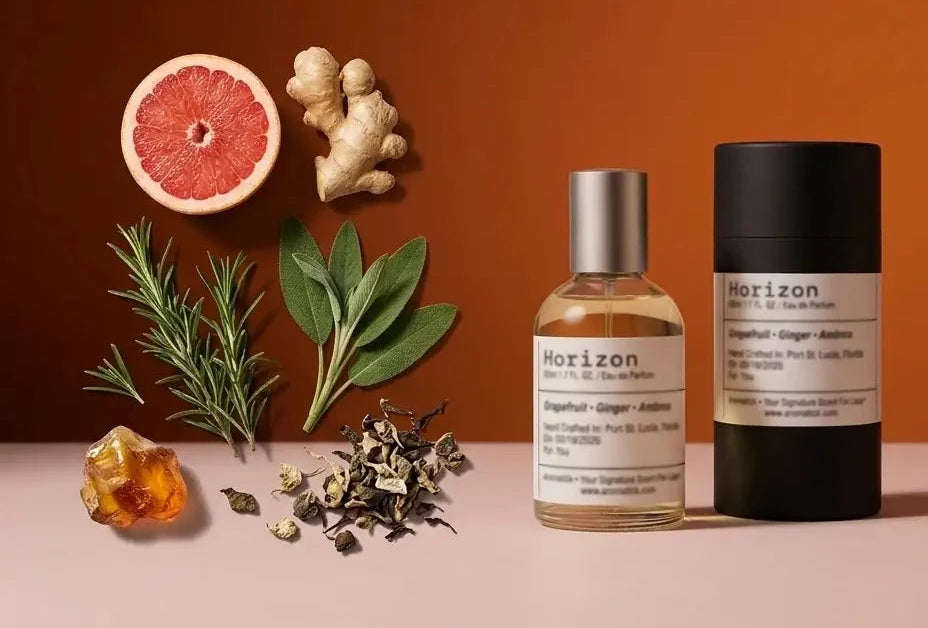

Three Wear Test: When Niche Beats Designer Perfume
Niche means perfumery-first, limited distribution, and creative freedom for the perfumer; designer means fashion-house origin, mass distribution, and marketing-driven development. Neither is automatically better. The right choice depends on your use case and budget, and the smartest move before spending real money on either is to sample first with a discovery set or decant.
TL;DR:
- Most niche fragrances are priced higher due to smaller production runs and natural ingredients, while designer scents incur costs from marketing and packaging.
- Sampling through discovery sets or decants is essential for accurately assessing a fragrance’s value and performance before committing to a full bottle.
- Brand distribution channels remain the primary indicator: niche brands sell mainly through specialty shops, whereas designer brands dominate mass-market retail.
- Being owned by the same conglomerates does not automatically make a niche perfume less authentic; distribution model remains the key classification factor.
- Price-per-wear calculations often reveal that affordable designer scents can be more cost-effective than pricier niche options, depending on longevity and reapplication needs.
Table of Contents
- Niche vs Designer Perfume: The Core Differences at a Glance
- What “Niche” Actually Means for a Perfume House
- What “Designer” Means for a Fashion-House Fragrance
- How to Judge Whether a Bottle Is Actually Worth the Price
- A Practical Checklist for Choosing Between Niche and Designer
- How to Sample and Buy Online Without Getting Burned
- Rodney’s Sampling Workflow for Smarter Fragrance Buys
- Common Myths About Niche and Designer Fragrances
- Building a Rotation That Uses Both Categories
- Try Before You Buy: Sampling Niche and Designer at Aromatick
- Sources
Niche vs Designer Perfume: The Core Differences at a Glance
The gap between niche and designer perfume comes down to five practical factors, and understanding them saves you from paying for a label instead of a fragrance.
- Distribution: Niche houses sell through specialty boutiques, select retailers, and their own sites; designer houses sell everywhere from department stores to airport duty-free.
- Composition: Niche formulas tend to prioritize architectural distinctiveness and higher natural-ingredient ratios; designer formulas are usually built for broad appeal through consumer testing.
- Longevity and sillage: Niche scents skew toward Eau de Parfum or Extrait concentrations with denser, longer-lasting bases; designer scents often sit at Eau de Toilette strength with lighter, more office-friendly projection.
- Branding: Niche brands lean on storytelling and perfumer identity; designer brands lean on the fashion house’s existing name recognition.
None of this makes niche inherently superior. It just means the two categories are built on different business models, and each model shows up in the bottle.
What “Niche” Actually Means for a Perfume House
“Niche” is a structural term, not a quality rating. A niche house is built around perfumery first, everything else second. That shows up in three ways: selective distribution, a perfumer with real creative latitude, and production runs small enough that a formula does not need to please a mass market to survive.
Because niche houses aren’t chasing shelf space at every mall retailer, they can afford higher concentrations of natural ingredients and take compositional risks that a designer brand’s marketing team would likely veto. This is why niche fragrances often smell more unusual, sometimes polarizing, and why they’re frequently released in Eau de Parfum or Extrait de Parfum strength rather than the lighter Eau de Toilette common on department store counters.
- Sold mainly through specialty perfumeries, brand boutiques, and curated online retailers rather than big-box stores.
- Smaller batch production, which supports unusual raw materials but also limits how widely a scent gets distributed.
- Perfumer-driven formulas, often credited to a named “nose,” instead of formulas shaped by a marketing brief.
- Skews toward EDP and Extrait concentrations for stronger longevity and sillage.
Here’s the wrinkle: several well-known niche houses are now owned by the same conglomerates that own designer labels. That ownership shift has blurred the line between the two categories since acquisitions accelerated in the 2010s, which is why distribution model, not corporate ownership, remains the most reliable way to classify a house.
Pro Tip: If you’re not sure whether a bottle counts as niche, check where it’s sold before you check who owns the company. Selective distribution through specialty retailers is a stronger signal than the brand’s backstory.
What “Designer” Means for a Fashion-House Fragrance
Designer perfumes exist because a fashion house wants a fragrance to extend its brand into a lower price point that more customers can actually afford. That single fact explains almost everything about how these scents get made, priced, and sold.
Designer fragrances are developed for mass appeal, tested against consumer panels, and distributed at scale through department stores, big-box retailers, and airport shops worldwide. That process smooths out anything too polarizing before a formula reaches shelves, which is why designer scents tend to be more universally wearable but less likely to surprise you.
- Backed by large marketing budgets, meaning packaging, advertising, and celebrity partnerships absorb a real share of the retail price.
- Consumer-panel testing during development, which favors broad likability over compositional risk.
- Usually released at Eau de Toilette strength, with EDP versions positioned as a step up.
- Wide, consistent availability, so you can usually find a signature designer bottle at the same price no matter where you shop.
This isn’t a weakness. A well-built designer fragrance like a classic aromatic fougère or a citrus-woody EDT can offer genuinely strong construction, dependable quality control, and performance that holds up all day, often for a fraction of what a niche bottle costs. For a daily driver you’ll wear five days a week, that consistency has real value.
How to Judge Whether a Bottle Is Actually Worth the Price
A $250 niche bottle and a $75 designer bottle aren’t priced on the same scale, and the sticker price alone tells you almost nothing about quality. What you’re really paying for splits into three buckets: raw materials, marketing and packaging, and distribution overhead.
Niche pricing tends to weight the first bucket more heavily. Designer pricing tends to weight the other two. Community observations from fragrance forums and hobbyist writeups consistently note that niche costs climb because of lower production volumes and pricier raw materials, while designer costs climb because of advertising and retail markup rather than what’s in the juice itself.
The most useful number you can calculate yourself is price-per-wear. A $220 niche Extrait that lasts 10 hours per spray and gets you 100 wears from a 50ml bottle costs about $2.20 a wear. A $70 designer EDT that needs three reapplications a day might cost more per wear over the same bottle life, once you factor in how much faster you go through it.
- Some designer flankers and niche-adjacent independent houses price competitively, with construction that rivals bottles twice the cost.
- Discovery sets and decants let you test $200+ bottles for a few dollars before committing.
- Smaller independent houses without conglomerate backing sometimes offer niche-level composition at closer-to-designer pricing.
Sampling before buying is the only reliable way to know which side of that math you’re actually on.
A Practical Checklist for Choosing Between Niche and Designer
Skip the debate over which category is “better” and work through this instead:
- Define the use case. A signature scent you’ll wear daily to work needs different traits than a special-occasion bottle you’ll wear a dozen times a year.
- Set your price-per-wear ceiling. Decide what you’re comfortable spending per wear, not per bottle, before you shop.
- Sample before you commit. Order a discovery set or decant and wear each contender for at least three full days before judging it.
- Track how it performs on your skin. Note opening, dry-down, longevity, and how much you reapply. Skin chemistry changes everything.
- Ask the seller about authenticity and returns. A legitimate retailer should be transparent about sourcing and offer a clear return path if a scent doesn’t work out.
Pro Tip: Judge a fragrance on day three of wearing it, not day one. Top notes fade fast, and what you smell after eight hours tells you far more about whether you’ll actually reach for that bottle again.
Red flags worth avoiding: sellers who won’t disclose batch codes, prices dramatically below market for a “designer” bottle, and listings with no return window at all.
How to Sample and Buy Online Without Getting Burned
Reputable buying guides consistently point to the same method: start with discovery sets or decants, then move to in-store or at-home skin tests over several days before spending money on a full bottle, especially with niche scents whose complexity can take multiple wears to reveal itself.
- Order a discovery set covering 4 to 6 scents in your price range and category of interest.
- Apply each sample to skin, not just paper, and wear it for a full day before forming an opinion.
- Record the opening, the dry-down after four hours, and how it smells the next morning on your clothes.
- Check packaging for correct batch codes, cellophane wrap, and box printing quality as basic authenticity markers.
- Confirm the retailer’s return window and satisfaction guarantee before purchasing a full bottle online.
Buyer’s remorse in fragrance almost always traces back to skipping the sampling step, not to picking the “wrong” category.
Rodney’s Sampling Workflow for Smarter Fragrance Buys
Start with a discovery set, not a full bottle. Move to a decant of your top two or three contenders. Then commit to a real three-wear test before you spend on 50ml or 100ml. Check the box printing, the batch code, and the invoice against the retailer’s description. If a seller won’t guarantee authenticity in writing, that’s your answer.
That sequence, paired with a structured selection workflow, removes most of the guesswork from choosing between niche and designer. A satisfaction guarantee and transparent invoicing matter more than which category the bottle falls into.
Common Myths About Niche and Designer Fragrances
The biggest myth is that “niche” automatically means better quality. It doesn’t. Niche is a business model description, referring to perfumery-first houses with selective distribution, not a certification of superior craftsmanship. Some niche houses distribute through boutiques and high-end retailers as pure positioning, while the actual formula inside performs no better than a solid designer EDT.
A second myth: designer means synthetic and cheap, niche means natural and premium. Both categories use synthetic aroma molecules extensively. Synthetics aren’t a downgrade. They’re often what gives a fragrance its longevity and its ability to project cleanly for hours. The real difference is typically the ratio and the budget behind sourcing, not the presence of synthetics at all.
A third confusion worth clearing up: niche, indie, and artisan aren’t interchangeable. Niche describes a perfumery-first business structure. Indie describes independent ownership. Artisan describes a perfumer who personally authors the formula. A house can be niche without being indie, and indie without being artisan. Conflating these terms is how shoppers end up assuming every small-batch bottle is hand-crafted by a single perfumer, when many are outsourced to the same fragrance houses that supply designer brands.
Last myth: higher price always means better performance. It doesn’t. Price reflects volume, materials, and distribution costs, not a guaranteed jump in longevity or sillage.

Building a Rotation That Uses Both Categories
I keep a couple of reliable designer Eau de Toilettes in daily rotation. They’re consistent, they’re inexpensive per wear, and nobody notices or cares that they’re not exotic. For dates, dinners, or anything memorable, I reach for a niche Extrait with more presence and complexity. A sensible starter rotation looks like one versatile designer EDT for daily wear and one niche EDP or Extrait for occasions. If you want a structured path to picking that niche piece, this guide to choosing niche fragrances is a good place to start.
— Rodney
Try Before You Buy: Sampling Niche and Designer at Aromatick
Aromatick carries authentic designer and niche fragrances side by side, with discounts of up to 60% off retail and a satisfaction guarantee behind every order.
That combination matters most when you’re trying to decide between categories instead of guessing from a description online. Rather than committing to a full 100ml bottle on faith, start with a discovery set or decant, run the three-wear test, and only step up to a full bottle once a scent has earned it on your own skin. If you’re drawn to a specific house, collections like Initio Parfums Prives show how niche pricing and designer pricing can sit closer together than most shoppers expect once discounts are factored in.
Browse the men’s fragrance collection for a place to start, sample a few contenders, and place an order once you’ve found the bottle worth wearing on repeat.
Sources
For deeper background on how these categories developed and what separates them structurally, Scent Chronicles breaks down niche positioning and distribution, PremierePeau outlines a working definition of niche perfume, and the Wikipedia entry on niche perfume covers how conglomerate acquisitions have blurred category lines over the past decade. Each source adds a different layer to the same practical point: sample first, then decide.
- Niche Perfumes: What They Are and Why They Matter
- Niche perfume — Wikipedia
- Niche vs Designer Perfumes: The Ultimate Guide to Understanding the Difference | ScentShelf Blog

Leave a comment
This site is protected by hCaptcha and the hCaptcha Privacy Policy and Terms of Service apply.