

$1 vs $5/mL: Perfume Subscription vs Decants for Fragrance Buyers
If you sample scents casually and don’t want to think about it, a subscription usually wins. If you’re chasing specific bottles and want to control exact cost per milliliter, decants win almost every time. The exception: subscriptions can beat decants on discovery when you have no idea what you like yet. If you already know your priority, skip to the decision checklist below.
TL;DR:
- Subscriptions often provide small, curated samples that make discovering new scents simple but limit control over specific bottle choices.
- Decants offer flexibility with exact fragrances and sizes, but sourcing quality and verifying authenticity depends heavily on seller trust.
- Cost per milliliter favors buying full bottles once annual usage exceeds 25 to 30 mL, while decants are more economical for testing expensive or niche fragrances.
- Running a short subscription trial followed by targeted decant testing can efficiently narrow down preferences without overspending.
- Buying from vetted decant shops or Aromatick guarantees authenticity and better value, especially when discounted full bottles are within reach.
Table of Contents
- Perfume Subscription vs Decants: The Quick Comparison
- How Perfume Subscription Services Actually Work
- What Are Decants and How Do You Buy Them?
- What Does Cost Per Milliliter Actually Look Like?
- Weighing Variety, Control, and Waste
- Is It Legal to Buy or Sell Decants?
- How Do You Decide Today?
- Why I Stopped Choosing One Method
- How Aromatick Fits Into Your Sampling Plan
- Sources
- FAQ
Perfume Subscription vs Decants: The Quick Comparison
A subscription is a recurring commitment, while a decant purchase is a one-time transaction. That distinction shapes almost everything else about the experience.
- Subscription samples: typically 5 to 8 mL per shipment, delivered monthly, drawn from a curated catalog you don’t fully control.
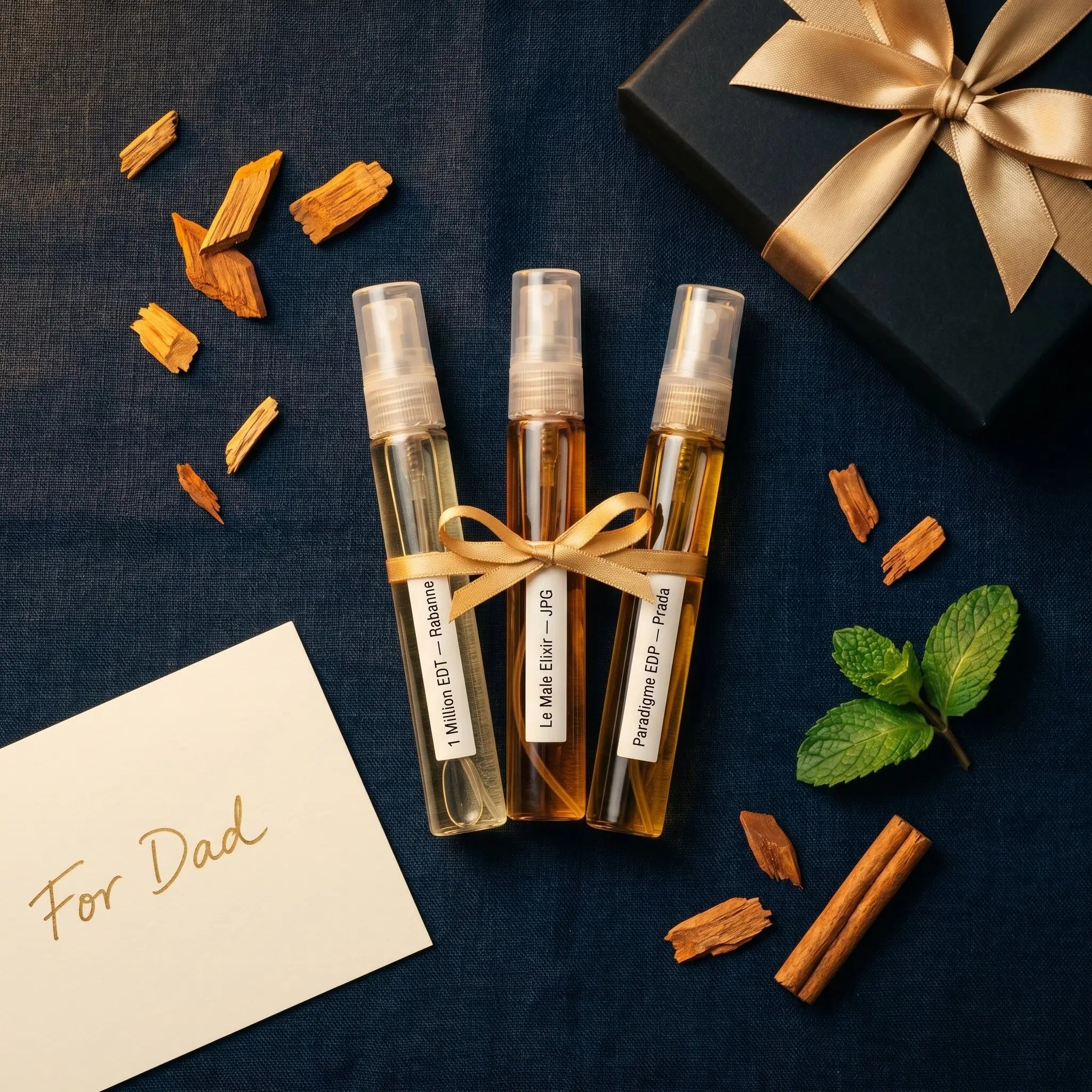
- Decant samples: commonly sold in 2 mL, 5 mL, or 10 mL sizes, purchased one at a time or in bulk, from whatever fragrance you choose.
- Cost structure: subscriptions run a flat monthly fee regardless of what arrives; decants are priced per bottle and per seller, so cost varies scent to scent.
- Catalog reach: subscriptions are bound to whatever their curators stock that cycle; decants can be sourced for almost any fragrance ever released, provided a seller carries it.
- Full bottles sit at the far end of the spectrum. Buying one only makes sense once you already know you’ll wear through it.
How Perfume Subscription Services Actually Work
Most fragrance subscription services run on a queue model. You build a wish list, the service ships from it (or substitutes something similar), and you get billed automatically until you cancel. Shipments generally land around 5 to 8 mL each, which is enough for two to three weeks of regular wear.
Where the value gets murky:
- Auto-renewal keeps charging even during months you skip wearing fragrance at all.
- Substitutions happen when your top pick is out of stock, and you often don’t find out until the box ships.
- Credit expiry on some plans means unused credits vanish instead of rolling over.
- Catalog limits mean niche or discontinued scents rarely show up, no matter how long you subscribe.
Tiered plans change your cost per milliliter significantly. A cheaper tier with smaller vials can actually cost more per milliliter than a pricier tier with larger pours. Read the fine print before assuming the bigger number is the worst deal.
What Are Decants and How Do You Buy Them?
A decant is a small portion of a fragrance poured out of a genuine bottle into a smaller vial. It’s not a diluted version or a knockoff. It’s the same juice, just less of it.
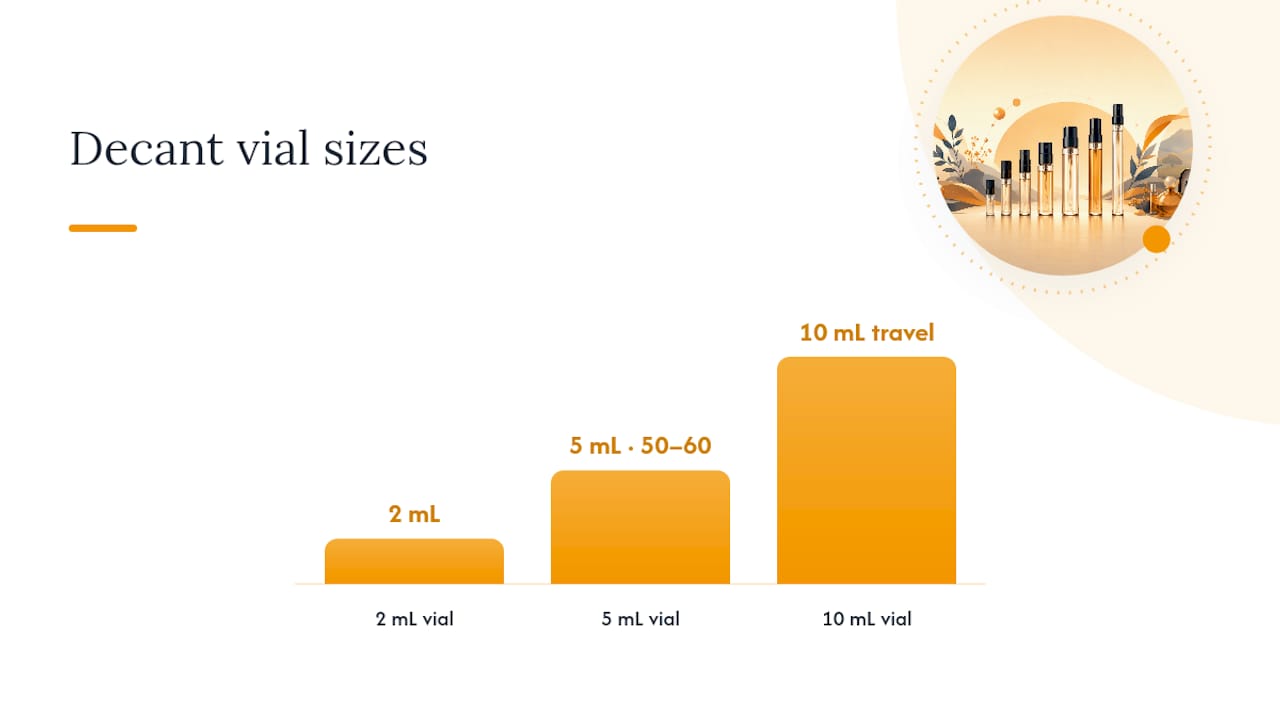
Sizing is standardized enough to plan around. A 5 mL vial holds roughly 50 to 60 sprays, which works out to about a month of wear at two sprays a day. A 2 mL vial gets you a handful of test wears. A 10 mL vial functions almost like a travel bottle.
Where you buy matters as much as what you buy:
- Vetted decant shops disclose sourcing and offer return policies, but charge a premium for that assurance.
- Community splits (fragrance forums, group buys) are cheaper but rely entirely on trust between strangers.
- Retailer testers decanted from store display bottles are usually legitimate, though quality can vary with how the tester bottle was handled.
The fastest authentication signal is disclosure. A seller who states whether the pour came from a tester or a sealed retail bottle, and who backs it with a return policy, is telling you they have nothing to hide. If you want a shortlist of shops that meet that bar, a rundown of vetted decant marketplaces is worth bookmarking before you buy blind.
What Does Cost Per Milliliter Actually Look Like?
Cost per milliliter is the one number that cuts through marketing on both sides of this debate. The math is simple: divide total price by total milliliters, then compare apples to apples.
- Bottle cost/mL = bottle price ÷ bottle size in mL.
- Subscription cost/mL = monthly fee ÷ mL received that month.
- Decant cost/mL = decant price ÷ decant size in mL.
Example A, designer fragrance: a $100 mL designer bottle runs roughly $1.00/mL. A subscription charging $16 a month for a 6 mL sample lands closer to $2.67/mL. A 5 mL decant of the same juice priced around $12 comes in near $2.40/mL. Here, subscriptions and decants land close together, and the full bottle wins if you know you’ll finish it.
Example B, niche fragrance: a $250 mL niche bottle is $2.50/mL. A decant priced at $25 for 5 mL sits at $5.00/mL, twice the bottle rate, but you’ve spent $25 instead of $250 to find out if you even like it. That gap is exactly why testing an expensive niche release through a small decant makes sense before committing to the flacon.
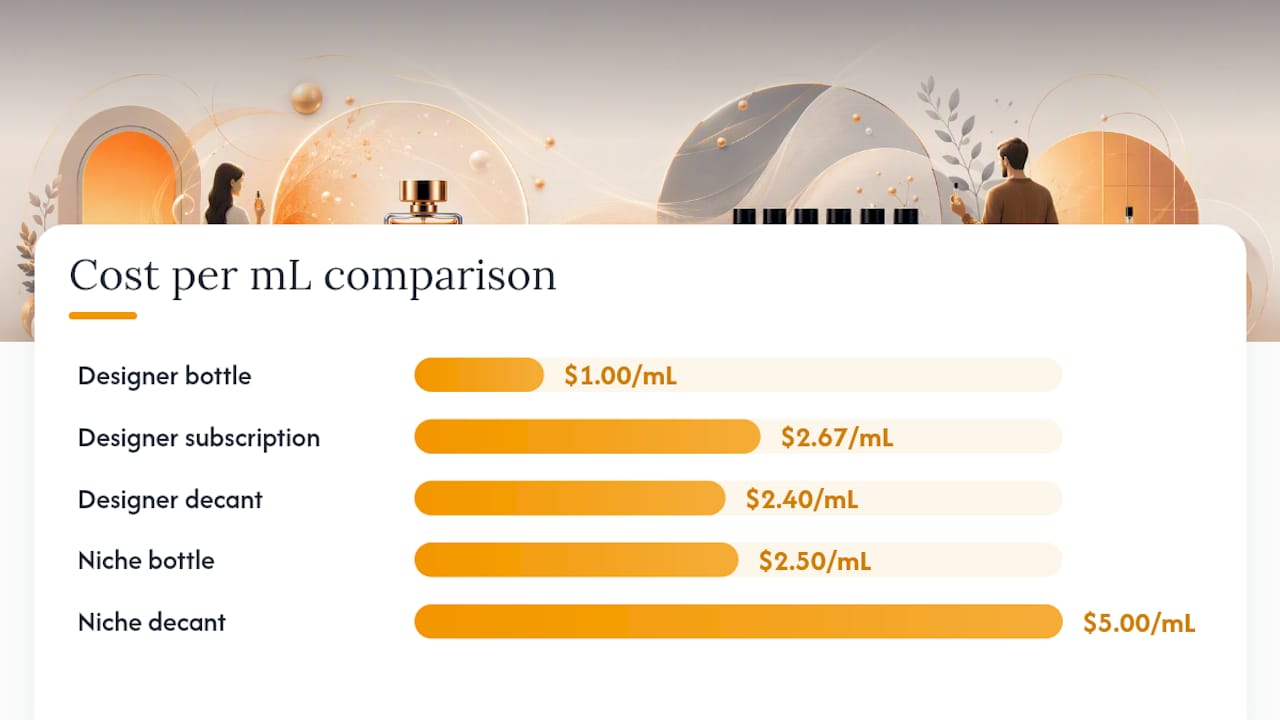
A useful rule of thumb: once your projected annual use of a single fragrance reaches roughly 25 to 30 mL, the cost/mL math from a buyer’s guide usually favors buying the full bottle over continuing to sample it piecemeal.
Weighing Variety, Control, and Waste
Subscriptions win on effortless discovery. You don’t have to research anything. New releases and limited editions occasionally show up in the queue before they hit general shelves, and the curation itself can introduce you to notes you’d never have searched for.
The tradeoff is control. You can’t guarantee what arrives, you’re locked into a monthly cadence whether or not you’re excited about that cycle’s picks, and unused months still get billed.
- Subscription pros: simplicity, curated discovery, occasional access to limited launches.
- Subscription cons: limited choice, fixed monthly cadence, paying even in months you don’t wear anything new.
- Decant pros: side-by-side testing of exact scents you pick, access to nearly any fragrance in existence, spend only on what interests you.
- Decant cons: sourcing quality varies by seller, packaging isn’t standardized, and shipping rules can complicate delivery.
Pro Tip: Run a short subscription trial for a season, then use decants to zero in on the two or three finalists it surfaced. You get the discovery upside without paying for a full year of samples you’ll never revisit.
Is It Legal to Buy or Sell Decants?
Decanting for personal use, splitting a bottle with a friend, pouring off a travel size, carries minimal legal risk. Selling decants commercially is a different matter entirely.
Once money changes hands at scale, sellers face trademark exposure, FPLA and FDA labeling obligations, and shipping compliance under hazmat rules. Luxury brands can and occasionally do challenge decanting operations, particularly when repackaging looks like it implies brand affiliation or when quality control is questionable.
- Sellers should disclose the vial’s source (tester versus sealed bottle) and avoid packaging that mimics the original brand.
- Buyers should confirm a seller ships via approved methods, since USPS requires surface-only transport for perfume as a flammable liquid, with absorbent packaging and volume limits per package.
- Anyone reselling should assume the first sale doctrine won’t shield them if repackaging damages the product or misleads buyers about affiliation.
None of this affects a hobbyist splitting a bottle with a friend. It matters if you’re buying from, or thinking about becoming, a commercial decant seller.
How Do You Decide Today?
Answer three questions honestly before you spend another dollar on samples.
- What’s your priority, variety or control? If you want to be surprised, lean subscription. If you’re chasing a specific list of bottles, lean decants.
- How many milliliters do you realistically wear per month? Under 10 mL suggests sampling stays cheaper than buying. Above 25 to 30 mL a year on one scent, a bottle likely pays for itself.
- Are you willing to vet sellers? Decants require a bit of homework on provenance and return policy. Subscriptions require none.
From there, the action plan is straightforward: run your cost/mL numbers, commit to a three-month subscription test if you’re still undecided, then buy targeted decants of your top contenders for a real side-by-side comparison.
Pro Tip: Order two or three decants at once and wear them on adjacent days instead of weeks apart. Drydowns are easy to misremember, and back-to-back testing is the only way to catch subtle differences in longevity and how a scent settles on your skin.
Why I Stopped Choosing One Method
Rodney: I run a short subscription window when I’m genuinely undecided, then switch to targeted decants once I have a shortlist. It’s the cheapest path to certainty I’ve found. When recommending sellers, I look for the same signal every time: does the vendor say plainly whether the pour came from a tester or a fresh bottle? If a shop doesn’t answer that directly, I don’t buy from them. Rotate methods with the seasons and you’ll spend less chasing scents you were never going to keep wearing anyway.
— Rodney
How Aromatick Fits Into Your Sampling Plan
Aromatick sells authentic bottles at up to 60% off department store pricing, which changes the break-even math from the section above in your favor. When a decant’s cost per milliliter starts creeping close to what a discounted full bottle would cost, that’s your signal to stop sampling and buy.
Every listing on the site discloses sourcing so you’re never guessing whether a bottle is genuine. Run your own numbers using our designer fragrance collection or niche fragrance collection: compare the discounted bottle price per milliliter against whatever you’re currently paying for decants or subscription samples of the same scent. If you’re still narrowing down which niche release deserves the full-bottle jump, our breakdown of niche versus designer value is worth a read first. Once your shortlist is set, browse the collection and see where the math actually lands.
Sources
- Is Decanting Perfume Legal? Personal Use vs. Selling - LegalClarity
- Start a fragrance subscription that actually saves — BestPerfumes
- Why fragrance decants are the smartest way to experience perfume — Bluegrass Fragrance
FAQ
Are Perfume Decants Worth It?
Yes, for testing expensive or niche fragrances before committing to a full bottle. A small decant reveals most of a scent’s longevity and drydown at a fraction of the flacon price.
Is Decanting Perfume Illegal?
No, decanting for personal use carries minimal legal risk. Selling decants commercially is where trademark, labeling, and shipping regulations come into play.
Who Has the Best Perfume Subscription?
There’s no single best option; it depends on catalog fit and how much control over specific scents you want. Compare sample size, monthly cost, and catalog breadth against your own cost-per-mL target before subscribing.
Is Scentbird or Scentbird Better Than Buying Decants?
Neither is universally better. Subscriptions suit low-effort discovery, while decants give you direct control over exactly which fragrance you test and at what volume.
How Much Fragrance Do I Need to Wear Before Buying a Full Bottle?
Once you’re using roughly 25 to 30 mL of one scent per year, a full bottle typically becomes cheaper per milliliter than continuing to buy samples.

Leave a comment
This site is protected by hCaptcha and the hCaptcha Privacy Policy and Terms of Service apply.