
Fragrance Value for Money: What You're Really Paying For
TL;DR:
- Fragrance value for money balances what you pay with scent quality, longevity, and satisfaction over time.
- Consumers often overlook key metrics like price per milliliter, concentration, and personal fit in favor of branding.
- Tracking these factors helps shoppers buy fragrances that deliver better performance and worth for their budget.
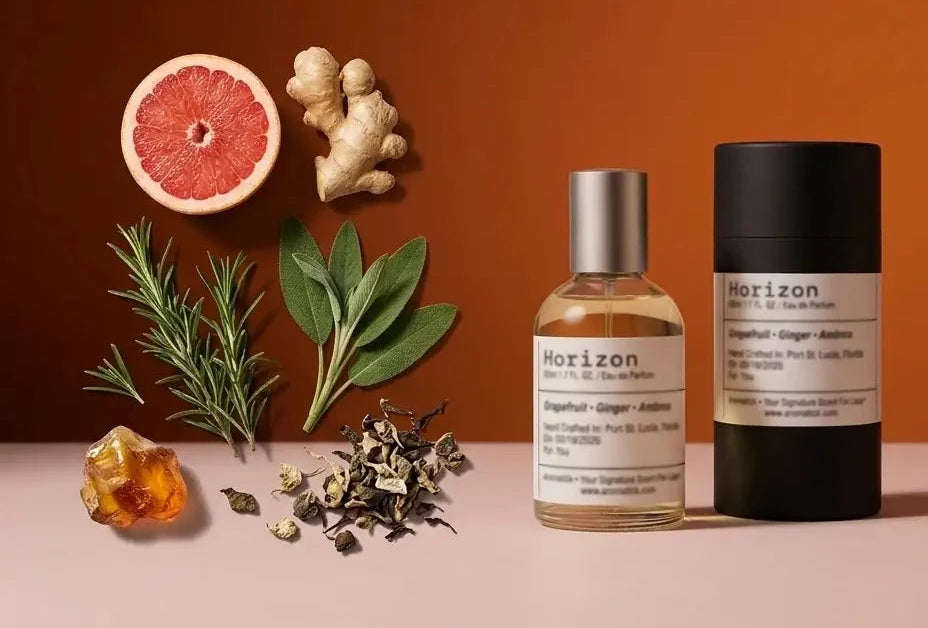
Fragrance value for money is defined as the balance between what you pay, the quality of the scent, and how much genuine satisfaction it delivers over time. Most shoppers focus on the sticker price and miss the metrics that actually matter: price per milliliter, concentration level, ingredient quality, and longevity on skin. A $30 bottle that lasts three weeks costs far more per wear than a $120 bottle that lasts six months. Understanding what is fragrance value for money means learning to read past the packaging and marketing to find scents that genuinely perform for your budget. Aromatick was built on exactly this principle: authentic fragrances at prices that make the math work in your favor.
What is fragrance value for money, and how do you measure it?
Fragrance value for money is the industry term “cost performance,” applied to perfume. It measures how much scent quality, longevity, and personal enjoyment you receive relative to what you spend. Price alone tells you almost nothing useful.
The global fragrance market rewards perception over performance. Luxury brands invest heavily in advertising, celebrity endorsements, and retail placement. Those costs flow directly into the retail price, not into the juice inside the bottle. Individual preference, skin chemistry, and usage context determine true perfume value more than any price tag does. That insight reframes the entire shopping decision.
Three metrics define fragrance cost performance: price per milliliter, concentration level, and longevity on your skin. A shopper who tracks all three makes consistently better purchases than one who relies on brand reputation alone. The sections below break each metric down into practical, usable guidance.
How to calculate fragrance price per milliliter
Price per milliliter is the most reliable metric for comparing the true cost of any fragrance purchase. The formula is straightforward: Total Price ÷ Bottle Volume (ml) = Price per ml.
Here is how that formula plays out across common bottle sizes:
| Bottle size | Retail price | Price per ml |
|---|---|---|
| 30 ml EDP | $55 | $1.83 |
| 50 ml EDP | $80 | $1.60 |
| 100 ml EDP | $130 | $1.30 |
| 100 ml EDT | $110 | $1.10 |
The 100 ml EDP looks like the best deal on price per ml. But that conclusion only holds if you finish the bottle before the fragrance degrades. Most perfumes remain stable for two to three years after opening. If you wear a scent occasionally, a 100 ml bottle may outlast its prime, making the 50 ml option the smarter buy.
Concentration level adds another layer to this calculation. Eau de Toilette (EDT) sits at roughly 5–15% aromatic concentration. Eau de Parfum (EDP) runs 15–20%. Extrait de Parfum reaches 20–40%. Higher concentration perfumes cost more per ml but require fewer sprays per wear and last longer on skin. Two sprays of an Extrait can outperform five sprays of an EDT, which changes the effective cost per wear significantly.
Brands also use bottle size reductions to raise prices without appearing to. A 100 ml bottle quietly reduced to 90 ml at the same retail price is a price increase of roughly 11%. Always verify the actual volume before comparing prices.
Pro Tip: Divide the bottle volume by your average daily sprays to estimate how many days the bottle will last. Then divide the retail price by that number to find your true cost per wear. That single number is more useful than price per ml alone.
What factors beyond price affect fragrance value for money?
Price per ml is objective. The factors below are qualitative, but they are just as real in determining whether a fragrance delivers genuine value.
- Ingredient quality. Luxury perfumes require fewer sprays and last longer because they contain more and higher quality natural oils. A well-sourced Bulgarian rose or Haitian vetiver costs significantly more than a synthetic substitute, and that difference shows up in how the scent evolves over hours on your skin.
- Longevity and scent evolution. A fragrance that opens with a bright citrus note, transitions into a warm floral heart, and dries down to a woody base delivers a richer experience than a flat, one-dimensional scent. That complexity is a form of value. It keeps the fragrance interesting across a full day.
- Packaging costs. Heavy glass bottles and ornate designs add to retail price but contribute nothing to scent performance. A beautiful bottle is pleasant to own, but it should not be the reason you pay a premium.
- Personal fit. Skin chemistry changes how a fragrance smells on you versus on someone else. A scent that performs beautifully on a friend may smell flat or sharp on your skin. Personal fit is not a soft consideration. It is the final filter that determines whether any purchase delivers real value.
“Consumers should focus on how a fragrance evolves on their skin and its scent profile depth rather than just its price. A fragrance that grows and changes across the day delivers more experience per dollar than one that fades within an hour.”
Luxury pricing also includes heritage, brand equity, and storytelling. These elements shape how you feel wearing a scent, which is a legitimate part of the experience. The key is knowing how much of what you pay goes toward the scent itself versus the narrative around it.
Designer vs. niche fragrances: how business models affect value
The business model behind a fragrance brand shapes its pricing more than most shoppers realize. Understanding this structure helps you identify where your money actually goes.
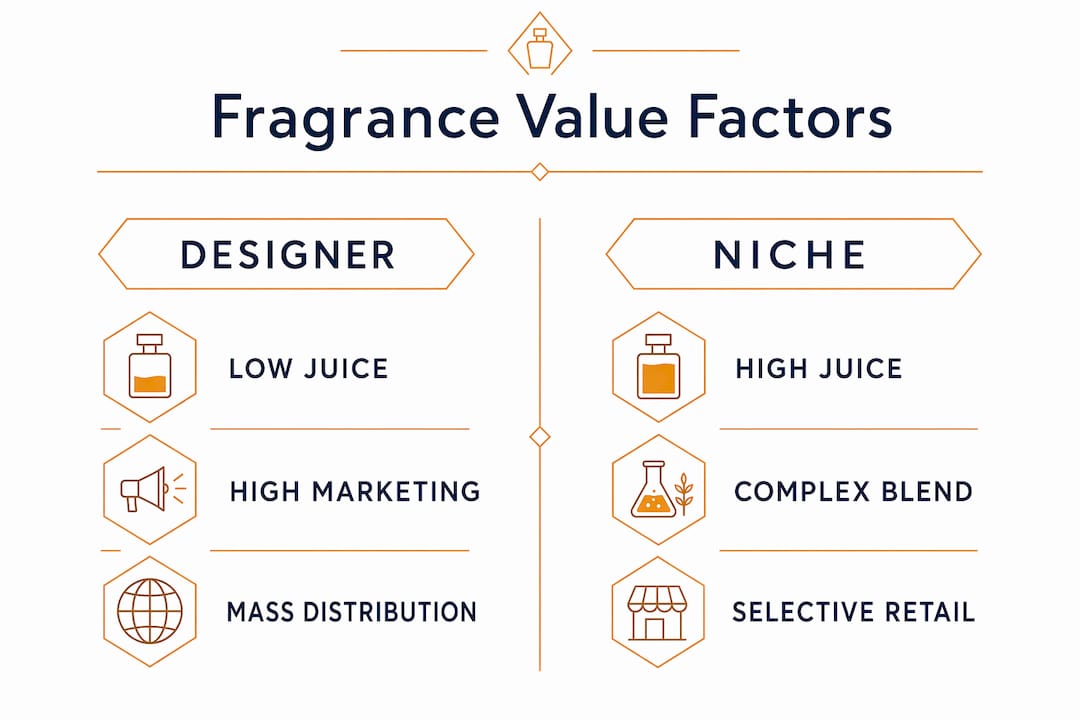
In mass-market designer fragrance, the juice inside the bottle accounts for just 3–8% of the retail price. Marketing takes 25–40%. Distribution absorbs another 30–40%. That means the scent itself is a small fraction of what you pay. The rest funds advertising campaigns, celebrity partnerships, and shelf space at department stores.
Niche perfumers operate on a different model. Niche perfumers often prioritize ingredient quality and complex formulas because their marketing budgets are smaller and their distribution is more direct. The result is that a higher share of the retail price goes into the actual formula. That does not make every niche fragrance superior, but it does mean the cost structure is more favorable to scent quality.
| Category | Juice as % of retail price | Marketing spend | Distribution model |
|---|---|---|---|
| Mass-market designer | 3–8% | 25–40% | Department stores, airports |
| Niche / independent | Typically higher | Lower | Direct, boutique, online |
Higher price does not guarantee better scent. A $300 designer fragrance may deliver less scent quality per dollar than a $90 niche option, depending on how each brand allocates its budget. The invisible craftsmanship of perfumer expertise and ingredient sourcing defines quality far more than the name on the box. Knowing this lets you shop across both categories with clear eyes. Aromatick carries both designer and niche collections at discounts up to 60%, which shifts the value equation further in your favor.
Practical tips for buying fragrances that offer true value
Getting the best value from a fragrance purchase comes down to a few consistent habits. These are not abstract principles. They are specific steps you can apply before every purchase.
-
Calculate price per ml before comparing bottles. Use the formula Total Price ÷ Volume (ml). Do this across every size option for the same fragrance before deciding which bottle to buy. The largest bottle is not always the best deal.
-
Match concentration to your lifestyle. If you wear a fragrance daily and need it to last through a full workday, an EDP or Extrait is more cost-efficient than an EDT, even at a higher per-ml price. If you wear fragrance occasionally or in warm weather, a lighter EDT may suit you better and reduce waste.
-
Estimate your actual usage rate. Count how many sprays you use per wear and how often you wear the scent. Divide the bottle’s total spray count by that number to estimate how long the bottle will last. A bottle that lasts 18 months delivers better value than one you finish in four months at the same price. Check out fragrance shopping tips for more guidance on matching bottle size to usage.
-
Use decants and discovery sets to avoid blind buys. Decants offer low-risk exposure to niche or expensive scents without a large upfront cost. Spending $10–$15 on a 5 ml decant before committing to a full bottle is one of the most financially sound habits in fragrance shopping.
-
Prioritize scent experience over packaging. A beautifully designed bottle is a pleasure to display, but it does not make the fragrance last longer or smell better. Allocate your budget toward the scent itself. Explore affordable niche fragrances that put ingredient quality ahead of elaborate presentation.
-
Track how the scent evolves on your skin. Wear a fragrance for a full day before deciding whether it delivers value. Top notes fade within 30 minutes. The heart and base notes define the actual wearing experience. A scent that smells great at the counter but disappears in two hours is not a good value at any price.
Pro Tip: Keep a simple note on your phone with each fragrance you own: bottle size, purchase price, and average sprays per day. After a month, you will know exactly which scents deliver the best cost per wear. That data is more useful than any review.
Key takeaways
Fragrance value for money requires three inputs working together: an objective cost metric (price per ml), a performance metric (longevity and concentration), and a personal fit metric (how the scent evolves on your skin).
| Point | Details |
|---|---|
| Use price per ml | Divide total price by volume to compare any two fragrances objectively. |
| Factor in concentration | Higher concentration means fewer sprays and longer wear, lowering cost per wear. |
| Avoid blind buys | Decants and discovery sets reduce financial risk on unfamiliar or expensive scents. |
| Look past packaging | Bottle design adds to retail price but does not improve scent quality or longevity. |
| Know where your money goes | In designer fragrances, only 3–8% of the retail price funds the actual juice. |
The metric most shoppers ignore
Most people I talk to about fragrance value focus on two things: the brand name and the retail price. Both are almost irrelevant to actual value. The number that matters is cost per wear, and almost nobody calculates it before buying.
I have seen shoppers pass on a $90 niche fragrance because it felt expensive, then spend $65 on a designer EDT that faded within three hours. The niche option, worn twice a week for a year, would have cost less per wear and delivered a far richer scent experience. The math was never close. The perception was.
The other mistake I see constantly is buying large bottles to save on price per ml without accounting for shelf life. A 200 ml bottle of a fragrance you wear twice a month will likely degrade before you finish it. You have not saved money. You have paid for fragrance you will throw away.
My honest advice: treat fragrance shopping the way you would treat any considered purchase. Run the numbers, test the product before committing, and trust your nose over the marketing copy. A scent that genuinely suits your skin chemistry and lasts through your day is worth more than a famous name that fades by noon. Price is just the starting point of the conversation.
— Rodney
Aromatick makes the value calculation easier
Aromatick carries authentic designer and niche fragrances at discounts of up to 60% off standard retail prices. That discount directly improves your price-per-ml calculation before you even open the bottle.
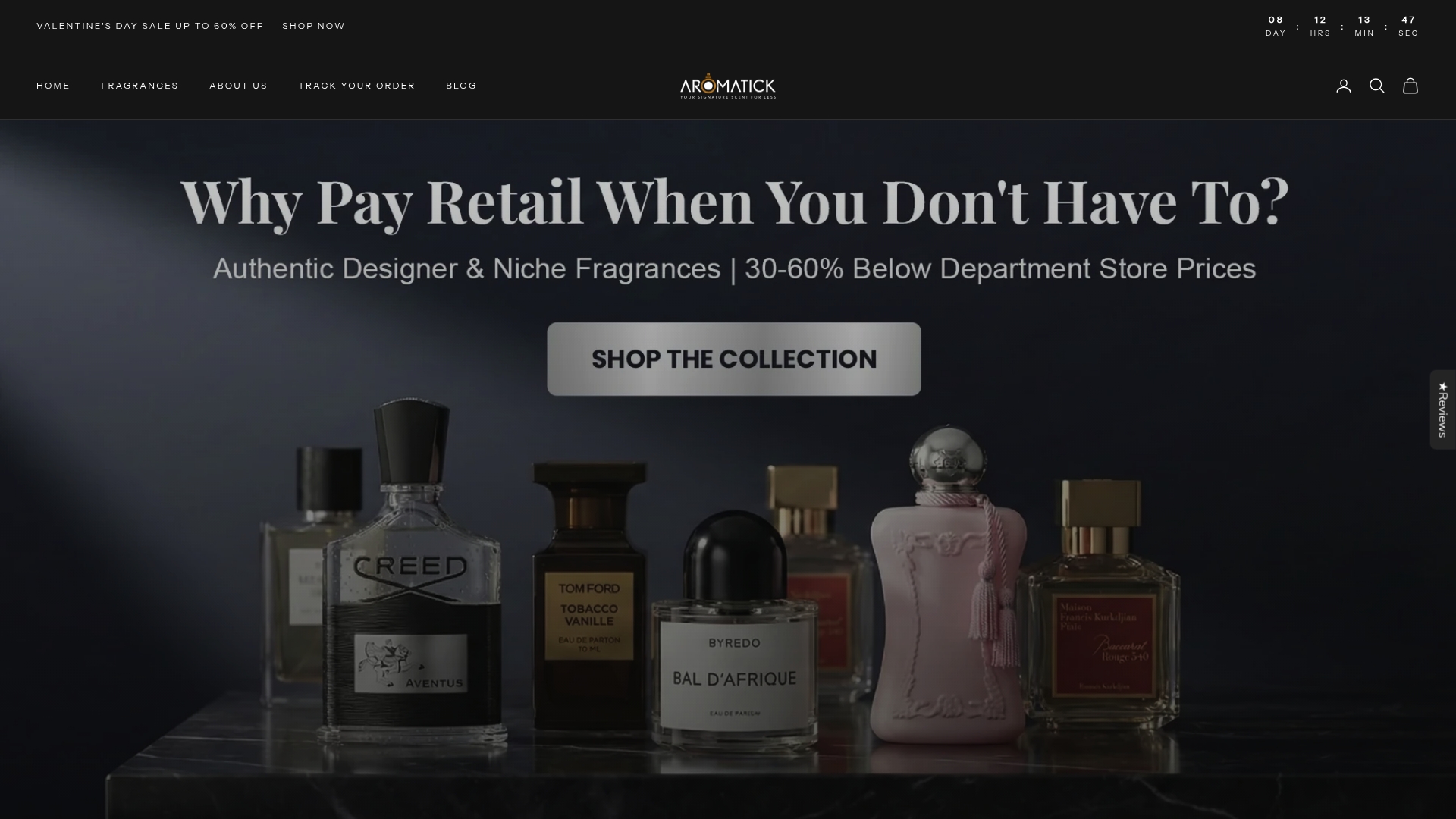
Shoppers who want to apply the cost-per-wear approach will find the math works strongly in their favor across Aromatick’s designer fragrance collection, where genuine products from major houses are priced well below department store rates. For those drawn to ingredient-forward options, the niche fragrance collection features independent and artisan houses that allocate more of their budget to the formula itself. Free shipping, secure payments, and a satisfaction guarantee remove the remaining friction from buying smart.
FAQ
What is fragrance value for money?
Fragrance value for money is the balance between what you pay and what you receive in scent quality, longevity, and personal satisfaction. It is best measured using price per milliliter combined with cost per wear.
How do I calculate fragrance price per ml?
Divide the total retail price by the bottle volume in milliliters. A $100 bottle containing 50 ml costs $2.00 per ml. Use this formula to compare any two fragrances objectively.
Does a higher price mean better fragrance quality?
Not consistently. In mass-market designer fragrances, only 3–8% of the retail price funds the actual scent. A higher price often reflects marketing and distribution costs rather than superior ingredients.
Are niche fragrances better value than designer ones?
Niche fragrances typically allocate a larger share of their budget to ingredients and formulation. That does not make every niche fragrance superior, but the cost structure is more favorable to scent quality than the mass-market model.
How do decants help with fragrance value?
Decants let you test a fragrance on your skin across a full day before committing to a full bottle. That low-cost trial prevents expensive blind buys and helps you confirm that a scent genuinely suits your skin chemistry and lifestyle.

Leave a comment
This site is protected by hCaptcha and the hCaptcha Privacy Policy and Terms of Service apply.