
How Packaging Reveals Whether Your Perfume Is Genuine
Packaging can strongly indicate whether a perfume is authentic, though it is not definitive proof on its own. The highest-confidence cues to check immediately are:
- Sharp, high-resolution printing with consistent fonts and no misspellings
- Tight, heat-sealed cellophane with neat folds and no bubbling
- Matching batch/lot codes on both the box and the bottle base
- Heavy, smooth glass with minimal seams and no cloudiness
- Secure cap with a clean fit, and an atomizer that sprays a fine, even mist
The role of packaging in authenticity verification is real and practical, but clever frauds can re-bottle genuine packaging with counterfeit liquid. If any cue seems off, confirm the scent’s performance and check the seller’s guarantees before completing a purchase.
Pro Tip: Photograph the box bottom, bottle base, and barcode before you buy. Those images become your evidence if you need to dispute authenticity later.
Key Takeaways
Packaging is the most accessible authenticity screen for fragrance shoppers, but it works best when combined with seller verification and a scent check.
| Point | Details |
|---|---|
| Print and seal quality | Sharp printing, tight cellophane, and correct regulatory symbols are the fastest counterfeit filters. |
| Batch code matching | The code on the box and the bottle base must match in font, method, and placement. |
| Bottle and hardware | Heavy, smooth glass, a secure cap, and a consistent fine-mist atomizer are high-confidence authenticity cues. |
| Seller guarantees | An explicit authenticity guarantee and a clear return policy matter as much as the packaging itself. |
| Aromatick | Aromatick backs every order with a 100% authenticity guarantee, verified supply chain, and a documented claims process. |
Table of Contents
- How packaging reveals a genuine perfume box
- Batch codes and serial numbers: how to find and verify them
- What the bottle itself tells you about authenticity
- Where you buy matters as much as what you inspect
- What to do if you suspect a counterfeit
- How to choose a seller you can trust
- How Aromatick verifies authenticity before you receive your order
- How packaging evolved into an anti-counterfeiting tool
- Anti-counterfeiting technologies built into modern packaging
- Why packaging shapes your sense of trust before you open the bottle
- How packaging fights counterfeits across industries
- The real limits of packaging checks
- Authentic fragrances, guaranteed: shop Aromatick’s verified collection
- Sources
How packaging reveals a genuine perfume box
Counterfeit boxes routinely fail on print quality. Genuine perfume-box printing is sharp, high-resolution, and perfectly aligned; blurry text, inconsistent font weights, misspellings, or pixelated logos are frequent counterfeit tells. Run your fingertip across the text: authentic regulatory copy feels crisp, not smudged.
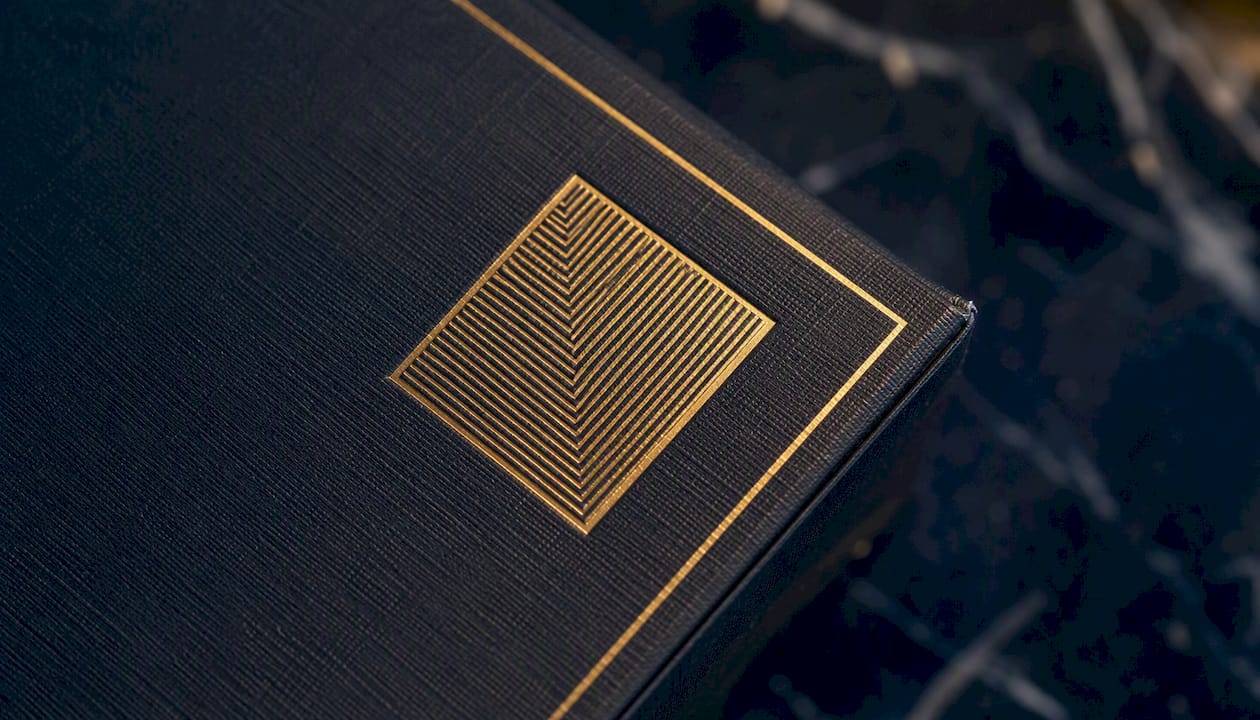
Foil stamping and embossing are harder to fake convincingly. On a real box, foil is uniform in color and sits flush with the surface; debossed lettering has clean, sharp edges. Shallow impressions, off-color metallic patches, or foil that peels at the corners all signal a poor reproduction.
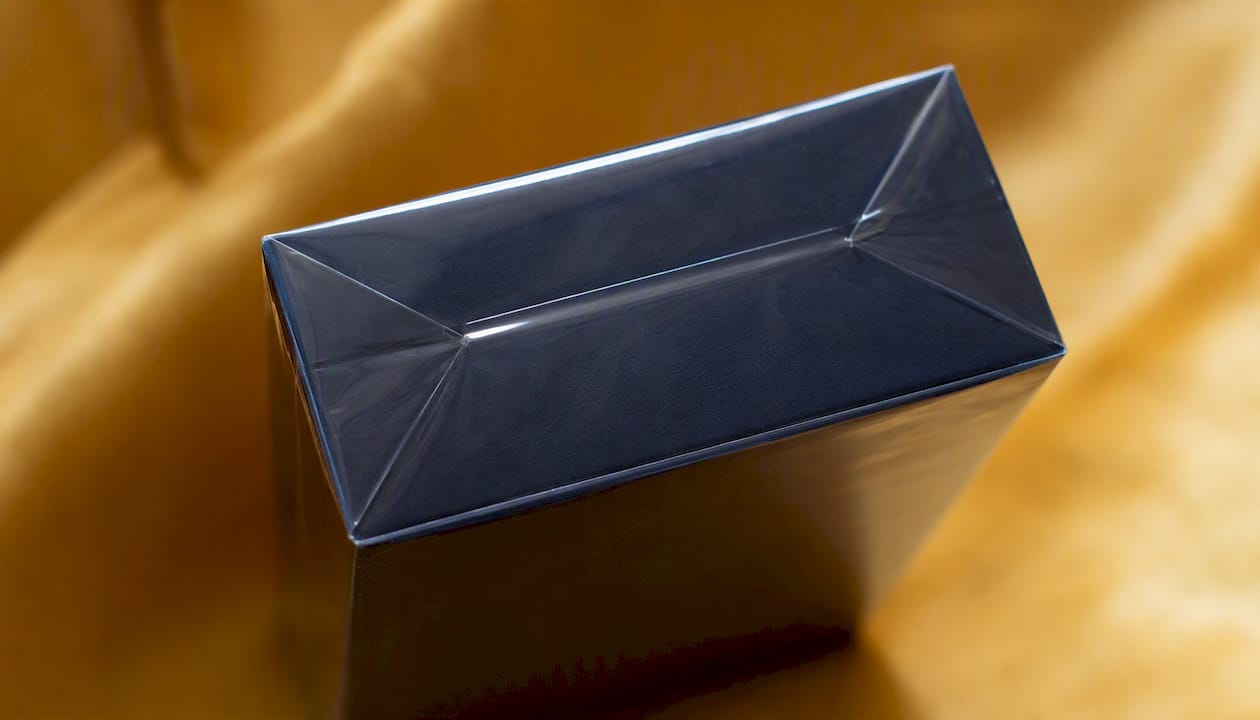
Tightly wrapped, heat-sealed cellophane with neat folds is typical of authentic packaging. Loose, bubbled, or glued wrapping is a common counterfeit sign. Check the corners: genuine shrinkwrap is folded flat and sealed with heat, not tape or excess adhesive.
Barcodes and regulatory symbols deserve a close look too. Authentic boxes carry a scannable barcode, a correct Period After Opening (PAO) symbol, an “e” mark, and country-of-origin text in the right positions. Blurred or distorted barcodes and missing regulatory text are red flags.
Pro Tip: *Use your phone camera to zoom into the printed text.
Batch codes and serial numbers: how to find and verify them
Batch codes are one of the most reliable packaging design authenticity checks available to shoppers. Here is a step-by-step process:
- Locate the code on the box. It is usually printed or debossed on the bottom flap, near the barcode, or along a side panel.
- Find the matching code on the bottle. Check the bottle base or the underside of the label. The code should use the same font, printing method, and placement style.
- Compare visually. Every legitimate perfume box usually has a batch code that must match the code on the bottle; mismatched or stickered codes are strong counterfeit indicators.
- Run a preliminary lookup. Free batch-check tools such as CheckFresh or CheckCosmetic can decode the production date. A code that decodes to a date years before the product was supposedly new warrants caution.
- Contact the brand directly if the lookup raises questions. Most major fragrance houses have a consumer-care line or email that can confirm whether a batch code is valid.
A few important caveats: codes can be copied from genuine boxes and reprinted on fakes, and re-bottling scams replace authentic liquid inside genuine packaging. Matching codes plus identical print quality is a high-confidence indicator, not a guarantee.
What the bottle itself tells you about authenticity
Luxury fragrance houses treat the bottle as an extension of the brand experience, engineered with weight, balance, and precise hardware that reflect genuine quality control. Authentic bottles are crafted from heavier, smoother glass with minimal seams; counterfeit bottles tend to be lightweight, rough-finished, or show visible bubbles and uneven seams.
Check these physical cues:
- Glass weight and clarity: Hold the bottle. A genuine bottle feels substantial and the glass is clear, free of cloudiness or trapped air bubbles.
- Logo and label application: Engraving and debossing on real bottles are precise and deep. A printed sticker used in place of engraving is an immediate red flag.
- Cap fit: The cap should seat firmly with no wobble. Magnetic or click closures, where the design calls for them, should engage cleanly.
- Atomizer performance: Caps and atomizers on genuine fragrances fit securely and produce a fine, consistent mist; loose caps or sputtering sprayers are common signs of inferior assembly. The dip tube inside should reach near the bottle’s base.
- Liquid appearance: The fragrance should be clear and consistent in color. Floating particles or sediment suggest contamination or degraded ingredients.
Where you buy matters as much as what you inspect
Packaging checks only go so far if the seller is the problem. Unauthorized sellers, suspiciously low prices, and mislabeled or poor-quality packaging are common signs associated with counterfeit cosmetics and fragrances; consumers should prioritize buying from authorized channels when possible.
Watch for these red flags:
- Price too far below market: A designer fragrance sold at a fraction of its typical retail price is a warning sign, not a bargain.
- Inconsistent packaging across units: If two bottles of the same scent from the same seller look slightly different, the supply chain is suspect.
- “Limited edition” claims that don’t match brand channels: Verify any special-edition claim on the brand’s official website before buying.
- No proof of authorized distribution: Ask the seller for a purchase invoice or confirmation of authorized supply. A legitimate seller can provide this.
- Thin return policy or no authenticity guarantee: Sellers who refuse returns or cannot state an explicit authenticity guarantee are higher risk.
For authentic discounts on designer fragrances, the safest approach is to buy from retailers who can document their supply chain.
What to do if you suspect a counterfeit
Acting quickly preserves your options. Follow these steps:
- Stop using the product. Counterfeit cosmetics and fragrances have been found to contain harmful undisclosed ingredients.
- Document everything. Photograph the box bottom, bottle base, batch code, barcode, and your proof of purchase.
- Contact the seller. Request written clarification on the product’s origin and ask for a refund if authenticity cannot be confirmed.
- Reach out to the brand. Send your photos and batch code to the brand’s consumer-care team. Documenting evidence and contacting the brand or seller are recommended steps when authenticity is in doubt.
- Escalate if needed. If the seller refuses to refund, open a dispute with your payment provider. For online purchases, this is typically straightforward within 60–120 days of the transaction.
- Report to authorities. The FBI’s Internet Crime Complaint Center (IC3) at ic3.gov and the U.S. Consumer Product Safety Commission (CPSC) both accept reports of counterfeit goods.
Pro Tip: Keep the original packaging and do not discard receipts. Brands and payment providers both require physical evidence to process authenticity disputes.
A short message to send a seller: “I have concerns about the authenticity of this product. Please provide proof of authorized purchase or a full refund within [X] days. I have documented the batch code and packaging and will escalate to my payment provider if this is not resolved.”
How to choose a seller you can trust
The seller’s policies are a packaging-independent layer of protection. Before you buy, look for:
- An explicit authenticity guarantee: The seller should state in writing that products are 100% genuine and offer a remedy if they are not.
- A clear return and refund policy: Time-limited money-back or exchange policies that specifically cover authenticity issues are the gold standard.
- Secure payment options: SSL-encrypted checkout and recognized payment processors (Visa, Mastercard, PayPal) reduce fraud exposure.
- Detailed product images: Trustworthy listings show close-ups of the box, bottle base, and batch code area, not just a glamour shot.
- Verifiable seller history: Long-standing sellers with a consistent review record are lower risk than new listings with few reviews.
Pro Tip: Search the seller’s name alongside “counterfeit” or “fake” before buying. A pattern of complaints is a stronger signal than any single review.
How Aromatick verifies authenticity before you receive your order
Aromatick sources directly through verified supply chains and applies a multi-step verification process before any fragrance ships. Here is what that process covers:
- Supply-chain verification: Products are sourced from authorized distributors, with documentation on file.
- Batch-code matching: Box and bottle codes are checked for consistency before fulfillment.
- Packaging and bottle inspection: Print quality, seal integrity, glass finish, and cap fit are reviewed as part of quality control.
- Customer dispute handling: If you receive a product and have authenticity concerns, Aromatick’s team will request photos of the box bottom, bottle base, batch code, and proof of purchase, then investigate and resolve the issue.
Aromatick also provides educational resources on spotting fake perfumes so shoppers can verify independently. The site’s product pages include close-up packaging images and policy disclosures.
Pro Tip: Save your order confirmation email. It serves as proof of purchase if you ever need to open an authenticity claim.
How packaging evolved into an anti-counterfeiting tool
Packaging’s role in product authentication stretches back centuries. Early apothecaries used wax seals and hand-stamped marks to signal that a remedy came from a specific maker. By the 19th century, embossed glass bottles and lithographed labels became standard ways to distinguish branded goods from imitations.
The 20th century brought industrialized counterfeiting, and the fragrance industry responded with increasingly sophisticated packaging. Serialized batch codes became standard practice by the 1970s and 1980s, allowing brands to trace production lots and identify unauthorized diversions. Tamper-evident seals and shrinkwrap followed as consumer-protection measures.
Today, packaging is a layered security system rather than a simple container. The consumer perception of packaging has shifted accordingly: shoppers now treat the box as a document, not just decoration.
Anti-counterfeiting technologies built into modern packaging
Brands have embedded several technologies into packaging that go beyond what the eye can easily detect:
- Holograms: Pressure-sensitive holographic seals shift color and pattern when tilted. Flat, static, or single-color “holograms” are almost always fakes.
- QR codes: Some brands link QR codes on packaging to a brand-hosted verification page. Scan the code and confirm the destination URL belongs to the official brand domain.
- RFID tags: High-end and limited-edition releases sometimes embed RFID chips in the box or bottle base. These require a reader to verify, but their presence can be confirmed by the brand.
- Invisible UV inks: Certain regulatory marks and serial numbers are printed in UV-reactive ink, visible only under a blacklight.
- Micro-printing: Text too small to read without magnification is embedded in label designs; counterfeiters rarely replicate it accurately.
No single technology is unbreakable, but the combination of several layers raises the cost and difficulty of counterfeiting significantly.
Why packaging shapes your sense of trust before you open the bottle
The impact of packaging on trust is partly psychological. Research in consumer behavior consistently shows that packaging quality functions as a proxy for product quality: when the box feels substantial and the printing is precise, shoppers assign higher credibility to the product inside. This effect is especially strong in fragrance, where the liquid itself cannot be evaluated until after purchase.
Counterfeiters exploit this dynamic deliberately. They invest in packaging that looks convincing at a glance while cutting costs on the liquid, glass, and hardware. Understanding this means you should treat any packaging cue that feels slightly “off” as meaningful, even if you cannot articulate exactly what is wrong. Your instinct is often responding to a real inconsistency in weight, texture, or color that your eye has not consciously registered yet.
How packaging fights counterfeits across industries
Fragrance is not alone in using packaging as an authentication layer. Pharmaceutical manufacturers use tamper-evident blister packs and serialized carton codes that connect to national drug databases. Luxury goods brands embed NFC chips in handbag dust bags and shoe boxes. The wine industry uses government-issued tax stamps and capsule seals that must be broken to open the bottle.
Each industry adapts the same principle: make the packaging itself a credential that is expensive to replicate and easy for a trained eye to verify. For fragrance shoppers, the practical takeaway is that the techniques used to spot genuine vs. counterfeit perfumes share a common logic with authentication practices across luxury goods broadly.
The real limits of packaging checks
Packaging verification is a powerful screening tool, but it has genuine boundaries worth understanding. The most sophisticated counterfeit operations source genuine empty bottles and boxes, then fill them with inferior liquid. In those cases, every packaging cue passes inspection because the packaging is, in fact, real.
Re-bottling scams are less common than outright fake packaging, but they exist, particularly in the gray market for discontinued or hard-to-find fragrances. The scent itself becomes the final check: if the fragrance smells noticeably flat, thin, or chemically harsh compared to a known reference, treat that as a serious signal regardless of what the packaging shows.
Packaging checks are also only as reliable as the inspector’s knowledge. A shopper unfamiliar with a specific brand’s packaging conventions may miss a subtle font change or an incorrect PAO symbol. Cross-referencing with the brand’s official website images before inspecting a physical bottle closes much of that gap.
A note on what packaging checks can and cannot do
Packaging inspection is the fastest and most accessible authenticity screen available to a fragrance shopper, and the checklist in this article covers the cues that catch the majority of counterfeits. That said, no packaging check is a substitute for buying from a seller with a documented supply chain and a written authenticity guarantee.
The re-bottling problem is the one I find most underappreciated. Shoppers who pass every packaging check and then skip the scent test are leaving the most important verification step undone. If you have a reference point, whether a sample, a department-store tester, or a trusted friend’s bottle, compare the scent directly. A genuine fragrance has depth, evolution, and longevity that a diluted or substituted liquid rarely replicates convincingly.
Use the checklist, preserve your evidence, and choose sellers who back their products in writing.
Authentic fragrances, guaranteed: shop Aromatick’s verified collection
Shoppers who have done the packaging research and want to skip the uncertainty can find authenticated designer and niche fragrances at Aromatick at 30–60% below typical retail prices.
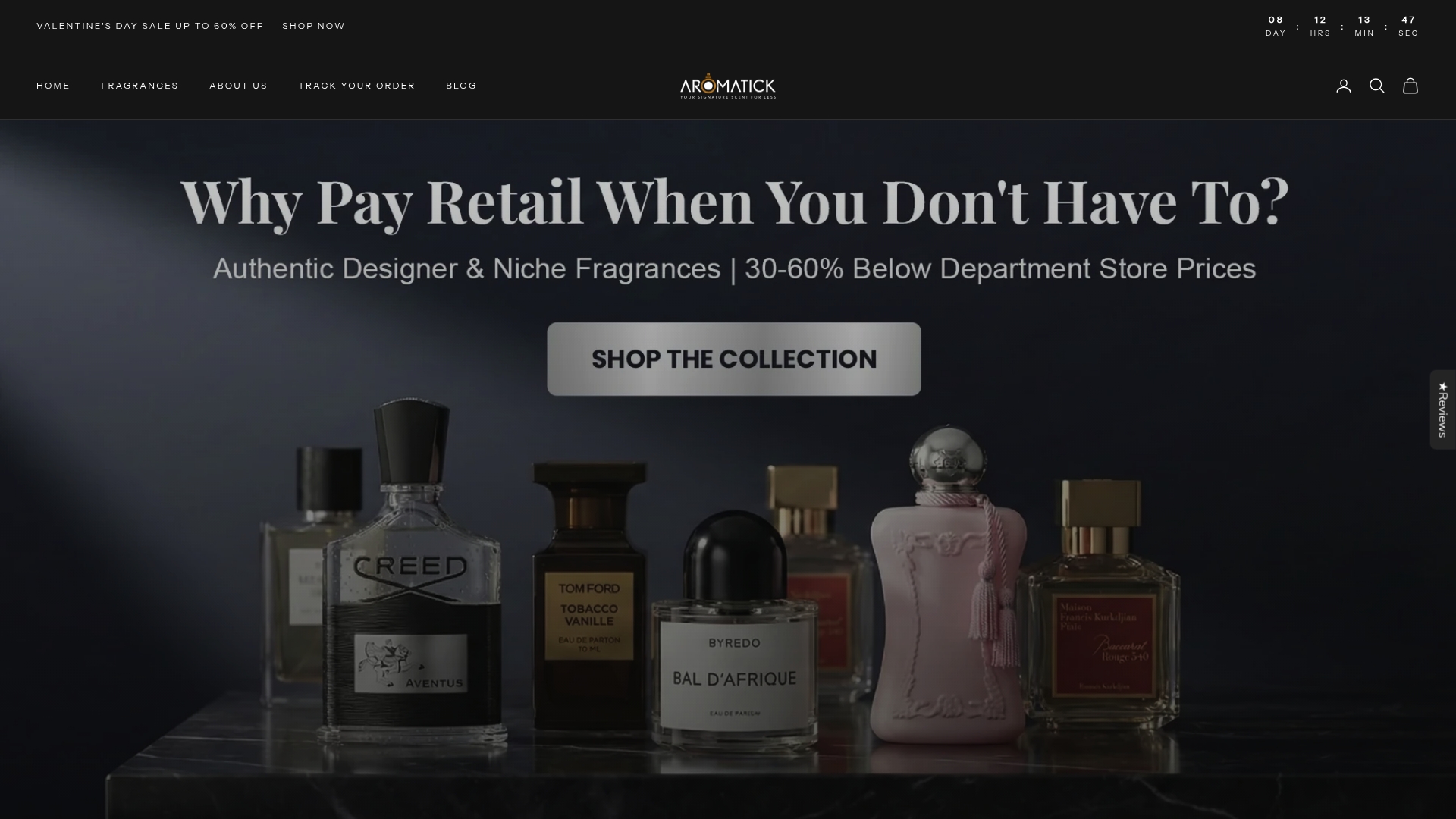
Aromatick offers free shipping above a qualifying order threshold, secure checkout, and a satisfaction guarantee that explicitly covers authenticity. If you receive a bottle and something seems off, the claims process is straightforward: photograph the packaging, contact the team, and Aromatick handles the rest. Browse the full collection and check out with confidence knowing the packaging you receive has already been inspected.
Sources
For batch-code lookups, packaging guides, and reporting channels:
- 7 signs your perfume might be fake | GQ India
- Is That Perfume Box Legit? 7 Signs of Real vs Fake Packaging
- Authenticity Checklist: Packaging, Print, and Fit & Finish for Perfumes | WhatScent
- Counterfeit Cosmetics, Fragrances — FBI
To report counterfeit goods in the United States: file a complaint at Ic3 (FBI Internet Crime Complaint Center) or contact the U.S. Consumer Product Safety Commission at cpsc.gov.

Leave a comment
This site is protected by hCaptcha and the hCaptcha Privacy Policy and Terms of Service apply.