
How to spot fake perfumes: a practical guide
TL;DR:
- Counterfeit perfumes pose health risks and are prevalent across markets, often mimicking genuine packaging with high accuracy.
- Thorough inspection—checking batch codes, packaging quality, and spray performance—helps identify fakes before purchase.
You find a luxury perfume listed at 70% off, sealed in what looks like perfect packaging, and your instinct says something is off. That hesitation is worth listening to. Counterfeit fragrances flood both physical markets and online platforms, and even experienced shoppers get fooled. This guide walks you through every practical step to verify a perfume’s authenticity, from reading the packaging to testing the atomizer, so you can shop with confidence and never waste money on a fake again.
Table of Contents
- Why fake perfumes are a persistent problem
- Essential tools and knowledge for spotting fakes
- Step-by-step: How to inspect a perfume for authenticity
- Troubleshooting: Edge cases and common pitfalls
- What to expect: Results of careful perfume authentication
- A new perspective: Why counterfeiting persists and how savvy shoppers stay ahead
- Shop authentic perfumes confidently and save
- Frequently asked questions
Key Takeaways
| Point | Details |
|---|---|
| Check the seller | Always buy from authorized or trusted retailers to minimize counterfeit risk. |
| Inspect packaging and details | Look for batch codes, print quality, and seals that match genuine product standards. |
| Test the atomizer and cap | A fine, consistent spray and precise cap fit usually mean authenticity. |
| Know the law | ‘Inspired by’ fragrances are not counterfeits, but always confirm what you’re actually buying. |
| Trust your instincts | If something seems off, walk away rather than risk disappointment. |
Why fake perfumes are a persistent problem
The counterfeit fragrance market is not a niche concern. It is a massive, organized industry that targets bargain shoppers specifically because the lure of a deal lowers their guard. The European Union seized 112 million counterfeit items worth €3.8 billion in 2024 alone, with perfumes and cosmetics consistently ranking among the most seized categories. That scale tells you something important: fakes are everywhere, and they are professionally produced.
Online marketplaces have made the problem worse. Third-party sellers can list products alongside genuine items, and without careful inspection, shoppers cannot tell the difference from a product photo. Physical retail is not immune either. Independent market goods, refilled bottles, and outright counterfeits have been found in discount stores and even some specialty shops.
The risk is not just financial. Counterfeit perfumes are often made with unregulated, cheap chemical substitutes. Some contain methanol, formaldehyde, or industrial solvents that can cause skin irritation, allergic reactions, or worse. Understanding the authentic vs counterfeit distinction is not just about getting what you paid for. It is about protecting your health.
Here is what makes bargain hunters especially vulnerable:
- The deal feels justified. When a price seems too good to be true, shoppers often rationalize it as a warehouse sale or overstock clearance.
- Packaging has improved dramatically. Modern counterfeits can replicate boxes, cellophane, and even holograms with surprising accuracy.
- Platforms create false trust. High seller ratings and professional listings give counterfeiters a credible storefront.
“The best defense against counterfeit perfumes starts long before you open the box. It starts with where you choose to shop.”
Reviewing a solid perfume authenticity guide before you buy is one of the most effective habits you can build.
Essential tools and knowledge for spotting fakes
Before you inspect a single bottle, you need the right setup. Spotting a fake is not about luck. It is about systematic verification, and that requires preparation.
As Estée Lauder Companies notes, buying only from authorized retailers or brand channels is the single most effective way to reduce your risk of receiving a counterfeit. That principle should anchor every purchase decision you make.
What to have on hand:
- A trusted reference sample of the genuine fragrance, if possible
- Good lighting, natural or bright white, to inspect fine print and glass quality
- Your phone for reverse image searches, batch code lookups, and brand website comparisons
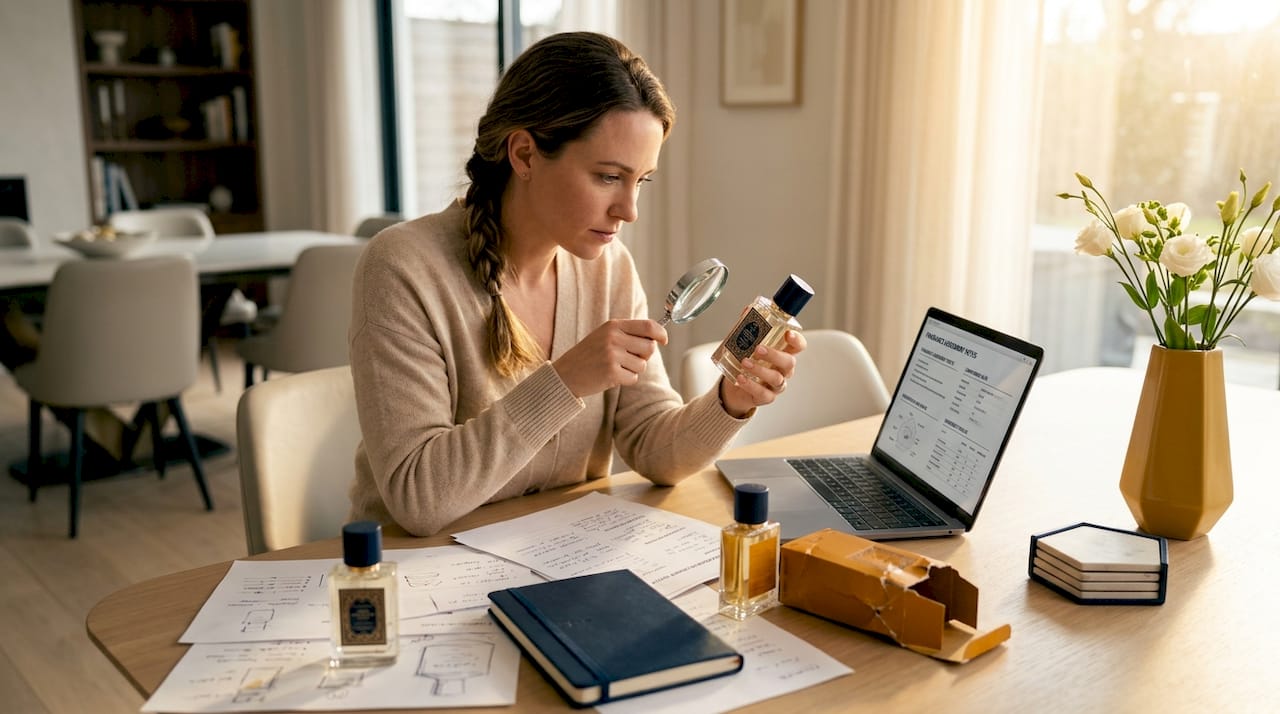
- A magnifying glass for examining small text and serial numbers
What to know before you start:
| Term | What it means | Why it matters |
|---|---|---|
| Authentic perfume | The genuine product from the original brand | The standard you are verifying against |
| Counterfeit | An illegal copy designed to deceive buyers | Illegal, potentially unsafe, and low quality |
| Replica | A product that mimics the original without necessarily claiming to be it | Legal gray area; not the same as authentic |
| Inspired by / smell-alike | A legal fragrance inspired by a famous scent | Honest about not being the original brand |
| Batch code | A production code printed on the bottle or box | Links to manufacture date and location |
Knowing these distinctions matters because not every cheap fragrance is a counterfeit. Some are legal imitations. The problem arises when a product is sold as the real thing but is not. Understanding beauty tech authentication methods can also help you apply modern verification tools to your process.
Pro Tip: Use free batch code checker websites like CheckFresh or Cosmetic Calculator. Enter the code from the bottom of the bottle or box to verify the production date and country of origin. Mismatched or nonexistent codes are immediate red flags.
For a deeper breakdown of how experts verify perfumes before they reach consumers, the fragrance verification guide covers the full process in detail.
Step-by-step: How to inspect a perfume for authenticity
This is the practical core of what you need to know. Follow these steps in order, and you will catch the vast majority of fakes before you spend a cent.
Step 1: Examine the packaging
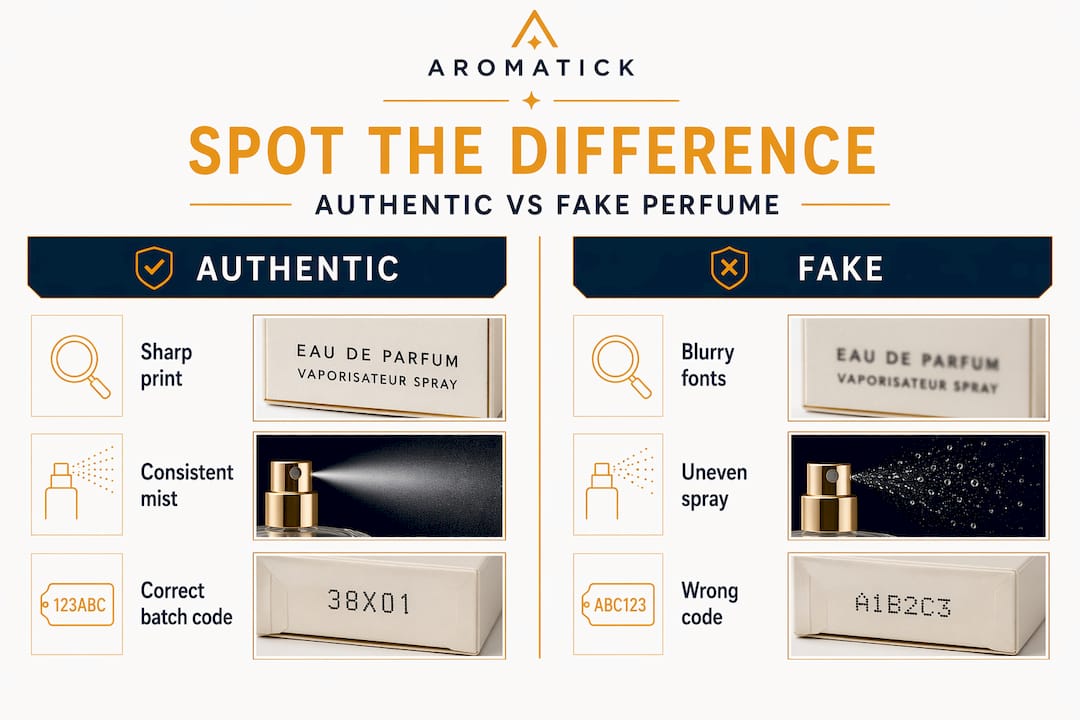
Start with the outer box. Authentic perfumes use high-quality printing with sharp, consistent fonts. Look for:
- Crisp, clean text with no blurring or ink bleeding
- Correct spelling of the brand name, fragrance name, and all legal text
- A batch code on the bottom or side of the box, typically 4 to 8 characters
- Cellophane wrapping that is tight, evenly sealed, and free of bubbles or loose edges
- Barcodes that scan correctly when tested with a barcode reader app
Step 2: Inspect the bottle
The bottle itself is harder to fake at a high level of quality. Check for:
- Uniform glass thickness with no bubbles or distortions
- Logos and engravings that are sharp and precisely positioned
- Labels that are perfectly aligned, not crooked or loosely applied
- A cap that fits snugly without wobbling or feeling hollow
Step 3: Test the atomizer
Step 4: Assess the fragrance itself
If you can smell it before buying, compare the scent profile to what you know of the genuine fragrance. Fakes often have a sharp, chemical top note that fades quickly. Authentic perfumes have layered complexity: a top note that transitions smoothly into a heart, then a lasting base.
| Feature | Authentic perfume | Fake perfume |
|---|---|---|
| Print quality | Sharp, consistent fonts | Blurry, uneven, or misspelled text |
| Batch code | Present and verifiable | Missing, incorrect, or unverifiable |
| Glass quality | Uniform, clear, no bubbles | Uneven thickness, visible distortions |
| Atomizer | Fine, even mist | Sputters, drips, or sprays unevenly |
| Scent longevity | Hours of development | Fades within 30 to 60 minutes |
| Cap fit | Snug and precise | Loose, wobbly, or misaligned |
Pro Tip: Never assume a sealed box means the perfume is authentic. Counterfeiters reseal boxes professionally. A sealed package is not proof of authenticity.
Learning to recognize authentic perfumes takes practice, but these steps give you a reliable framework. You can also cross-reference your findings with tips on how to spot authentic scents when shopping on a budget.
“A sealed box, a glossy label, and a familiar name are not enough. Real authentication requires checking multiple details simultaneously.”
Troubleshooting: Edge cases and common pitfalls
Even careful shoppers encounter situations where the answer is not immediately clear. Here is how to handle the most common edge cases.
Inspired-by and smell-alike fragrances
Not every imitation is a crime. As fragrance industry experts clarify, legally imitative smell-alike products are not counterfeits in the strict trademark sense. They are designed to evoke a famous scent without claiming to be the original brand. These products are legal and sometimes clearly labeled. The problem arises when a seller presents them as the genuine article.
Well-made fakes on reputable platforms
This is where many shoppers get caught off guard. Even major online marketplaces have hosted counterfeit listings from third-party sellers. Estée Lauder sued a major retailer over alleged counterfeit fragrances sold through its marketplace, which shows that even storefronts with strong reputations are not immune. Always verify the seller specifically, not just the platform.
Red flags to watch for:
- Seller profiles with no history, inconsistent reviews, or recent account creation
- Listings with no batch code mentioned or photos that avoid showing the bottom of the bottle
- Return policies that are vague, non-existent, or require you to pay return shipping
- Prices that are dramatically lower than every other authorized seller
- Product descriptions that use phrases like “inspired by” or “similar to” while listing the original brand name
“If a deal feels engineered to make you act fast without thinking, it probably is.”
When you are genuinely unsure, the safest move is to contact the brand directly. Most major fragrance houses have customer service teams that can verify batch codes and confirm authorized retailers. You can also revisit the genuine vs counterfeit perfumes guide to cross-check your findings against documented examples.
Pro Tip: Search the seller’s name alongside the word “counterfeit” or “fake” before purchasing. Real customer experiences often surface in forums and review threads that never appear on the platform itself.
What to expect: Results of careful perfume authentication
When you apply these methods consistently, the outcomes are genuinely rewarding. You will filter out risky listings quickly, often within minutes of looking at a product page. The combination of packaging checks, batch code verification, and seller research eliminates the vast majority of fakes before you even place an order.
Genuine savings are absolutely possible. Authentic fragrances do appear at discounted prices through legitimate channels, including authorized liquidators, seasonal sales, and specialty retailers who operate with lower overhead than department stores. As Estée Lauder Companies emphasizes, the key is buying from authorized channels, not simply from sellers who claim to offer discounts.
What vigilance delivers:
- Confidence that the fragrance you receive matches what you ordered
- Protection from skin reactions caused by unregulated ingredients in fakes
- Better long-term value, since authentic perfumes perform as intended
- A clearer sense of which sellers and platforms you can trust for future purchases
Here is a quick reference table to keep handy:
| Check | What to look for | Pass or fail |
|---|---|---|
| Packaging print | Sharp, correctly spelled text | Pass if crisp; fail if blurry or wrong |
| Batch code | Present and verifiable online | Pass if confirmed; fail if missing |
| Bottle quality | Even glass, precise logo placement | Pass if uniform; fail if distorted |
| Atomizer test | Fine, consistent mist | Pass if smooth; fail if sputtering |
| Seller verification | Authorized, established, transparent | Pass if verified; fail if unclear |
Understanding fragrance authenticity meaning in a broader sense helps you internalize why these checks matter beyond any single purchase.
A new perspective: Why counterfeiting persists and how savvy shoppers stay ahead
Most guides focus on the mechanics of spotting fakes, and that is useful. But they rarely address the deeper question: why does this problem keep growing despite better consumer awareness?
The answer is simple economics. The profit margin on a convincing fake luxury perfume is enormous. A counterfeit bottle that costs a few dollars to produce can sell for $80 or more. That incentive is powerful enough to fund sophisticated production operations, professional packaging replication, and even legal workarounds. Fakes evolve because the financial reward for evolving is massive.
What most guides miss is the importance of context over inspection alone. You can be the most careful inspector in the world, but if you consistently buy from unverified sources, you are playing a game where the odds are stacked against you. The single most reliable habit is not knowing what to look for. It is knowing where to buy.
Building relationships with trustworthy sellers over time yields far better outcomes than chasing one-time bargains from unknown sources. When you find a retailer who is transparent about sourcing, provides verifiable batch codes, and has a clear authenticity guarantee, that relationship is worth more than any single discount. A deeper understanding of authenticity reinforces why the source of your purchase is the foundation of every other check you perform.
The uncomfortable truth is that no single inspection technique is foolproof. The most sophisticated fakes pass individual checks. What they cannot do is pass all checks simultaneously, especially when the seller’s track record, pricing context, and product details are all examined together. Combine your methods. Trust your instincts. And remember that walking away from a suspicious deal is always the right call.
Shop authentic perfumes confidently and save
Knowing how to spot a fake is powerful. Knowing where to shop so you rarely have to worry about it is even better.
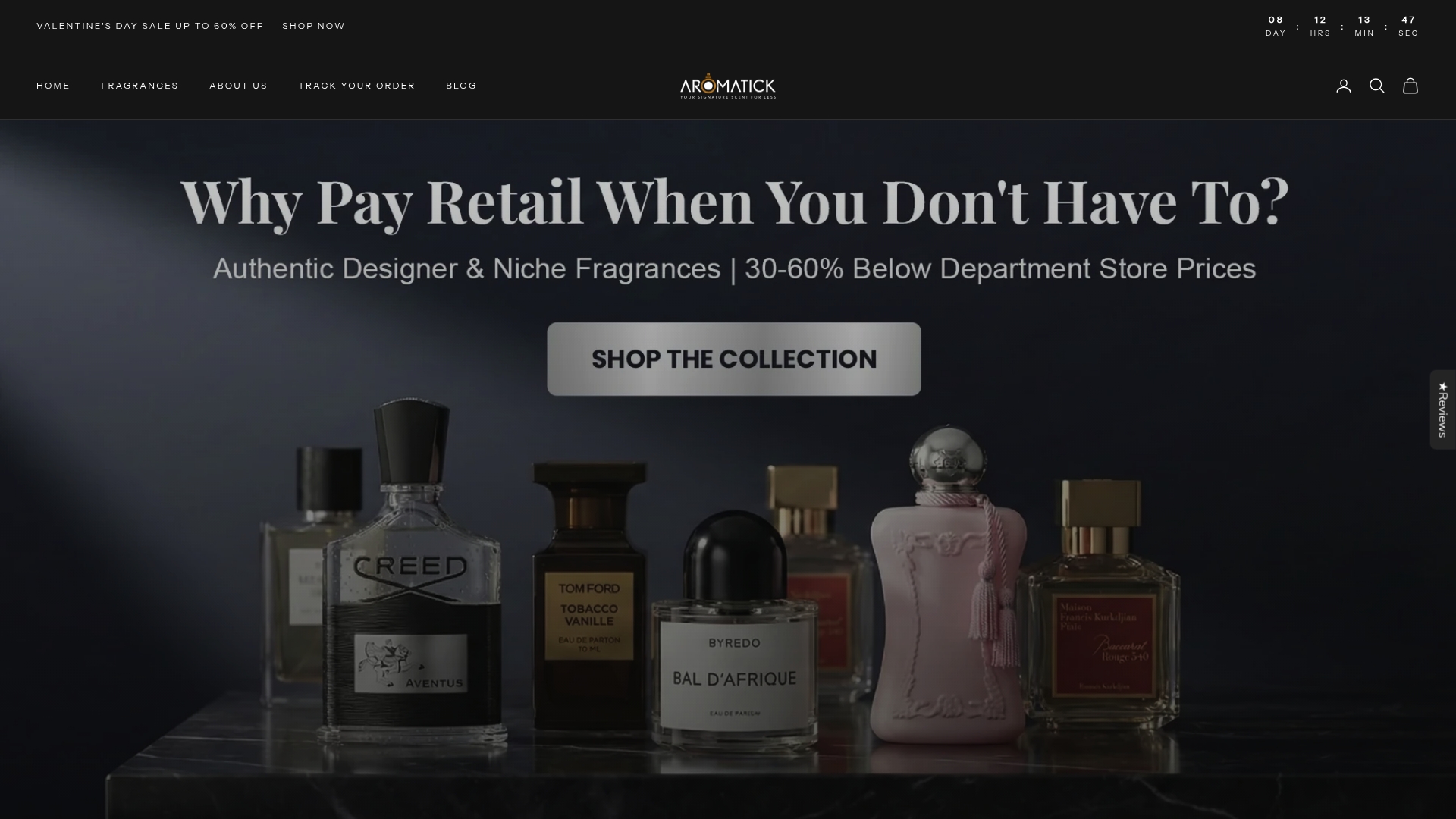
At Aromatick, every fragrance in our catalog is verified for authenticity before it reaches you. We source directly from trusted supply chains and pass the savings on to you, with discounts of up to 60% on genuine luxury scents. Browse our designer fragrance collection for iconic names at prices that make sense, or explore our niche fragrance collection for rare, artisan finds that are just as genuine. If you are shopping for something special, our women’s perfume collection offers a curated range of authentic options with full transparency on sourcing. Real luxury. Real savings. No second-guessing.
Frequently asked questions
What is the most obvious sign of a fake perfume?
Packaging print quality and batch codes are often the first warning signs, so look for blurry text, misspellings, or codes that cannot be verified through official tools.
Are all cheaper perfumes online likely to be fake?
Not all discounted perfumes are fake, but buying from unauthorized marketplaces significantly increases your risk of receiving a counterfeit regardless of price.
Can fake perfumes be dangerous?
Yes. Counterfeit perfumes are a documented health risk because they often contain unregulated chemicals that can cause skin irritation, allergic reactions, or other adverse effects.
How are “inspired by” perfumes different from counterfeits?
Legally imitative smell-alike products are designed to evoke a famous scent without claiming to be the original brand, making them a distinct and legal category separate from deceptive counterfeits.
If I’m unsure about a perfume’s authenticity, what should I do?
Contact the brand directly with the batch code, use an official batch code verification tool, or simply purchase from a trusted retailer with a verified authenticity guarantee.

Leave a comment
This site is protected by hCaptcha and the hCaptcha Privacy Policy and Terms of Service apply.