
What Is a Scent Collection? Your Complete Guide
TL;DR:
- A scent collection is a carefully curated set of fragrances designed to suit different moods, occasions, and seasons, forming a personal olfactory wardrobe. It serves distinct roles like daily wear, evening, comfort, seasonal, and statement, helping communicate mood and reinforce identity without words. Building a purposeful collection of four to six fragrances, tested through sampling, and stored properly enhances personal expression and emotional connection to scent.
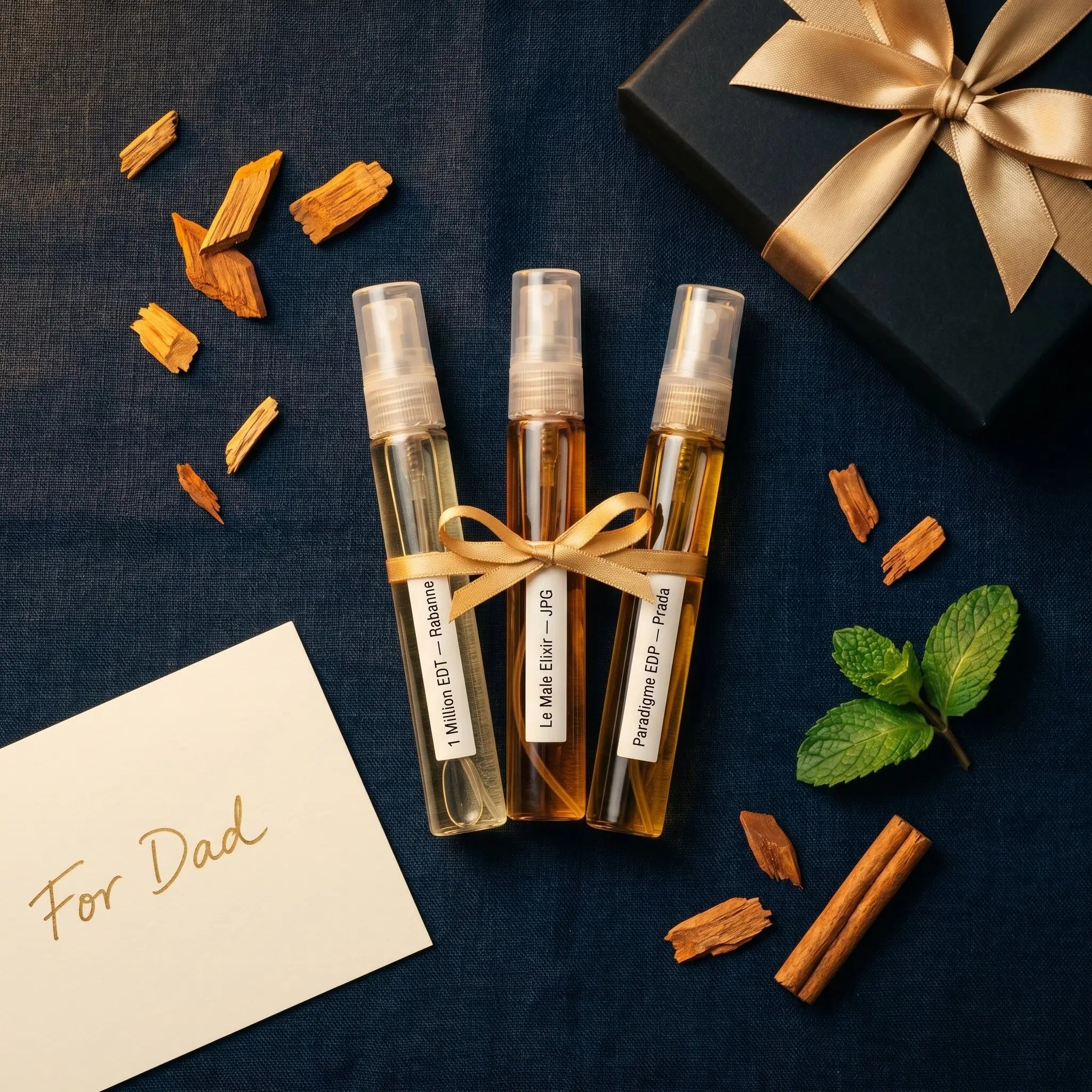
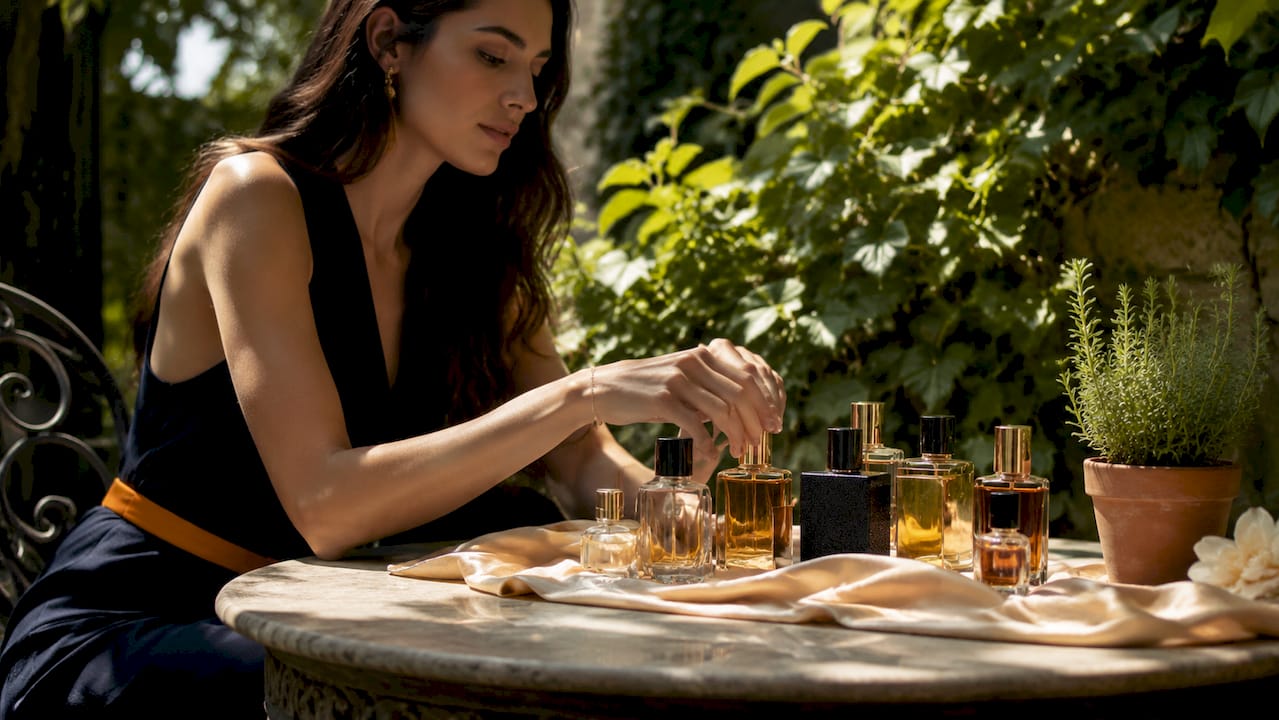
A scent collection is a curated group of fragrances chosen to suit different moods, occasions, and seasons, forming a personal olfactory identity. In the fragrance world, this concept is also called a fragrance wardrobe, a term that captures the idea more precisely: just as you dress differently for work, a date, or a weekend hike, you reach for different scents to match each context. Brands like Jo Malone London have built entire product lines around this philosophy, offering complementary scents designed to be worn alone or layered together. Travel-size perfume oils make it easy to explore this idea without committing to full bottles. Understanding what a scent collection is, and how to build one with purpose, transforms fragrance from a single signature into a living, expressive practice.
What is a scent collection and why does it matter?
A scent collection is defined as a purposeful, curated set of fragrances that work together to cover the full range of your personal and social life. The key word is purposeful. Owning ten bottles of similar woody musks is not a collection. It is a habit. A true fragrance wardrobe includes scents that serve distinct roles: a light, fresh option for daily wear, a richer amber or floral for evenings, a comforting scent for quiet days at home, and a bold statement fragrance for special occasions.

The role of collections in fragrance choice goes beyond aesthetics. Scent is one of the most direct triggers of memory and emotion in human experience. A well-chosen collection gives you a sensory toolkit, one that lets you communicate mood, mark occasions, and reinforce personal identity without saying a word. That is the real value of thinking about fragrance as a wardrobe rather than a single bottle.
What are the main types of fragrances in a collection?
Perfumes are categorized into four primary olfactory families: floral, fresh, woody, and amber. These families are the foundation of any fragrance wardrobe. Understanding them helps you identify gaps in your collection and make smarter purchases.
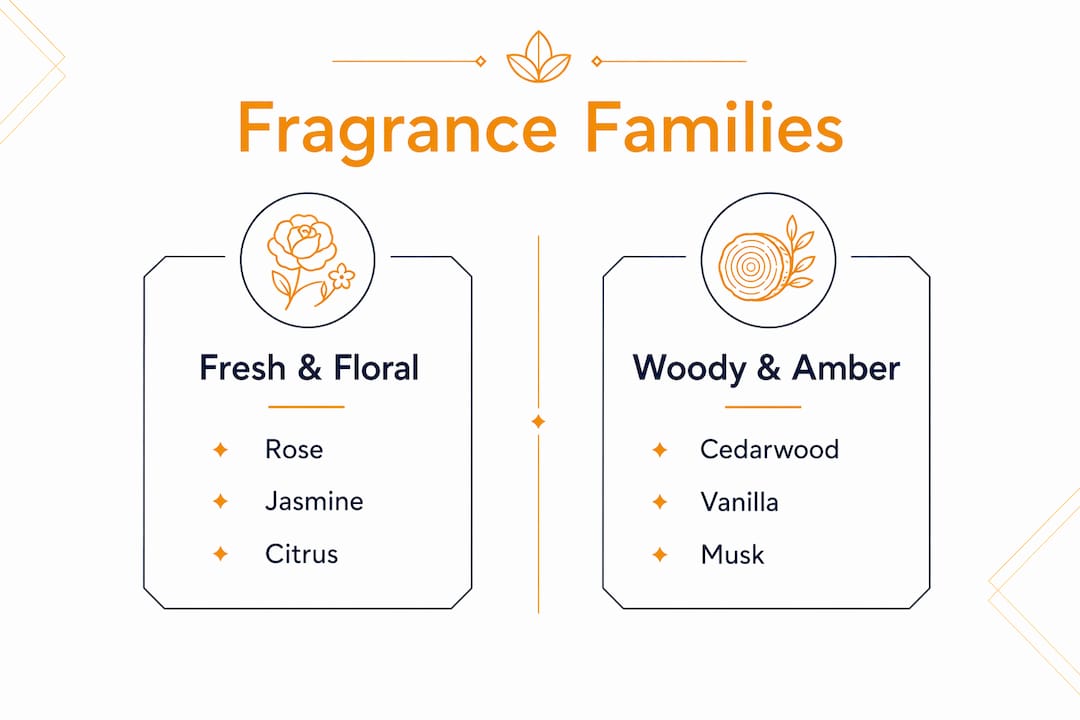
Each family contains subcategories that add nuance. Floral scents range from soft rose and jasmine to green, dewy florals. Fresh fragrances include citrus, aquatic, and clean ozonic types. Woody scents span cedar, sandalwood, and smoky oud. Amber fragrances cover gourmand (sweet, edible notes like vanilla and caramel), spicy orientals, and warm resins. A fragrance can overlap families, such as a floral woody amber, which is one of the most common structures in modern perfumery.
Every fragrance also has a three-tier note structure that affects how it smells over time.
- Top notes: The first impression, lasting 15–30 minutes. Common examples include bergamot, lemon, and pink pepper.
- Middle (heart) notes: The core character, emerging after 30 minutes. Rose, jasmine, and lavender are classic heart notes.
- Base notes: The lasting foundation, often detectable for hours. Sandalwood, musk, and vetiver anchor most fragrances.
| Fragrance Family | Common Notes | Typical Mood or Occasion |
|---|---|---|
| Floral | Rose, jasmine, peony | Romantic, feminine, daytime |
| Fresh | Citrus, green tea, aquatic | Casual, sporty, warm weather |
| Woody | Cedar, oud, sandalwood | Sophisticated, evening, cooler months |
| Amber / Gourmand | Vanilla, tonka bean, caramel | Cozy, sensual, fall and winter |
| Citrus | Bergamot, lemon, neroli | Energizing, office, morning wear |
How many fragrances make a meaningful collection?
A well-rounded fragrance wardrobe typically consists of 4 to 6 core bottles fulfilling distinct roles. That number is not arbitrary. It reflects the practical reality of how many contexts most people actually dress for with scent. Going beyond six bottles without clear purpose is where collections start to feel overwhelming rather than expressive.
Think of your fragrance wardrobe the way you think about your clothing wardrobe. You do not need 30 shirts if 8 well-chosen ones cover every situation. The same logic applies to scent. Each bottle should earn its place by serving a role no other bottle already fills. The six core roles most collectors recognize are:
- Daily wear: A light, inoffensive scent suitable for work or errands. Fresh or soft floral families work well here.
- Evening or occasion: A richer, more complex fragrance for dinners, events, or nights out. Woody ambers and orientals are strong choices.
- Comfort scent: A personal, skin-close fragrance you wear for yourself. Soft musks and gourmands often fill this role.
- Warm weather: A bright, airy scent that performs well in heat. Citrus and aquatic fragrances excel in summer.
- Cool weather: A warmer, heavier fragrance that suits fall and winter. Spicy woods and resins carry well in cold air.
- Statement scent: A bold, distinctive fragrance that makes an impression. This is your most personal and expressive choice.
The main pitfall in building a collection is prioritizing quantity over purpose. A meaningful collection functions as a personal olfactory library, not a display shelf.
Pro Tip: Use decants or sample vials to test a fragrance across a full 24-hour cycle before buying a full bottle. Skin chemistry changes how a scent develops, and what smells great in the store may shift significantly after a few hours on your skin.
How to create and maintain your scent collection
Building a fragrance wardrobe is a process, not a single shopping trip. The most satisfying collections develop over time, guided by experience and self-awareness. A practical fragrance selection workflow starts with identifying which of the six roles above you still need to fill, then sampling within the appropriate family.
Selecting fragrances with intention
Start by auditing what you already own. Identify which roles are covered and which are missing. Then sample within the family that fills the gap. Perfume shopping is best approached through sampling over a 24-hour cycle to understand scent development and skin chemistry before committing to full sizes. This single habit prevents most impulse purchases.
Layering scents for custom combinations
Fragrance layering is a hallmark of advanced collectors, enabling the creation of unique combinations customized by season, occasion, or mood. The basic rule is to layer complementary families. A fresh citrus over a woody base creates a bright, grounded combination. A floral over a soft musk adds depth without heaviness. Aromatick has a detailed guide on layering fragrances like a pro if you want to go deeper on technique.
Storing fragrances to preserve quality
Proper storage is non-negotiable for anyone serious about their collection. Storing fragrances in cool, dark environments away from sunlight and humidity preserves scent integrity and longevity. Light and heat degrade aromatic molecules, which shortens the lifespan of even the most expensive bottle. A drawer, a closet shelf, or a dedicated fragrance box all work well. Avoid bathroom storage, where heat and humidity fluctuate constantly.
- Keep bottles away from direct sunlight and heat sources.
- Store in their original boxes when possible to block light exposure.
- Avoid keeping fragrances in the bathroom due to humidity and temperature swings.
- Apply to pulse points (wrists, neck, inner elbows) to maximize warmth and projection.
- Rotate your collection seasonally to keep each fragrance fresh and relevant.
Pro Tip: Apply an unscented moisturizer to your skin before spraying fragrance. Hydrated skin holds scent molecules longer, which extends the life of each application significantly.
What are the real benefits of a scent collection?
A thoughtfully curated fragrance wardrobe delivers benefits that go well beyond smelling good. Building a scent collection as an olfactory library that reflects memories and emotions tailored to your lifestyle is the core advantage. Each fragrance becomes a marker for a specific chapter of your life or a particular kind of day.
The practical and emotional benefits include:
- Personal identity: Your collection reflects your taste, values, and personality more precisely than a single signature scent ever could.
- Mood management: Reaching for a comforting vanilla on a stressful day or a bright citrus on a sluggish morning is a real, effective mood tool.
- Social adaptability: Different settings call for different scents. A light fresh fragrance for the office respects others’ space. A rich oriental for a dinner date signals intention.
- Smarter gifting: When you understand fragrance families and roles, you can give gifts with genuine knowledge rather than guessing.
- Avoiding fragrance fatigue: Rotating scents prevents your nose from becoming desensitized to a single fragrance, which is a real phenomenon called olfactory adaptation.
Olfactory collections should maintain a signature theme where each element complements but does not overpower the core fragrance identity. This principle applies to personal collections just as much as it does to brand portfolios. Every new addition should fit the overall character of your wardrobe rather than pull it in a completely different direction.
Key takeaways
A scent collection is most valuable when each fragrance serves a distinct role within a coherent, purposeful wardrobe of 4 to 6 core bottles.
| Point | Details |
|---|---|
| Define your fragrance roles | Assign each bottle a purpose: daily wear, evening, comfort, seasonal, or statement. |
| Start with four fragrance families | Floral, fresh, woody, and amber cover the full range of moods and occasions. |
| Test before you buy | Use decants or samples over 24 hours to understand how a scent develops on your skin. |
| Store correctly | Keep fragrances in cool, dark spaces away from heat and humidity to preserve quality. |
| Prioritize purpose over quantity | A collection of 4 to 6 intentional bottles outperforms a shelf of 20 redundant ones. |
Why i think most people build their collections backwards
Most people start a fragrance collection by buying what smells good in the store. That is the wrong starting point, and I say that from experience. I spent years accumulating bottles that all shared the same warm, woody character because that is what I gravitated toward in the moment. The result was a shelf full of beautiful fragrances that all told the same story.
The shift happened when I started thinking about occasions before scents. I asked myself: what do I actually need a fragrance for this week? A morning meeting, a weekend hike, a dinner out. Then I found scents that answered those specific needs. That reframe changed everything. Suddenly my collection had gaps I could fill intentionally rather than duplicates I could not justify.
Seasonal rotation is the other habit that transformed how I use my collection. Wearing a heavy amber in July feels wrong, and wearing a bright citrus in January feels equally off. Matching scent to season is not a rule. It is just paying attention to how fragrance interacts with temperature and context. I now treat my collection like a seasonal wardrobe, rotating bottles in and out the way I rotate clothing. The fragrances I reach for in October stay in the back of the drawer in May. That practice keeps every bottle feeling fresh and meaningful rather than routine.
If you want to avoid the most common mistakes, Aromatick’s guide on fragrance collecting mistakes is worth reading before your next purchase.
— Rodney
Explore authentic fragrance collections at Aromatick
Building a fragrance wardrobe starts with access to genuine, high-quality scents across every family and style. Aromatick offers an extensive catalog of authentic designer fragrances at 30–60% off retail prices, covering floral, woody, fresh, amber, and niche categories for both men and women. Every bottle is verified authentic, so you are not guessing about quality when you add a new role to your wardrobe.

Whether you are filling your first daily wear slot or adding a statement scent for special occasions, Aromatick’s collection spans brands from Hugo Boss to Initio Parfums Privés, with free shipping and a satisfaction guarantee on every order. Browse the full niche fragrance collection to discover scents that go beyond the department store shelf.
FAQ
What is a scent collection in simple terms?
A scent collection, also called a fragrance wardrobe, is a curated set of fragrances chosen to cover different moods, occasions, and seasons. Each bottle serves a specific role rather than functioning as a single all-purpose scent.
How many fragrances should a beginner’s collection include?
A well-rounded fragrance wardrobe typically consists of 4 to 6 core bottles covering daily wear, evening, comfort, and seasonal roles. Starting with four bottles, one from each primary olfactory family, gives you strong coverage without overwhelming your budget.
What are the four main fragrance families to know?
The four primary olfactory families are floral, fresh, woody, and amber. Each family covers a distinct mood and occasion range, and most fragrances belong to one family or blend two together.
How do i test a fragrance before buying a full bottle?
Use decants or sample vials and wear the fragrance for a full 24-hour cycle to understand how it develops on your skin. Skin chemistry significantly affects how a scent smells after the top notes fade, so testing over time is the most reliable method.
What is fragrance layering and should beginners try it?
Fragrance layering means applying two complementary scents together to create a custom combination. Beginners can start simply by pairing a fresh citrus with a woody base, which creates a grounded, versatile result without requiring advanced technique.

Leave a comment
This site is protected by hCaptcha and the hCaptcha Privacy Policy and Terms of Service apply.