
What Is a Fragrance Flanker Line: A Simple Guide
A fragrance flanker is a variation of an existing perfume that keeps the core DNA of the original while changing at least one meaningful attribute — notes, concentration, packaging, or who it’s made for. Think of Dior’s Hypnotic Poison alongside the original Poison: same gothic, seductive spirit, but a softer, more wearable character. This guide walks through how flankers work, why brands make them, and how to decide whether one is worth your money.
Table of Contents
- What exactly makes a perfume a flanker?
- Why do brands keep releasing flankers?
- Common flanker types and notable families you should know
- How concentration levels shape flanker identity
- Are flankers worth buying? How to judge before you commit
- When flankers help a brand — and when they hurt it
- Key Takeaways
- A note from Aromatick
- Useful sources and further reading
- The flanker question most guides get wrong
- The flanker question most guides get wrong
What exactly makes a perfume a flanker?
According to Wikipedia’s perfume entry), a flanker retains the parent fragrance’s name or brand DNA while delivering a fresh olfactory experience. That shared identity is the defining feature. If you strip it away, you have a new pillar, not a flanker.
What a flanker keeps from the parent:
- The brand name or a recognizable portion of it (Poison, 1 Million, Le Male)
- A signature accord or at least one anchor note that makes the family connection audible on skin
- The bottle’s basic silhouette or design motif
- The brand’s overall positioning (luxury, playful, sensual)
What a flanker typically changes:
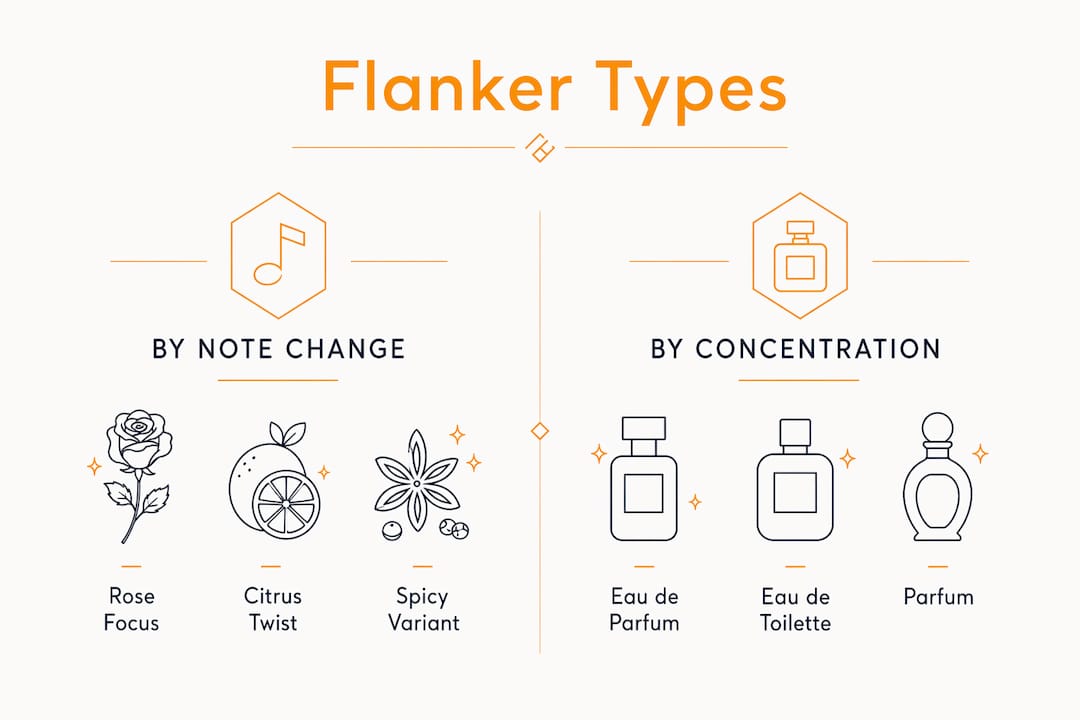
- One or more notes added, removed, or emphasized (a rose pushed forward, a vanilla deepened)
- Concentration level (an EDP original gets a lighter EDT version, or an intense parfum upgrade)
- Packaging color or finish (same bottle, new shade)
- Target gender or age demographic
- Seasonal or limited-edition positioning
The border cases trip people up. A reformulation changes the original formula without releasing a new product. A reissue brings back a discontinued scent. A marketing-only variation swaps the box art but leaves the juice untouched. None of those are true flankers.
Why do brands keep releasing flankers?
The short answer is that flankers are lower-risk than new launches. A brand building on an established name avoids the full cost of bottle design, consumer education, and shelf-space negotiation from scratch. Retailers like Sephora and Ulta actively request seasonal activations, and a flanker is the fastest way to deliver one.
Creatively, flankers can be genuinely interesting. A perfumer given a brief to “explore the rose in Good Girl” or “make Le Male feel like summer” has real artistic latitude. The constraint of working within a known framework sometimes produces more focused, distinctive work than an open brief would.

The risk, as former IFF creative director Johanna Monange has noted, is overuse. When a brand releases a new flanker every few months, the line loses coherence and the original’s prestige erodes. For shoppers, that’s a signal: a brand with many flankers released in a short period is probably chasing shelf space, not crafting something new.
Pro Tip: When a flanker line grows beyond five or six entries, check whether each one has a distinct note story. If the descriptions blur together, the brand is likely prioritizing retail activation over creative intent.
Common flanker types and notable families you should know
Flankers fall into a handful of recurring patterns. Brand family frameworks show that signature lines are foundational, flankers offer evolution, and exclusive collections signal higher artistry. Understanding which type you’re looking at helps you set the right expectations before you buy.
Common flanker types:
- Seasonal/light versions: stripped-down, often aquatic or citrus-forward for warm weather
- Intense/parfum versions: higher concentration, richer base notes, longer wear
- Gender-swapped editions: a masculine original recast for women, or vice versa
- Gourmand or floral reinterpretations: a single note family pushed to the foreground
- Limited or exclusive editions: collector-targeted, often with premium packaging
Here’s how some of the most recognized flanker families stack up:
| Family | What changed vs. parent | Concentration shift | Targeting | Purpose |
|---|---|---|---|---|
| Dior Poison → Tendre Poison | Softer florals, less darkness | EDT (lighter) | Younger, feminine | Broaden appeal |
| Dior Poison → Hypnotic Poison | Almond and vanilla added | EDT/EDP | Feminine, sensual | Reinterpret the accord |
| Dior Poison → Pure Poison | White florals, sheer feel | EDP | Feminine, clean | Seasonal freshness |
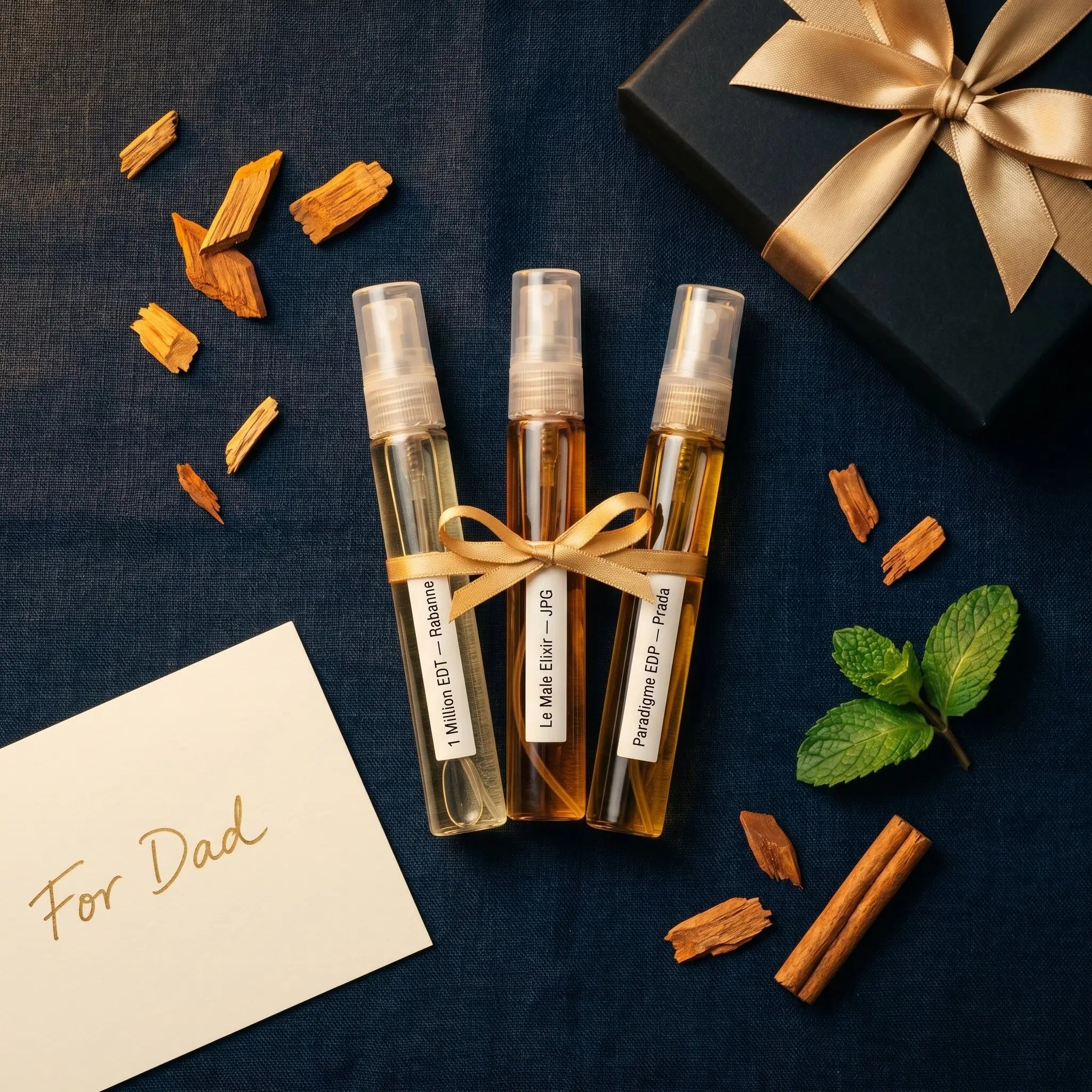
| Paco Rabanne 1 Million → Lady Million | Honey, patchouli, feminine floral | EDP | Women | Gender-swapped edition |
| Jean Paul Gaultier Le Male → Le Male Elixir | Richer lavender, deeper vanilla | Parfum | Men | Intense/parfum upgrade |
| Carolina Herrera Good Girl → Good Girl Suprême | Intensified rose and tonka | EDP | Women | Intensified reinterpretation |
| Dolce & Gabbana Dolce → multiple iterations | Seasonal florals rotated | EDP/EDT | Women | Annual seasonal activation |
| Issey Miyake L’Eau d’Issey → L’Eau d’Issey Pure | Cleaner, aquatic-mineral | EDT | Women | Lighter, modern refresh |
The Dolce & Gabbana Dolce line is a textbook case of seasonal strategy: the family has released numerous iterations since the original launch, with many timed to spring or seasonal retail windows.
How concentration levels shape flanker identity
Concentration is one of the most common levers brands pull when creating a flanker. Understanding the four main levels tells you a lot about what a flanker is trying to do.
| Concentration | Fragrance oil content | Typical longevity | Sillage |
|---|---|---|---|
| Parfum / Extrait | — | — | Close, intimate |
| Eau de Parfum (EDP) | — | — | Moderate |
| Eau de Toilette (EDT) | — | 3–5 hours | Light to moderate |
| Cologne / Splash | 2–5% | 1–3 hours | Very light |
A flanker labeled “Intense” or “Elixir” almost always signals a jump to EDP or Parfum concentration. A flanker with “Légère,” “Pure,” or “Aqua” in the name typically drops to EDT or lighter. That shift changes not just longevity but the entire character: base notes dominate at higher concentrations, while top notes shine at lower ones.
A quick buying tip: for office wear or hot climates, an EDT flanker often performs better than the original EDP because it projects less aggressively. For evenings or cooler months, the Parfum version earns its price.
Are flankers worth buying? How to judge before you commit
The honest answer is: sometimes yes, sometimes no. The difference usually comes down to how much the flanker actually changes versus how much it just looks different on the shelf. Here’s a practical approach.
- Sample before you buy. Test the flanker on skin, not a strip. Skin chemistry changes how a fragrance develops, and a flanker’s altered notes may read very differently on you than on the original. Aromatick’s fragrance reviews and discovery sets make this step affordable.
- Compare the note lists side by side. If the flanker’s listed notes are nearly identical to the parent’s, the change may be cosmetic. Look for at least one meaningfully different heart or base note.
- Check the concentration. A concentration change alone is a legitimate reason to buy a flanker, especially if the original’s longevity didn’t work for your lifestyle.
- Read multiple reviews focused on dry-down and longevity. Opening sprays can be misleading; the dry-down tells you what you’ll actually smell like after two hours.
- For collectors: buying the full family makes sense when each entry has a distinct identity. Collectors treat flanker releases as chapters in a larger narrative, which is a legitimate and rewarding approach.
- For casual buyers: sample first, choose based on occasion, and don’t feel obligated to own the original before the flanker. Some flankers genuinely outperform the parent for everyday wear.
For practical fragrance shopping tips that go beyond flankers, Aromatick’s guides cover sampling strategies and how to evaluate longevity before committing to a full bottle.
When flankers help a brand — and when they hurt it
The industry view from GQ is nuanced: well-crafted flankers can clarify or amplify a parent scent’s character, sometimes becoming more iconic than the original. Hypnotic Poison is a strong example. It launched in 1998 as a flanker to the 1985 Poison, and many collectors now consider it the superior fragrance in the family.
The counterpoint is the cash-in flanker. When a brand releases a new version with minimal creative change, primarily to secure a retail activation slot, the result is a product that confuses shoppers and dilutes the original’s identity. Johanna Monange’s point about brand equity erosion is worth keeping in mind: flankers can shorten long-term brand value when released too rapidly without meaningful differentiation.
For shoppers, the practical takeaway is straightforward. Look for flankers where the brand can articulate what changed and why. A vague “new interpretation” with no clear note story is a warning sign. A flanker that names a specific new ingredient, a concentration upgrade, or a deliberate seasonal brief is worth your attention.
Key Takeaways
A fragrance flanker is a variation of an existing perfume that keeps the parent’s core DNA while changing at least one meaningful attribute, such as notes, concentration, or target audience.
| Point | Details |
|---|---|
| Core definition | A flanker shares the parent’s name and DNA but changes notes, concentration, packaging, or targeting. |
| How to spot one | Look for a shared name root and at least one meaningfully different note or concentration level. |
| Why brands make them | Lower launch cost, retailer activation pressure, and the chance to reach new demographics. |
| How to judge one | Sample on skin, compare note lists, check concentration, and read dry-down reviews before buying. |
| Collector vs. casual buyer | Collectors build full families; casual buyers should sample first and choose based on occasion and lifestyle. |
A note from Aromatick
Testing a flanker before committing to a full bottle is almost always the right move. At Aromatick, you can browse authentic designer fragrances at up to 60% off, including many of the flanker families covered here, so exploring a full line doesn’t have to mean a full-price investment.
Useful sources and further reading
These are the strongest references for anyone who wants to go deeper on fragrance flankers:
- Wikipedia — Flanker (perfume)): The clearest neutral definition of the term; good starting point for the concept.
- Glossy — The big business of perfume flankers: The best industry-reporting source on commercial motives and brand equity risks; includes practitioner perspectives.
- GQ — Best fragrance flankers: Curated list with editorial commentary; useful for identifying well-regarded flankers across major houses.
- Bois de Jasmin — Perfume Flankers 101: Thoughtful long-form explainer from a respected fragrance writer; strong on the creative side of flanker development.
- WhatScent — Brand Family Trees: Visual and conceptual framework for understanding how flankers fit within a brand’s full portfolio.
The flanker question most guides get wrong
The flanker question most guides get wrong
Most flanker guides spend their energy ranking which flankers smell better than the original. That’s the wrong frame. The more useful question is whether the flanker has a reason to exist beyond shelf space.
The perfume industry has a structural incentive problem. Retailers want newness on a seasonal clock; brands want to protect development budgets; and the path of least resistance is a flanker with a new bottle color and a press release about “reimagining the iconic accord.” Shoppers end up with a drawer full of near-identical bottles and a vague sense that none of them quite hit the mark.
The flankers worth owning are the ones where a perfumer was given a genuine brief: explore a single note more deeply, adapt for a different climate, or push the concentration to reveal what the original was holding back. Those flankers teach you something about the parent scent. The others are just marketing with a spray nozzle.
My advice: treat the note list as a contract. If a brand can’t tell you specifically what changed and why, the flanker probably isn’t worth the price of a full bottle. Sample it, enjoy it if it works for you, but don’t let the family branding pressure you into buying something the brand itself can’t clearly explain.

Leave a comment
This site is protected by hCaptcha and the hCaptcha Privacy Policy and Terms of Service apply.