
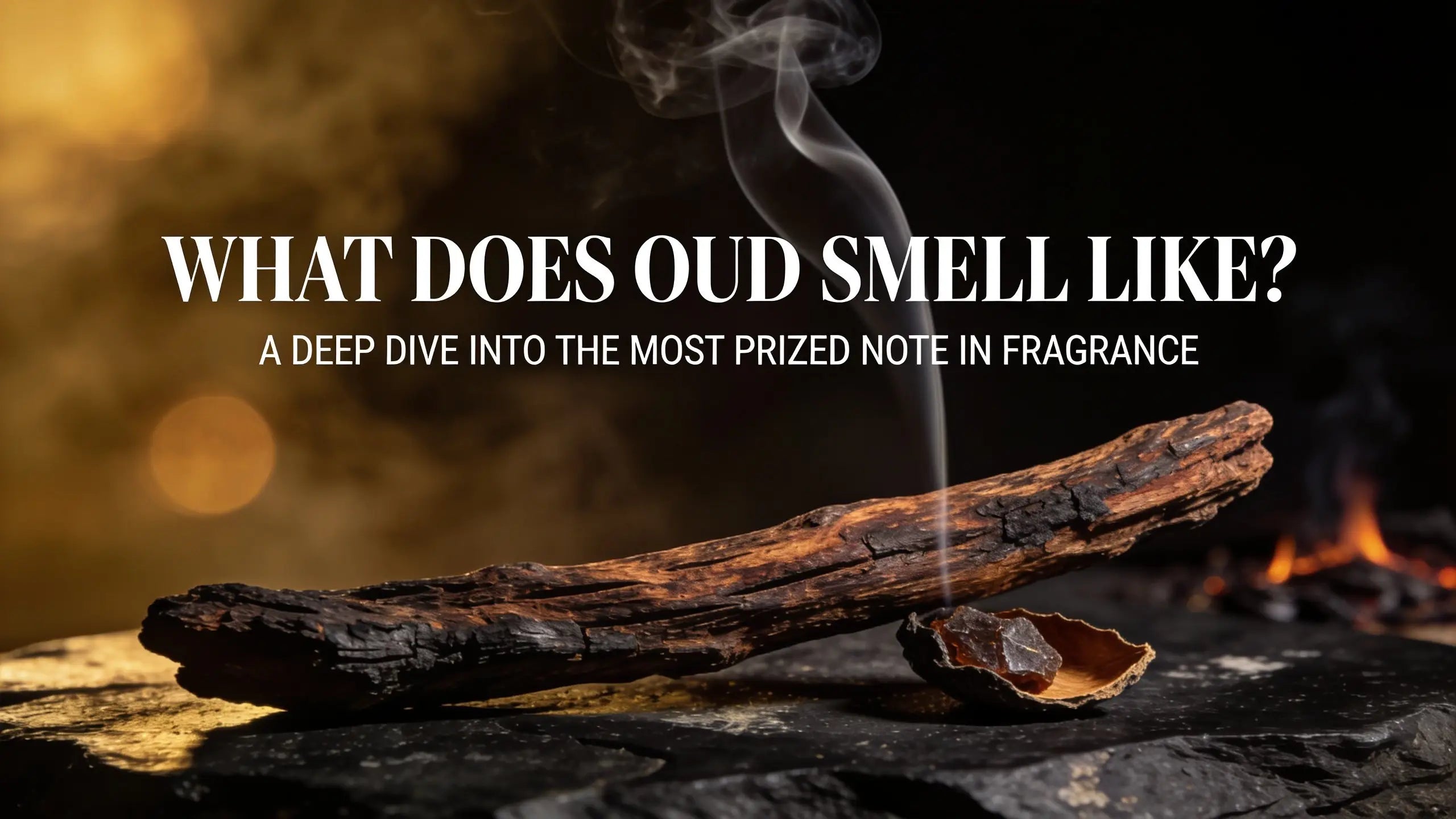
If you have ever asked what does oud smell like and gotten the answer "rich and woody," you were cheated out of a real explanation. Oud is the resinous heartwood of the Aquilaria tree, produced only when the tree is infected by a specific mold. The result is one of the most chemically complex natural ingredients in perfumery, with a scent profile that spans barnyard funk, dark sweetness, leather, incense, and forest floor. Sometimes all in the same bottle.
What Does Oud Smell Like at Its Core?
Strip away the marketing copy and the core scent of oud is animalic, woody, and resinous with a persistent smokiness underneath.
The animalic quality is the part that surprises first-timers. It is not dirty in a bad way. Think of it closer to worn leather or horse tack rather than anything unpleasant. That character comes from specific sesquiterpene compounds, particularly agarospirol and jinkoh-eremol, which are only present in genuinely infected agarwood.
The other layers you will consistently find in quality oud:
- Smoke and incense: A dry, slightly ashy warmth that anchors the whole composition.
- Dark sweetness: Not sugar-sweet. More like dried fruit or aged wood.
- Earthiness: Damp forest floor, mushroom, occasionally wet stone.
- Medicinal edge: Some ouds, particularly Hindi, carry a sharp, almost clinical note that fades into warmth over time.
Understanding what does oud smell like at the raw material level helps you recognize it in a finished fragrance, whether it is used as a solo note or buried in a complex blend.
How Region Changes Everything
The single biggest variable in what does oud smell like is geography. Oud from different countries smells genuinely, dramatically different. This is not marketing segmentation. It is chemistry shaped by soil, climate, and tree genetics.
Indian (Hindi) Oud: The most polarizing origin. Heavy, deeply animalic, with a fecal or barnyard note that serious collectors either prize or cannot tolerate. High-grade Hindi oud softens into leather and dark wood over time. It is not subtle.
Cambodian (Cambodi) Oud: Sweeter, lighter, and significantly less animalic. More accessible for Western palates. Often described as honeyed wood with a soft floral undertone.
Oud from Borneo: Pencil shavings and cool wood upfront, transitioning into a dry, slightly sweet base. Less funk, more structure.
Sri Lankan Oud: Often fruity and medicinal, sitting somewhere between Cambodi and Hindi in intensity.
If you are new to asking what does oud smell like, start with Cambodi. It is the easiest entry point into a genuinely complex ingredient.
Wild vs. Cultivated vs. Synthetic: Three Different Answers
What does oud smell like also depends on whether you are smelling wild-harvested, cultivated, or synthetic material. These are not interchangeable.
Wild oud is increasingly rare and legally restricted due to Aquilaria being listed under CITES Appendix II. The resin has had decades to develop inside the tree, which produces a depth and complexity that cultivated material rarely matches. When you smell wild oud, the layers keep changing for hours.
Cultivated oud comes from plantation-grown trees that are artificially inoculated with mold to trigger resin production. The result is more consistent and dramatically cheaper. It smells cleaner, sometimes almost generic compared to wild. Not bad. Just less interesting.
Synthetic oud has improved significantly. Firmenich and Givaudan both produce oud molecules that convincingly replicate specific facets of the natural material. Many mainstream designer fragrances use synthetic oud because it offers stability, batch consistency, and a fraction of the cost. Synthetic oud tends to smell like the sweetest, smoothest version of the real thing.
If what does oud smell like matters to you beyond curiosity, the wild vs. cultivated distinction is where to focus your attention and your money.
Oud in Perfumery: How It Behaves in a Blend
Oud functions differently depending on where it sits in a composition.
Used as a base note, oud acts as an anchor. It extends the longevity of everything above it and adds depth that synthetic musks cannot replicate. Most Western niche fragrances that claim oud on the label are using it this way, often blended with rose, saffron, or leather.
Used as a solo note (pure oud oil, or attar), oud is the entire conversation. No distraction, no softening. This is how traditional Middle Eastern perfumery wears it.
The most commercially popular oud combinations:
- Oud and rose: The classic Middle Eastern pairing. Rose softens oud's animalic edges; oud gives rose its spine.
- Oud and sandalwood: Creamy and dry at the same time. More accessible than straight oud.
- Oud and leather: Doubles down on the animalic character. Serious and polarizing.
What does oud smell like when it is overdiluted in a mainstream fragrance? Mostly just sweet wood with a vague smokiness. Recognizable but not representative of what the raw material actually does.
Frequently Asked Questions
Does oud smell good to everyone?
Is oud the same as agarwood?
Why is oud so expensive?
How do I know if a perfume contains real oud?
What does oud smell like compared to sandalwood?
Where to Go Next
If this breakdown of what does oud smell like opened more questions than it closed, these are the threads worth pulling:
- How to evaluate oud quality before buying: What to look for in color, viscosity, and smoke test results.
- The best oud-forward fragrances for beginners: Specific bottles that represent the note honestly without overwhelming.
- Middle Eastern vs. Western oud perfumery: How the same ingredient gets used in completely different structural logic.
- How to wear oud: Application points, layering strategies, and why less is genuinely more with high-grade material.
Oud rewards the people who take it seriously. Start with one good Cambodi attar, wear it for a week, and you will understand what does oud smell like in a way no article can fully deliver.


Leave a comment
This site is protected by hCaptcha and the hCaptcha Privacy Policy and Terms of Service apply.