
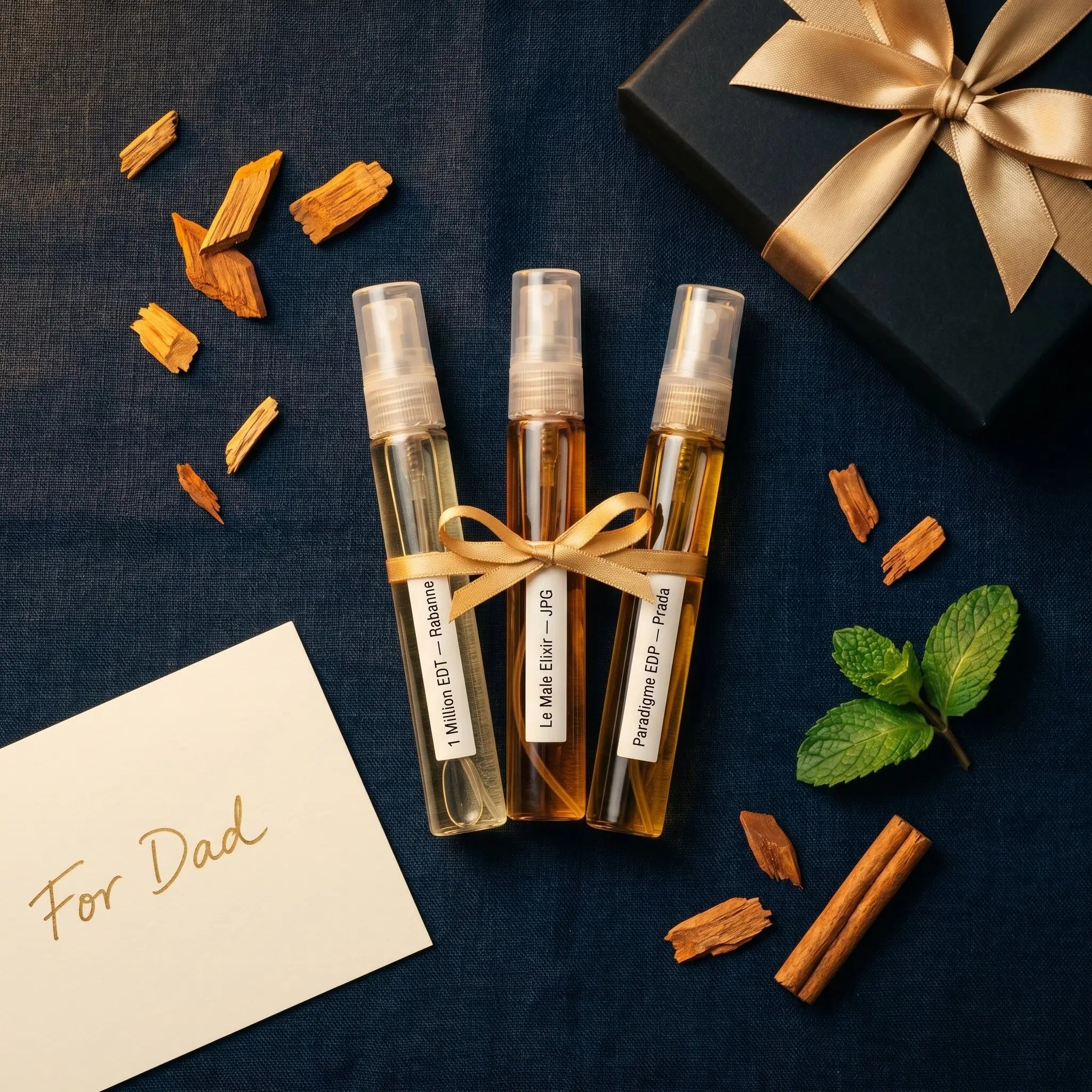


Walk into any fragrance retailer and you are facing several hundred bottles, each promising to smell incredible. The honest truth is that maybe twenty of them will work for your specific taste. The rest are aimed at someone else, even when the marketing makes them sound universal. The fastest way to navigate this is to understand fragrance families, the traditional industry framework for grouping compositions by their core character.
I am a twelve-year fragrance collector and the founder of Aromatick. I started learning the fragrance families about three years into collecting and immediately wished I had learned them on day one. They turn fragrance shopping from a guessing game into something close to a search filter. Here is the buyer-friendly version, with no perfumery school jargon.
The seven main fragrance families
Industry classifications vary, but most fragrance professionals work with seven main families. Some compositions blend two or three. Most have one dominant family.
1. Fougère

The classic men's fragrance family. Fougère (French for "fern") is built on lavender, oakmoss, coumarin (the hay-like sweetness from tonka bean), and aromatic herbs. The composition is traditionally barbershop, masculine in the classical sense, and slightly powdery.
Examples you may have smelled: Paco Rabanne Pour Homme, Drakkar Noir, Azzaro Pour Homme, Kouros, Dior Eau Sauvage
Modern descendants: Many "freshie" designer men's fragrances trace their DNA to fougère, even when the label calls them aromatic or fresh.
You probably like fougère if: You appreciate classical masculine fragrances, you are drawn to lavender and barbershop-style scents, you find most modern designer men's compositions too sweet.


2. Chypre

The structural counterpart to fougère for the unisex and women's side. Chypre (French for "Cyprus") is built on bergamot, oakmoss, labdanum, and patchouli. The composition is typically dry, sophisticated, slightly bitter, and very long-lasting.
Examples you may have smelled: Mitsouko by Guerlain, Aromatics Elixir by Clinique, Coromandel by Chanel, classic women's chypres from Dior
Modern descendants: Many niche compositions still build on chypre architecture. Most modern "woody-aromatic" fragrances borrow chypre structure.
You probably like chypre if: You gravitate to dry sophisticated fragrances, you like vintage perfumery, you find most modern compositions too sweet or too synthetic.
3. Oriental (also called Amber)

The warm, sensual, evening-and-cold-weather family. Oriental compositions are built on amber, vanilla, resins, spices, and exotic woods. The character is rich, slightly sweet, often spicy, and built for projection.
Examples you may have smelled: Tom Ford Tobacco Vanille, Yves Saint Laurent Black Opium, Dior Hypnotic Poison, Maison Francis Kurkdjian Grand Soir, Versace Eros
Modern descendants: Most "sweet" or "warm" niche fragrances live in the oriental family. The recent gourmand boom (vanilla, caramel, coffee) is an oriental sub-family.
You probably like oriental if: You gravitate to warm, sweet, projecting fragrances, you wear fragrance for evenings and cold weather, you appreciate vanilla and amber prominently in compositions.


4. Aromatic (also called Fresh-Aromatic)
The dominant modern men's family. Aromatic compositions are built on aromatic herbs (rosemary, sage, mint, basil), citrus, and supporting woody-amber bases. The character is clean, fresh, slightly herbal, and projecting.
Examples you may have smelled: Dior Sauvage, Bleu de Chanel, Acqua di Giò, YSL Y EDP, most modern "blue" designer men's fragrances
Modern descendants: Aromatic-amber and aromatic-fougère hybrids dominate the men's market in 2026. The "Sauvage alternatives" we covered in our L'Immensité vs Sauvage comparison are aromatic-amber.
You probably like aromatic if: You gravitate to clean fresh masculine compositions, you wear designer men's fragrances primarily, you appreciate ambroxan-driven projection.


5. Citrus
The lightest, brightest family. Citrus compositions are built on lemon, bergamot, neroli, grapefruit, and supporting fresh notes. The character is sparkling, energetic, casual, and typically lower-projection.
Examples you may have smelled: 4711 Original Eau de Cologne, Acqua di Parma Colonia, Eau d'Orange Verte (Hermès), most heritage colognes
Modern descendants: Niche citrus-aromatics like LV Imagination (read our Imagination summer review) and Tom Ford Neroli Portofino. Most heritage colognes are pure citrus.
You probably like citrus if: You wear fragrance for warm weather and casual contexts, you appreciate light bright compositions, you find heavy fragrances overwhelming.
6. Floral
The largest family by composition count, dominant in women's fragrance. Floral compositions are built on rose, jasmine, lily, tuberose, gardenia, peony, and other flower notes. The character ranges from light and airy (white florals) to rich and indolic (jasmine and tuberose).
Examples you may have smelled: Chanel No. 5, Yves Saint Laurent Libre, Dior J'adore, most mainstream women's fragrances
Modern descendants: Floral-fruity, floral-oriental, and floral-musk hybrids dominate the modern women's market.
You probably like floral if: You gravitate to romantic and feminine compositions, you appreciate specific flower notes, you wear fragrance to feel polished or elegant rather than statement-projecting.
7. Aquatic (also called Marine or Ozonic)

The newest family, mostly post-1990. Aquatic compositions are built on synthetic marine notes, calone, sea salt, and water accords. The character is clean, fresh, slightly cool, and evocative of water and outdoor air.
Examples you may have smelled: Acqua di Giò by Giorgio Armani, Cool Water by Davidoff, L'Eau d'Issey Pour Homme by Issey Miyake, Bvlgari Aqva Pour Homme
Modern descendants: Many summer fragrances incorporate marine notes. Niche aquatics from Maison Margiela Replica (Beach Walk, Sailing Day) live in this family.
You probably like aquatic if: You gravitate to clean fresh outdoor compositions, you wear fragrance for hot weather and beach contexts, you appreciate restrained projection.


How to find your family
The fastest method is to look at fragrances you have loved historically and identify the family pattern. If you have always loved Sauvage, Bleu de Chanel, and YSL Y EDP, your dominant family is fresh-aromatic-amber. If you love Tom Ford Tobacco Vanille and Tom Ford Tuscan Leather, your family is oriental. If you love Acqua di Giò and Cool Water, your family is aquatic.
Most collectors discover they have one dominant family they reach for daily and one or two secondary families for specific contexts (evening, cold weather, formal). Building a collection around your dominant family with secondary picks for variety is more practical than buying widely across all seven.
The decant approach to learning families

If you are unfamiliar with the families and want to learn quickly, the most efficient path is to wear one or two reference fragrances from each family for a week each. Decants make this affordable. A 5ml decant of a defining fragrance from each family runs $80 to $120 total, gives you enough wear time to learn each family viscerally, and saves you from buying full bottles in families you might not actually like.
For the four families most relevant to modern men's collecting, here are the reference picks Aromatick carries as decants:
- Aromatic-amber: YSL Y EDP decant or LV L'Immensité decant
- Oriental: Tom Ford Oud Wood decant or MFK Baccarat Rouge 540 decant
- Citrus: LV Imagination decant
- Fougère / Aromatic Fougère: JPG Le Male Le Parfum decant
The full lineup is at our designer and niche decants collection.


Frequently Asked Questions
What is the most popular fragrance family for men in 2026?
Can a fragrance belong to more than one family?
What is the difference between oriental and gourmand fragrances?
What fragrance family is Dior Sauvage?
How many fragrance families should a collector own?
Summary
Fragrance families are the single most useful framework for buying fragrances you will actually wear. The seven main families (fougère, chypre, oriental, aromatic, citrus, floral, aquatic) cover almost every composition on the market. Most collectors discover they have one dominant family they reach for daily, with secondary families for specific contexts. Once you know your dominant family, fragrance shopping gets dramatically more efficient. You stop wasting time and money on compositions outside your taste range and focus on building a collection within categories you actually love.
Rodney Gallagher is the founder of Aromatick and a twelve year fragrance collector. Aromatick sells authenticated decants and full bottles across all major fragrance families.

Leave a comment
This site is protected by hCaptcha and the hCaptcha Privacy Policy and Terms of Service apply.