

Confirm Costco Perfume Authenticity in 5 Minutes: U.S. Checklist
Yes, Costco perfumes are genuine in the overwhelming majority of cases. Costco sources designer fragrances through authorized distribution and gray-market channels, not counterfeit suppliers, though shoppers should still confirm a batch code and inspect packaging before assuming a bottle is flawless. If anything looks off, Costco’s return policy is your fastest fix. Watch for older stock, discontinued packaging, and the absence of in-store testers.
TL;DR:
- Most Costco perfumes are authentic, with supported supply chains including authorized distribution and legitimate gray-market channels.
- Verifying authenticity involves checking batch codes, inspecting packaging details, and testing the scent’s evolution, all within minutes.
- Old or discontinued stock is common and not counterfeit, often showing signs like oxidation or packaging updates, not fake chemicals.
- Costco’s supplier contracts include quality inspections, reducing the risk of fake products, but gray-market and aged stock can still pose challenges.
- The retailer’s lenient return policy provides a safety net for consumers if a bottle appears off after purchase, especially for older or discontinued items.
Table of Contents
- Are Costco Perfumes Authentic? The Business Model Behind the Discount
- How To Verify a Perfume’s Authenticity At Costco
- Gray Market, Old Stock, or Counterfeit: Know the Difference
- What Costco’s Policies Actually Guarantee (and Don’t)
- Practical Shopping Tips From a Fragrance Retailer’s Perspective
- Costco Versus Department Stores, Specialty Shops, and Online Marketplaces
- Does Costco’s Perfume Differ From the Retail-Standard Bottle?
- What Customers Actually Say About Costco Perfume Authenticity
- Verifying Authenticity After You’ve Already Bought the Bottle
- An Editorial Take on Buying Perfume at a Discount Warehouse
- A Guaranteed Alternative When You’d Rather Skip the Detective Work
- Sources
Are Costco Perfumes Authentic? The Business Model Behind the Discount
Costco doesn’t discount designer perfumes by cutting corners on sourcing. It discounts them by running a membership warehouse model that makes money on annual fees rather than fat markups on individual bottles. That structure lets Costco sell a bottle of Dior or Versace at a slimmer margin than a department store would ever accept, because the membership fee already covers the overhead a mall counter has to build into its price tag.
Bulk purchasing power adds another layer. When Costco buys tens of thousands of units of one SKU, it negotiates a wholesale price that smaller specialty retailers simply can’t match.
Some inventory comes through authorized distribution deals directly with brands or their licensed distributors. Other bottles arrive through gray-market channels, meaning legitimate product that changed hands outside the brand’s official retail network, often because a distributor overproduced or a retailer overordered.
A few concrete reasons Costco perfume ends up cheaper without being fake:
- Discontinued packaging designs that brands have phased out but still manufacture identical juice for.
- Overstock from other retailers that Costco buys in bulk at a steep wholesale discount.
- Regional SKU differences, where a bottle made for a different country’s market lands in a U.S. warehouse.
- Cosmetic blemishes on outer boxes that don’t affect the fragrance inside.
None of this points to counterfeiting. It points to a supply chain that prioritizes volume and low margin over retail polish, which is exactly why designer fragrance prices at Costco are often significantly below department store tags for the identical bottle.
How To Verify a Perfume’s Authenticity At Costco
You don’t need a chemistry degree to spot a real bottle from a suspicious one. You need five minutes and a phone camera. Here’s the order that actually works, based on how fragrance-authenticity reporting recommends checking a bottle before you commit.
- Find the batch code first. Every legitimate bottle carries a stamped alphanumeric code, usually on the bottom of the box and etched or printed on the bottle itself. If the box code doesn’t match the bottle code, that’s your biggest red flag.
- Inspect the packaging. Look at the cellophane wrap (crisp, tight, factory-sealed), the printing (sharp, no blurred fonts), and the alignment of any embossed lettering. Sloppy printing is a hallmark of counterfeit production, not authentic bottling.
- Check the bottle and atomizer. Authentic glass feels substantial and the spray produces a fine, even mist. A weak, sputtering, or unevenly dispersed spray often signals a cheaper counterfeit atomizer.
- Test the scent behavior. Real designer fragrances evolve. Top notes fade into a mid and dry-down over an hour or two. A scent that stays flat or vanishes in twenty minutes wasn’t built with the same formulation.
- Use the return policy if anything feels off. Don’t debate it in your head for a week. Costco’s returns process is fast and lenient, and it exists precisely for moments like this.
Pro Tip: Photograph the batch code before you open the box. If you need to check it against a manufacturer batch-code database later, you’ll want a clear image, not a guess from memory.
Gray Market, Old Stock, or Counterfeit: Know the Difference
Not every “something’s off” bottle is fake. Three distinct scenarios produce three very different outcomes, and lumping them together leads to bad decisions.
- Gray market product is genuine fragrance that traveled outside the brand’s authorized retail network. It’s real, but the manufacturer may decline warranty support or customer service since the sale happened outside their approved chain. Courts have repeatedly treated parallel-import perfume sales as legally distinct from counterfeiting, even when brands push back on the practice.
- Old stock means an authentic bottle that’s been sitting in a warehouse or on a shelf long enough for the juice to oxidize. The scent turns sharper, sometimes vinegary, and the color darkens. Not dangerous, just tired.
- Counterfeit is the real problem: different chemical composition, sometimes unsafe ingredients, and a scent that reads flat or synthetic from the first spray. If you land here, stop using it and return it immediately.
What Costco’s Policies Actually Guarantee (and Don’t)
Costco’s supplier contracts include explicit inspection and quality-assurance language, giving Costco contractual authority to test or inspect products at the supplier’s expense before they ever reach a warehouse shelf.
Costco’s supplier agreements grant the company the right to inspect and test products for quality assurance purposes, a formal safeguard baked directly into how it vets vendors before goods reach shelves.
That contractual language, documented in Costco’s own SEC filings, is a meaningful signal. It means Costco isn’t simply trusting suppliers on their word. It also means Costco’s premium fragrance offerings are curated with those same quality expectations applied across the board.
None of that replaces a manufacturer warranty, though. If your bottle came through a gray-market path, the brand itself may not offer support even if Costco’s own return window covers you. That’s where Costco’s member-friendly return policy earns its reputation. Fast refunds and lenient handling of opened bottles function as a real safety net exactly when you can’t test before you buy, filling the gap a missing warranty leaves behind.
Practical Shopping Tips From a Fragrance Retailer’s Perspective
Costco functions as a replenishment warehouse, not a discovery counter. You won’t find testers on shelves, so the smartest move is sampling a scent elsewhere before you commit to a full bottle at the warehouse. Decant services and indie sample sources, including eco-conscious solid perfume options like INGRID, let you confirm you actually like a fragrance before buying it in bulk-discount format.
Once you’ve settled on a scent you know and trust, the checks above become second nature:
- Batch-code verification and packaging inspection are standard practice for any serious fragrance buyer, not just a Costco-specific precaution.
- A quick five-minute check protects a $60 to $150 purchase, which is a reasonable trade in anyone’s book.
- If you’d rather skip the detective work entirely, transparent authenticity guarantees from dedicated fragrance retailers remove that burden up front.
Pro Tip: Keep a small decant of a fragrance you already trust as a scent reference. Comparing dry-down side by side is the fastest way to catch a formulation that’s off.
Costco Versus Department Stores, Specialty Shops, and Online Marketplaces
Every fragrance-buying channel carries its own authenticity profile. Department stores like Macy’s or Nordstrom sell almost exclusively through direct brand relationships, which means near-zero counterfeit risk but full retail pricing with no meaningful discount.
Specialty fragrance shops split into two camps. Authorized boutique retailers offer testers and staff expertise, useful for discovery, at prices close to department stores. Independent discount fragrance shops vary wildly in sourcing quality, and verification there matters more, not less, than at Costco.
Online marketplaces carry the widest authenticity spread of any channel. Third-party sellers on open marketplaces range from fully legitimate to outright counterfeit operations, and the platform itself often can’t guarantee sourcing on every individual listing. That’s the core difference from Costco: a single retailer with one contractual relationship to its suppliers versus a marketplace hosting thousands of independent sellers with no unified vetting standard.
Costco lands in a specific middle zone. It’s a single accountable retailer, like a department store, but its willingness to buy gray-market and discontinued-run inventory puts it closer to a discount specialty shop in terms of what you’ll find on shelves. You get real accountability paired with real price variance. That combination is rare, and it’s why Costco keeps showing up in fragrance-enthusiast conversations despite generally not offering testers.
Does Costco’s Perfume Differ From the Retail-Standard Bottle?
The juice inside a Costco fragrance bottle is, in the vast majority of cases, chemically identical to what you’d find at a department store. Brands don’t formulate a separate “warehouse-grade” version of Chanel No. 5 or Sauvage. What changes is almost always packaging, not formulation.
Discontinued box designs are the most common variance. A brand refreshes its outer carton every few years for marketing reasons, but the fragrance formula inside stays the same for years or decades. Costco often ends up with the previous-generation box design because that inventory got sold off in bulk once the new design launched.
Regional packaging differences show up occasionally too. A bottle manufactured for European or Asian distribution can carry different language printing on the box, different volume measurements (milliliters instead of ounces), or a slightly different cap design, while containing the exact same fragrance oil concentration.
Size variance is the other notable difference. Costco frequently stocks larger-format bottles, sometimes 3.4 ounces or bigger, that aren’t available in standard retail sizes. That’s a packaging and merchandising decision, not evidence of a different formulation.
The bottom line: if the batch code checks out and the scent behaves the way it should through a full wear cycle, packaging cosmetics don’t indicate anything is wrong with what’s inside.

What Customers Actually Say About Costco Perfume Authenticity
Consumer reporting and shopper feedback consistently land in the same place: most Costco fragrance purchases are the real thing, with the caveat that shoppers should stay alert to packaging condition and batch codes. Fragrance forums and comment sections tell a similar story. Enthusiasts routinely report picking up big-name bottles, Versace Eros and Creed among them, at prices well below specialty shop tags, and finding the scent performance matches what they know from authorized retail.
The complaints that do surface tend to cluster around two things: dissatisfaction with older packaging designs (a cosmetic gripe, not an authenticity one) and occasional reports of a bottle that smelled “off,” which usually traces back to oxidized old stock rather than counterfeit product. Genuine counterfeit reports at Costco specifically are rare compared to the volume of complaints tied to open online marketplaces.
The pattern that emerges from repeated shopper accounts is straightforward: buy a current, popular SKU with a clean batch code, and your odds of a fully authentic, well-preserved bottle are strong. Buy an obscure or heavily discounted discontinued item, and the odds of running into old stock rise, though outright fakes remain uncommon.

Verifying Authenticity After You’ve Already Bought the Bottle
Checking authenticity doesn’t stop at the register. If you’re a few weeks into wearing a fragrance and something nags at you, a handful of follow-up checks can settle it.
Start with the batch code you photographed at purchase. Most major fragrance houses maintain lookup tools, and third-party batch-code checker sites and apps can cross-reference the code against known manufacturing date ranges. A code that returns no valid match, or one that corresponds to a manufacturing date wildly inconsistent with how “fresh” the bottle looked, is worth investigating further.
Compare your bottle’s dry-down against community references. Fragrance forums and dedicated review sites often include detailed breakdowns of how a specific formulation should smell hours into wear. If your bottle diverges sharply from multiple independent accounts, that’s a stronger signal than any single packaging detail.
Keep your receipt and box until you’re fully confident in the bottle. Costco’s return window gives you real runway to investigate before you’re locked out of a refund, so there’s no reason to rush a decision you’re still uncertain about. A batch-code guide walks through exactly what a legitimate code should look like across major fragrance houses, which is worth a bookmark if you buy discounted fragrance regularly.
An Editorial Take on Buying Perfume at a Discount Warehouse
The conventional advice on this topic treats Costco like a gamble, warning readers to brace for fakes. That’s overblown. The real risk at Costco isn’t counterfeiting, it’s buying discontinued or aging stock without checking the batch code first, and that’s a much smaller, much more manageable problem.
What gets underrated is how much the return policy does the heavy lifting here. Most shoppers treat verification and returns as separate concerns. They’re not. A quick batch-code check up front, backed by a fast return if something feels wrong, covers nearly every failure mode you’ll encounter in a warehouse aisle.
Where I’d push back on typical guidance is the emphasis on “trust your nose.” A nose untrained on a specific fragrance’s dry-down isn’t a reliable detector for subtle degradation. Batch codes and packaging details are objective. Scent memory isn’t. Prioritize the objective checks first, and treat your nose as a secondary confirmation, not the primary test.
— Rodney
A Guaranteed Alternative When You’d Rather Skip the Detective Work
Not every shopper wants to photograph batch codes and cross-reference packaging fonts before wearing a new fragrance. If that’s you, Aromatick offers the same discounted designer fragrance buyers want at Costco, minus the guesswork.
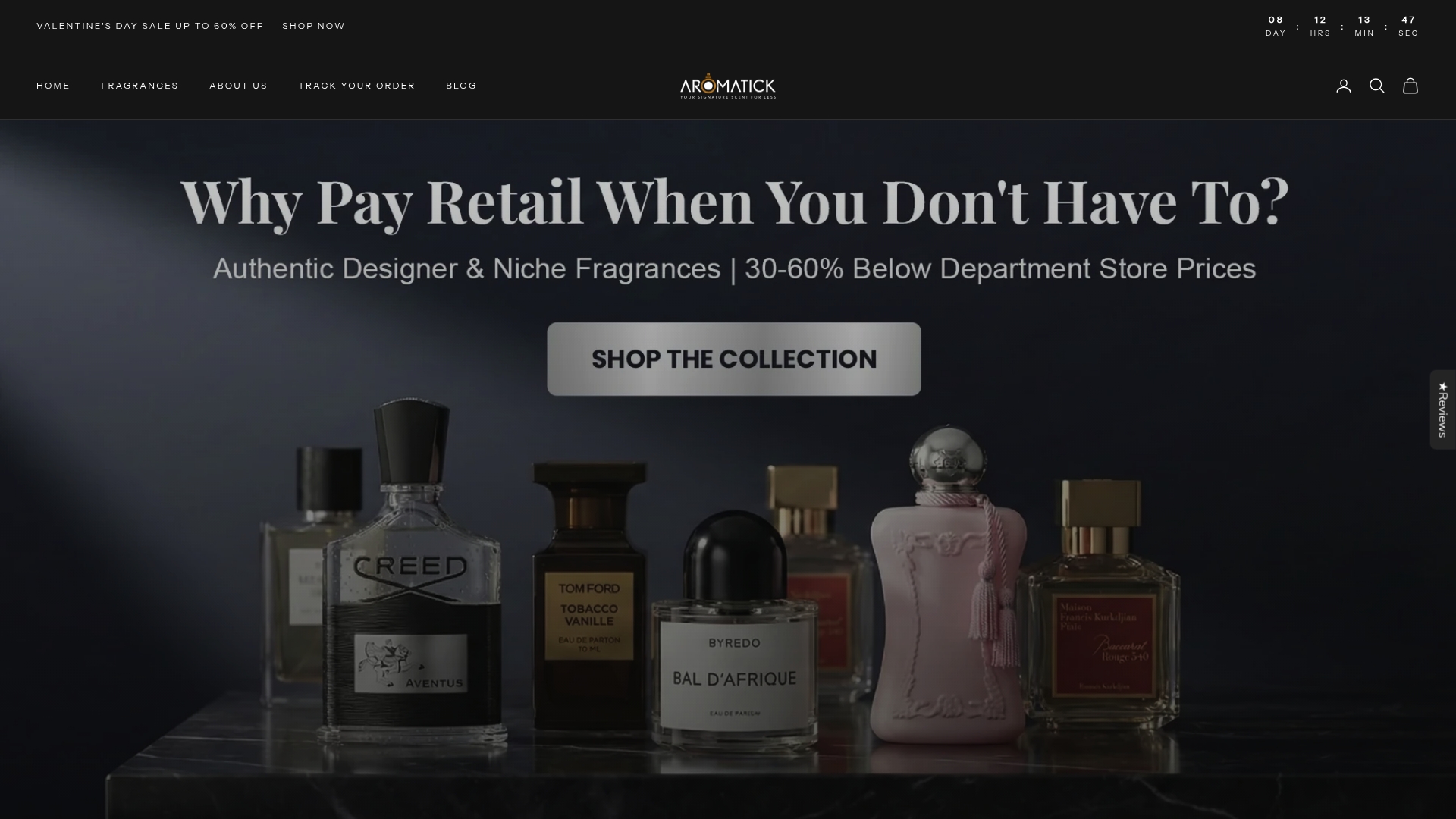
Aromatick sells designer and niche fragrances at discounted prices, with sourcing information provided for shoppers. The site offers a satisfaction guarantee and free shipping over a certain order amount, along with blog content explaining how batch codes and packaging checks work for interested readers. Where Costco asks you to bring your own detective kit, Aromatick does that vetting before the bottle ever ships.
If you’d rather browse a curated, pre-verified selection than second-guess a warehouse find, start with the designer fragrance collection and pick your next bottle with the sourcing question already answered.
Sources
- Costco supplier agreement (SEC exhibit)
- Are Costco perfumes real? - Necole Bitchie
- Premium Perfumes | Costco

Leave a comment
This site is protected by hCaptcha and the hCaptcha Privacy Policy and Terms of Service apply.