
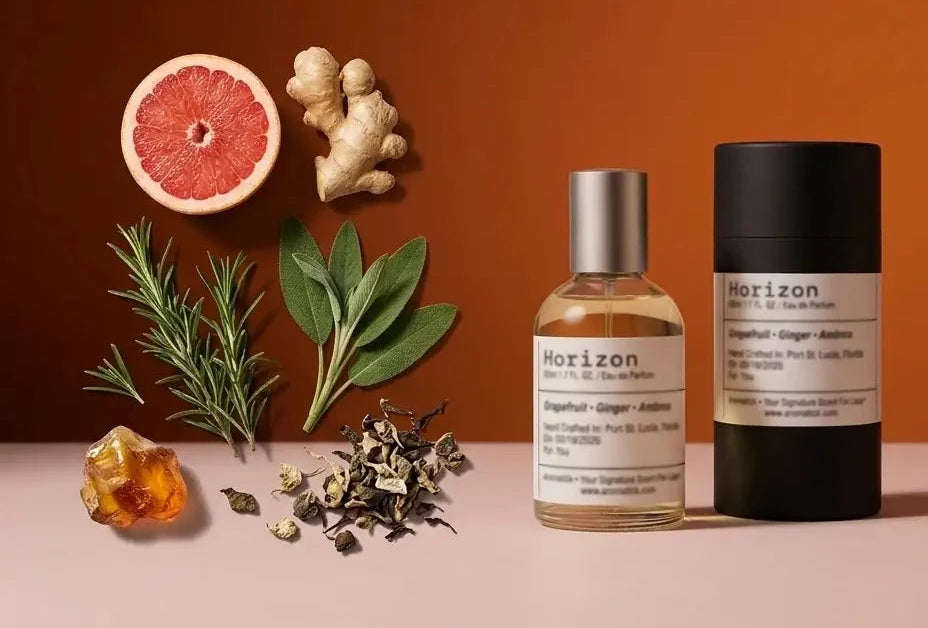

Discover your signature scent: guide to personal fragrance
TL;DR:
- A signature scent reflects personal identity through consistency, recognition, and emotional connection.
- Brands use signature scents strategically across all touchpoints to build emotional loyalty and reinforce identity.
- Most people benefit from building a wardrobe of scents rather than relying on a single signature fragrance.
Most people own more than one perfume, yet the pressure to land on a single “signature scent” can make fragrance shopping feel unnecessarily complicated. The idea that every person needs one unmistakable bottle, worn rain or shine, season after season, is more myth than reality. A signature scent can mean different things depending on whether you’re an individual searching for personal expression or a brand building an identity through smell. Understanding both sides of this concept gives you a smarter framework for making fragrance choices that actually fit your life, your skin, and your budget.
Table of Contents
- What is a signature scent?
- How brands use signature scents for identity
- Personal signature scent: More than just a favorite fragrance
- How to discover your own signature scent
- A fresh take: Do you need just one signature scent?
- Find your signature scent for less at Aromatick
- Frequently asked questions
Key Takeaways
| Point | Details |
|---|---|
| Signature scent meaning | A signature scent is a unique fragrance that matches your personality or a brand’s identity. |
| Brands & scent marketing | Brands use signature scents to create emotional connections and support recognition. |
| Personal selection tips | Testing fragrances on your skin and paying attention to their dry-down is key to finding your signature scent. |
| Fragrance wardrobe | Rotating scents rather than sticking to only one can keep your fragrance experience fresh and enjoyable. |
What is a signature scent?
At its most basic, a signature scent is a fragrance so closely tied to a person or brand that it becomes instantly recognizable. Think of it like a style of handwriting. Once you know it, you can spot it without a label. For individuals, it’s the scent people notice the moment you walk into a room, something that feels like a natural extension of who you are.
As fragrance experts at Refinery29 explain, a “signature scent” is an extension of your personality, not just a pleasant smell you happen to enjoy. That distinction matters. Plenty of people wear perfume they like. Far fewer wear a scent that genuinely reflects their character, values, and presence.
“A signature scent doesn’t just smell good on you — it feels like you. It’s the olfactory version of your most authentic self.”
What makes a scent qualify as a signature? Several qualities matter:
- Consistency: You wear it often enough that others associate it with your presence.
- Recognition: People notice when you’re wearing it and, more tellingly, when you’re not.
- Skin compatibility: It interacts well with your skin’s natural chemistry, smelling slightly different and better on you than on anyone else.
- Emotional resonance: It connects to your memories, personality, or aspirations in a meaningful way.
The psychology behind this is well documented. Smell is the sense most directly linked to the brain’s limbic system, which governs emotion and memory. When a scent becomes associated with a specific person, it triggers an almost involuntary emotional response in those who encounter it. That’s exactly why a particular perfume can make you think of your grandmother, a favorite teacher, or a memorable trip without any conscious effort.
For brands, the stakes are equally high. A signature scent used in a hotel lobby, retail store, or luxury packaging creates a sensory memory that advertising campaigns struggle to replicate. The experience of choosing a signature scent applies whether you’re a person seeking self-expression or a business curating a complete brand experience.
Personal signature scents tend to skew toward fragrances that are distinctive without being abrasive, long-lasting, and flattering across different settings. They are often warm, woody, clean, or musky rather than overtly sweet or intensely aromatic, though individual taste plays a decisive role.
How brands use signature scents for identity
Brands have understood the power of scent far longer than most consumers realize. The hospitality industry pioneered the concept decades ago, engineering specific aromas to be pumped through ventilation systems in hotel lobbies. Today, everything from luxury automotive brands to fast-fashion retailers has experimented with signature scenting to reinforce identity.
The difference between a generic branded perfume and a true brand signature scent is intentionality. A branded perfume is simply a product sold under a label. A brand signature scent is a strategic asset, designed to communicate the brand’s values through smell before a single word is spoken or product is seen.
According to scent branding experts, a “signature scent” as a brand asset is most convincing when it is consistent with brand identity across every touchpoint. That means the same scent notes should appear in the store environment, product packaging, and any scented marketing materials the brand produces.
Here’s how personal and brand signature scents compare:
| Feature | Personal signature scent | Brand signature scent |
|---|---|---|
| Purpose | Self-expression and recognition | Marketing and emotional recall |
| Consistency | Worn regularly by one person | Applied across multiple environments |
| Customization | Evolves with skin chemistry | Engineered for controlled delivery |
| Success metric | Others recognize and associate it | Customers recall the brand through smell |
| Flexibility | Can rotate seasonally | Usually kept consistent for brand coherence |
The benefits for brands are measurable. Scent marketing studies consistently show that ambient scent increases the time customers spend in retail spaces and positively influences purchase intent. More importantly, it builds emotional connection, which is the hardest and most valuable form of brand loyalty to earn.
Pro Tip: If you’re evaluating a designer fragrance as your personal signature, consider trying it in different environments first. A scent that feels perfect in an air-conditioned store may perform very differently outdoors in summer heat or in a cozy restaurant setting.
For individuals interested in building their own recognizable fragrance identity, the brand approach offers a useful lesson: consistency and intentionality matter far more than using the most expensive or exotic bottle on the shelf.
Personal signature scent: More than just a favorite fragrance
There is a meaningful difference between a perfume you reach for frequently and one that has become your signature. The former is preference. The latter is identity. Many people own a collection of fragrances they enjoy without any one of them ever becoming truly associated with who they are.

Your personal signature scent should do more than smell pleasant in the bottle. It needs to work with your biology. Every person’s skin has a unique pH, moisture level, and natural scent profile that interacts with applied fragrance in distinct ways. A fragrance that smells warmly sweet on one person may smell powdery or even medicinal on another. This is why trying a scent on paper is never the full story.
The dry-down process is critical. When you first spray a fragrance, what you smell is the top notes, typically bright citrus, green, or sharp aromatic elements that dissipate within 15 to 30 minutes. The heart notes emerge next, lasting one to three hours and forming the body of the scent. Finally, the base notes settle in, often woody, musky, or resinous, and these can linger on skin for six to twelve hours. Your true impression of a fragrance should always come from the dry-down, not the opening.
How do you know when you’ve found your signature versus just a fragrance you like? Consider these key factors:
- Longevity on your skin: Does it last through your day without constant reapplication?
- Mood match: Does it reflect how you want to feel and be perceived most of the time?
- Seasonal flexibility: Can it be worn across multiple seasons, or does it feel out of place in warm weather?
- Compliment factor: Do others respond positively to it, unprompted?
- Return rate: Do you keep reaching for it even when newer purchases are available?
That said, adapting to repeated scent exposure is completely natural, and a fragrance wardrobe can add interest and variety to your daily experience. The one-scent-for-life model works for some people but genuinely limits others. Fragrance experts increasingly encourage building a small, curated collection rather than forcing yourself to commit to a single bottle.
For those who want to explore beyond a single choice, choosing niche fragrances opens doors to smaller-batch perfumery, where the focus on ingredient quality and unusual accords makes it easier to find something genuinely distinctive. Niche options often perform better on a wider range of skin types because they avoid the heavy use of synthetic extenders that can distort how a fragrance develops.
Using a step-by-step fragrance selection process helps you move from preference to something that truly represents you, taking the guesswork out of a decision that can feel overwhelming given the sheer number of options available.
How to discover your own signature scent
Finding your signature scent is a process, not an impulse decision. It takes time, some experimentation, and a willingness to test before committing to a full bottle. The good news is that the process itself is enjoyable, especially when you approach it with the right strategy.
Here is a practical approach to narrow your search:
- Identify your preferred fragrance families: Start broadly. Do you gravitate toward fresh and aquatic scents, warm oriental compositions, woody and earthy profiles, or soft florals? Knowing your family helps you eliminate a huge portion of the market immediately.
- Sample before you buy: Never purchase a full bottle blind. Order samples or decants from trusted sources. Many niche brands and online retailers offer sample programs specifically for this reason.
- Test on skin, not paper: Skin testing matters because cards cannot show how a fragrance evolves on your body chemistry over hours of wear.
- Wear it for a full day: Apply a sample in the morning and check back in at the two-hour, four-hour, and six-hour marks. Note how the scent changes and whether you still enjoy it late in the day.
- Test in different weather: A heavy amber in summer heat can become overwhelming. A light citrus in winter may feel thin and short-lived. Weather genuinely affects both projection and longevity.
- Note what gets compliments: External feedback, while not the only metric, is a reliable signal that a fragrance is working with your chemistry in a positive way.
Here’s a quick reference to help you match scent profiles with lifestyle and occasion:
| Lifestyle/occasion | Recommended scent family | Example notes |
|---|---|---|
| Corporate/office | Clean, fresh, aromatic | White musk, vetiver, green tea |
| Casual/everyday | Woody, soft floral | Sandalwood, rose, light patchouli |
| Evening/formal | Oriental, gourmand | Amber, vanilla, oud |
| Outdoor/active | Aquatic, citrus | Sea salt, bergamot, lime |
| Cold weather | Spicy, resinous | Cinnamon, labdanum, benzoin |
Pro Tip: Before buying a full bottle, swap samples with fellow fragrance enthusiasts in online communities. Fragrance forums and social groups often have active swap threads where you can access dozens of samples for very little cost, giving you real-world testing without the financial commitment.
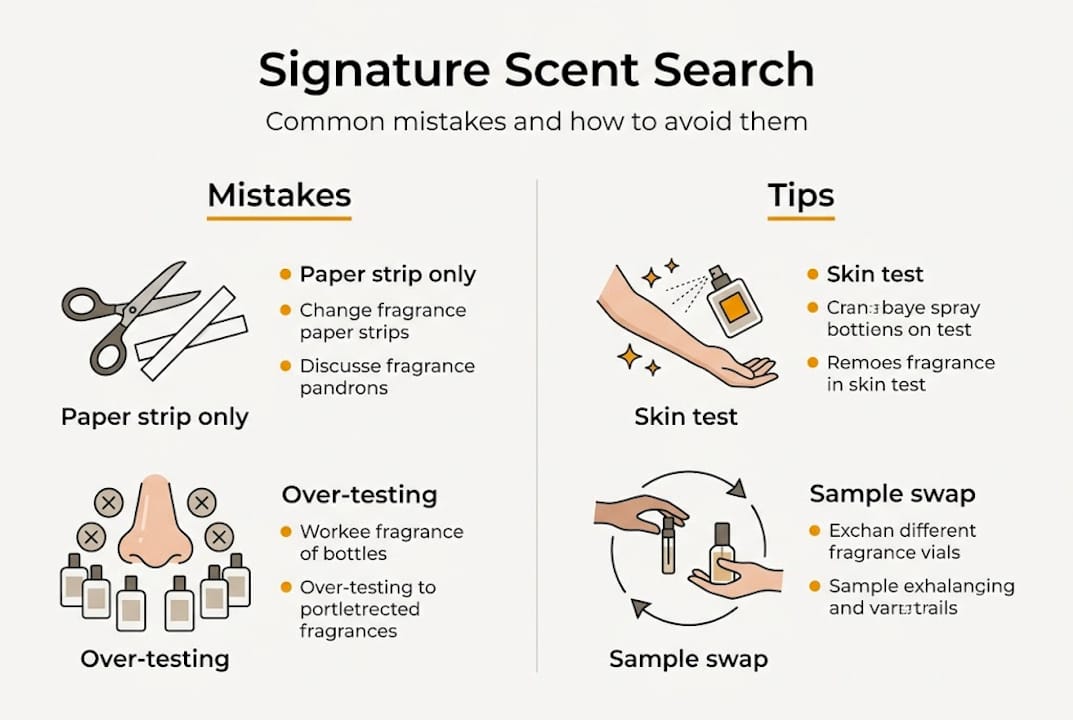
Common mistakes to avoid during your search include relying only on paper strips at department store counters, testing more than three fragrances in one session (your nose fatigues quickly), and buying immediately after smelling the top notes. Give every candidate at least four hours on your skin before forming a final opinion.
Budget is also a real consideration. Full bottles from designer and niche houses can range from $80 to several hundred dollars. A budget-friendly perfume selection strategy helps you access quality without overspending, and following an authentic step-by-step guide ensures you’re always purchasing genuine products, not imitations.
A fresh take: Do you need just one signature scent?
Here is the truth that most fragrance content won’t tell you directly: the idea of one definitive signature scent is largely a marketing construct. It’s appealing in theory, and it’s certainly how luxury fragrance advertising frames the conversation. But real fragrance lovers almost universally operate differently.
Most people who are serious about scent build a small wardrobe of four to eight fragrances, rotating based on season, mood, and occasion. Fragrance enthusiasts widely discuss a fragrance wardrobe approach precisely because it aligns with how scent actually functions in human life. Your mood on a rainy Tuesday in November is genuinely different from your mood on a warm Saturday in June, and your fragrance can reflect that without any loss of identity.
The practical advice here is to stop hunting for “the one” and start building a curated collection with intention. Identify a core scent that you wear most frequently, and let that become your de facto signature in social memory. Then build around it with one or two seasonal alternatives and one reserved for evenings or special occasions.
For smart shopping tips on designer fragrances, understanding this wardrobe model actually makes purchasing decisions easier, not harder. You’re no longer searching for a single perfect answer. You’re building a thoughtful collection where every bottle earns its place.
Find your signature scent for less at Aromatick
Ready to put this all into practice without stretching your budget?
At Aromatick, you’ll find authentic designer and niche fragrances at discounts of up to 60% off retail price. Whether you’re searching for a clean daily signature or an intense evening fragrance, the selection spans hundreds of options across every scent family. Explore the full designer fragrance collection for well-known luxury brands, or browse the niche fragrance collection if you’re looking for something more distinctive and unusual. Every product is 100% authentic, backed by free shipping and a satisfaction guarantee, so you can explore confidently and find the scent that truly fits you.
Frequently asked questions
What defines a brand signature scent?
A brand signature scent is a fragrance that consistently expresses a brand’s identity across multiple touchpoints, and as scent branding experts note, it works best when it aligns with the brand’s values and is experienced coherently in every setting.
How do I find my signature scent?
Test fragrances directly on your skin and observe how they evolve through the dry-down, since skin testing matters far more than a quick sniff of a paper card for understanding how a fragrance truly performs on your chemistry.
Should I have just one signature scent?
You don’t have to, and many fragrance enthusiasts don’t. A fragrance wardrobe approach lets you rotate scents based on mood, occasion, and season, which is both more practical and more enjoyable than committing to a single bottle forever.
Why is skin chemistry important when picking a signature scent?
Skin chemistry, including your pH level, hydration, and natural body scent, directly affects how a fragrance smells and how long it lasts, which is why dry-down testing on skin is the only reliable way to evaluate whether a scent is truly right for you.

Leave a comment
This site is protected by hCaptcha and the hCaptcha Privacy Policy and Terms of Service apply.