
How to Spot Counterfeit Perfumes: 2026 Guide
TL;DR:
- Counterfeit perfumes mimic authentic scents using inferior ingredients, posing health risks and financial loss. Verifying seller credibility, examining packaging details, inspecting batch codes, and testing scent longevity are essential to authenticate fragrances. A combination of these methods offers the most reliable protection against fake perfumes.
Counterfeit perfumes are fraudulent fragrance products designed to mimic authentic designer or niche scents while using inferior, often unregulated ingredients. Knowing how to spot counterfeit perfumes protects both your wallet and your health. The fragrance industry calls this process fragrance authentication, and it relies on a cluster of signals rather than a single test. Batch code verification tools like CheckFresh.com, packaging standards set by brands like Hugo Boss, and safety guidelines from IFRA all play a role. This guide walks you through every layer of that verification process.
How to spot counterfeit perfumes before you buy
The first and most effective defense against fakes is vetting the seller before you ever inspect a bottle. Seller trust signals like a clear business identity, consistent return policies, and credible customer reviews reduce your risk more than any single physical test. A seller with no verifiable business address, no return policy, and a flood of five-star reviews posted within days of each other is a serious warning sign.
Look closely at the product listing itself. Authentic listings use official product photography, accurate scent names, correct concentration labels (Eau de Parfum, Eau de Toilette), and precise bottle sizes in milliliters. Listings that mix up concentration terms, show inconsistent sizing, or use generic stock photos instead of actual product images should raise immediate concern.
Price is one of the clearest fake perfume warning signs. A 100ml bottle of Hugo Boss Bottled Eau de Parfum retails for around $80–$100 at authorized stores. If you find it listed at $15, the math does not work. Genuine fragrance discounts exist, but they come from authorized retailers clearing inventory, not from anonymous third-party sellers.
Pro Tip: Use the online shopping checklist from Parfumla to cross-reference seller credentials before committing to a purchase. It takes two minutes and can save you from a costly mistake.
Key seller red flags to watch for:
- No physical business address or contact information listed
- Refund and return policies that are vague or absent entirely
- Listings that describe a scent as “inspired by” or “type” rather than the actual brand name
- Prices more than 70% below the manufacturer’s suggested retail price
- Only one or two product images with no close-up of the box base or batch code
What packaging details reveal about authenticity
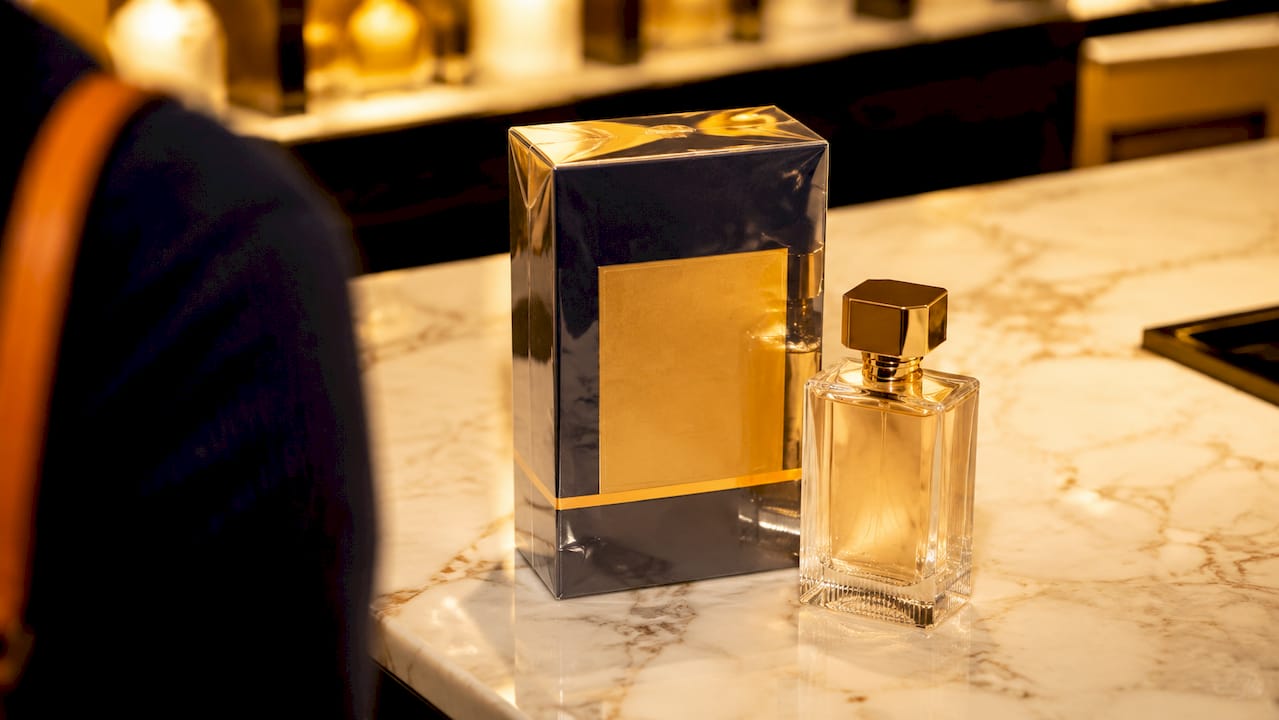
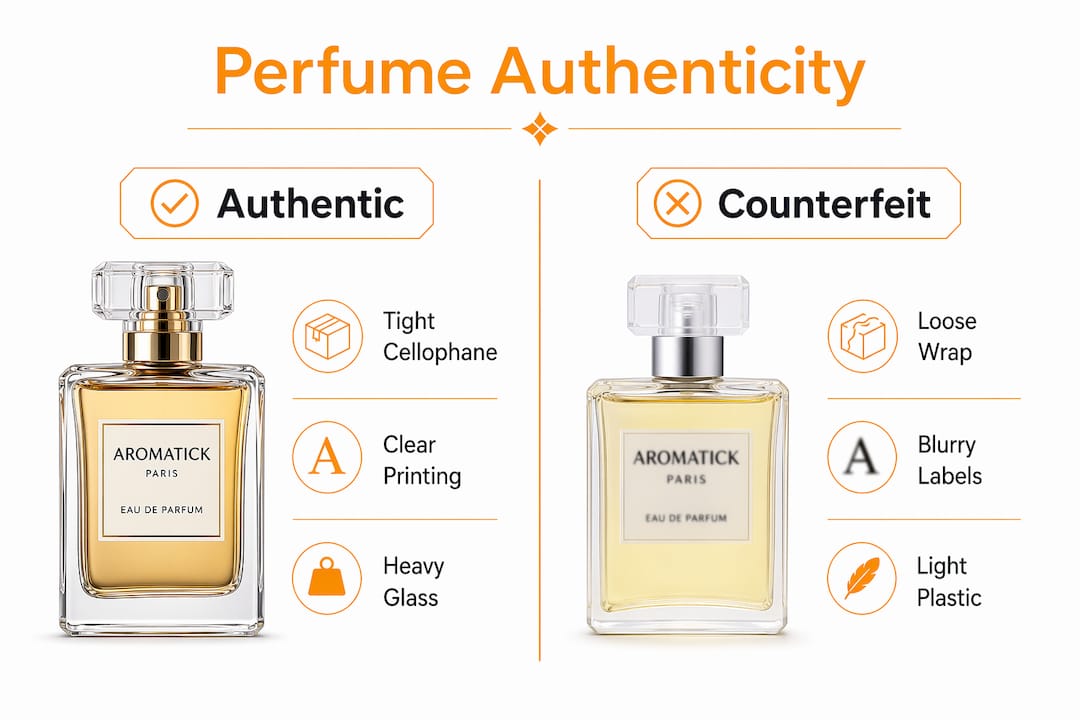
Authentic perfume packaging is a direct reflection of the brand’s quality standards. Luxury perfume packaging features sharp, high-definition printing and precise professional-grade cellophane wrapping without creases or excess glue. Counterfeit packaging uses lower-quality printing, which causes blurry text, inconsistent fonts, and spelling errors. These are not subtle differences. Hold the box under good light and the gap becomes obvious.
Cellophane and box construction
The cellophane wrap on a genuine perfume fits like a second skin. It is taut, heat-sealed at the edges, and completely free of bubbles or loose folds. Counterfeit wrapping is often loose, unevenly sealed, or shows excess glue at the corners. The box itself should feel sturdy and substantial. Authentic boxes use thick cardboard with a consistent color finish. Fake boxes often feel flimsy and may show slight color variation between panels.
Print quality and labeling
Run your finger across the text on the box. Authentic printing sits cleanly on the surface with no raised edges or smearing. Check the logo placement against the brand’s official website. Even a millimeter of misalignment is a red flag. Spelling errors are the most obvious giveaway, but font weight inconsistencies and incorrect trademark symbols are just as telling.
Bottle and atomizer quality
Physical inspection of the bottle includes checking for smooth, heavy glass, a tight-fitting cap, an even atomizer spray, and a centered, non-peeling label. Counterfeits cut corners with light bottles, uneven seams, cheap plastic caps, and sprayers that either clog or spray unevenly. Shake the bottle gently. Authentic perfume liquid is typically clear or lightly tinted and consistent in color. Cloudy or oddly colored liquid suggests degraded or substituted ingredients.
| Feature | Authentic perfume | Counterfeit perfume |
|---|---|---|
| Cellophane wrap | Taut, heat-sealed, no bubbles | Loose, uneven, excess glue |
| Print quality | Sharp, consistent fonts, correct spelling | Blurry, mismatched fonts, typos |
| Glass bottle | Heavy, smooth, even seams | Light, rough edges, uneven seams |
| Atomizer spray | Even, consistent mist | Clogged, uneven, or weak spray |
| Cap fit | Firm, precise fit | Loose, wobbly, or misaligned |
Pro Tip: Compare the box and bottle side by side with an official brand image from the manufacturer’s website. Brands like Chanel, Dior, and Hugo Boss publish high-resolution product images that make discrepancies easy to spot.
How do batch codes help verify perfume authenticity?
A batch code is a 3–11 character alphanumeric code stamped on both the bottle base and the outer box. It identifies the production batch, manufacturing date, and sometimes the production facility. Missing or non-matching codes between the bottle and box are a strong indicator of a counterfeit product.
Here is how to use batch codes effectively:
- Locate the code. Check the bottom of the bottle and the base of the box. The code is usually embossed, printed, or stamped in small text.
- Compare both codes. The code on the bottle must exactly match the code on the box. Any difference means the bottle and box were not originally packaged together.
- Decode the code online. Enter the code at CheckFresh.com to retrieve the manufacturing date and verify it falls within a plausible production window for that fragrance.
- Cross-reference with the fragrance launch date. A batch code that decodes to a date before the fragrance was officially launched is a clear sign of fraud.
- Treat the result as one data point. A valid batch code does not confirm authenticity on its own.
That last point matters. Batch code verification is helpful but not definitive. Counterfeiters sometimes copy legitimate batch codes from authentic bottles and stamp them onto fakes. Batch code tools can also be incomplete, and some legitimate products use unusual formats that do not decode cleanly. Use batch codes as one layer of a multi-factor check, not as a final verdict.
| Batch code scenario | What it means |
|---|---|
| Codes match on bottle and box | Consistent packaging, positive sign |
| Codes do not match | Bottle and box were not originally paired |
| Code decodes to pre-launch date | Strong indicator of counterfeit |
| Code does not decode at all | Inconclusive; check other factors |
| No code present on bottle or box | High-risk indicator of counterfeit |
What scent characteristics reveal a fake fragrance?
The nose is your most personal authentication tool. Counterfeit fragrances fade within 30–60 minutes because they use low-grade aroma chemicals or insufficient concentration of fragrance oil. Authentic perfumes maintain complex fragrance evolution for hours, moving through distinct top, heart, and base note phases.
Spray a small amount on your wrist and wait. A genuine Eau de Parfum should still be detectable after four to six hours, with the dry-down revealing warmer, woodier, or muskier base notes. A fake typically smells sharp and synthetic at first, then disappears almost entirely within an hour. The dry-down on a counterfeit is often flat, harsh, or oddly chemical rather than the warm, rounded finish of a quality fragrance.
Testing on paper versus skin also reveals differences. Spray on a paper strip first to assess the initial scent profile. Then spray on skin to observe how the fragrance interacts with your body chemistry. Authentic fragrances evolve noticeably on skin. Counterfeits tend to smell nearly identical on paper and skin because they lack the complex ingredient structure needed to react with body heat.
“Authentic perfumes undergo dermatological safety testing and comply with IFRA guidelines. Counterfeit perfumes are manufactured without regulatory oversight, increasing the risk of irritating or harmful ingredients.” — Naluda Magazine
The health risk is real. IFRA, the International Fragrance Association, sets strict limits on ingredients that can cause skin sensitization or allergic reactions. Counterfeit manufacturers ignore these standards entirely. If a perfume causes immediate skin irritation, redness, or an unusual reaction, stop using it. You can read more about scent longevity and safety as key markers of genuine fragrance quality.
Pro Tip: If you own an authentic bottle of the same fragrance, spray both side by side on separate wrist areas. The difference in projection, longevity, and dry-down between a real and fake version is almost always immediately apparent.
Signs of a counterfeit scent profile:
- Fades completely within 30–60 minutes of application
- Smells sharp, synthetic, or chemical from the first spray
- Lacks a distinct dry-down or base note phase
- Causes skin irritation, redness, or an unusual reaction
- Smells noticeably weaker than the same fragrance tested at a department store
Key takeaways
Reliable perfume authentication requires a collective assessment of seller reputation, packaging integrity, bottle construction, batch codes, and scent characteristics rather than any single test.
| Point | Details |
|---|---|
| Vet the seller first | Check business identity, return policies, and reviews before inspecting the product. |
| Inspect packaging closely | Look for sharp print quality, tight cellophane, and sturdy box construction. |
| Match batch codes | Codes on the bottle and box must match; use CheckFresh.com to decode manufacturing dates. |
| Test scent longevity | Authentic perfumes last four to six hours with evolving notes; fakes fade within an hour. |
| Use multiple checks | No single test confirms authenticity; combine all four verification layers for confidence. |
My take: why one check is never enough
I have seen buyers walk away from a purchase because the price looked suspicious, only to buy a fake from a different seller with a polished website and a convincing batch code. The counterfeit fragrance market has matured. The fakes that circulate today are not the obvious knock-offs of ten years ago. Some have near-perfect packaging, plausible batch codes, and even a reasonable first spray.
What they cannot fake consistently is the full sensory experience over time. The scent evolution from top to heart to base, the way a quality fragrance like Initio Parfums Privés Atomic Rose deepens on warm skin after two hours, the weight of the glass bottle in your hand. These things require genuine ingredients, genuine manufacturing, and genuine quality control.
My honest advice: start with the seller, not the bottle. A trustworthy source with verified authenticity practices removes most of the risk before you ever open the box. Physical and scent checks are your second and third lines of defense, not your first. Buyers who skip seller vetting and go straight to sniffing the cap are playing a game the counterfeiters have already prepared for.
The guide to recognizing authentic perfumes from Aromatick covers additional authentication details worth bookmarking for your next purchase.
— Rodney
Shop verified authentic fragrances at Aromatick
Knowing how to identify fake perfumes is only half the solution. The other half is buying from a source where authenticity is guaranteed from the start.
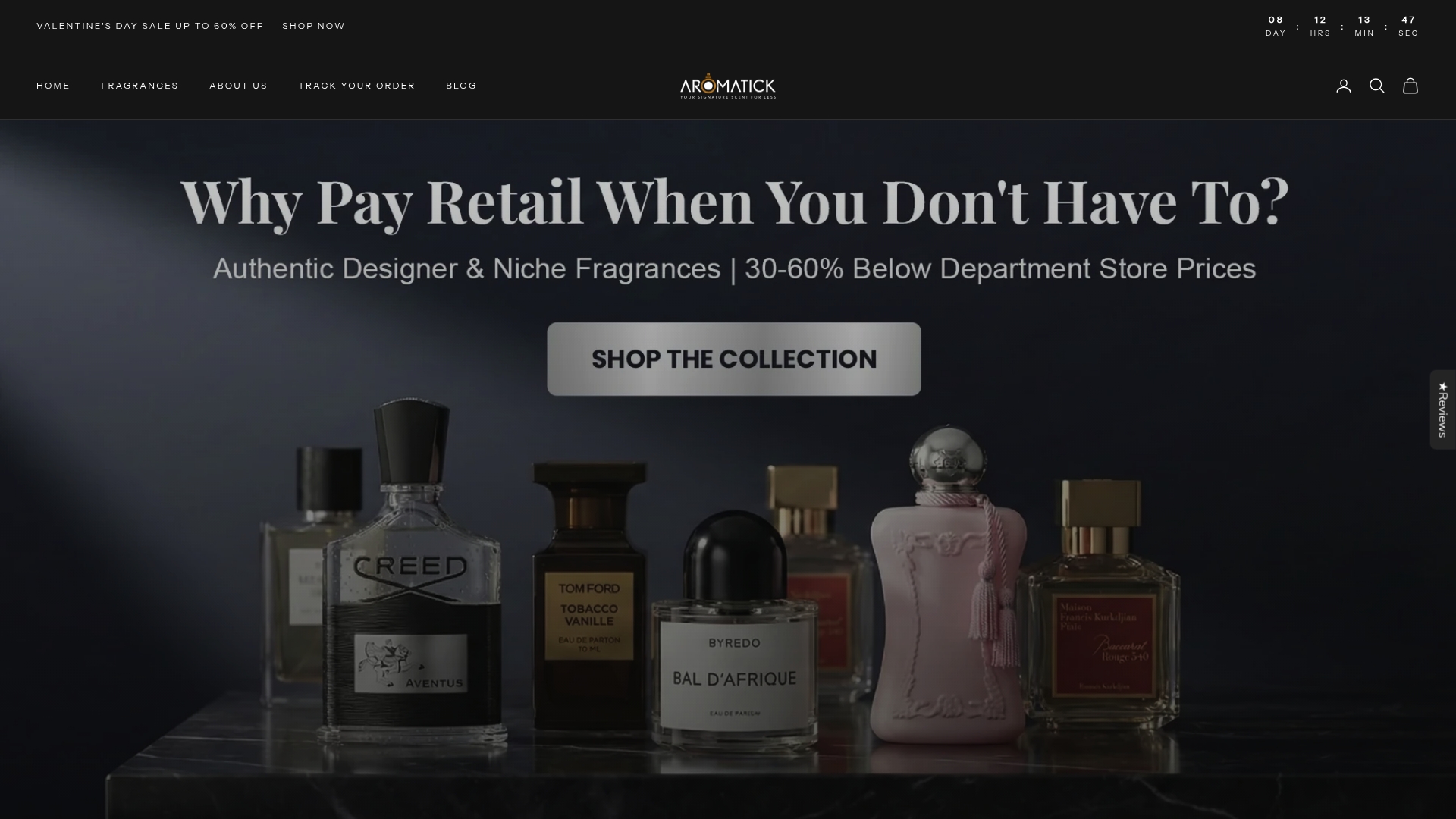
Aromatick specializes in authentic designer fragrances from brands like Hugo Boss, Initio Parfums Privés, and more, at discounts of 30–60% below department store prices. Every product is verified genuine before it reaches you. Aromatick offers free shipping, secure payments, and a satisfaction guarantee, so you shop with full confidence. Skip the authentication anxiety and browse a curated collection where the work has already been done for you.
FAQ
What is the fastest way to check if a perfume is fake?
Compare the batch code on the bottle base with the code on the outer box. Non-matching codes are an immediate red flag, and you can decode the manufacturing date using CheckFresh.com.
Can a fake perfume harm your skin?
Yes. Counterfeit perfumes lack regulatory oversight and may contain irritating or harmful ingredients that authentic perfumes, which comply with IFRA safety standards, are required to exclude.
How long should a real perfume last on skin?
A genuine Eau de Parfum typically lasts four to six hours or longer, with the scent evolving through distinct top, heart, and base note phases. Fakes typically fade within 30–60 minutes.
Are discounted perfumes always fake?
No. Authorized retailers and specialty fragrance stores like Aromatick offer genuine perfumes at significant discounts by eliminating retail overhead. The key is verifying the seller’s credentials and authenticity guarantees before purchasing.
What is the most reliable way to authenticate a perfume?
The most reliable approach combines seller vetting, packaging inspection, batch code verification, and scent longevity testing. No single check is definitive on its own.

Leave a comment
This site is protected by hCaptcha and the hCaptcha Privacy Policy and Terms of Service apply.