

Perfume Buying Guide for Beginners: Choose Right
TL;DR:
- Understanding fragrance families helps beginners identify their preferred scent types and avoid sensory overload.
- Testing perfumes on skin for at least 60 minutes reveals the full character of a fragrance, ensuring better purchasing choices.
A perfume buying guide for beginners is the essential first step to mastering scent selection by learning how fragrance families, concentration levels, and personal skin chemistry shape your ideal perfume. The fragrance industry uses specific terms like Eau de Toilette, Eau de Parfum, and Parfum to describe concentration levels, and each one delivers a different strength and wear time. Beginners who understand these fundamentals make better purchases and avoid the most common mistake: buying a full bottle based on a 30-second sniff. Aromatick offers authentic designer and niche fragrances at up to 60% off, making it easier to explore without overspending.
What are fragrance families and how do they help beginners?
Fragrance families are the five major scent categories that define a perfume’s personality: Floral, Woody, Oriental, Fresh, and Gourmand. Every perfume belongs to one or more of these families. Knowing which family appeals to you cuts through hundreds of options and gives you a clear starting point.
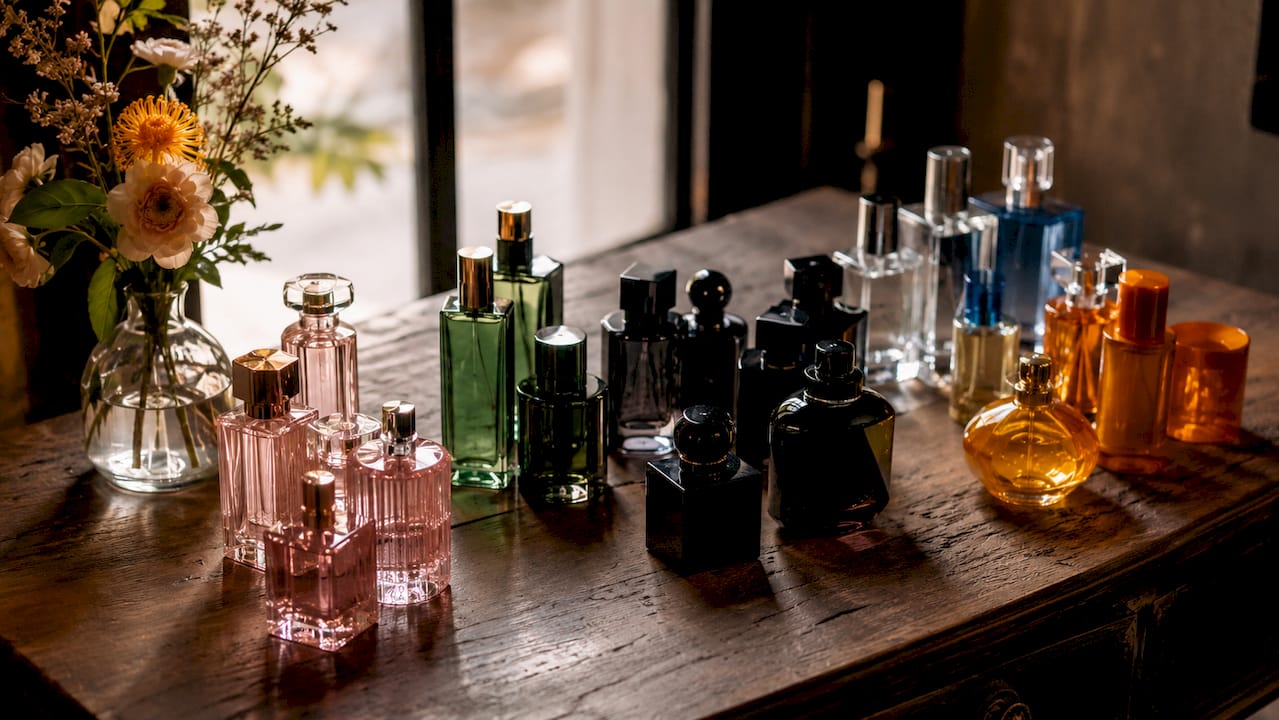
Think of scent families like music genres. Just as you would not browse every song ever recorded to find something you like, you do not need to smell every perfume on the shelf. You narrow the list by genre first, then explore within it.
Here is what each family smells like:
- Floral: Rose, jasmine, peony, and lily. These are the most popular category worldwide, especially in women’s fragrances. They range from light and airy to rich and heady.
- Woody: Sandalwood, cedar, vetiver, and oud. These smell warm, earthy, and grounded. They work well in cooler weather and lean masculine, though many are unisex.
- Oriental: Amber, vanilla, musk, and spice. These are warm, rich, and long-lasting. They project strongly and suit evening wear.
- Fresh: Citrus, green tea, aquatic, and ozonic notes. These smell clean, light, and energizing. They are ideal for daytime and warm weather.
- Gourmand: Vanilla, caramel, chocolate, and coffee. These smell edible and sweet. They are modern and popular in niche perfumery.
Focusing on just one or two families bypasses the majority of options and prevents the sensory overload that hits most beginners at a perfume counter. Once you identify your preferred family, you can read a perfume’s notes list and immediately know whether it is worth testing.
Pro Tip: Read the listed notes on any perfume before you smell it. If the top three notes match your preferred family, it is worth your time. If they do not, move on.
Aromatick’s fragrance families guide goes deeper into each category with specific examples to help you identify your preferences quickly.
How do concentration levels affect longevity and strength?
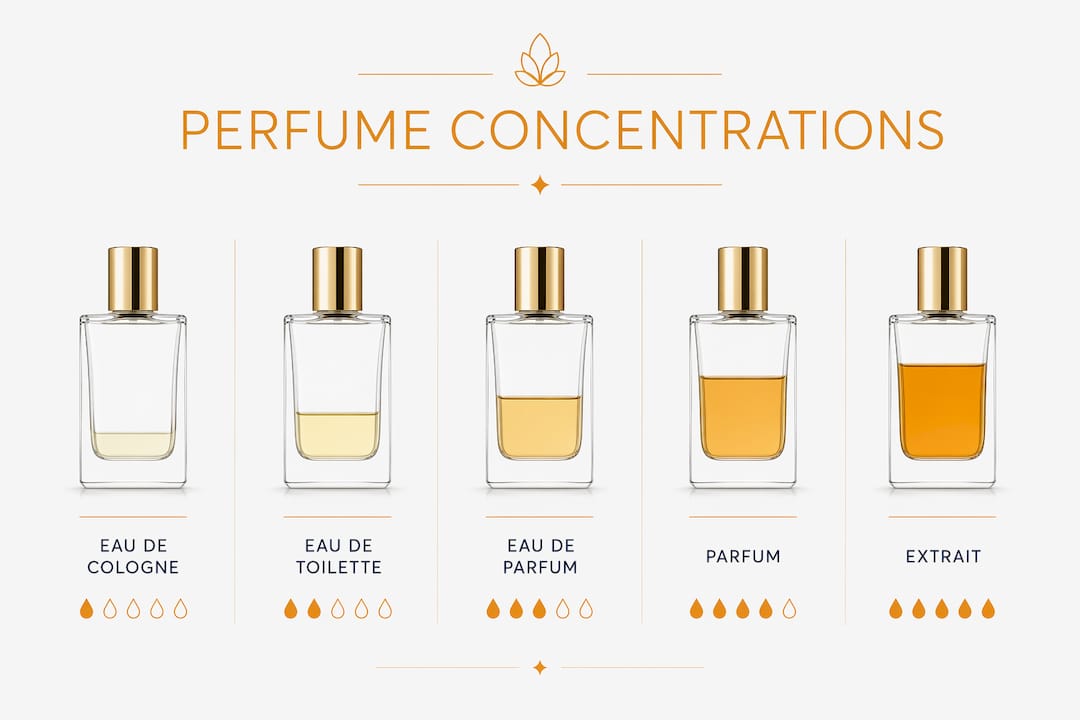
Perfume concentration is the percentage of fragrance oil in the formula. It directly controls how strong the scent is, how long it lasts on your skin, and how much you pay. EDT lasts 3–5 hours, EDP lasts 6–8 hours, and Parfum lasts over 8 hours. That difference matters when you are choosing between a daytime office scent and a fragrance for a long evening out.
| Concentration | Oil Percentage | Lasting Time | Best For |
|---|---|---|---|
| Eau de Cologne (EDC) | 2–4% | 2–3 hours | Casual, hot weather |
| Eau de Toilette (EDT) | 5–15% | 3–5 hours | Daytime, office, everyday |
| Eau de Parfum (EDP) | 15–20% | 6–8 hours | Evening, cooler weather |
| Parfum (Extrait) | 20%+ | 8+ hours | Special occasions, longevity |
EDT is the most common starting point for beginners. It is lighter, less expensive, and works for most daytime situations. EDP is the better choice when you want a scent that lasts through a full workday or into the evening without reapplying. Parfum delivers the most intense and long-lasting experience, but it also costs more and requires a lighter hand when applying.
Price does not always scale perfectly with concentration. An EDT from a luxury house can cost as much as an EDP from a mid-range brand. The concentration tells you about longevity, not quality.
Pro Tip: If you are buying your first bottle, start with an EDT or EDP. They give you the best balance of longevity, versatility, and price.
For a detailed breakdown of each concentration type, Aromatick’s perfume concentration guide explains how oil percentages translate to real-world wear.
How to test perfumes effectively before buying
Testing perfume correctly is the single most important skill in this fragrance selection guide. Most beginners smell a perfume on a paper strip, like it, and buy the bottle. That is a mistake. Paper strips only show you the top notes, which are the opening burst of scent designed to grab your attention. Top notes fade within 5–15 minutes, and the true character of a perfume lives in its heart and base notes.
Follow these steps to test a perfume properly:
- Spray on a pulse point. Apply to your wrist, inner elbow, or neck. Body heat activates the fragrance and lets your skin chemistry interact with the formula.
- Wait at least 20 minutes. The heart notes begin to emerge after the top notes fade. This is where the real personality of the scent appears.
- Evaluate at 60 minutes. By this point, the base notes are developing. Testing for at least 60 minutes gives you an accurate picture of how the perfume will smell throughout the day.
- Limit yourself to three scents per session. Smelling more than three fragrances in one visit causes olfactory fatigue. Your nose stops distinguishing differences accurately.
- Return the next day if unsure. A second evaluation after sleeping on it removes the excitement bias that leads to impulse purchases.
“The full scent character of a perfume is only revealed over 4 to 8 hours of wear. Buying based on the first five minutes is like judging a film by its opening scene.” — Fragrance testing principle
Blind buying based solely on brand marketing yields low satisfaction. Cross-referencing notes from scents you already like improves your selection accuracy significantly compared to choosing by packaging or advertising alone.
Step-by-step approach to buying your first perfume
Buying your first perfume is straightforward when you follow a structured process. This approach removes guesswork and builds real confidence.
- Identify your preferred scent family. Write down two or three scents you already enjoy, whether that is a soap, a candle, or a lotion. Look at their notes and identify the family pattern.
- Choose your concentration. Decide whether you need a light daytime scent (EDT) or something longer-lasting for evenings (EDP or Parfum).
- Sample before you commit. Decants and discovery sets ranging from 1–10ml cost between $5 and $25. They let you test a fragrance across multiple days and occasions before spending $90 to $300 on a full bottle.
- Test on skin, not paper. Apply to a pulse point and wear it for a full day. Note how it changes from morning to evening.
- Buy from a reliable retailer. Authenticity matters. Counterfeit fragrances use inferior ingredients that smell different and can irritate skin. Aromatick sells only verified authentic fragrances, with detailed product information and a satisfaction guarantee.
| Step | Action | Why it matters |
|---|---|---|
| Identify scent family | Match to existing preferences | Narrows hundreds of options to a manageable shortlist |
| Choose concentration | Match to occasion and budget | Sets correct expectations for strength and wear time |
| Sample first | Use decants or discovery sets | Avoids costly mistakes on full bottles |
| Test on skin | Wear for a full day | Reveals true scent development and longevity |
| Buy authenticated | Choose verified retailers | Guarantees formula integrity and ingredient quality |
Aromatick’s step-by-step fragrance guide walks through this process with specific product recommendations for each scent family.
Key Takeaways
Beginners who understand fragrance families, concentration levels, and proper skin-testing methods make confident perfume purchases and avoid the costly mistakes that come from impulse buying.
| Point | Details |
|---|---|
| Start with scent families | Identify your preferred family first to cut through hundreds of options quickly. |
| Match concentration to occasion | EDT suits daytime wear; EDP and Parfum deliver longer-lasting results for evenings. |
| Always test on skin | Paper strips only show top notes; skin testing over 60 minutes reveals the true scent. |
| Sample before buying full bottles | Decants and discovery sets ($5–$25) let you test before committing to a $90–$300 bottle. |
| Buy from verified retailers | Authentic fragrances perform as intended; counterfeits use inferior ingredients. |
What I’ve learned from watching beginners buy perfume
The most common mistake I see is speed. A shopper walks up to a counter, sprays three things on paper, picks the one that smells best in that moment, and walks away with a $120 bottle. Two weeks later, they are not wearing it. The top notes seduced them. The base notes did not.
Active smelling is a learned skill, and there is no pressure to buy immediately. The best buyers I have observed treat perfume shopping like wine tasting. They take notes, return multiple times, and only commit when they have worn a scent through a full day and still want more of it.
The financial side matters too. A $15 decant that you wear for a week tells you more than a 30-second counter test ever will. If you love it after seven days, the full bottle is an easy decision. If you do not, you saved $100.
My honest advice: ignore marketing entirely when you are starting out. The bottle design, the celebrity face, and the brand story tell you nothing about whether a scent suits your skin and lifestyle. Trust your nose, take your time, and build a small collection of two or three bottles that you actually reach for every day. That is worth more than a shelf full of impulse purchases.
— Rodney
Authentic fragrances at prices that make sampling possible
Aromatick carries a wide range of authentic designer fragrances at 30–60% below standard retail prices. That price difference makes it practical to try more scents, explore different concentrations, and build a collection without the financial risk that stops most beginners from experimenting.
Whether you are drawn to classic designer names or want to step into niche fragrances, Aromatick’s catalog covers both ends of the spectrum with verified authentic products. Free shipping, secure payments, and a satisfaction guarantee mean you can shop with confidence from the first purchase.
FAQ
What is the best perfume concentration for beginners?
Eau de Toilette (EDT) is the best starting point for most beginners. It is lighter, more affordable, and versatile enough for everyday wear, lasting 3–5 hours on skin.
How many perfumes should I test in one shopping session?
Limit yourself to three fragrances per session. Testing more causes olfactory fatigue, which prevents your nose from accurately distinguishing scents.
Why does a perfume smell different on my skin than on a strip?
Your skin chemistry, body temperature, and natural oils all interact with a fragrance formula. Paper strips only show the top notes and cannot replicate how a scent develops on your body over time.
What are discovery sets and are they worth it?
Discovery sets are small sample collections, typically 1–10ml bottles, that cost between $5 and $25. They let you test multiple fragrances on skin across several days before committing to a full bottle priced at $90 or more.
How long should I wear a perfume before deciding to buy it?
Wear a fragrance for at least 60 minutes before making a judgment, and ideally for a full day. Top notes fade within 15 minutes, and the heart and base notes that define the true scent take several hours to fully develop.

Leave a comment
This site is protected by hCaptcha and the hCaptcha Privacy Policy and Terms of Service apply.