
Tips for Choosing Cologne: Your Practical Scent Guide
TL;DR:
- Choosing the right cologne depends on understanding concentration levels, personal chemistry, and matching scents to occasions. Testing on skin over 24 hours helps reveal true fragrance development, while evaluating at the 30 to 60-minute mark ensures accurate judgment. Building a small, versatile wardrobe and avoiding common mistakes leads to better style choices and longer-lasting satisfaction.
Cologne selection is defined by personal chemistry, not by popularity or packaging. The right fragrance complements your skin, fits your lifestyle, and reflects your personality without effort. Yet many buyers rush the process, picking a bottle based on a quick counter spritz or a celebrity endorsement. These tips for choosing cologne cut through that noise, giving you a practical framework built on fragrance science, proper testing, and occasion awareness. Follow them, and you stop wasting money on bottles that sit unused.
1. Tips for choosing cologne start with understanding concentrations
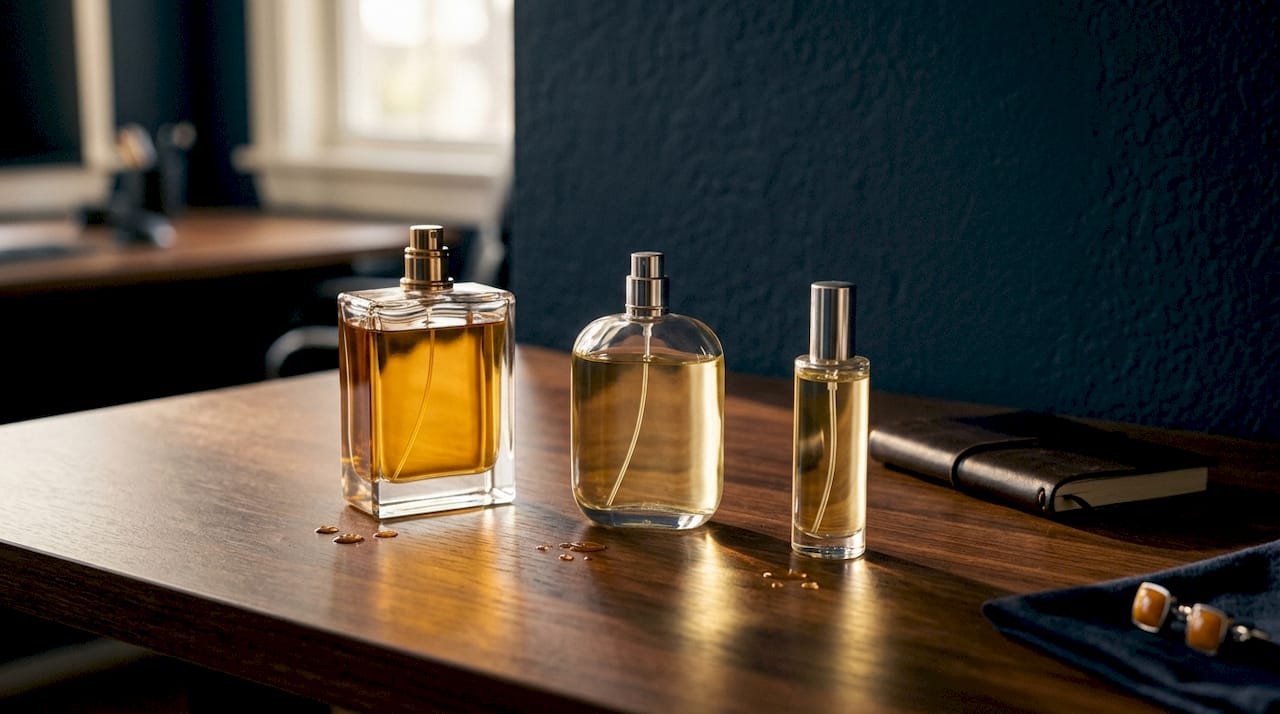
Fragrance concentration is the single most important factor in how a cologne performs on your skin. It determines scent strength, how long it lasts, and what you pay. Fragrance concentrations range from Parfum at 15–40% aromatic oils lasting 8+ hours, down to Eau de Cologne at 2–5% oils lasting just 1–3 hours. That gap in performance is enormous, and it directly affects value.
Here is how the four main categories compare:
| Concentration | Oil % | Longevity | Typical price per 50ml |
|---|---|---|---|
| Parfum | 15–40% | 8+ hours | $150–$500+ |
| Eau de Parfum (EDP) | 10–20% | 4–8 hours | $80–$200 |
| Eau de Toilette (EDT) | 5–15% | 2–4 hours | $50–$120 |
| Eau de Cologne (EDC) | 2–5% | 1–3 hours | $30–$80 |
Understanding fragrance concentration helps you match the bottle to your actual needs. An Eau de Toilette works well for daily office wear where you want a lighter presence. A Parfum or EDP suits evenings or occasions where you want the scent to carry through the night without reapplying.
Pro Tip: If you are new to cologne, start with an Eau de Toilette. It gives you flexibility, costs less, and lets you test how a scent family works on your skin before committing to a pricier concentration.
Season and lifestyle also shape which concentration makes sense. Heavy Parfums can feel suffocating in summer heat. Lighter EDTs and EDCs breathe better in warm weather, while richer EDPs and Parfums shine in cooler months when projection is naturally subdued.
2. Learn the three scent stages before you buy
Every cologne unfolds in three distinct stages: top notes, heart notes, and base notes. Top notes are what you smell in the first 5–15 minutes. They are bright, volatile, and often misleading. Heart notes emerge after 20–30 minutes and define the fragrance’s true character. Base notes anchor the whole composition and linger for hours.
Evaluating a fragrance at the 30–60 minute mark captures its truest character as the heart notes develop fully. This is the most reliable decision point. Skipping to this stage before buying saves you from dozens of poor purchases.
Most buyers make their decision at the counter within two minutes of spraying. That is a top-note decision, not a true fragrance decision. The cologne you fall in love with at the 45-minute mark is the one worth buying.
3. Test cologne on your skin, not on paper
Paper strips give you a rough idea of a fragrance’s direction, but they tell you nothing about how it will smell on you. Skin chemistry, including pH and moisture levels, changes how a scent smells. No fragrance smells the same on two different people. This makes personal skin testing non-negotiable.
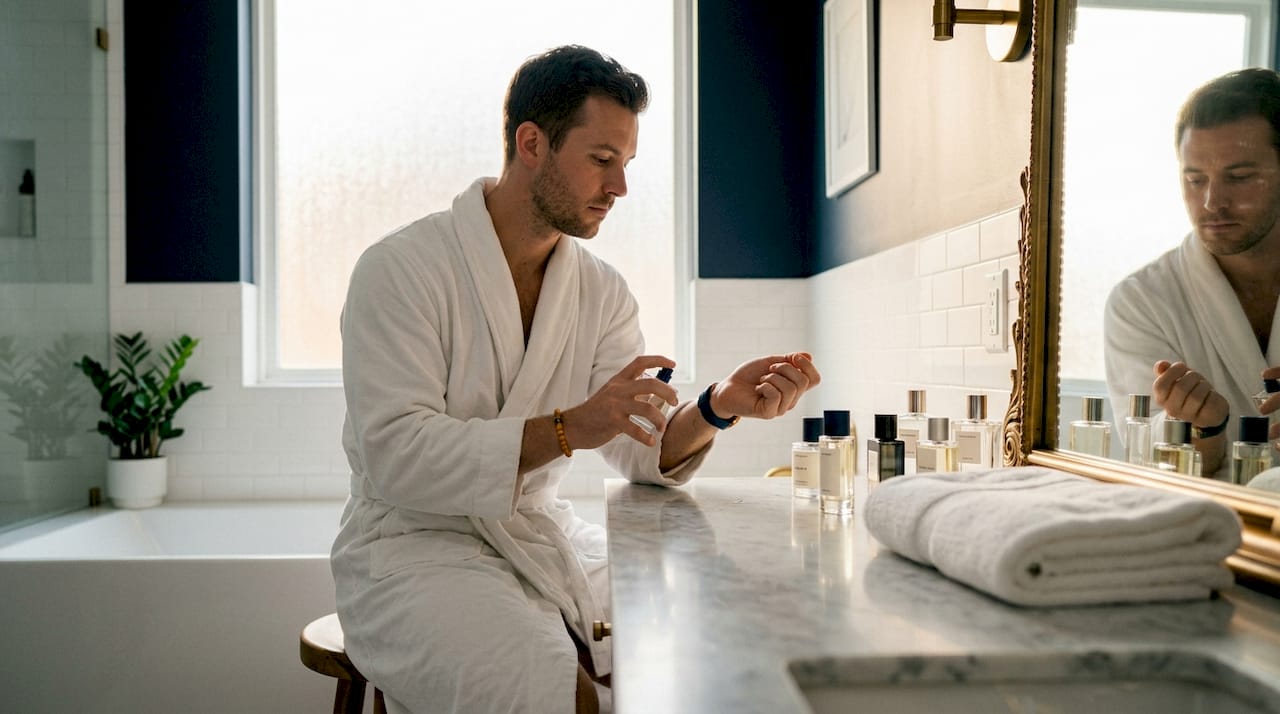
Apply 2–3 sprays on pulse points such as the inner wrist, the neck, or the inner elbow. These areas generate warmth that activates the fragrance and helps it project naturally. Let the scent settle without touching or rubbing it.
Rubbing your wrists together after applying cologne breaks down scent molecules and flattens the fragrance’s opening. It alters the true experience before you even get to the heart notes. Spray, then wait.
Test samples multiple times under different conditions, including morning versus evening, indoors versus outdoors, and on different days. This gives you a reliable picture of how the scent behaves across your real life, not just in a controlled store environment.
4. Follow a structured 24-hour testing protocol
Proper cologne testing requires at least a 24-hour wear period with scheduled checks at each scent stage to understand true development. A structured approach turns fragrance selection from a gamble into a confident choice.
Here is a practical testing sequence:
- Apply in the morning. Spray 2–3 times on pulse points and note the initial impression.
- Check at 30 minutes. The top notes are fading. Note what is emerging.
- Evaluate at 1–2 hours. Heart notes are fully present. This is the fragrance’s true personality.
- Assess at 4–6 hours. Base notes dominate. Judge longevity and how the dry-down feels.
- Note the 24-hour mark. Some base notes, especially musks and woods, linger on fabric and skin well into the next day.
- Repeat on a second day. Mood, diet, and skin hydration affect scent perception. A second test confirms your first impression.
- Ask for honest feedback. A trusted friend or partner notices projection and sillage (the scent trail you leave) better than you can from your own nose.
Keep a simple olfactory journal. Write down the scent name, the date, your impressions at each stage, and your final verdict. After testing several fragrances, patterns emerge that reveal your true preferences.
Pro Tip: Smell fresh coffee beans or the back of your own hand between testing different fragrances. Both reset your nose quickly and reduce olfactory fatigue between samples.
5. Limit how many scents you test per session
Olfactory fatigue limits accurate evaluation to about 3 fragrances per session. After that, your nose loses the ability to distinguish differences clearly. Testing more than three colognes in one sitting leads to confused impressions and poor decisions.
Space your testing sessions out over several days. This approach takes more time, but it produces far better results. Testing fewer than 3 fragrances per session and repeating wear tests at home under various conditions minimizes fatigue and builds real confidence in your choice.
Quality over quantity applies to fragrance testing just as much as it applies to fragrance buying. Three well-evaluated scents tell you more than ten rushed ones.
6. Match your cologne to the occasion and season
Scent families align naturally with specific occasions and environments. Lighter citrus and aquatic scents suit warm weather and daytime wear, while woody and oriental scents fit colder months and formal events. This is not a rigid rule, but it is a reliable starting point.
Here is a practical guide to scent family matching:
- Fresh and citrus: Office, daytime outings, spring and summer, casual social settings
- Aquatic and green: Outdoor activities, beach, warm-weather travel
- Woody and aromatic: Evening events, fall and winter, business formal, dates
- Oriental and spicy: Formal occasions, cold weather, evening wear, special events
- Fougère (fern-like, clean): Versatile year-round, casual to smart casual
Season affects not just comfort but also how a fragrance projects. Heat amplifies projection, so a heavy oriental can become overwhelming in July. Cold air suppresses projection, so a light EDT may disappear within an hour in January. Choosing a seasonal fragrance that accounts for temperature makes a real difference in how others experience your scent.
“The best cologne for any occasion is the one that feels like a natural extension of who you are in that moment. Scent should enhance your presence, not announce it.”
7. Build a fragrance wardrobe instead of chasing one perfect scent
Beginners benefit from building a versatile fragrance wardrobe with at least a fresh daytime scent and a richer evening scent. No single cologne covers every situation well. A small, curated collection gives you flexibility without complexity.
A practical starter wardrobe includes three bottles. First, a fresh or citrus EDT for daily daytime use. Second, a woody or spicy EDP for evenings and cooler months. Third, a versatile aromatic fougère that bridges casual and smart casual occasions. These three cover the vast majority of situations most people encounter.
Building a fragrance wardrobe is more practical than hunting for an all-occasion perfect scent. Fragrance is contextual by nature. Wearing the right scent for the right moment is a skill, and a small wardrobe makes that skill easy to practice.
8. Avoid the most common cologne buying mistakes
Most poor fragrance purchases trace back to a handful of predictable errors. Recognizing them before you shop saves both money and frustration.
- Buying on packaging alone. A beautiful bottle says nothing about what is inside. The fragrance industry invests heavily in bottle design precisely because it influences purchase decisions at the counter.
- Judging too quickly. Evaluating perfume within the first 30 minutes is unreliable. Openings are volatile and often misleading. Heart and base notes define the true character.
- Ignoring skin chemistry. A fragrance that smells incredible on a friend may smell flat or sharp on you. Your skin’s pH, moisture level, and even diet alter how a scent develops.
- Over-applying. More sprays do not equal better performance. Two to three sprays on pulse points is the correct amount for most concentrations. Over-application becomes intrusive to everyone around you.
- Poor storage. Heat, light, and humidity degrade fragrance molecules over time. Store bottles in a cool, dark place, away from bathroom humidity and windowsills.
- Skipping samples. Buying a full bottle without testing is the single most avoidable mistake in fragrance buying. Samples exist precisely to prevent this.
Pro Tip: Apply cologne right after showering when your skin is clean and slightly warm. The residual moisture helps the fragrance bind to your skin and project more evenly throughout the day.
Key Takeaways
Choosing the right cologne requires understanding fragrance concentration, testing on skin over 24 hours, and matching scent families to your occasion and season.
| Point | Details |
|---|---|
| Concentration defines performance | Match Parfum or EDP to evenings, EDT or EDC to daytime and warm weather. |
| Test on skin, not paper | Skin chemistry alters every fragrance; always test on pulse points before buying. |
| Wait before judging | Evaluate at the 30–60 minute mark when heart notes reveal the true scent. |
| Limit testing sessions | Test no more than 3 fragrances per session to avoid olfactory fatigue and poor decisions. |
| Build a small wardrobe | A fresh daytime scent plus a richer evening scent covers most occasions for beginners. |
What I have learned from years of testing fragrances
The most common mistake I see is impatience. People spray, sniff once, and decide in under a minute. I spent years doing exactly that, and I ended up with a shelf full of bottles I never wore past the first week. The turning point was committing to the 24-hour test. That single change transformed how I evaluate any fragrance.
The other lesson that took time to absorb is that trends are almost irrelevant to personal fragrance choice. What performs well on a model in an ad campaign may do nothing for your skin chemistry or your lifestyle. I have worn niche fragrances that cost a fraction of a hyped designer release and received more genuine compliments. The scent that works for you is the one that works on you, full stop.
My honest advice for anyone starting out: buy samples before bottles, keep a testing journal, and give each fragrance at least two full days of wear before forming an opinion. Start with popular cologne types to understand which scent families resonate with you, then narrow from there. Patience here is not a virtue. It is a strategy that saves real money.
— Rodney
Authentic designer colognes, tested and priced right at Aromatick
Knowing how to select cologne is only half the equation. Having access to authentic, quality fragrances at a price that lets you build a real wardrobe is the other half.
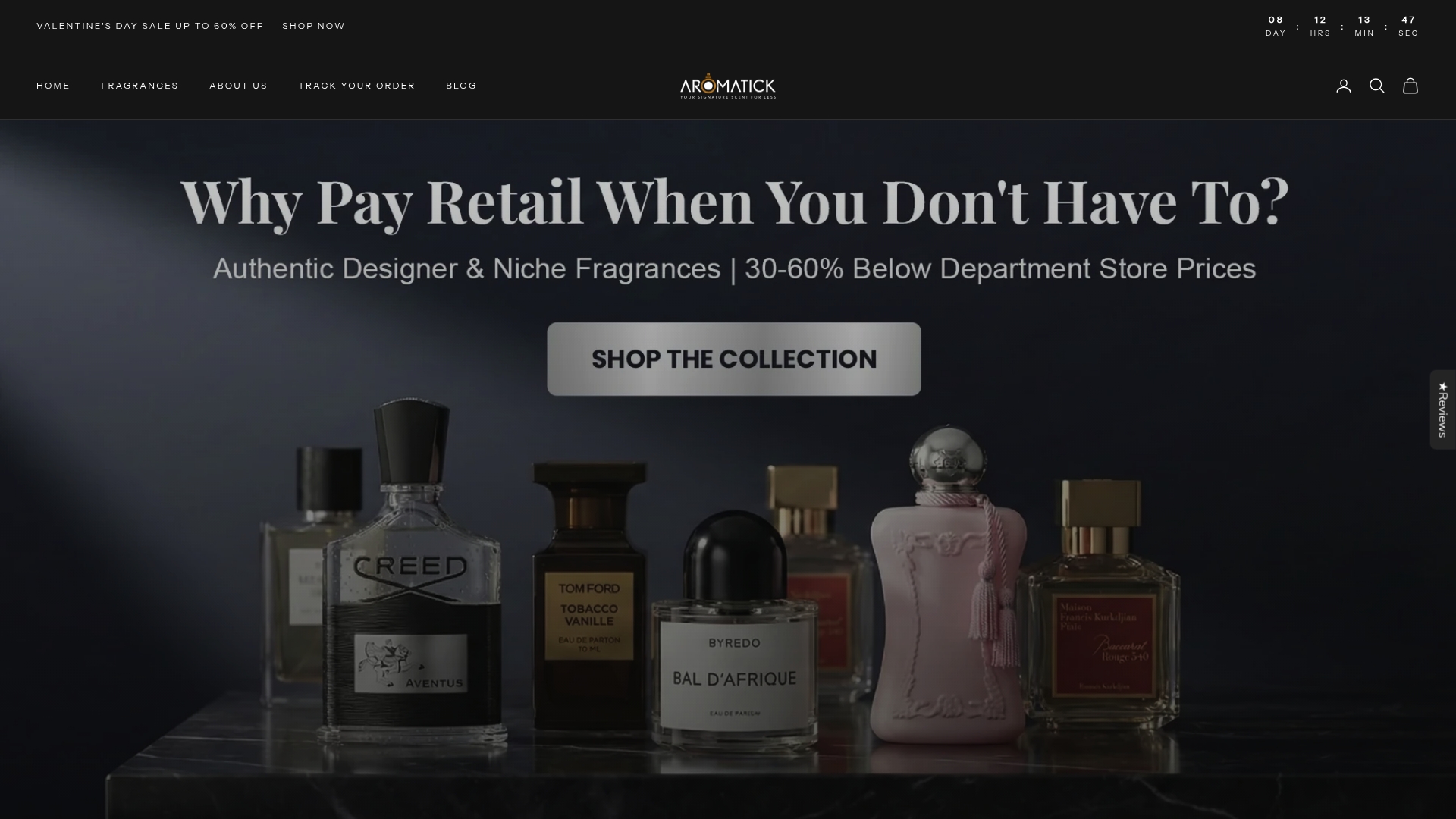
Aromatick carries a wide selection of authentic designer fragrances at discounts of up to 60% off retail, so you can apply every testing tip in this guide without the financial pressure of full department-store pricing. Every bottle is genuine, and the catalog spans both popular designer labels and niche collections for buyers who want something less common. Free shipping, secure payments, and a satisfaction guarantee make the first purchase easy. Browse the full collection and put your new fragrance knowledge to work.
FAQ
What is the best cologne concentration for beginners?
Eau de Toilette is the best starting point for beginners. It offers a lighter scent presence, costs less than Eau de Parfum or Parfum, and gives you room to experiment with different scent families without a large financial commitment.
How long should I test a cologne before buying?
Test a cologne for at least 24 hours across two separate wear sessions. This gives you a clear picture of how the top, heart, and base notes develop on your specific skin chemistry.
Why does cologne smell different on me than on someone else?
Skin chemistry, including pH level, moisture, and even diet, changes how fragrance molecules interact with your body. No cologne smells identical on two different people, which is why personal skin testing is non-negotiable before any purchase.
How many colognes should I test in one session?
Limit each testing session to 3 fragrances. Beyond that, olfactory fatigue sets in and your nose can no longer evaluate scents accurately, leading to unreliable impressions and poor buying decisions.
How should I store cologne to make it last?
Store cologne in a cool, dark place away from heat, direct light, and humidity. Bathroom shelves are one of the worst storage locations. A drawer or closet shelf preserves fragrance molecules and extends the bottle’s life significantly.

Leave a comment
This site is protected by hCaptcha and the hCaptcha Privacy Policy and Terms of Service apply.