
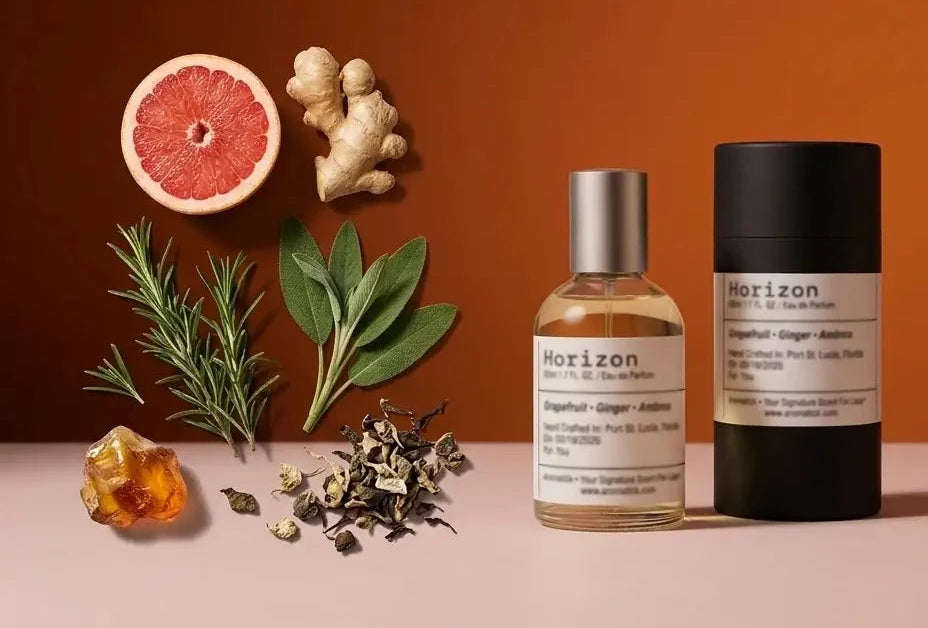

Why fragrance authenticity matters: safety, value, scent
TL;DR:
- Authentic perfumes are made with regulated ingredients, precise formulas, and safety testing.
- Counterfeit fragrances can contain harmful chemicals, posing significant health risks.
- Buying from trusted sources and verifying batch codes ensures genuine, high-quality scents.
Picking up a perfume at a steep discount feels like a win — until it isn’t. Counterfeit fragrances flood the market every year, and many buyers never realize what they’ve actually purchased until the scent fades in an hour or a rash appears on their wrist. Authenticity in perfume goes far deeper than brand names and logos. It touches on your health, your money, and the sensory experience you’re paying for. This article breaks down what fragrance authenticity really means, why counterfeits carry hidden risks, and how you can find genuine luxury scents without overspending.
Table of Contents
- The true meaning of fragrance authenticity
- Health and safety: The hidden dangers of counterfeits
- Scent profile, performance, and lasting value
- Authentic luxury for less: Smart strategies for buying real fragrances
- Our take: Authenticity isn’t optional — here’s the real reason it matters
- Find authentic fragrances and expert guidance at Aromatick
- Frequently asked questions
Key Takeaways
| Point | Details |
|---|---|
| Safety first | Authentic fragrances are regulated and tested for safe skin use, while counterfeits often skip safety checks. |
| True scent quality | Genuine perfumes deliver a richer, longer-lasting scent that counterfeits can’t replicate. |
| Long-term value | Choosing authentic scents means better wear, greater satisfaction, and higher resale potential for enthusiasts. |
| Smart shopping | You can find real luxury fragrances at a discount by checking for authenticity and buying from authorized sellers. |
The true meaning of fragrance authenticity
When most people think about fragrance authenticity, they picture a logo or a famous house name. But what fragrance authenticity means goes well beyond the label on the bottle. A truly authentic perfume is the result of strict ingredient sourcing, a protected formula developed by trained perfumers, and regulatory testing that confirms both safety and consistency.
Understanding fragrance authenticity also means recognizing what it is not. There’s a meaningful difference between a alternative, a alternative, and a counterfeit. A alternative is a fragrance inspired by another scent, openly marketed as such. A alternative attempts to replicate the formula as closely as possible. A counterfeit, however, is a product designed to deceive — it mimics the packaging, bottle, and branding of an original to trick buyers into thinking they’re getting the real thing.
“Authentic perfumes are crafted to precise quality standards using high-quality aroma molecules, something counterfeit products simply cannot replicate.”
Here’s why fakes consistently fall short:
- Formula integrity: Genuine perfumes use specific aroma molecules in calibrated ratios. Fakes substitute cheaper, often unregulated alternatives.
- Ingredient sourcing: Authentic houses source raw materials from vetted suppliers. Counterfeits use whatever is cheapest.
- Batch consistency: Real fragrances smell the same bottle to bottle. Fakes vary wildly between batches.
- Regulatory compliance: Authentic perfumes meet international fragrance safety standards. Counterfeits skip this entirely.
- Longevity and projection: Authentic scents are engineered to evolve across top, heart, and base notes. Fakes often smell flat or disappear within an hour.
The benefits of choosing authentic scents are straightforward: you get reliability, safety, and the full sensory experience the perfumer intended. That’s not a luxury — it’s the baseline you deserve.
Health and safety: The hidden dangers of counterfeits
Having clarified the value of authenticity, it’s essential to understand the direct risks posed by counterfeits. This is where the stakes become very real.
Counterfeit perfume manufacturers operate outside any regulatory framework. There are no safety audits, no ingredient disclosures, and no accountability. Counterfeit perfumes can contain harmful solvents, unregulated allergens, and even toxic substances like methanol or formaldehyde. These aren’t rare edge cases — they’re a predictable outcome of an industry built on deception.
Here are the most common health consequences reported from counterfeit fragrance exposure:
- Skin irritation and contact dermatitis: Unregulated chemicals cause redness, itching, and rashes, especially on sensitive skin areas like the neck and wrists.
- Allergic reactions: Synthetic allergens not approved for cosmetic use can trigger immune responses ranging from mild to severe.
- Respiratory issues: Inhaling volatile compounds from low-quality solvents can cause headaches, dizziness, and breathing discomfort.
- Eye irritation: Accidental contact with counterfeit sprays can irritate the eyes due to uncontrolled chemical concentrations.
Authentic perfume brands follow a very different path. Rigorous safety checks and regulatory compliance are built into the development process, including dermatological testing, allergen limits set by the International Fragrance Association (IFRA), and stability testing across temperature and light conditions.
| Factor | Authentic perfume | Counterfeit perfume |
|---|---|---|
| Ingredient sourcing | Vetted, regulated suppliers | Unknown, unregulated |
| Safety testing | IFRA and regulatory compliant | None |
| Allergen control | Strictly limited | Uncontrolled |
| Batch consistency | Guaranteed | Highly variable |
| Health risk | Minimal | Significant |
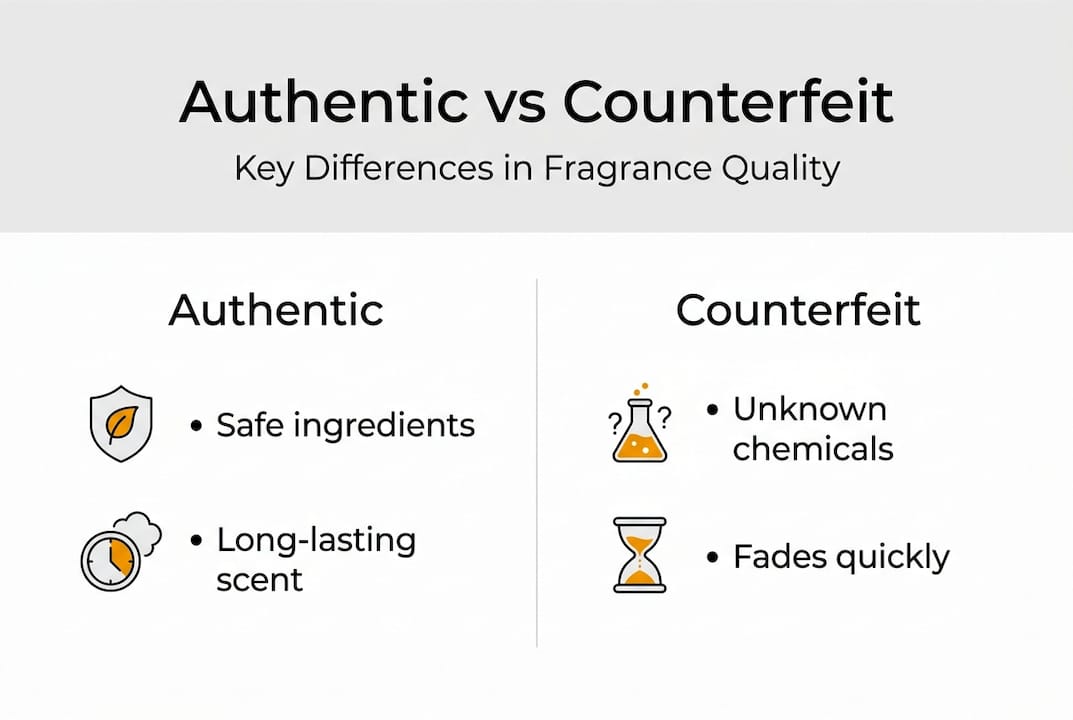
For more on how genuine products are verified, fragrance verification and safety is a useful resource that walks through the full process. The bottom line: a counterfeit perfume isn’t just a bad purchase. It can be a genuine health hazard.
Scent profile, performance, and lasting value
Besides safety, authenticity dramatically impacts a perfume’s scent experience and the value you get. This is where fragrance enthusiasts feel the difference most acutely.
Authentic fragrances are engineered to perform. The top notes — the first impression you smell — give way to a richer heart, which then settles into a lasting base. Authentic fragrances ensure scent consistency and longer wear, while fakes tend to fade fast and can smell noticeably off as the cheap solvents evaporate. What you’re left with from a counterfeit is often a flat, synthetic impression that bears little resemblance to the original.
There’s also a financial logic here that many buyers miss. Counterfeit perfumes seem cheaper upfront, but because they fade so quickly, you end up using more product and buying replacements more often. That’s the cost of false economy.
Key value advantages of choosing authentic scents:
- Consistent performance: Every application delivers the same experience, bottle after bottle.
- Longer wear time: Authentic formulas are designed for longevity, reducing how much you use per application.
- Resale potential: Sealed, authentic bottles from sought-after houses retain or increase in value. Counterfeits have zero resale worth.
- Collector appeal: Authenticity for resale value is a real consideration for fragrance collectors building a curated wardrobe.
- Emotional satisfaction: Wearing the real thing, knowing what went into it, adds to the experience in a way a fake simply cannot.
For a more on authenticity benefits, including how to evaluate performance before committing to a full bottle, sample programs from authorized sellers are an excellent starting point.
Pro Tip: If a perfume’s scent disappears completely within 90 minutes of application on clean skin, that’s a strong signal it may not be genuine. Authentic fragrances, even lighter eau de cologne concentrations, typically last three to four hours minimum.
Authentic luxury for less: Smart strategies for buying real fragrances
If you’re choosing wisely, you can enjoy luxury scents without overspending or risking a fake. Here’s how.
The good news is that discounted genuine fragrances are widely available from authorized sellers and reputable platforms, giving budget-conscious shoppers real value without compromise. The key is knowing where to look and what to verify.
Where to find real fragrances at fair prices:
- Authorized retailers and e-commerce platforms: These sellers source directly from brands or licensed distributors. Discounts are possible because of volume purchasing, not because corners are cut.
- Independent market sellers with a track record: Some legitimate sellers operate outside official distribution channels but sell genuine products. Look for verified reviews, return policies, and clear sourcing information.
- Sample and decant programs: Before committing to a full bottle, buy a sample from a trusted decanting service. This lets you verify the scent and performance firsthand.
Steps to verify authenticity before you buy:
- Check for a batch code on the bottom of the bottle or box. Use tools like CheckFresh to decode it and confirm the production date.
- Compare the bottle, cap, and font on the label against official brand photos. Counterfeits often have slightly off proportions or blurry printing.
- Read seller reviews specifically for authenticity mentions, not just shipping speed.
- Ask the seller for proof of their supply chain if you’re spending significantly.
Red flags to watch for:
- Discounts exceeding 70 to 80% with no clear explanation
- Missing or illegible batch codes
- Packaging that feels lightweight or flimsy
- No return or satisfaction policy
For practical guidance on spotting authentic scents and understanding authentic discounts explained, both resources offer detailed walkthroughs that can protect your next purchase.
Pro Tip: A legitimate discount on a real fragrance is usually explained by the seller’s business model — lower overhead, direct sourcing, or clearance inventory. If no explanation exists and the price seems impossible, trust your instincts.
Our take: Authenticity isn’t optional — here’s the real reason it matters
Stepping back, there’s a bigger lesson to draw from all of this. Authenticity in fragrance is often framed as an ethics question — about supporting real brands, respecting intellectual property, or avoiding fakes on principle. Those are valid points. But they miss the most fundamental reason authenticity matters.
It matters because sensory truth is irreplaceable. When you wear a genuine fragrance, you’re experiencing exactly what a skilled perfumer intended. That’s a form of quality that no counterfeit can fake, regardless of how convincing the bottle looks. Brands that lose authenticity see trust erode over time, no matter how polished their messaging becomes. The same applies to the individual consumer’s experience.
Buying a fake doesn’t just risk your health or waste your money. It disconnects you from the actual experience you were seeking. And for fragrance lovers, that experience is the whole point. A deeper look at authenticity consistently reinforces this: the value of a real perfume is inseparable from its origin, its formula, and its integrity. Chasing a lower price at the expense of all three is a trade that never pays off.
Find authentic fragrances and expert guidance at Aromatick
Ready to take your fragrance journey further with confidence? At Aromatick, every product is sourced for authenticity and offered at prices that make luxury genuinely accessible.
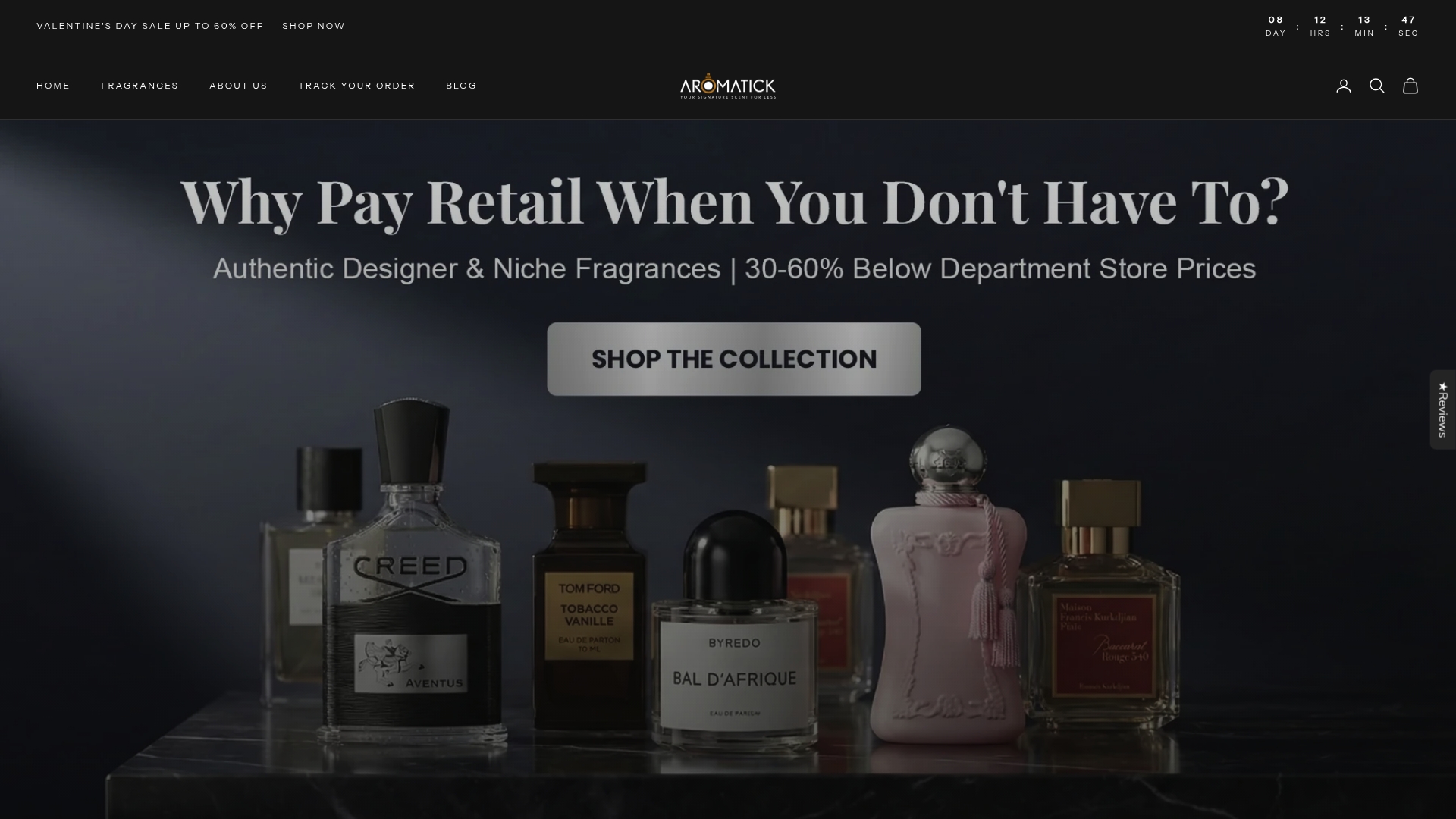
Whether you’re building your first fragrance wardrobe or adding a niche scent to a growing collection, Aromatick offers genuine designer and niche fragrances at discounts of up to 60%. You can shop authentic scents across hundreds of brands, with free shipping and a satisfaction guarantee that removes the guesswork. If you want to go deeper before you buy, our guides help you understand fragrance authenticity and make confident, informed choices every time.
Frequently asked questions
What are common signs of counterfeit fragrances?
Signs include an off or flat scent, poor bottle and packaging quality, missing or illegible batch codes, and discounts that seem unrealistically deep. Counterfeits often lack the quality controls that make authentic perfumes consistent and safe.
Are all discounted perfumes fake?
No. Many genuine fragrances are sold at a discount by authorized sellers or through the independent market, but buyers should always verify the seller’s legitimacy and check for batch codes and return policies.
Can counterfeit perfumes really be dangerous?
Yes. Fake perfumes pose risks through unregulated chemicals that may cause skin irritation, allergic reactions, or respiratory discomfort, since they are manufactured without any safety testing or regulatory oversight.
How can I confirm a perfume’s authenticity before buying?
Verify the seller’s authorization, check the batch code using an online decoder, examine the packaging closely against official brand images, and read buyer reviews that specifically mention authenticity.

Leave a comment
This site is protected by hCaptcha and the hCaptcha Privacy Policy and Terms of Service apply.