
What fragrance authenticity means and why it matters
You spray your new perfume and something feels off. The scent fades within an hour, the bottle feels lighter than expected, and the packaging has a subtle misspelling you almost missed. Counterfeit fragrances represent a shocking 10-15% of all perfume sales globally, meaning millions of consumers unknowingly purchase fake products every year. Understanding how to verify fragrance authenticity protects your investment, ensures your safety, and guarantees you experience the true artistry of luxury scents. This guide explains what fragrance authenticity means, how to identify genuine perfumes through consumer and laboratory methods, and why distinguishing authentic products from counterfeits matters for your health and fragrance experience.
Table of Contents
- Key takeaways
- What fragrance authenticity means and why it matters
- How to verify fragrance authenticity: consumer and lab methods
- Navigating scent reformulations and distinguishing authentic changes from fakes
- Tips for budget-conscious shoppers to ensure fragrance authenticity
- Explore authentic fragrances with confidence
- Frequently asked questions about fragrance authenticity
Key Takeaways
| Point | Details |
|---|---|
| Authenticity meaning | Fragrance authenticity means a perfume matches the brand official formulation and safety standards, ensuring consistent scent, safety, and regulatory compliance. |
| Health risks of counterfeits | Counterfeit fragrances can exceed allergen limits by large margins and include unlisted ingredients that raise skin, eye, and respiratory risks. |
| Verification methods | Consumers inspect packaging quality batch codes and price while laboratories use gas chromatography mass spectrometry to verify authenticity. |
| Authorized sellers pricing | Buying from authorized channels and watching for a reasonable price helps distinguish genuine fragrances from counterfeits. |
What fragrance authenticity means and why it matters
Fragrance authenticity refers to verifying that a perfume or cologne matches the brand’s official formulation, produced under licensed manufacturing, complying with safety standards like IFRA, ensuring consistent scent, longevity, and safety without counterfeits or adulterants. This definition extends beyond simple brand verification to encompass chemical composition, manufacturing processes, and regulatory compliance that together create the genuine fragrance experience.
Authentic perfumes deliver multiple benefits that justify their premium positioning. The scent profile remains consistent across batches, allowing you to repurchase your signature fragrance with confidence. Longevity meets brand promises, with top, middle, and base notes evolving as intended over 6-12 hours rather than disappearing within minutes. Safety becomes paramount when you consider that genuine fragrances undergo rigorous allergen testing and ingredient screening before reaching consumers.
The International Fragrance Association (IFRA) establishes strict guidelines limiting allergenic compounds like linalool, limonene, and eugenol to safe concentrations. Authentic manufacturers reformulate products when necessary to maintain compliance, protecting consumers from sensitization and adverse reactions. Your skin absorbs fragrance compounds throughout the day, making ingredient safety critical for long-term health.
Counterfeit fragrances pose serious health risks that extend far beyond disappointing scent performance:
- Allergenic compounds frequently exceed IFRA limits by 200-400%, triggering contact dermatitis and respiratory irritation
- Unlisted ingredients including industrial solvents, synthetic musks, and heavy metals accumulate in body tissues
- Bacterial contamination from unsanitary manufacturing conditions causes skin infections
- Phototoxic compounds increase UV sensitivity, leading to burns and hyperpigmentation
“Counterfeits often exceed safety allergen limits posing health risks such as allergies and irritation, with laboratory analysis revealing prohibited ingredients like methanol and diethyl phthalate in samples seized from online marketplaces.”
The financial impact compounds these health concerns. Counterfeit perfumes cost 30-70% less than authentic products but deliver virtually no value. The scent disappears within 30-90 minutes, forcing multiple applications daily. Bottle sizes often contain 15-25% less product than labeled. When you calculate cost per wear, counterfeits actually cost more while exposing you to unnecessary health risks. Understanding this quality and safety guide helps you make informed purchasing decisions that protect both your wallet and wellbeing.
How to verify fragrance authenticity: consumer and lab methods
Primary methodologies include consumer checks: packaging quality, batch codes verifiable via CheckFresh, bottle weight/thickness, price reasonableness, authorized sellers; lab methods: GC-MS, GCxGC-TOF MS for chemical fingerprinting against authentic databases. These complementary approaches create multiple verification layers that catch increasingly sophisticated counterfeits attempting to mimic authentic products.
Consumer verification methods empower you to assess authenticity before purchasing or immediately upon receipt. Start by examining packaging printing quality under bright light. Authentic boxes feature crisp text with no bleeding, perfect color registration, and high-resolution brand logos. Counterfeit packaging typically shows blurred letters, misaligned graphics, or slightly incorrect font choices that become obvious during close inspection.
Batch code verification provides objective confirmation of manufacturing details. Every authentic perfume includes a batch code stamped on the bottle bottom or box that corresponds to production date and facility. Follow these steps to verify batch codes:
- Locate the batch code on both the bottle and outer packaging, ensuring they match exactly
- Visit CheckFresh.com or CheckCosmetic.net and enter the code along with brand name
- Verify the production date falls within reasonable timeframes (typically 6-36 months before purchase)
- Cross-reference packaging design with the production year, as brands update boxes periodically
- Contact the brand directly if the batch code returns no results or suspicious dates
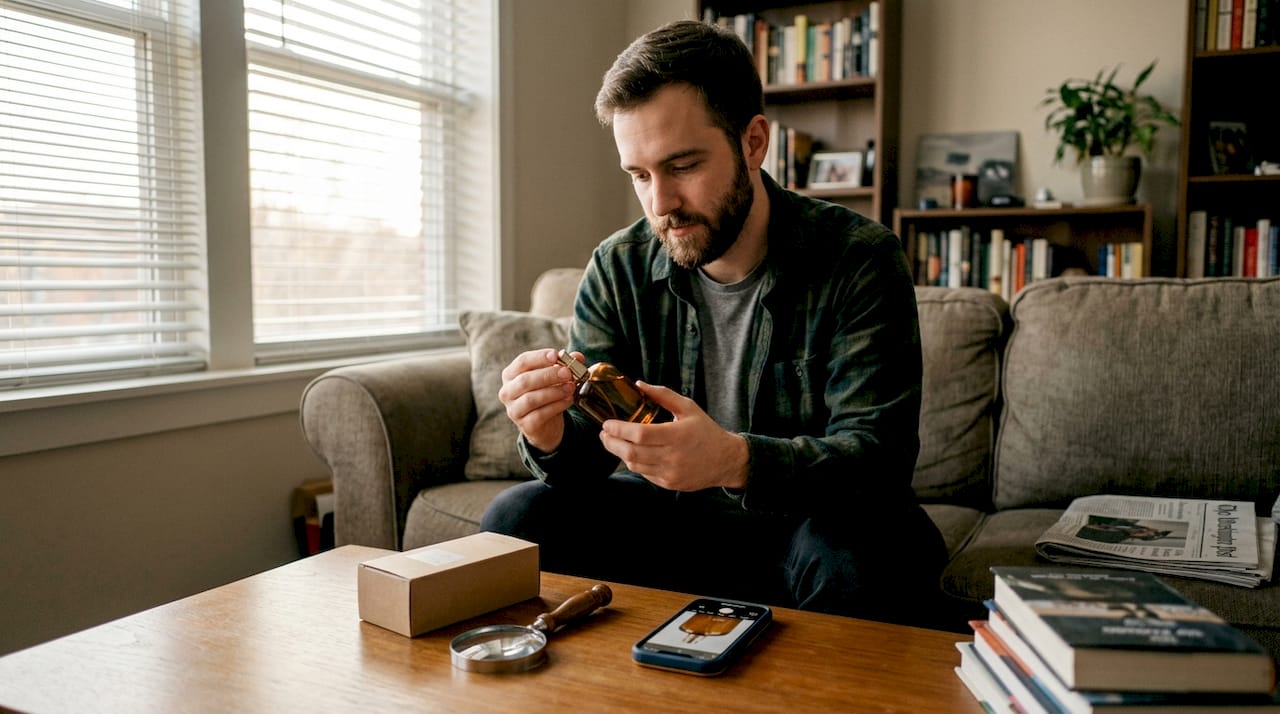
Bottle construction reveals manufacturing quality that counterfeiters struggle to replicate cost-effectively. Authentic perfume bottles feel substantial, with glass thickness of 3-5mm compared to 1-2mm in fakes. Spray mechanisms operate smoothly with consistent mist patterns. Caps fit precisely without wobbling. Magnetic closures (common in luxury brands) snap firmly into place. These tactile differences become apparent when you compare suspect bottles against verified authentic samples.
Price logic serves as a critical screening tool, though not definitive proof alone. Luxury fragrances carry premium pricing that reflects ingredient costs, brand licensing, marketing, and distribution. When sellers offer discounts exceeding 40% off manufacturer’s suggested retail price, investigate thoroughly. Legitimate authorized retailers occasionally run 20-35% promotions during seasonal sales, but deeper discounts typically indicate independent market diversion, expired stock, or counterfeits.
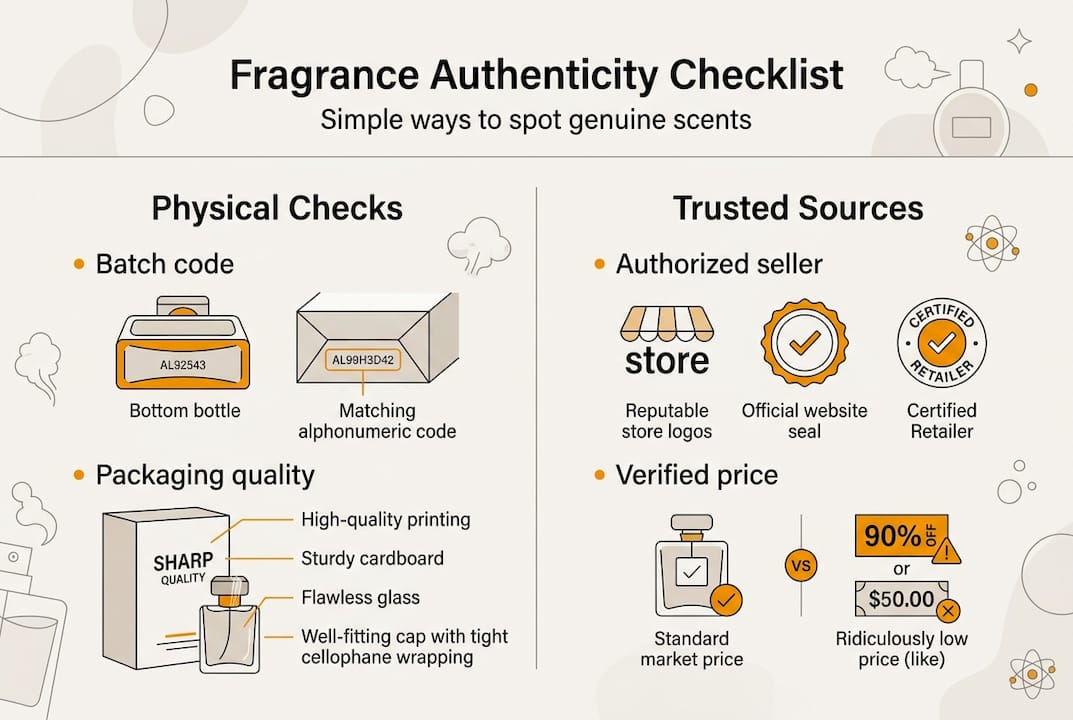
Seller authorization provides another verification layer. Brands maintain lists of authorized retailers on their websites. Purchasing from department stores, brand boutiques, or verified online retailers eliminates most counterfeit risk. Third-party marketplaces, auction sites, and unauthorized discount sellers carry significantly higher counterfeit risk of 25-60% according to industry estimates.
Laboratory chemical analysis represents the gold standard for definitive authentication. Gas chromatography-mass spectrometry (GC-MS) separates fragrance compounds and identifies each molecule, creating a chemical fingerprint unique to authentic formulations. The more advanced two-dimensional gas chromatography time-of-flight mass spectrometry (GCxGC-TOF MS) provides even greater resolution, detecting subtle differences in isomer ratios and trace compounds that counterfeiters cannot replicate. Chemical profiling webinars demonstrate how these techniques identify fakes with 99.9% accuracy by comparing samples against authenticated reference databases.
| Verification Method | Accessibility | Accuracy | Cost | Best For |
|---|---|---|---|---|
| Packaging inspection | Consumer | 60-75% | Free | Initial screening |
| Batch code checking | Consumer | 70-85% | Free | Online purchases |
| Bottle construction | Consumer | 65-80% | Free | In-person evaluation |
| Price analysis | Consumer | 50-70% | Free | Risk assessment |
| Seller authorization | Consumer | 85-95% | Free | Purchase decisions |
| GC-MS analysis | Laboratory | 95-99% | $200-500 | High-value disputes |
| GCxGC-TOF MS | Laboratory | 99-99.9% | $500-1200 | Legal cases |
Pro Tip: Heavy discounts exceeding 40% off retail almost always indicate counterfeits or problematic sourcing, while batch code mismatches between bottle and box represent the single most reliable red flag accessible to consumers without laboratory equipment.
Learning to recognize authentic perfumes through these combined methods builds confidence for every purchase. The verification methods guide provides additional depth on advanced techniques. For comprehensive purchasing strategies, consult this buying guide for brand perfumes covering selection criteria beyond authenticity alone.
Navigating scent reformulations and distinguishing authentic changes from fakes
Reformulations due to IFRA restrictions (e.g., reduced oakmoss, coumarin in Tom Ford Black Orchid) alter scent slightly but remain authentic if declared; sophisticated fakes mimic packaging and scent but fail longevity and chemical profile. This distinction confuses even experienced fragrance enthusiasts who notice scent differences between bottles purchased years apart.
IFRA regulations evolve continuously as new research identifies allergenic compounds or environmental concerns. When studies demonstrate that specific ingredients cause sensitization rates above acceptable thresholds, IFRA issues amendments requiring reformulation. Brands must comply within 12-24 months, creating legitimate scent variations across production batches.
Common reformulation examples include:
- Oakmoss reduction in chypre fragrances (2010-2012) due to atranol and chloroatranol allergen concerns
- Coumarin limitations in oriental and gourmand scents (2015-2017) following sensitization studies
- Natural musk replacements with synthetic alternatives (2008-2010) for animal welfare and consistency
- Benzyl salicylate restrictions in floral compositions (2018-2020) based on updated exposure assessments
These reformulations preserve brand authenticity while meeting current safety standards. Manufacturers typically announce significant changes through press releases or product descriptions, though minor adjustments often occur without public notification. The Tom Ford Black Orchid guide documents how this iconic fragrance evolved through three distinct formulations between 2006 and 2024, each authentic despite noticeable scent differences.
| Characteristic | Legitimate Reformulation | Counterfeit Fake |
|---|---|---|
| Packaging quality | Identical to current production | Subtle printing errors, color shifts |
| Batch code validity | Verifies on CheckFresh with correct dates | Invalid, missing, or mismatched codes |
| Scent profile | Slightly altered but recognizable | Initially similar, diverges after 30-60 minutes |
| Longevity | Maintains 6-10 hour performance | Fades within 1-3 hours |
| Chemical analysis | Matches brand’s declared formulation | Shows prohibited or unlisted compounds |
| Price point | Standard retail or modest discounts | Heavily discounted 40-70% off |
| Seller authorization | Available through authorized channels | Primarily unauthorized third parties |
Sophisticated counterfeiters now study reformulation discussions in fragrance communities, using this knowledge to explain scent discrepancies when customers complain. They claim bottles contain “vintage formulations” or “pre-reformulation stock” to justify performance differences. Chemical fingerprinting remains the only definitive method to distinguish these deceptive fakes from genuine reformulated products.
The challenge intensifies with discontinued fragrances that developed cult followings. Counterfeiters specifically target these products because authentic stock becomes scarce, prices increase dramatically, and consumers lack recent reference points for comparison. Vintage Guerlain, discontinued Dior Homme formulations, and original Creed batches command premium prices that incentivize sophisticated counterfeiting operations.
Pro Tip: Consult brand announcements, fragrance databases like Fragrantica, or contact customer service directly to understand declared reformulations before assuming scent differences indicate counterfeits, especially for fragrances purchased 3-5 years apart.
Understanding the authenticity role explanation helps you appreciate why brands reformulate and how these changes differ fundamentally from counterfeit operations attempting to deceive consumers.
Tips for budget-conscious shoppers to ensure fragrance authenticity
Budget-conscious enthusiasts should prioritize authorized sellers with authenticity guarantees, avoid discounts over 40%, and use batch code verification especially for high-value items. Smart shopping strategies allow you to access luxury fragrances at reasonable prices without sacrificing authenticity or safety.
Authorized retailers provide the strongest authenticity assurance because they source directly from brand manufacturers or licensed distributors. Department stores like Nordstrom, Saks, and Bloomingdale’s maintain strict supply chain controls. Online authorized retailers including FragranceNet, FragranceX, and Sephora offer authenticity guarantees backed by return policies. Brand boutiques and official websites eliminate all counterfeit risk, though prices typically remain at or near MSRP.
Discount thresholds require careful evaluation. Legitimate sales of 15-25% off occur during holiday promotions, new launch clearances, or loyalty program rewards. Discounts of 30-40% appear during end-of-season sales, discontinued scent liquidations, or authorized outlet stores. Anything beyond 40% off demands thorough verification through batch codes, seller authorization checks, and packaging inspection.
Batch code verification becomes essential for online purchases where you cannot physically inspect products before buying. Request clear photos of batch codes before completing transactions. Upon delivery, verify codes immediately and initiate returns if discrepancies appear. Save all verification screenshots as documentation for potential disputes.
Budget-conscious shoppers can ensure authenticity through these practical steps:
- Purchase only from sellers offering money-back authenticity guarantees with clear return windows of 30-60 days
- Compare prices across 5-7 authorized retailers to establish legitimate discount ranges for specific fragrances
- Join brand loyalty programs providing 15-20% discounts on authentic products during member-exclusive sales
- Buy discovery sets or smaller sizes (30-50ml) from authorized sources rather than large bottles from questionable sellers
- Request samples from department store counters to verify scent profiles before purchasing discounted bottles online
- Monitor authorized retailer email lists for flash sales offering genuine 25-35% discounts on authentic inventory
- Avoid marketplace sellers with limited transaction history, vague product descriptions, or stock photos instead of actual items
- Use credit cards with purchase protection covering counterfeit goods for added security on higher-value transactions
Tester bottles represent another budget-friendly option when purchased from authorized sources. Brands produce testers for retail display in identical formulations to retail products. These bottles typically lack decorative caps and come in plain boxes, reducing costs by 20-30%. Authorized discount retailers sell excess tester inventory at legitimate reduced prices. However, unauthorized sellers frequently label counterfeits as “testers” to explain packaging differences, so verify seller authorization before purchasing.
Pro Tip: Sample testers at department stores or purchase official discovery sets directly from brands to learn authentic scent profiles, then confidently identify genuine products when shopping authorized discount retailers for full bottles at 20-35% savings.
Fragrance enthusiasts seeking authentic discount shopping tips can explore strategies for maximizing value without compromising authenticity. Research on the best places to buy authentic cologne identifies specific retailers with proven track records for genuine products at competitive prices.
Explore authentic fragrances with confidence
Now that you understand how to verify fragrance authenticity and distinguish genuine products from counterfeits, you can shop luxury scents with confidence. Aromatick specializes in providing verified authentic designer and niche fragrances at transparent discounts of 20-60% off retail prices, eliminating the overhead costs of traditional department stores while maintaining strict authenticity standards.
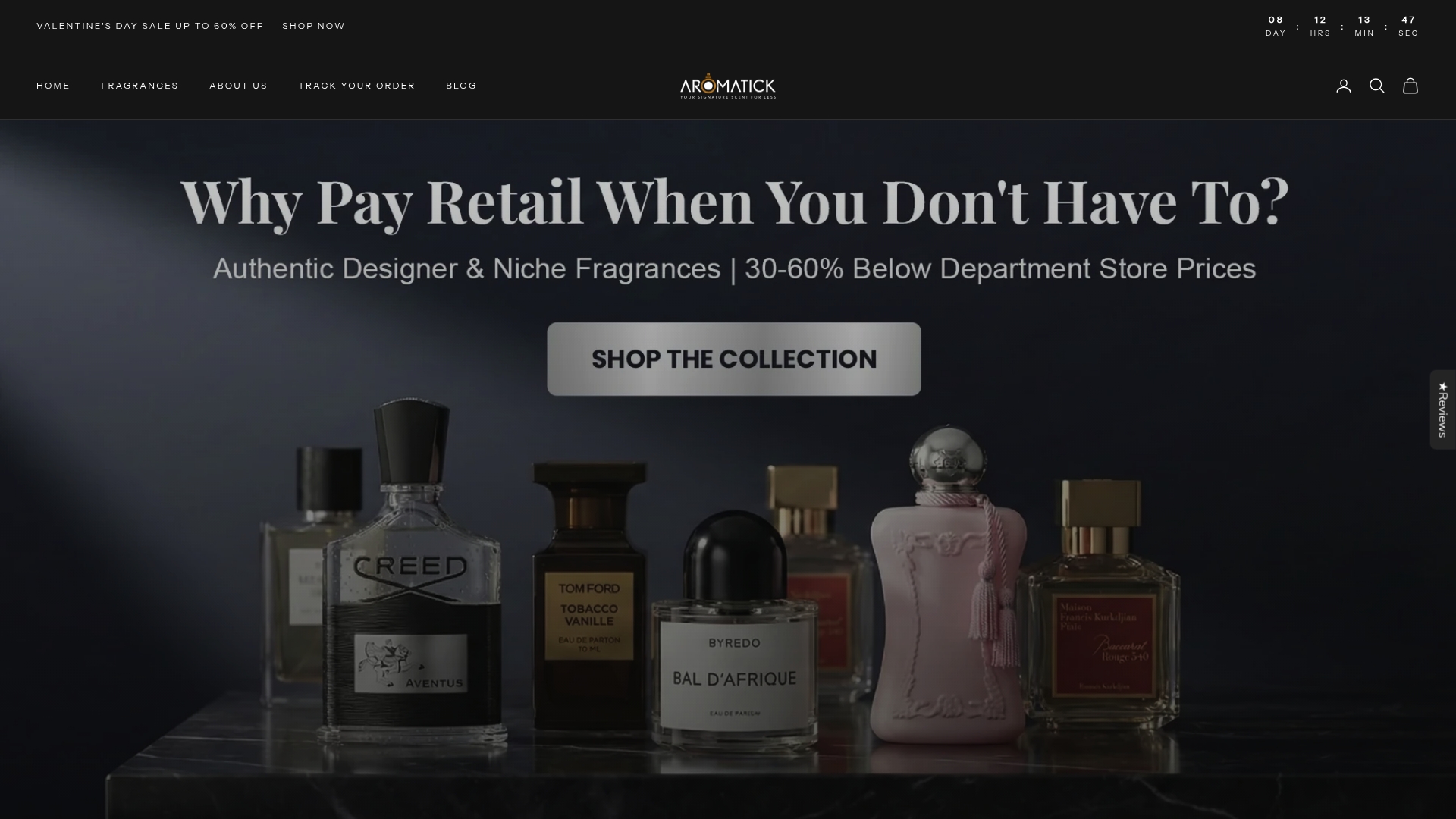
Every fragrance sold comes with authenticity guarantees, verifiable batch codes, and detailed product information helping you make informed decisions. The platform offers free shipping, satisfaction guarantees, and secure payment processing, creating a trust-based shopping environment where you access luxury scents affordably without sacrificing quality or safety. Explore the collection at Aromatick to discover authentic fragrances that match your style and budget.
Frequently asked questions about fragrance authenticity
What does fragrance authenticity mean?
Fragrance authenticity confirms that a perfume matches the brand’s official formulation, was manufactured under proper licensing, and complies with IFRA safety standards for allergens and ingredients. Authentic products deliver consistent scent profiles, appropriate longevity, and guaranteed safety, while counterfeits may contain harmful compounds and disappear within hours.
How can I check if a perfume is authentic at home?
Inspect packaging for printing quality, verify batch codes on CheckFresh match both bottle and box, examine bottle weight and glass thickness, and compare prices against authorized retailers. Authentic perfumes feature crisp printing, valid batch codes, substantial bottles, and pricing within 40% of MSRP. Spray the fragrance to assess longevity and scent development over 6-8 hours.
What are signs of counterfeit perfumes?
Counterfeit indicators include blurred packaging text, mismatched or invalid batch codes, lightweight bottles with thin glass, prices discounted over 40% off retail, and scent that fades within 1-3 hours. Additional red flags include spelling errors on boxes, poorly functioning spray mechanisms, and sellers without brand authorization or clear return policies.
Why do some genuine perfumes smell different over time?
Legitimate reformulations occur when IFRA updates allergen restrictions or environmental regulations change, requiring brands to adjust formulations while maintaining authenticity. Tom Ford Black Orchid reduced oakmoss and coumarin levels in 2012 and 2017 reformulations, creating noticeable scent differences between production years. These changes preserve safety compliance while keeping products authentic.
Is it safe to use discounted perfumes?
Discounted perfumes from authorized retailers offering 20-35% off remain safe and authentic, representing legitimate sales or loyalty discounts. However, heavily discounted products exceeding 40% off from unauthorized sellers carry high counterfeit risk and may contain harmful ingredients exceeding allergen limits. Always verify seller authorization and batch codes before purchasing discounted fragrances to ensure both authenticity and safety.

Leave a comment
This site is protected by hCaptcha and the hCaptcha Privacy Policy and Terms of Service apply.