
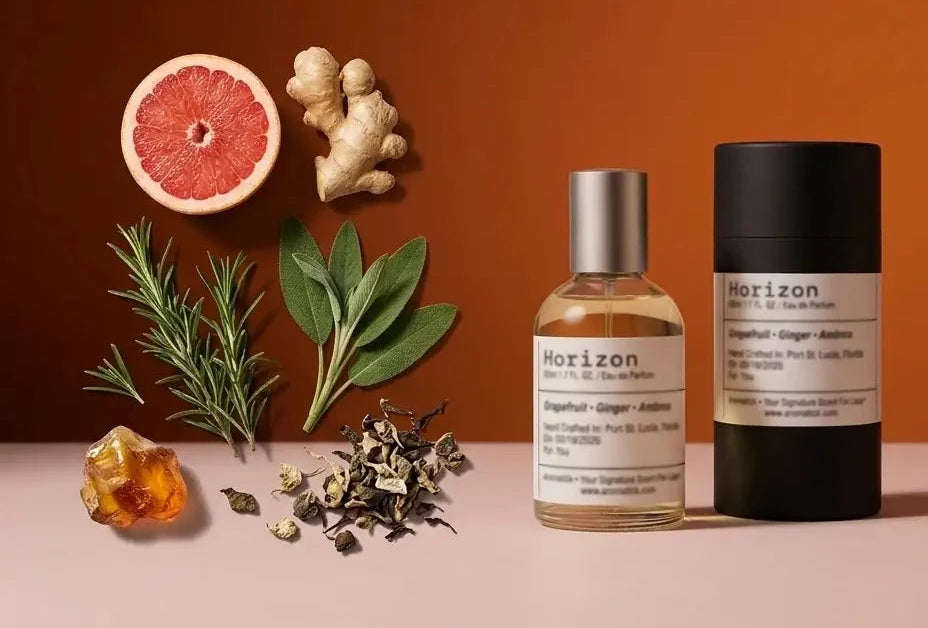

Why seasonal fragrances matter: elevate your scent all year
TL;DR:
- Climate, temperature, and humidity significantly influence fragrance projection and longevity.
- Seasonal scent notes and structures are tailored to weather conditions for optimal experience.
- Rotating fragrances throughout the year enriches personal style and prevents olfactory fatigue.
That bottle of woody amber you love in January? It might smell sharp, almost aggressive, on a humid August afternoon. The same fragrance, the same skin, but a completely different experience. Most people assume a signature scent is a lifetime commitment, something to wear every day regardless of the calendar. But fragrance is far more dynamic than that. Temperature, humidity, and even your body’s natural chemistry shift with the seasons, and your perfume reacts to every one of those changes. Understanding why this happens, and how to use it to your advantage, can genuinely transform the way you experience and share fragrance all year long.
Table of Contents
- How climate changes your fragrance experience
- Choosing the right fragrance notes for each season
- Signature scent vs. rotation: The expert view
- How to build your seasonal scent wardrobe (and maximize value)
- The real secret: Why seasonal scents multiply your fragrance joy
- Explore designer and niche seasonal scents at Aromatick
- Frequently asked questions
Key Takeaways
| Point | Details |
|---|---|
| Climate alters scent performance | Heat and cold dramatically change the way your fragrance projects and lasts on skin. |
| Notes matter by season | Choose fresh notes for summer and rich ones for winter to get the best experience. |
| Rotate for more joy | Switching scents seasonally helps you avoid nose fatigue and maximize mood and style. |
| Personalize and experiment | Testing, layering, and gifting with the seasons boosts creativity and value. |
How climate changes your fragrance experience
If you’ve ever stepped outside on a hot summer day and noticed your perfume announcing itself before you even entered the room, that’s physics at work. Heat accelerates the evaporation of fragrance molecules, which means your scent projects strongly and immediately. The downside is that this burst fades quickly. According to fragrance and weather science, heat shortens wear to 2 to 4 hours while cold air can extend longevity up to 12 hours, though projection stays close to the skin.
Cold weather tells a different story. Low temperatures slow molecular evaporation, so your fragrance lingers for much longer but stays subtle. You might need to lean in close to catch it. This is why heavy, rich scents feel so satisfying in winter: they have the time to unfold slowly and reveal their full depth. Understanding perfume longevity in different climates helps you make smarter choices about when and how much to apply.
Humidity adds another layer of complexity. Moist air actually helps fragrance molecules stay suspended longer, which can amplify a scent’s presence. That’s why a light floral can feel almost overwhelming at a summer garden party. Dry winter air, by contrast, tends to flatten projection and make even bold fragrances feel quieter.
Here’s a quick reference for how climate affects your fragrance:
| Climate condition | Projection | Longevity | Best fragrance style |
|---|---|---|---|
| Hot and dry | Very strong | Short (2 to 4 hrs) | Light citrus, aquatic |
| Hot and humid | Strong to intense | Moderate | Fresh, green, clean |
| Cold and dry | Subtle | Long (8 to 12 hrs) | Woody, spicy, oriental |
| Cold and humid | Moderate | Long | Warm florals, amber |
Practical adjustments make a real difference:
- Summer: Apply one or two sprays to pulse points. Avoid over-spraying.
- Winter: Add an extra spray and consider applying to clothing for extended diffusion.
- High humidity: Opt for lighter concentrations like Eau de Toilette.
- Dry cold: Reach for Eau de Parfum or Parfum for better staying power.
Skin chemistry also plays a role. Oilier skin, which is more common in warm weather, tends to hold fragrance better. Drier skin in winter can absorb scent faster, reducing longevity further.
“Fragrance is not a static accessory. It’s a living, breathing interaction between the juice, your skin, and the environment around you.”
Choosing the right fragrance notes for each season
Once you understand how climate affects performance, the next challenge is picking the right scent families for each time of year. This isn’t just about personal taste. It’s about how certain ingredients behave and feel in specific weather conditions.
Winter calls for depth and warmth. Vanilla, sandalwood, oud, and spices like cardamom or cinnamon feel natural when temperatures drop. These notes have a richness that cold air preserves beautifully, letting them develop slowly over hours. Expert insight from Vogue confirms that seasonal shifts drive ingredient choices, with deeper woods and resins dominating winter collections, treating fragrance as an invisible accessory that complements fashion.
Summer is the season for freshness. Citrus notes like bergamot, lemon, and grapefruit evaporate quickly in heat, which is actually ideal: they deliver an immediate, energizing burst without becoming overwhelming. Marine and green notes, think cut grass, sea breeze, and cucumber, also thrive in warm weather. They feel clean and appropriate rather than cloying.
Spring and autumn are transitional seasons, and they reward blended approaches. Florals with a touch of amber, or leather accords softened by a hint of peach or rose, bridge the gap between extremes. These are also the seasons when seasonal scent collections from luxury houses tend to shine, offering nuanced compositions that feel neither too heavy nor too light.
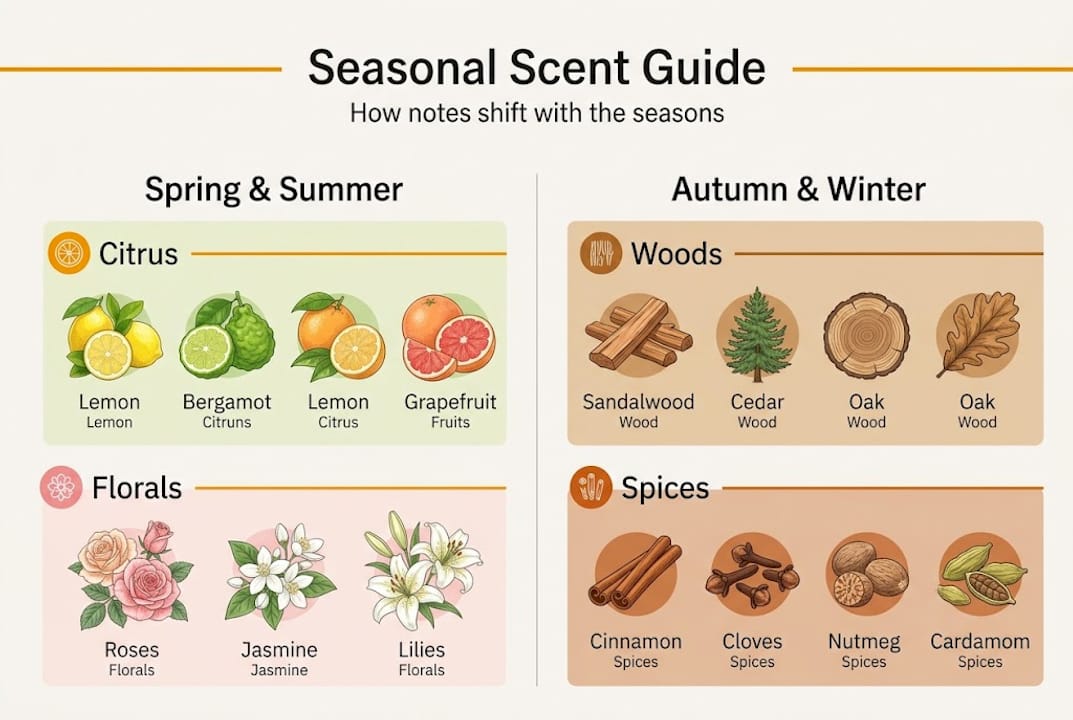
Here’s a comparison of popular fragrance families by season:
| Season | Top notes | Heart notes | Base notes |
|---|---|---|---|
| Spring | Green tea, peony | Rose, jasmine | Light musk, cedar |
| Summer | Citrus, aquatic | Neroli, white floral | Clean musk, vetiver |
| Autumn | Apple, spice | Amber, iris | Sandalwood, patchouli |
| Winter | Bergamot, aldehydes | Oud, leather | Vanilla, benzoin |
Key considerations when shopping by season:
- Niche brands often create limited seasonal releases worth exploring.
- Fragrance discounting patterns often align with seasonal retail cycles, making it a smart time to stock up.
- Versatile scents with moderate sillage work across multiple seasons.
Pro Tip: Layer two scents from the same fragrance family to create a personalized blend. A woody base with a citrus top coat, for example, works surprisingly well across spring and early summer.
Signature scent vs. rotation: The expert view
Having seen how seasons affect scent notes, let’s weigh whether rotating fragrances or sticking to one makes more sense. This is one of the most debated topics among fragrance enthusiasts, and the answer is genuinely personal.
Signature scent advocates have a strong case. Wearing the same fragrance consistently builds a sensory identity. People remember you by it. It simplifies your morning routine and removes decision fatigue. Some of the most iconic fragrance stories in history belong to people who wore one scent for decades. Some fragrance lovers prefer year-round signature scents for identity and versatility, treating seasonal guidelines as optional rather than mandatory.
But rotation has clear advantages that are hard to ignore. Wearing the same fragrance every day leads to olfactory fatigue, a state where your nose simply stops registering the scent because it’s become too familiar. You stop smelling it. Others still do, but you lose the joy of it. Rotation prevents olfactory fatigue and enhances personal style by matching mood and weather, and it also opens up wonderful gifting opportunities for seasonal luxuries.
Consider curating a fragrance wardrobe the way you think about clothing. You wouldn’t wear a heavy wool coat in July. Your fragrance wardrobe can follow the same logic without requiring you to abandon your favorites entirely.
Here are the main considerations for each approach:
Signature scent benefits:
- Builds a recognizable personal identity
- Simplifies daily decisions
- Cost-effective if one bottle lasts the year
Rotation benefits:
- Keeps your nose engaged and appreciative
- Matches fragrance performance to actual weather conditions
- Creates meaningful gifting opportunities around holidays and seasons
- Encourages discovery of new favorites
“Seasonal rules are guidelines, not absolutes. The best fragrance is always the one that feels right to you, in this moment, in this weather.”
For gift-givers, rotation opens a genuinely thoughtful angle. Seasonal gift sets allow you to match a scent to a specific occasion, a warm vanilla for the holidays, a fresh citrus for a summer birthday, making the gift feel intentional rather than generic.
How to build your seasonal scent wardrobe (and maximize value)
So, if you want the best of both worlds, here’s how to curate your own seasonal fragrance wardrobe for maximum value and enjoyment.
- Audit your current shelf. List every fragrance you own and note which seasons you actually reach for each one. You may already have more coverage than you think.
- Identify the gaps. If you have three winter-leaning scents but nothing fresh for summer, that’s your priority. Focus on the season you’re least covered for.
- Test before you commit. Buy decants or travel sizes before investing in a full bottle. Body chemistry and fragrance suitability vary significantly from person to person, and even in controlled indoor climates, your skin may react differently than expected.
- Prioritize versatile scents. A good amber floral, for example, can carry you through autumn and winter. A crisp green scent can work for both spring and early summer.
- Layer strategically. Matching base notes across your products, a sandalwood body lotion under a woody fragrance, adds depth without buying more bottles.
Here’s a simple seasonal wardrobe plan to get started:
| Season | Recommended bottle count | Priority note families |
|---|---|---|
| Spring | 1 to 2 | Floral, green, light musk |
| Summer | 1 to 2 | Citrus, aquatic, clean |
| Autumn | 1 | Amber, spice, leather |
| Winter | 1 to 2 | Woody, oriental, vanilla |
For gifting, look for discovery boxes or curated holiday sets. These often include multiple smaller sizes across a scent family, making them ideal for someone just beginning to test fragrance longevity and build their own rotation. A well-chosen fragrance gift set can introduce someone to a brand they’d never have tried on their own.
Pro Tip: Even if you live in a climate-controlled environment, always test a new fragrance on your skin for at least two hours before making it your daily option. Skin chemistry is personal, and what smells perfect in the store may shift significantly once it’s on you.
The real secret: Why seasonal scents multiply your fragrance joy
Most fragrance guides focus on rules: wear light in summer, go heavy in winter. That’s useful, but it misses the deeper point. Seasonal rotation isn’t just about optimizing performance. It’s about staying curious.
The fragrance enthusiasts who get the most out of their collections are the ones who treat each season as a reason to discover seasonal fragrance advantages and explore something new. They don’t just rotate out of obligation. They rotate because it keeps their relationship with scent alive and exciting. Every quarter brings a new opportunity to try a different house, a different note family, a different version of themselves.
This is also where gifting becomes genuinely meaningful. A fragrance matched to a season and a personality says far more than a generic bottle chosen from a department store shelf. It shows you paid attention. That kind of thoughtfulness is rare, and people remember it.
The best fragrance discoveries rarely happen through routine. They happen through experimentation, through a decant tried on a whim, or a seasonal set opened on a cold December morning. Seasonal rotation is the framework that makes those moments possible.
Explore designer and niche seasonal scents at Aromatick
Ready to take your scent game to the next level? Building a seasonal fragrance wardrobe doesn’t have to be expensive or overwhelming.

At Aromatick, you’ll find an extensive designer fragrance collection and a carefully curated niche fragrance collection, both available at up to 60% off retail prices. Whether you’re filling a gap in your seasonal rotation, searching for the perfect holiday gift set, or simply curious about a new scent family, Aromatick makes it accessible. Authentic products, free shipping, and a satisfaction guarantee mean you can explore with confidence. Start building your fragrance wardrobe today and find the seasonal scents that truly feel like you.
Frequently asked questions
Do I really need to change my perfume for every season?
You don’t have to, but rotating scents with the weather genuinely improves fragrance performance and personal style. Fragrances perform differently based on temperature and humidity, so matching your scent to the season helps you get the most out of every bottle.
What fragrance notes work best for summer versus winter?
Citrus and marine notes excel in summer heat, while woods, spices, and amber add warmth and depth in winter. Seasonal ingredients shift based on how they interact with temperature, making note selection a key part of seasonal dressing.
Is it wasteful to buy multiple scents for different seasons?
Not if you choose versatile bottles, buy travel sizes, or share decants across a rotation. Rotation prevents olfactory fatigue and actually helps you use each fragrance more mindfully rather than burning through one bottle too quickly.
Will seasonal rotation really make my perfume last longer?
Yes. Cold air slows evaporation and extends wear time significantly, while hot weather reduces it. Adjusting how much you apply based on the season, less in heat, more in cold, optimizes lasting power and prevents waste.
Can I wear just one scent all year?
Absolutely. Seasonal rules are guidelines, not requirements. Personal preference, local climate, and lifestyle should always guide your fragrance wardrobe, and a well-chosen signature scent can work beautifully across all four seasons.
Recommended
- Seasonal Scents: Find the Perfect Fragrance for Every Season
- How to Layer Fragrances Like a Pro: Secrets to Building Your Perfect
- Fragrance longevity explained: lasting scents & smart choices
- Why fragrance authenticity matters: safety, value, scent
- Role of Aroma in Gin – Shaping Flavor Experience – GIN NIRO

Leave a comment
This site is protected by hCaptcha and the hCaptcha Privacy Policy and Terms of Service apply.