
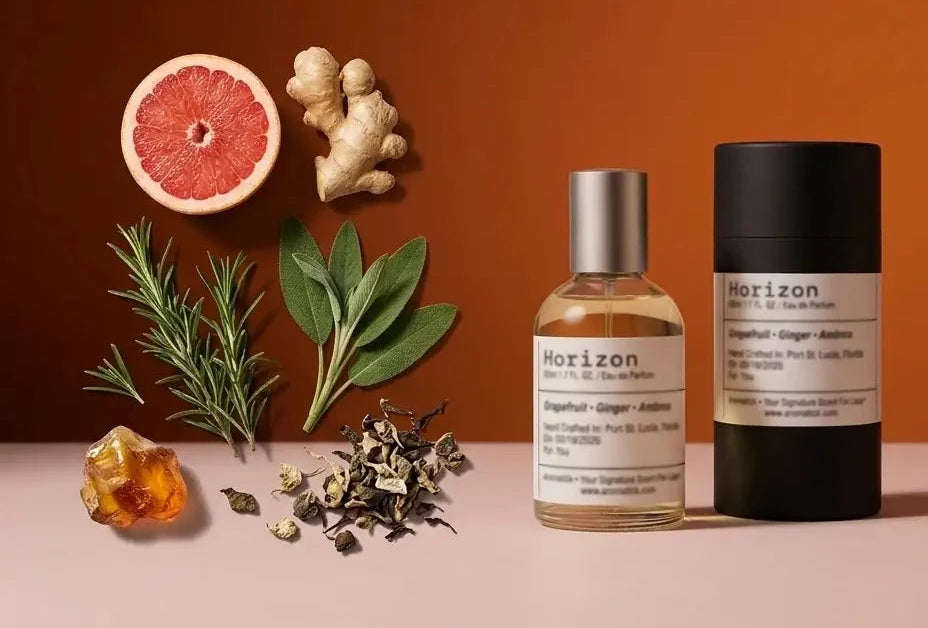
Best Fragrance Layering Tips for a Signature Scent
TL;DR:
- Fragrance layering involves combining scented products to create a personal, long-lasting scent profile. Applying heavier products first and distributing sprays across different body zones enhances clarity and harmony. Matching compatible or contrasting scents strategically allows for personalized and dynamic fragrance expressions.
Fragrance layering is defined as the practice of combining multiple scented products, including oils, lotions, and perfumes, to build a unique, longer-lasting scent that feels personal and dimensional. Known in perfumery circles as “scent stacking,” this technique has moved well beyond niche hobbyist circles. Searches for scent combinations have risen 143% year over year among younger fragrance fans, with “scent layering” searches climbing 47% in the same period. That level of interest signals a real shift in how people think about wearing fragrance. The best fragrance layering tips are not about wearing more product. They are about wearing the right products in the right order.
1. What is the best order for layering fragrances?
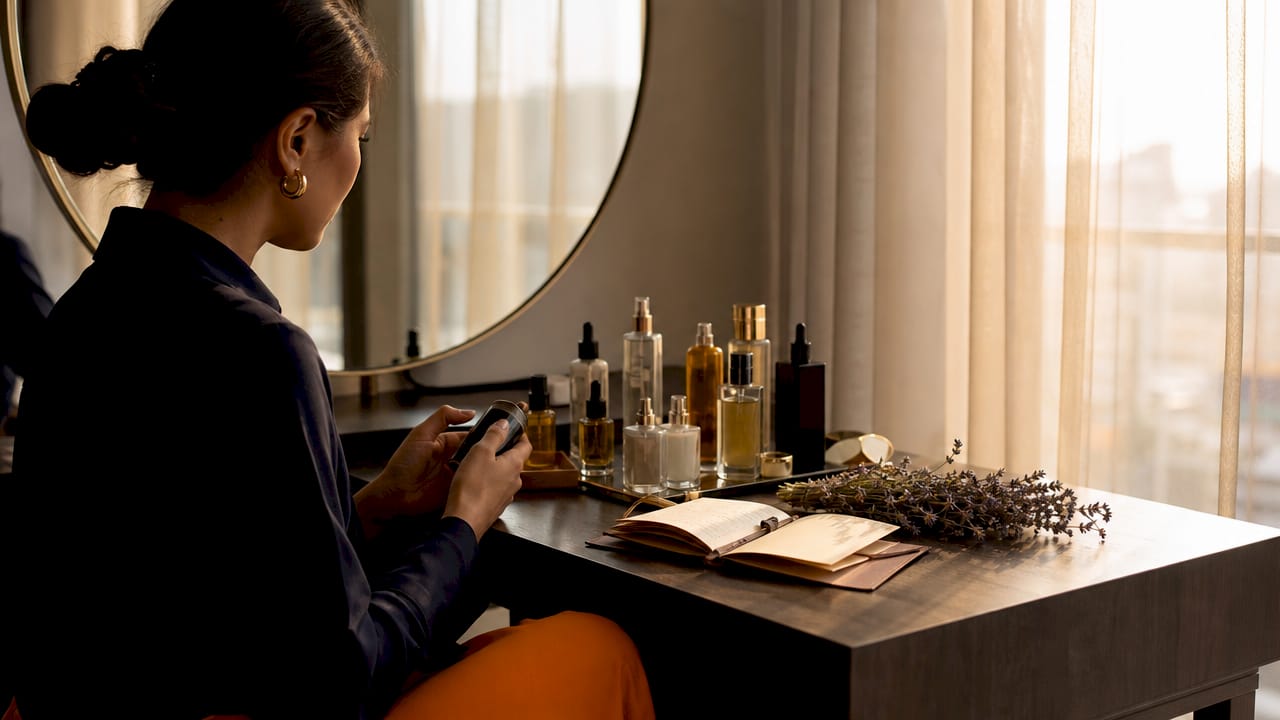
The correct layering sequence is heaviest products first, lightest products last. Applying oils and lotions before any spray fragrance preserves the clarity of lighter top notes and prevents heavier base notes from smothering them. Think of it as building a house: the foundation goes down before the walls.
Start with an unscented or lightly scented body lotion. Follow with a perfume oil or scented cream if you use one. Finish with your Eau de Toilette or body mist as the final layer. This sequence keeps each element audible in the final blend.
- Step 1: Apply unscented moisturizer to clean, dry skin
- Step 2: Add any perfume oil or scented body cream
- Step 3: Spray your Eau de Parfum or Eau de Toilette
- Step 4: Finish with a light body mist if desired
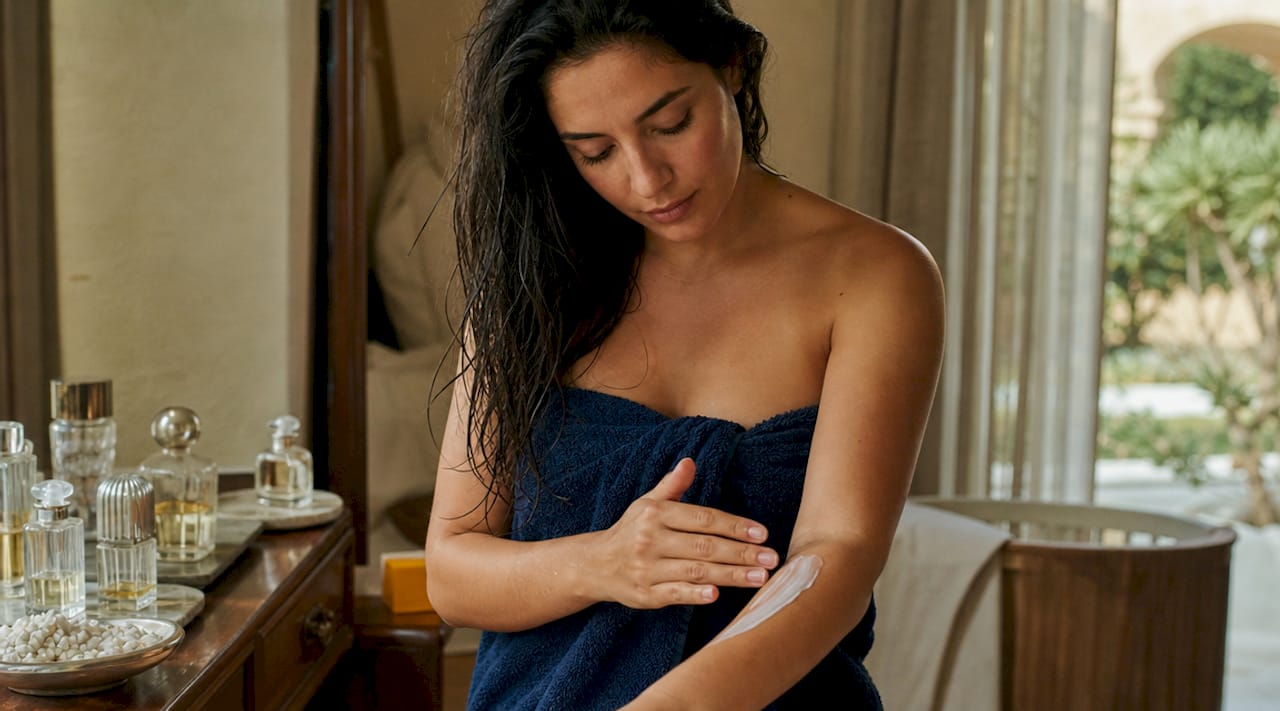
Pro Tip: Apply your base lotion while your skin is still slightly warm from the shower. Warm skin opens pores and helps fragrance molecules bind more effectively.
2. Why starting with a hydrated base matters
Hydrated skin holds fragrance molecules longer and diffuses scent more gently throughout the day. Dry skin absorbs fragrance quickly and releases it just as fast, which is why a well-moisturized base is not optional. It is the single most underused technique in everyday fragrance wear.
A fragrance-free lotion works best as a base because it does not compete with the scents you layer on top. Scented lotions and oils also work well when they share notes with your chosen perfume, adding depth rather than noise. If you wear a vanilla-based perfume, a vanilla body lotion underneath amplifies the warmth without adding a competing scent.
Exfoliating two to three times per week also helps. Smooth, fresh skin holds fragrance more evenly than skin with dry patches, which can cause uneven scent diffusion.
3. How to choose complementary scent combinations
The most reliable fragrance combinations pair scents from compatible or adjacent fragrance families. Floral with vanilla, woody with spicy, and citrus with musk are classic pairings that work because their shared chemical structures blend without clashing. You can find a detailed breakdown of these pairings in this fragrance layering guide from Aromatick.
Contrast pairings are equally valid and often more interesting. A clean floral layered with a smoky tobacco note creates texture that neither fragrance achieves alone. The key is that at least one element should be shared between the two scents, whether that is a woody base, a citrus top note, or a musky dry-down.
- Floral + Vanilla: Soft and warm. Works well for evening wear.
- Citrus + Musk: Clean and fresh. Ideal for daytime or office settings.
- Woody + Spicy: Rich and grounding. Strong choice for cooler months.
- Floral + Tobacco: Unexpected contrast with real depth and character.
- Gourmand + Amber: Sweet and enveloping. A natural fit for winter layering.
Pro Tip: When testing a new combination, spray both scents on separate areas of your wrist and let them dry down for 20 minutes before deciding if they work together. First impressions on wet skin are often misleading.
4. How spray ratios control scent balance
Getting the ratio right separates a well-blended combination from an overpowering mess. The standard recommendation is 2–3 sprays of a heavier scent paired with 3–5 sprays of a lighter, fresher scent. The lighter fragrance needs more volume to stay audible against the heavier base.
This ratio is a starting point, not a rule. Your skin chemistry, the concentration of each fragrance, and the environment all affect how the balance lands. Adjusting spray count based on personal preference is expected and encouraged. Start conservative and add more of the lighter scent until the blend feels balanced.
Keeping both scents on the same general body area helps them merge into a single impression rather than two separate fragrances fighting for attention. Pulse points like the wrists, inner elbows, and the base of the throat are the most effective locations for this kind of blending.
5. What role do environment and skin type play?
High humidity and heat cause fragrance molecules to evaporate faster and project more aggressively. This means a combination that feels balanced indoors can become overwhelming outside on a hot day. Adjusting your layering choices by season is not optional if you want consistent results.
- Warm weather: Favor citrus, green, and soft floral layers. These notes stay fresh without becoming sharp or cloying in heat.
- Cool weather: Amber, oud, and gourmand notes perform better in dry or cold air. They project steadily without the risk of over-amplification.
- Humid climates: Use fewer sprays overall and choose lighter concentrations like Eau de Toilette over Eau de Parfum.
- Dry climates: Skin loses moisture faster, so a richer base lotion becomes even more important for scent retention.
Lighter scents like citrus and soft florals prevent what perfumers call “evaporation fatigue,” where a heavy scent becomes oppressive in heat. Heavier notes like oud and amber anchor well in cooler, drier air where they can diffuse slowly and steadily.
6. How to layer by body location for clarity
Spraying every fragrance on the same spot is the most common layering mistake. When two or more scents land on the exact same patch of skin, their notes muddle together rather than blending. Layering by body location gives each scent room to develop independently while still contributing to the overall impression.
A practical approach is to assign each fragrance a zone. Apply your heavier, base-note-rich scent to pulse points like the wrists and neck. Spray a lighter, fresher scent on your clothes or inner elbows. Add a hair mist or light body spray to your hair for a soft, trailing effect. This spatial separation creates dimension that a single fragrance cannot replicate.
Clothes hold fragrance differently than skin. Fabric retains scent molecules longer and does not interact with skin chemistry, so the scent stays truer to its original character. This makes clothing an excellent location for a fragrance you want to preserve without alteration.
7. Practical do’s and don’ts for perfume layering
Fragrance layering is akin to composing music, where the goal is harmony or interesting contrast, not volume. Keeping that principle in mind prevents the most common errors.
“Layering allows for adaptability of scent to mood, occasion, and season, providing more flexibility than a fixed perfume. The goal is a blend that feels like one cohesive scent, not two fragrances competing for attention.”
Do:
- Start with one hero fragrance and add one accent scent before building further
- Test combinations on skin and wait 20 minutes for the dry-down before judging
- Use scented body products to add depth without adding another spray fragrance
- Keep a simple log of combinations you enjoy so you can recreate them
Don’t:
- Spray three or more fragrances on the same skin spot
- Judge a combination immediately after spraying. Top notes are deceptive.
- Assume more sprays equal better results. Restraint produces cleaner blends.
- Ignore your skin chemistry. The same combination smells different on every person.
Layering adapts your scent to mood, occasion, and season in a way that a single fixed fragrance cannot. That flexibility is the real value of the practice.
8. Building a signature scent through experimentation
A signature scent built through layering is more personal than any single bottled fragrance because it reflects your choices, your skin, and your preferences. The science of layering fragrances rewards patience and curiosity in equal measure.
Start with two fragrances maximum. Master that combination before adding a third element. Most experienced layerers work with two to three scents at most, because restraint produces clarity. Adding more fragrances does not automatically produce a better result. It usually produces noise.
Keep notes on what works. Write down the fragrances, the number of sprays, the locations, and the weather conditions. Scent memory is unreliable, and a combination that felt perfect on a cool october morning may not translate to a humid july afternoon. Documentation turns trial and error into a repeatable process.
Key Takeaways
Fragrance layering works best when you apply the heaviest products first, match complementary scent families, and distribute sprays across different body zones for clarity and dimension.
| Point | Details |
|---|---|
| Start with a hydrated base | Apply unscented lotion before any spray fragrance to improve scent longevity. |
| Layer heaviest to lightest | Apply oils and creams first, then Eau de Parfum, then lighter body mists last. |
| Control spray ratios | Use 2–3 sprays of a heavier scent and 3–5 sprays of a lighter scent for balance. |
| Distribute by body zone | Spray different fragrances on separate areas to prevent note muddling. |
| Adjust for environment | Choose lighter scents in heat and richer notes like amber or oud in cooler weather. |
Fragrance layering as a personal art form
I’ve spent years experimenting with scent combinations, and the single biggest shift in my approach came when I stopped treating layering as a formula and started treating it as a conversation between fragrances. Most guides focus on rules. What they underemphasize is that your skin is a variable no rule can fully account for.
The conventional wisdom says to pair scents from the same fragrance family. That advice is safe, and it works. But the most memorable combinations I’ve worn have come from contrast: a cold, aquatic note over a warm, resinous base, or a sharp green citrus over a soft, powdery musk. Those pairings feel alive in a way that “floral plus vanilla” rarely does.
What I tell anyone starting out is this: master the layering process with two fragrances before you think about three. Complexity is earned, not assembled. And the patience to let a combination dry down fully before judging it is the single skill that separates people who love layering from people who give up on it after one attempt.
Layering is also one of the few areas in fragrance where budget and luxury genuinely coexist. A well-chosen $30 body lotion under a quality Eau de Parfum can outperform a $200 fragrance worn on dry skin. The technique matters more than the price tag.
— Rodney
Where to find fragrances worth layering
Building a layering wardrobe means having access to quality scents at a price that lets you experiment freely. Buying a fragrance you are afraid to use generously defeats the purpose.

Aromatick carries authentic designer and niche fragrances at up to 60% off retail price, which makes building a layering collection genuinely practical. Whether you are looking for a rich base note fragrance or a fresh top-note accent, the catalog covers both ends of the spectrum. Aromatick also stocks niche fragrance collections for those who want more unusual, complex scents that layer in unexpected ways. Every product is authentic, and free shipping removes the last barrier to trying something new.
FAQ
What is fragrance layering?
Fragrance layering is the practice of combining multiple scented products, such as body oils, lotions, and perfumes, to create a unique, longer-lasting personal scent. The technique is also called scent stacking in the fragrance industry.
What scents layer well together?
Floral and vanilla, citrus and musk, and woody and spicy pairings are the most reliable combinations for fragrance layering. Contrasting combinations like floral with tobacco also work well when at least one shared note connects the two scents.
How many sprays should you use when layering fragrances?
The recommended ratio is 2–3 sprays of a heavier scent and 3–5 sprays of a lighter scent. Adjust based on your personal preference and the concentration of each fragrance.
Does skin type affect how layered fragrances smell?
Skin hydration directly affects scent longevity and diffusion. Dry skin absorbs fragrance faster and releases it sooner, while moisturized skin holds molecules longer and diffuses scent more evenly throughout the day.
Can you find good colognes to layer at retail fragrance counters?
Retail fragrance counters offer a useful starting point for testing scents before committing. For a broader selection with expert context, resources like Sephora cologne comparisons can help identify popular options worth testing as layering candidates.

Leave a comment
This site is protected by hCaptcha and the hCaptcha Privacy Policy and Terms of Service apply.