
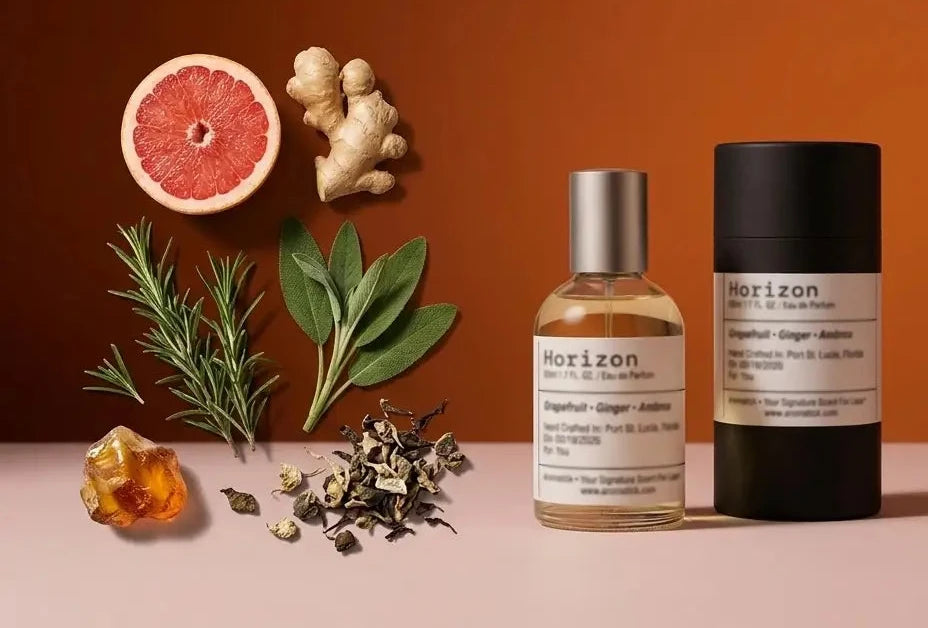

Decant vs Sample: What's the Difference and Which to Buy
A sample is a small vial filled by the brand, or by a retailer on its behalf. A decant is real perfume moved from a full retail bottle into a small atomizer by someone else. The scent is the same, and the difference is who fills it, how much you get and how it is packaged. Samples suit a first impression. Decants suit a longer trial. A discovery set is a boxed group of samples that lets you compare several scents at once.
TL;DR
- Sample: a small vial, often under 2 ml, filled at the source by the brand or its production facility. It is best for a quick first impression.
- Decant: genuine fragrance transferred from a full bottle into a travel atomizer, most often 2 ml to 10 ml. It is best for wearing a scent across several days.
- Discovery set: a boxed collection of minis, usually from one house. It is best for exploring a brand or a scent family.
- Smart route: use a set to narrow the field, then decant the two or three scents you keep returning to, and only then buy a full bottle.
- Handling matters: keep decants out of heat and sunlight, and buy from a seller that is open about where the juice comes from.
Table of Contents
- What a sample is
- What a decant is
- Decant vs sample at a glance
- How much perfume do you actually get?
- Where discovery sets fit in
- Which one should you choose?
- A simple testing routine
- Authenticity and handling
- Perspective: why we pair decants with full bottles
- Try before you commit with Aromatick
- FAQ
- Sources
What a sample is
“Sample” is a loose word. In the strict sense it means a brand sample: a small vial or spray card that the perfume house itself produces. One industry explainer notes that a brand sample is filled inside the production facility and sealed at the source. It has never been opened and re-poured by a third party.
You meet brand samples in a few places:
- tucked into an online order as a free extra
- handed out at a department-store counter
- included in a discovery set
- sold individually as single vials
The sizes are small. One industry blog puts the vials in sample sets at roughly 0.8 to 1.7 ml each. That is enough for a handful of sprays, not a week of wear.
People also use “sample” for anything small. A vial of a few drops, a pre-filled mini from a hobbyist and a retailer’s tiny vial can all get the label. That blurring is why the question comes up so often in fragrance forums.
What a decant is
A decant is perfume transferred from a full retail bottle into a smaller container, usually a spray atomizer. Specialist sellers, collectors and split groups are the usual people who fill them. Sizes most often fall between 2 ml and 10 ml, according to the same Osmetheca explainer.
The liquid is the same perfume that sits in the full bottle. The container and the person doing the filling are what change. That is also why the source matters. A decant is only as authentic as the bottle it came from.

Decant is also a business model. The Los Angeles Business Journal described a California startup that buys full-size bottles and has staff pour them into smaller samples, starting at 99 cents for under a milliliter. Tiny formats like that exist because people want to try a scent before committing to a bottle.
Decant vs sample at a glance
| Brand sample | Decant | Discovery set | |
|---|---|---|---|
| Filled by | The brand or its production facility | A retailer, specialist seller or collector | The brand, or a retailer assembling minis |
| Typical size | Under about 2 ml | Often 2 ml to 10 ml | Several vials, about 0.8 to 1.7 ml each in many sets |
| Packaging | Sealed vial or spray card | Atomizer or small spray bottle | Boxed set of minis |
| Best for | A first impression | A multi-day trial or travel | Comparing several scents |
| Availability | Only for scents the brand samples | Current, older and hard-to-find scents | Whatever the set includes |
The sizes above are ranges from the sources cited in this guide. Individual products vary, so check the volume on each listing.
How much perfume do you actually get?
Milliliters are hard to picture, so think in wears.
A standard atomizer sprays a fraction of a milliliter at a time, and most people use two to four sprays per wearing. On those numbers:
- A sample under 1 ml gives you one or two wearings. It is fine for judging the opening and not much more.
- A decant of 2 ml gives you roughly a week or two of daily wear, depending on how many sprays you use.
- A decant of 5 ml to 10 ml gives you a month or more of regular use. That is long enough to wear the scent through different weather, moods and outfits.
These are rough figures and your spray habits change them. The practical point holds anyway: a decant lets you live with a scent, while a sample lets you meet it.
This matters because fragrance changes on skin. The first ten minutes are the top notes. The heart and the dry-down arrive hours later, and they react to your skin chemistry, the temperature and what you ate or wore. One spritz on a paper strip can’t tell you how a perfume behaves at 6 p.m. on a Tuesday.
Where discovery sets fit in
Many searchers ask about discovery sets next to decants, so here is the distinction.
A discovery set is an official box of small vials filled at the factory and sealed, often sold by the perfume house. It usually collects the core lineup of one brand in miniature. A related product is the mixed sample set, where a retailer or the buyer picks scents across brands. Scenday’s guide explains the split: a discovery set is curated by one brand as an introduction, while a sample set is an assortment of individual vials. Some brands credit the price of a set toward a later full bottle.
What do you get? Allure’s roundup describes sets built around about five sample-size scents, with listed prices running from $68 to $120 and bottles of 7 ml or more in the larger options. That is much more generous than a single-spray tester.
So the comparison runs like this:
- Discovery set vs sample: a set is a bundle of samples. You get variety and a lower cost per scent, but each vial is small.
- Discovery set vs decant: a set gives breadth, one small taste each of many scents. A decant gives depth, many wears of one.
- Decant vs sample: a decant gives you the time to decide. A sample gives you a taste, with the brand’s own packaging.
If you want a deeper walk through set contents, our sample sets and discovery set buyer’s guide covers them in detail.
Which one should you choose?
Neither format wins every time. One comparison guide’s advice is to pick a set when its contents answer the questions you’re exploring, and to choose individual samples when your shortlist is already narrow. Here is how that plays out.
You are new to a brand or a scent family
Start with a discovery set. You might not know whether you like woody fougères, gourmand vanillas or fresh citrus colognes. Five small vials show you the range of a house in one go.
You have narrowed it down to two or three scents
Choose decants. This is where a 5 ml atomizer earns its place. Wear one scent for a week, then the next, and see which one you reach for without thinking.
The scent is discontinued or hard to find
A decant is often the only route. One explainer points out that decants are useful when a brand doesn’t offer samples, when a fragrance has been discontinued, or when you want a working volume between 5 ml and 30 ml.
You are buying a gift
A decant lets you pass on a trial-size version of a scent you love. If you’re not sure of the recipient’s taste, a small set of different scents gives them room to choose. For fuller bottles, you can browse the designer perfumes and colognes collection.
You are watching your budget
Neither format is cheap per milliliter. As one guide puts it, the point is that they let you be wrong for little compared with blind-buying a full bottle. Many serious samplers use both: a set to learn a house, then decants of the two or three scents that stay on their list.
Our breakdown of how subscriptions compare with decants goes into per-milliliter cost if that is your main concern. For the reasoning behind trying before buying, see The Real Role of Perfume Sampling Before You Buy.
A simple testing routine
Try this to get a real read on a scent, whichever format you pick.
- Test on clean, dry skin. Spray the inside of your wrist or elbow, not a strip you will forget about.
- Wait before judging. Check the scent at 15 minutes, then at two hours, then at the end of the day.
- Wear it more than once. Skin chemistry, weather and time of day all change how a scent behaves, so give it several wearings in different conditions.
- Test one scent at a time. Mixing several on one wrist muddies everything.
- Take notes. Write down what you notice at each stage: longevity, how far it projects and whether people comment.
- Decide after a full cycle. If you still enjoy the scent at the end of the vial, you have your answer.
Authenticity and handling
The liquid in a decant comes from a real bottle, so authenticity comes down to the seller. Look for these signs:
- Clear sourcing. The seller says where the perfume comes from and stands behind it.
- A proper label. It names the fragrance, the volume and who filled it.
- Clean, dated filling. Neat atomizers, no residue and no leaks.
- Plain pricing. Prices that match the size and the scent, with no mystery bargains.
For more on why this matters, read our piece on the role of authenticity in perfumes.
Does decanting change the scent?
Perfume is a sensitive alcohol-based formula. Beauty Independent notes that once a fragrance leaves its original packaging, which was designed to preserve the formula, it becomes more chemically vulnerable if handled poorly. That is a reason to handle it well, not a reason to avoid decants.
Safe-use habits are simple:
- store the atomizer away from heat, direct sun and humid bathrooms
- keep the cap closed between uses
- use clean, dry atomizers if you decant at home
- use the vial within a reasonable time for the best scent
The same publication reports that some indie brands send bulk fragrance to be filled into sampling vials at an approved production facility, which shows that careful filling is part of how the industry works.
Is decanting legal in the US?
Decanting perfume for your own use is described as legal. Selling it brings obligations. LegalClarity explains that the Lanham Act bars trademark use that could mislead buyers about a product’s origin, and that the Fair Packaging and Labeling Act calls for a label showing the product’s identity, the distributor’s name and address, and the net quantity. If you buy decants, look for sellers who label them properly.
Perspective: why we pair decants with full bottles
We see the same pattern in the shoppers who come to us. They love a scent for ten minutes, buy a bottle and then find the dry-down is not for them. A sample is a handshake. A decant is a first date that lasts a week.
That is why we offer decants next to full-size designer and niche bottles. You can try a fragrance on your own schedule, in your own routine, and decide with real information. When you are sure, the full bottle is waiting at 30 to 60% below retail, with the same authentic, batch-verified fragrance.
Our guidance is simple. Use samples or a discovery set to explore, use a decant to confirm, and buy the bottle only when you know you will finish it. We would rather you love what you buy than own a shelf of half-used regrets.
Rodney
Try before you commit with Aromatick
Aromatick sells authentic designer and niche fragrances for men and women, from full-size bottles to decants and discovery sets, at prices we claim to be 30 to 60% below retail. Orders ship free in the US above a qualifying threshold, and a satisfaction guarantee backs them.
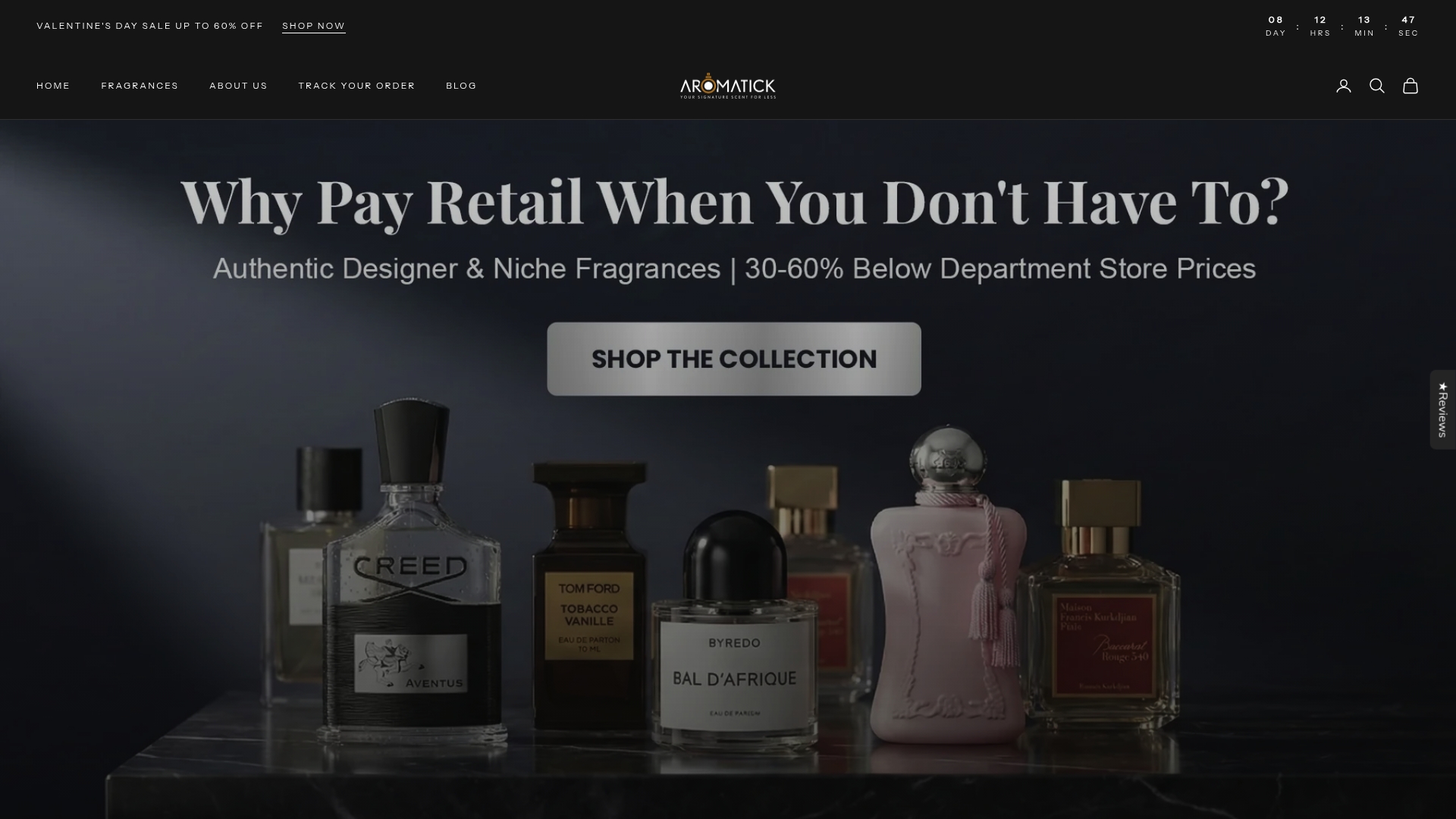
If you already have a shortlist, start with the men’s cologne collection or the women’s perfume collection. If you want to explore first, head to our fragrance shop and look at decants and sets. Our guide to what fragrance decants are and the longer full guide to decanting answer the practical questions.
FAQ
What does “decant sample” mean?
It is a small amount of genuine perfume poured from a full bottle into a smaller atomizer, usually by a seller or collector. The phrase mixes the two terms because decants are often sold in sample-like sizes. The main difference from a brand sample is who fills the vial.
Is a decant better than a sample?
It depends on your goal. A decant gives you more perfume, so it suits a longer trial of a scent you already like. A brand sample is sealed at the source and works well as a quick first impression.
Is a discovery set better than decants?
A set is better for breadth, and decants are better for depth. Sets let you compare several scents at once, while decants let you wear one for days. Many people use a set first, then decant their favorites.
Is decanting perfume illegal?
Decanting for personal use is described as legal. Selling decants raises trademark and labeling questions in the US, so buy from sellers who label their products clearly and are open about sourcing.
How should I store a decant?
Keep it capped, away from heat and sunlight, and out of a steamy bathroom. Heat and light are the main things that can harm a fragrance once it is outside its original packaging.
Sources
- Fragrance Seekers Try Options Online, Los Angeles Business Journal
- Discovery Sets vs Decants: Which to Buy?, WhatScent
- What is a perfume decant?, Osmetheca
- Fragrance Discovery Sets Let You Test Perfume Before Buying, Allure
- The Rise of Discovery Sets and Samples in the Perfume Industry
- Perfume Samples & Discovery Sets, Explained, Scenday
- Discovery Set or Individual Perfume Samples?
- Fragrance Decanting Is Growing, Beauty Independent
- Is Decanting Perfume Legal?, LegalClarity

Leave a comment
This site is protected by hCaptcha and the hCaptcha Privacy Policy and Terms of Service apply.