
Fragrance Authenticity Verification: What You Need to Know
TL;DR:
- Counterfeit perfumes have become so advanced that visual inspection alone often fails to verify authenticity. Scientific laboratory techniques, such as GC×GC–TOF MS, provide precise chemical profiling that distinguishes genuine fragrances from fakes, while consumer checks focus on packaging, bottle quality, and researching the seller. Ultimately, buying from trusted sources with clear sourcing and authenticity guarantees offers the most reliable consumer protection against counterfeit fragrances.
Counterfeit perfumes have become so sophisticated that even experienced fragrance collectors are fooled at the point of purchase. The packaging looks right, the bottle feels close, and the scent seems familiar enough to pass a quick sniff test. So what is fragrance authenticity verification, and why does it matter beyond simple visual inspection? This guide breaks down exactly how authentic fragrances are identified, from advanced laboratory analysis to practical consumer checks, giving you the knowledge to buy with confidence and protect your collection from costly fakes.
Table of Contents
- Key takeaways
- What fragrance authenticity verification actually means
- Laboratory methods: how science detects fakes
- Consumer checks: practical ways to identify genuine fragrances
- The nuances and challenges of verification
- Applying verification knowledge when buying and collecting
- My honest take on fragrance authenticity
- Shop authentic fragrances with confidence at Aromatick
- FAQ
Key takeaways
| Point | Details |
|---|---|
| Verification goes beyond packaging | True fragrance authenticity verification analyzes chemical composition, not just labels or batch codes. |
| Lab techniques are the gold standard | GC×GC–TOF MS and mass spectrometry can detect fakes that look visually identical to originals. |
| Batch codes are not proof | Batch codes can be falsified, making them unreliable as a standalone verification method. |
| IFRA Certificates mean something different | These certificates confirm supplier safety compliance, not that your specific bottle is genuine. |
| Buy from verified sources | Trusted retailers with authenticity guarantees provide the most reliable protection for consumers. |
What fragrance authenticity verification actually means
Fragrance authenticity verification is the process of confirming that a perfume product genuinely originates from the brand and manufacturer it claims to represent, and that its chemical composition matches the original formulation. That definition sounds straightforward. In practice, it covers a spectrum of methods ranging from a consumer inspecting a box in their hands to a lab scientist running two-dimensional chemical separation on a perfume sample.
The confusion starts when people treat surface-level checks as proof. Packaging quality, holographic stickers, and batch codes all get cited as authentication tools. But none of them reliably verify what is actually inside the bottle. Fragrance quality assurance, at its most rigorous level, requires analyzing the volatile chemical compounds that make up a fragrance’s composition, comparing them against validated reference profiles from genuine production batches.
A few misconceptions are worth clearing up directly:
- IFRA Certificates are issued to fragrance ingredient suppliers and manufacturers to confirm safe use compliance with industry standards. They are not consumer-facing documents, and they do not prove that a bottle on a shelf is genuine.
- Batch codes appear on almost every legitimate bottle and are frequently cited as proof of authenticity. As discussed in detail below, they are not.
- Certificates of analysis can be useful within a supply chain but are not a substitute for independent chemical profiling.
Understanding why fragrance authenticity matters goes beyond protecting your wallet. Counterfeit fragrances have been found to contain hazardous substances. Knowing what genuine verification looks like is the first step toward protecting yourself.
Laboratory methods: how science detects fakes
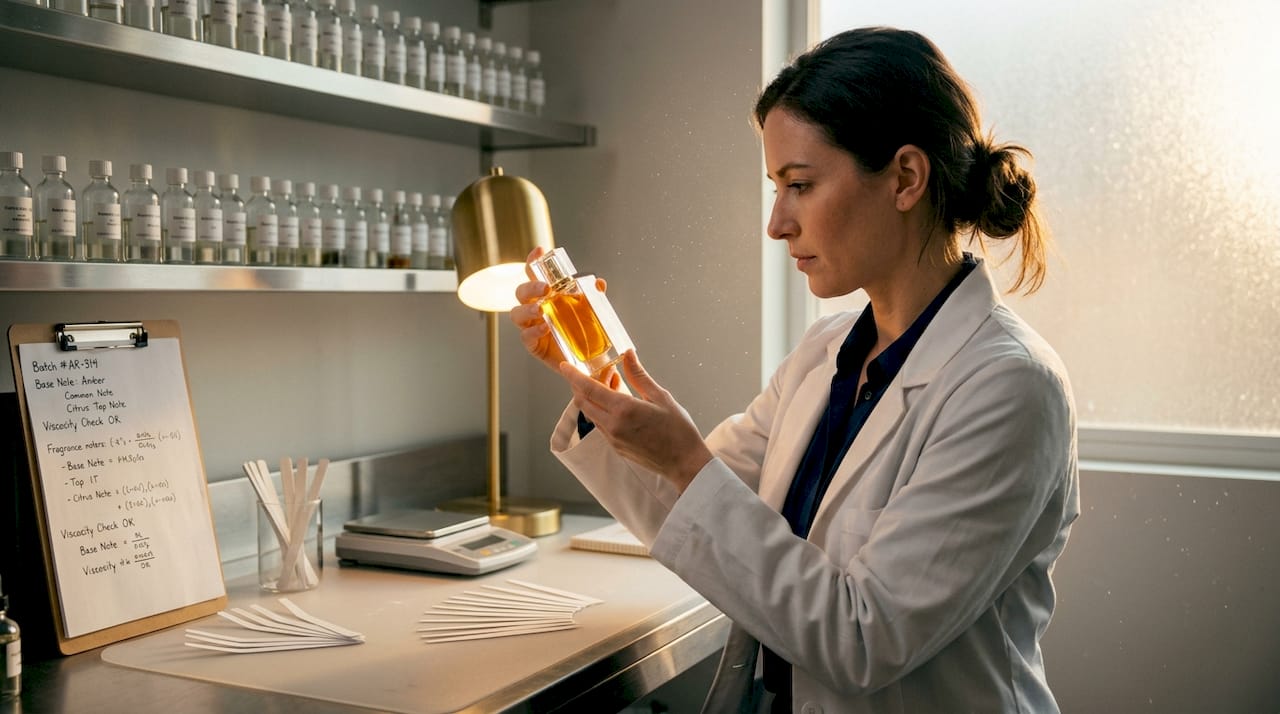
The most reliable methods of fragrance verification happen in a controlled lab environment, using analytical chemistry techniques that are invisible to consumers but extraordinarily precise. The leading technique is GC×GC–TOF MS, which stands for two-dimensional gas chromatography coupled with time-of-flight mass spectrometry. It works by separating fragrance volatiles across two dimensions, producing a detailed chemical fingerprint that maps every detectable compound in a sample.
Why two dimensions? A single GC column can miss compounds that overlap or co-elute. Adding a second orthogonal separation column dramatically increases resolution, revealing subtle differences between an authentic formulation and a counterfeit that might otherwise go undetected.
The results can be striking. One study found that an authentic sample had 45 compounds while counterfeit versions contained only four, with hazardous materials including methanol present in the fakes. That is not a minor variation. That is a completely different product.
Pro Tip: If you are authenticating a high-value fragrance through a lab, ask specifically whether the facility uses validated reference profiles from genuine production batches. Without that reference standard, chemical profiles alone cannot definitively confirm authenticity, only identify differences.
Here is a quick comparison of the key methods used in professional fragrance authenticity assessment:
| Method | What it detects | Limitation |
|---|---|---|
| GC×GC–TOF MS | Full volatile compound fingerprint | Requires reference standards from genuine batches |
| GC-MS (single dimension) | Major volatile compounds | Lower resolution; may miss subtle differences |
| FTIR spectroscopy | Molecular functional groups | Less specific; best used alongside GC methods |
| Visual inspection | Packaging, label, bottle features | Counterfeits increasingly replicate originals perfectly |
Chemometric software plays a supporting role in this process. Smart chemometric tools process the raw spectral data automatically, flagging statistical differences between a test sample and the authentic profile that would be impossible to spot with the naked eye. Without this software layer, even experienced analysts would struggle to interpret the complexity of a two-dimensional fragrance fingerprint at scale.
The IFRA analytical methods program also contributes here. IFRA develops standardized lab procedures that support consistent chemical analysis across the fragrance industry, giving labs a validated framework for measuring fragrance composition and quality.
Consumer checks: practical ways to identify genuine fragrances
Most people buying a fragrance are not going to run a GC×GC analysis before checkout. That is completely reasonable. There are still practical steps you can take to identify genuine fragrances before committing to a purchase, especially when buying online or from unfamiliar sellers.
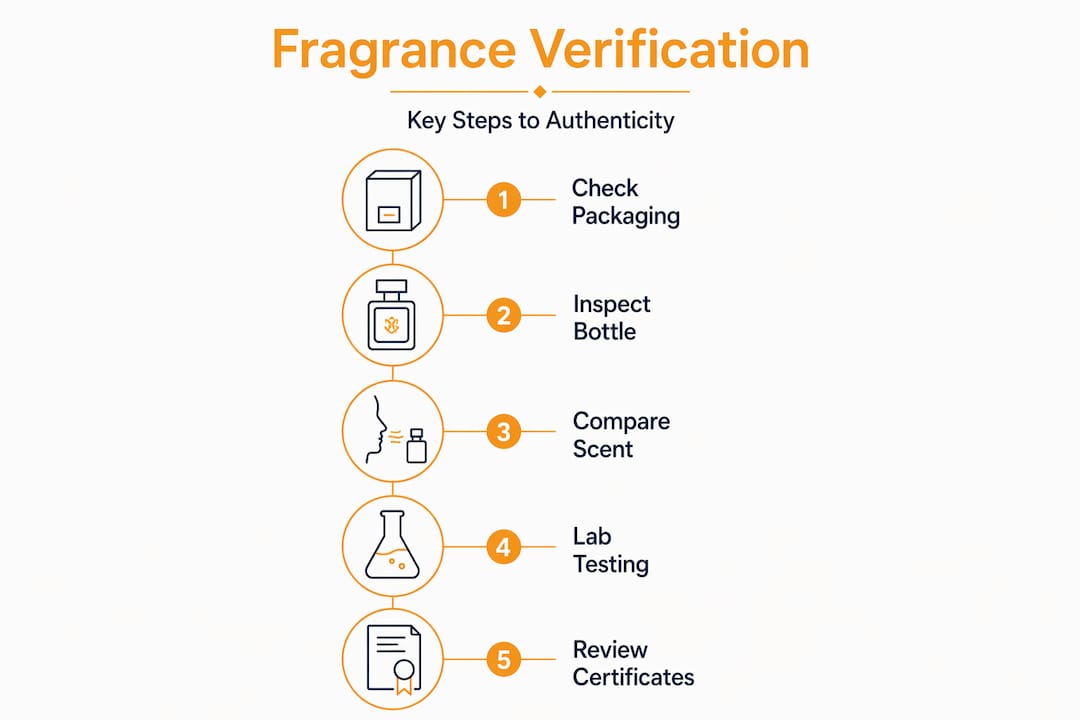
- Examine the packaging critically. Authentic fragrances are packaged with tight tolerances. Look for clean, sharp printing with no smudged text or uneven fonts. The cellophane wrap should be evenly heat-sealed with no loose edges. Boxes should feel sturdy, not flimsy.
- Inspect the bottle closely. Hold it up to light. The glass should be consistent in thickness with no bubbles or distortions. The cap should fit with a firm, precise click. Any wobble or rough seam on a glass bottle is a red flag.
- Smell the fragrance carefully. Authentic designer and niche fragrances have specific projection, longevity, and dry-down characteristics. If a fragrance you know well smells sharper, thinner, or fades within an hour, something may be off. Counterfeits often use cheaper aroma chemicals that behave differently on the skin.
- Check the batch code, but do not stop there. Batch codes can be cross-referenced on sites like Checkfresh to estimate production dates. However, batch codes can be falsified or reused, so they serve as one data point, not proof.
- Research the seller before you buy. Look for established retailers with clear return policies, a track record of verified customer reviews, and explicit authenticity guarantees. Marketplace listings with no seller history and prices that seem too low to be real are warning signs worth heeding.
Pro Tip: When buying a fragrance you have never smelled before, order a sample first if possible. Comparing a sample from a verified source against what arrives in the full bottle is one of the most reliable consumer-level checks you can perform.
The nuances and challenges of verification
Certifying fragrance authenticity is harder than it looks, even with the best tools. Several realities complicate the picture for both consumers and professionals.
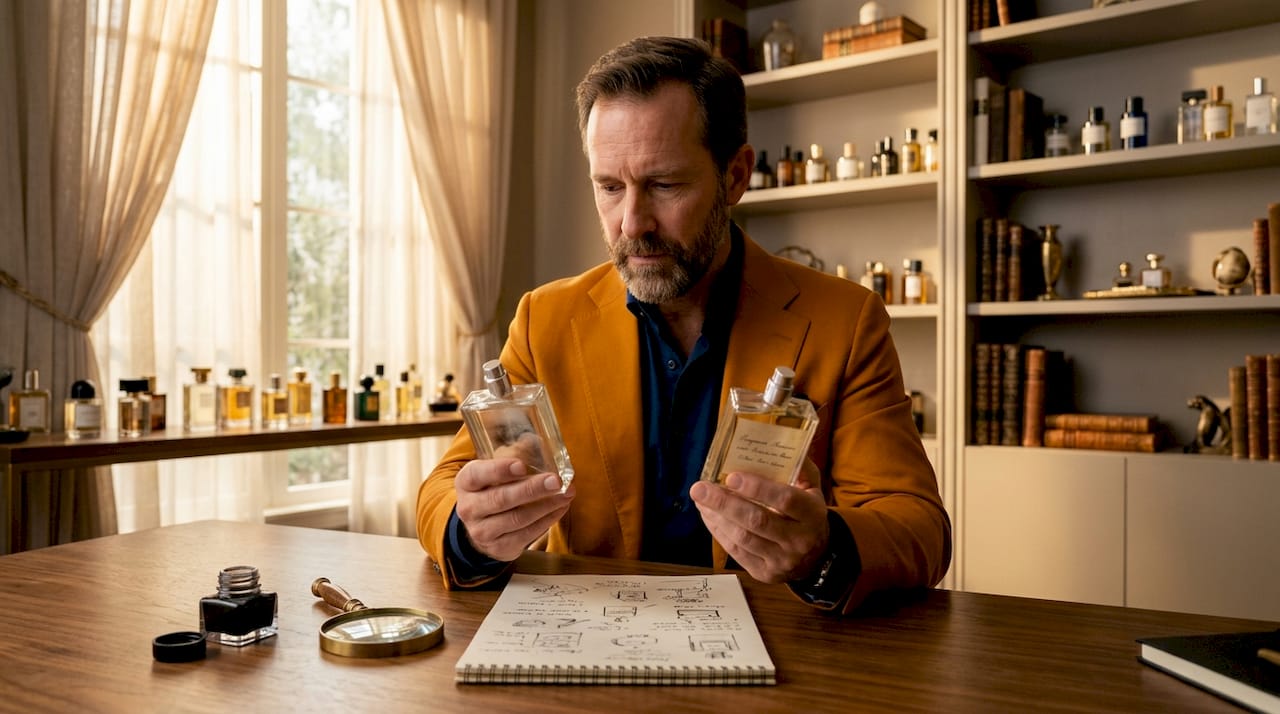
The packaging of modern counterfeits has become so convincing that visual checks have largely lost their reliability as a standalone method. High-quality fakes replicate foil stamping, embossing, and label printing to a degree that passes casual inspection, and even careful scrutiny by collectors. This is not a fringe issue. It is why fragrance authenticity assessment increasingly depends on what is inside the bottle, not what is on the outside.
Lab testing carries its own challenges. Misapplied analytical methods can produce misleading results. For instance, headspace GC-MS optimized for samples with significant water content may register false positives when applied to an oil-heavy or alcohol-heavy formulation. The matrix of the fragrance itself matters. A method that works well for an eau de toilette may not transfer cleanly to a pure parfum without adjustment.
“Chemical profiling without validated reference standards tells you a sample is different, not necessarily that it is fake. The reference standard is what turns a data observation into a definitive conclusion.”
There is also the regulatory reality around IFRA Certificates. Consumers sometimes present these certificates as proof that a product they received is genuine. They are not that. IFRA Certificates confirm that a fragrance ingredient supplier or manufacturer is meeting safety and compliance standards for intended use. They say nothing about whether the specific bottle in your hand came from that manufacturer.
Emerging technologies like electronic noses and portable near-infrared spectrometers hold real promise for consumer-level verification. But as of 2026, these devices are still calibrated primarily for research and industrial applications rather than individual consumer use.
Applying verification knowledge when buying and collecting
All of this comes together into a practical framework for how to verify fragrance authenticity in real life, whether you are building a serious collection or simply buying your favorite designer scent at a discount.
- Combine methods proportionally to value. For a $30 bottle, thorough visual inspection and a reputable seller are reasonable due diligence. For a rare $400 niche fragrance, it is worth seeking a specialist retailer with documented sourcing, or pursuing lab verification through a professional analytical service if the stakes justify it.
- Prioritize trusted retailers with explicit authenticity guarantees. An authenticity guarantee backed by a return policy is not the same as a vague “we only sell authentic products” claim. Look for retailers who specify their sourcing and stand behind their products with real recourse.
- Use batch codes as context, not conclusions. If a batch code dates a bottle to 2019 but the seller claims it was just released, that is a discrepancy worth investigating. Used correctly, batch codes support broader verification rather than replacing it.
- Build reference knowledge. If you collect seriously, handling genuine bottles from reputable retailers trains your eye and nose for what is correct. That reference knowledge becomes one of your most useful tools when evaluating unfamiliar purchases.
- Read seller reviews with a critical eye. Generic five-star reviews that say “smells great” are not authentication. Look for reviews that mention specific details about packaging, batch matching, or direct comparisons to department store bottles.
For a deeper look at how to spot fake perfumes using practical tools, the linked guide covers both physical inspection steps and more advanced consumer-accessible options in detail.
My honest take on fragrance authenticity
I have spent years going deep on fragrance science, and the one thing that still surprises people when I explain it is how little visual inspection actually tells you. Collectors with sharp eyes and years of experience have been burned by counterfeits that passed every surface check they knew. Not because those collectors were careless. Because the fakes were genuinely that good.
What I have learned from spending time with lab data is that the difference between an authentic fragrance and a sophisticated counterfeit is almost entirely chemical. The box, the cap, the label font, even the weight of the bottle can all be replicated. The exact profile of 45 volatile compounds in precise ratios? That is far harder to copy.
The uncomfortable truth about batch codes specifically is that too many people treat them as the final word. They are not. I have seen bottles with perfectly legitimate-looking batch codes that did not match the scent profile of the genuine article. The code was real. The fragrance was not.
My practical advice to anyone buying: spend less energy on the box and more energy on the seller. A retailer who publishes their sourcing practices, maintains an explicit authenticity guarantee with actual recourse, and has verifiable reviews is doing more to protect you than any printed code or certificate ever can. Science-backed verification at the lab level is the gold standard, but for most consumers, a trusted source is the most accessible version of that protection.
— Rodney
Shop authentic fragrances with confidence at Aromatick
At Aromatick, authenticity is not a marketing phrase. Every fragrance in the catalog is backed by a 100% authenticity guarantee, with sourcing practices built to eliminate the counterfeit risk that plagues less careful retailers. Whether you are shopping for a daily designer scent or adding to a serious collection, Aromatick’s curation gives you genuine products at up to 60% off department store pricing.
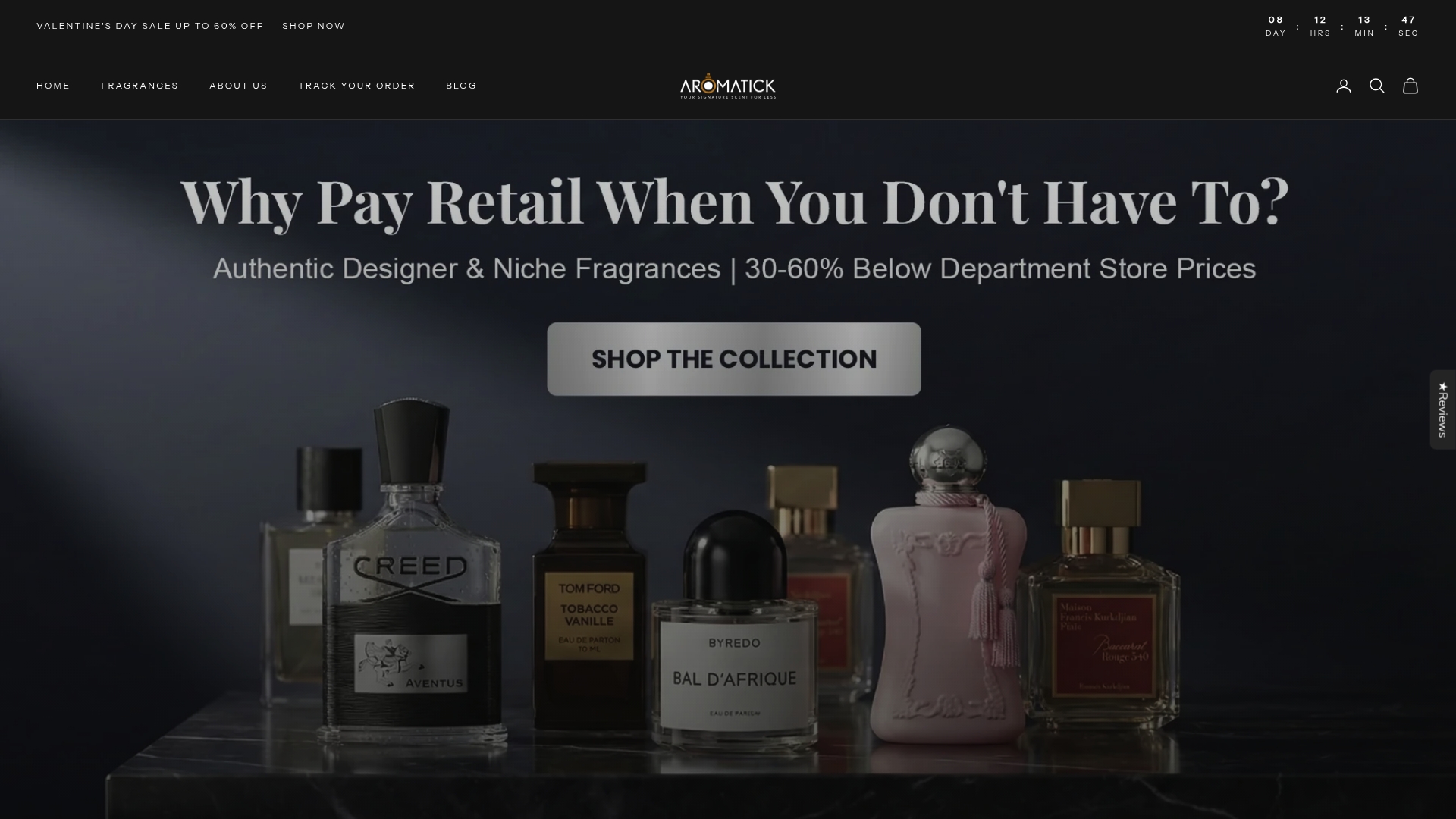
For collectors seeking something exceptional, the Initio Parfums Prives collection offers some of the most sought-after niche fragrances available, all verified authentic and shipped with Aromatick’s full guarantee. Beyond niche, the women’s and men’s designer collections bring luxury names within reach without sacrificing confidence in what you are receiving. When you know what fragrance authenticity verification involves, you also know how much sourcing practices matter. Aromatick’s commitment starts there.
FAQ
What is fragrance authenticity verification?
Fragrance authenticity verification is the process of confirming that a perfume genuinely comes from its claimed manufacturer and contains the correct chemical formulation. It ranges from consumer visual checks to advanced lab analysis using techniques like GC×GC–TOF MS.
Can you verify a fragrance’s authenticity at home?
You can perform meaningful checks at home, including examining packaging quality, inspecting the bottle, comparing scent performance, and researching the seller. However, definitive chemical verification requires laboratory analysis with validated reference standards.
Do batch codes prove a fragrance is authentic?
No. Batch codes can be falsified or reused, making them useful as one supporting data point but not reliable as standalone proof of authenticity.
What do IFRA Certificates actually confirm?
IFRA Certificates confirm that a fragrance ingredient supplier or manufacturer meets IFRA safety and compliance standards. They do not verify that a specific consumer bottle is genuine.
What is the most reliable method for identifying genuine fragrances?
GC×GC–TOF MS chemical profiling compared against validated reference standards from genuine production batches is currently the most reliable method for definitively authenticating a fragrance sample.

Leave a comment
This site is protected by hCaptcha and the hCaptcha Privacy Policy and Terms of Service apply.