
Fragrance Layering Checklist: Your Step-by-Step Guide
TL;DR:
- Layer fragrance layering involves applying a heavier base scent first, followed by a lighter modifier, with a total spray count equal to one fragrance. Waiting 15 to 30 minutes before evaluation helps ensure the blend’s harmony and longevity. Using shared notes between fragrances can prevent clashes and create a more cohesive scent.
Your fragrance layering checklist in 30 seconds: apply sprays of a heavier base scent (vanilla, musk, amber, or oud) to pulse points, wait a moment, then add sprays of a lighter modifier (citrus, neroli, or a light floral). Keep your total spray count equal to what you’d use for a single fragrance. Test on skin and wait 15–30 minutes before deciding if the blend works. That’s the whole system. Everything below explains why it works and how to get it right every time.
Pinterest reported a 125% rise in searches for “perfume layering combinations,” and the trend shows no sign of slowing. Aromatick put together this guide so you can skip the guesswork and build a blend that’s genuinely yours.
Quick-start checklist:
- Choose one heavy anchor: vanilla, musk, amber, sandalwood, or oud
- Choose one lighter modifier: bergamot, grapefruit, lemon, neroli, jasmine, or rose
- Apply anchor first (2–3 sprays), wait 60 seconds, then apply modifier (1–2 sprays)
- Total sprays should not exceed what you’d normally use for a single fragrance
- Wait 15–30 minutes on skin before evaluating the blend
Table of Contents
- What do you need to know before you start layering?
- What is the step-by-step fragrance layering checklist?
- What are the best beginner pairings to try right now?
- How do you control intensity through application methods?
- What are the most common layering mistakes and how do you fix them?
- How should you test combinations safely?
- Key Takeaways
- Why layering is worth the patience
- Build your layering wardrobe with Aromatick
What do you need to know before you start layering?
Every fragrance is built around a three-tier structure: top notes, heart notes, and base notes. Top notes (citrus, bergamot, grapefruit, lemon) hit first and fade within 15–30 minutes. Heart notes (jasmine, neroli, rose) form the body of the scent and last 1–3 hours. Base notes (vanilla, amber, musk, oud, sandalwood, cedar) are the foundation, often lingering for 4–8 hours or more.
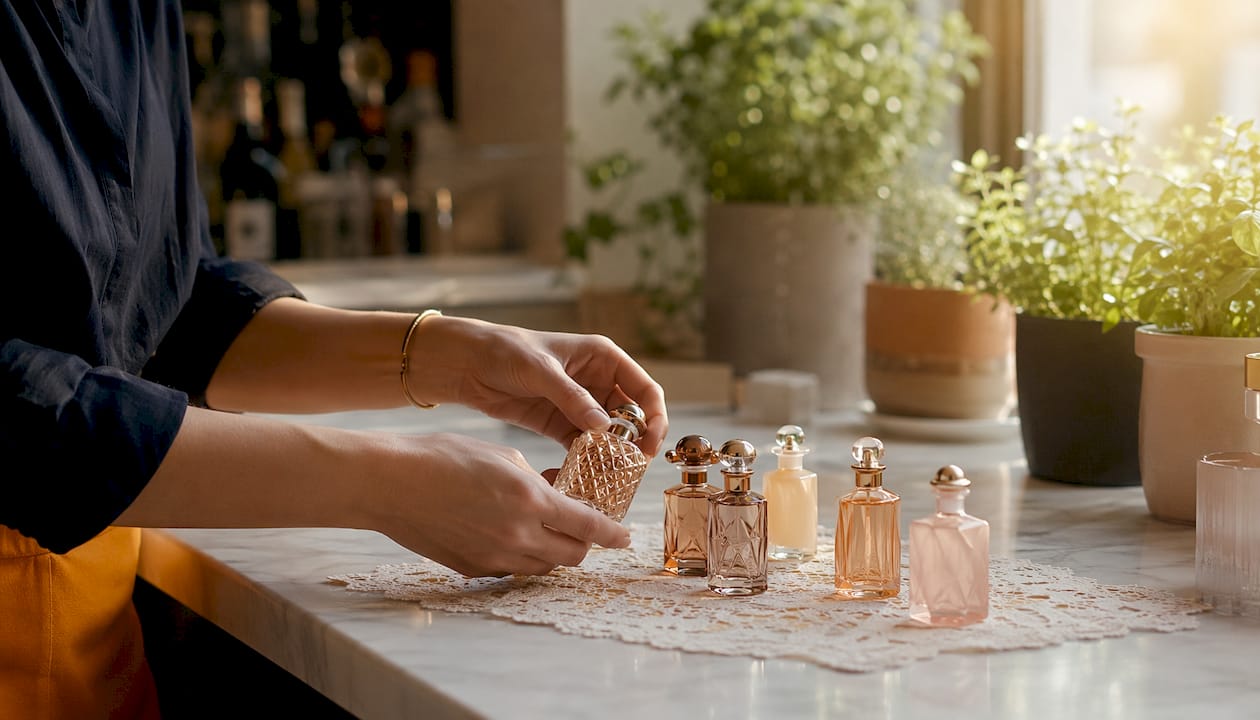
When you layer two fragrances, the base notes do the structural work. Heavier, longer-lasting notes like vanilla and oud anchor the blend and give it staying power, while a brighter modifier rides on top and adds contrast. The heavier-first rule is consistent across perfumers: apply the denser scent first so the lighter one stays perceptible rather than getting buried.
The most reliable pairing logic is one anchor plus one modifier. Avoid combining two heavy, fully composed fragrances — two dense oud-based or gourmand scents will compete and overpower rather than blend. The goal is purposeful enhancement: use the modifier to amplify a specific facet of your anchor, whether that’s brightness, creaminess, or warmth.
Pro Tip: Look for a shared note between your two fragrances. If both contain vanilla or musk, that common thread acts as a bridge and dramatically reduces the chance of a clash. Building your signature scent around a shared note is one of the most reliable beginner strategies.
- Top notes: citrus (bergamot, grapefruit, lemon), green, light aromatic
- Heart notes: florals (jasmine, neroli, rose), spice, herbs
- Base notes: vanilla, amber, musk, oud, sandalwood, cedar
What is the step-by-step fragrance layering checklist?
Follow these steps in order. Skipping prep or rushing the evaluation is where most blends go wrong.
- Prep your skin. Apply an unscented moisturizer to pulse points. Hydrated skin holds scent better and allows the blend to develop more evenly. Let the lotion absorb fully before spraying.
- Choose your anchor. Pick one heavier, longer-lasting scent: vanilla, amber, oud, musk, or a woody base like sandalwood or cedar. This is your structural backbone.
- Choose your modifier. Pick one lighter, brighter scent: a citrus (bergamot, lemon, grapefruit), a light floral (jasmine, neroli, rose), or a clean musk. It should contrast or complement the anchor, not duplicate it.
- Test on paper first. Spray one strip with the anchor and one with the modifier. Hold them together and smell. If they clash on paper, they’ll clash on skin.
- Apply anchor to pulse points. Wrists, inner elbows, base of throat. Use 2–3 sprays. Wait 60 seconds.
- Apply modifier. Add 1–2 sprays on the same or adjacent pulse points. Your total spray count should match what you’d use for a single fragrance alone.
- Wait and evaluate. Give the blend 15–30 minutes on skin. Top notes will shift; the real character of the layer emerges in the heart phase.
- Adjust for next wear. If the modifier disappears too fast, add one more spray. If it overpowers, drop to one spray or move it to a less warm pulse point.
Spray count reference
| Layer | Spray count | Notes |
|---|---|---|
| Anchor (base/heart) | 2–3 sprays | Apply first; heavier, longer-lasting |
| Modifier (top/light) | 1–2 sprays | Apply second; brighter, contrasting |
| Total | 3–4 sprays | Equal to a single-fragrance application |
Pro Tip: If both fragrances already project strongly, start with 1 spray of each. You can always add; you can’t subtract. Applying different scents to separate pulse points — wrist vs. neck vs. chest — creates a subtle, evolving scent cloud as you move rather than a single fused note.
What are the best beginner pairings to try right now?
These six combinations are reliable starting points. Each one works because of contrast, a shared note, or a textural boost.
- Vanilla + bergamot: Warm, creamy base lifted by sharp citrus brightness. Perfect for cooler weather or an evening out.
- Oud + rose: A classic pairing. The oud provides smoky depth; rose adds a floral lift that keeps it from feeling heavy. Works beautifully in fall and winter.
- Musk + lemon: Musk smooths and extends almost anything. Lemon keeps it clean and fresh. A reliable daytime layer, especially in warmer months.
- Amber + neroli: Amber’s resinous warmth pairs naturally with neroli’s soft, slightly honeyed citrus. Elegant and wearable year-round.
- Sandalwood + jasmine: Cedar and sandalwood serve as welcoming bases for lighter florals. Jasmine adds sweetness without going gourmand.
- Musk + grapefruit: Effortlessly fresh. The musk anchors longevity while grapefruit adds a sparkling, energetic top. Great for warm-weather wear.
Pairing quick-reference
| Base family | Modifier family | What it adds |
|---|---|---|
| Vanilla / amber | Citrus (bergamot, lemon) | Brightness over warmth |
| Oud / resinous | Light floral (rose, jasmine) | Floral lift, depth |
| Musk | Almost anything | Smoothness, longevity |
| Sandalwood / cedar | Floral or citrus | Softness, freshness |
| Amber | Neroli / soft citrus | Warmth, elegance |
Layering works best when you treat one fragrance as the hero and the other as a supporting note. The modifier’s job is to amplify a specific facet — brightness, creaminess, warmth — not to compete for attention.
Pro Tip: Weather changes how a blend performs. In heat, heavy bases like oud and amber project more intensely, so reduce your anchor spray count by one. In cooler weather, citrus modifiers fade faster, so apply them closer to a warm pulse point like the inner elbow.
How do you control intensity through application methods?
Where and how you apply each layer shapes the final result as much as the fragrances themselves.
- Same pulse point (fusion): Spraying anchor and modifier on the same spot (e.g., both on the wrist) blends them into a single unified scent. Best for pairings you’ve already tested and trust.
- Adjacent pulse points (separation): Anchor on the wrist, modifier on the neck. The two scents interact in your scent cloud without fully merging, creating a more complex, shifting effect.
- Hair mist: A light spray of the modifier into hair diffuses it softly and extends its presence without adding projection. Ideal for a subtle top layer.
- Unscented lotion base: Applying an unscented moisturizer before your anchor helps base notes like vanilla and musk adhere to skin longer. A lightly scented body lotion that shares a common note works even better.
- Solid perfume or oil: Solid balms and fragrance oils applied before an alcohol-based spray anchor the base and slow evaporation. Layer creamy consistencies first, then oils, then alcohol-based sprays last.
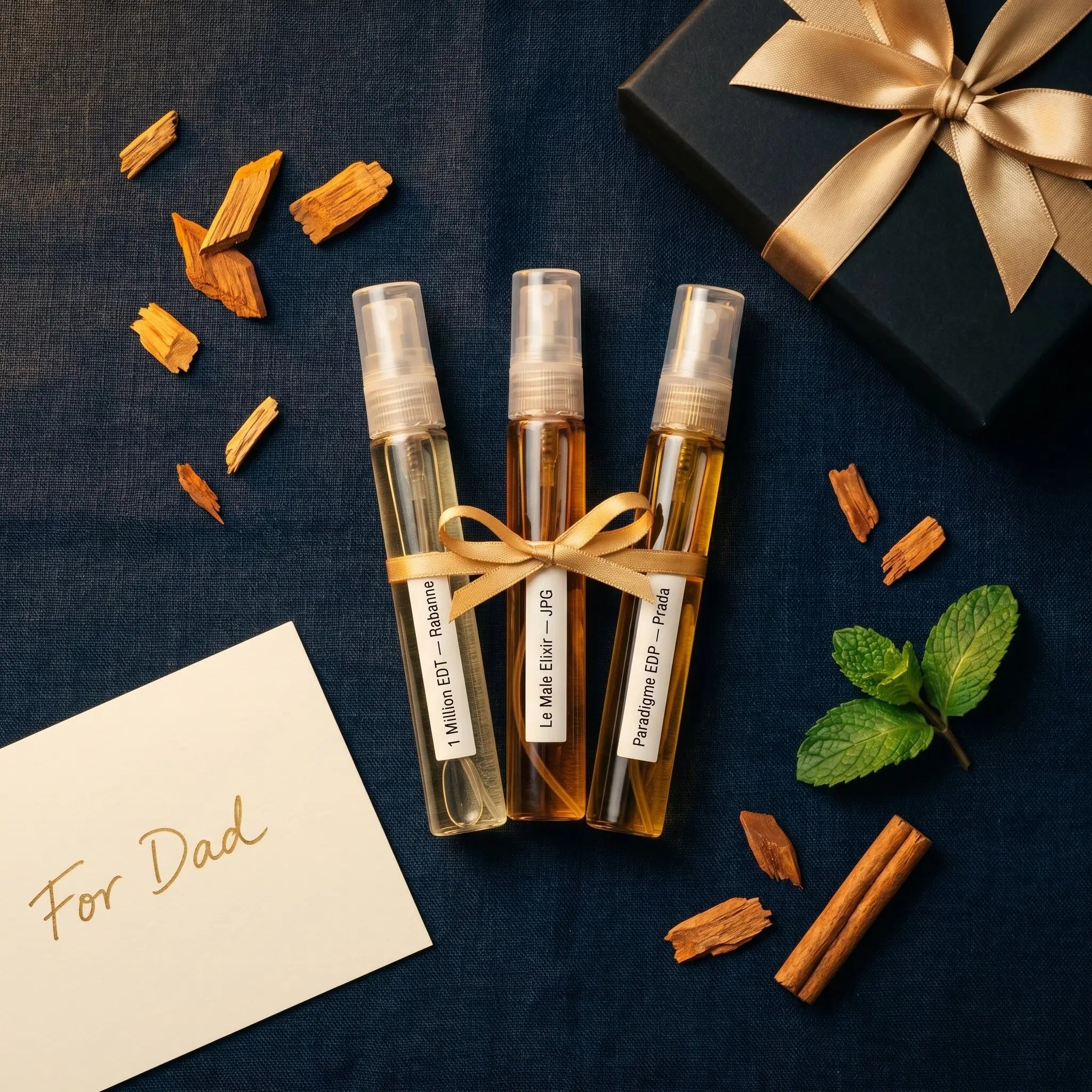
Pro Tip: Decants and discovery sets let you test many combinations without committing to full bottles. Aromatick’s fragrance wardrobe guide walks through how to build a small, versatile testing collection.
What are the most common layering mistakes and how do you fix them?
Most bad layers come from one of four mistakes. Each has a straightforward fix.
- Overspraying: Doubling your spray count when layering is the most common error. Fix: treat the combined application as one fragrance’s worth of sprays, not two.
- Pairing two heavy, complex fragrances: Two dense oud or gourmand scents share too many components and produce a muddy, jarring result. Fix: swap one for a single-note or linear scent like a clean musk or a simple citrus.
- Testing too quickly: Evaluating a blend within the first five minutes means you’re only smelling top notes. Fix: wait the full 15–30 minutes for the heart phase to emerge.
- Skipping skin prep: Dry skin loses top notes fast and makes base notes smell flat. Fix: always apply unscented moisturizer first.
Pro Tip: If a blend goes wrong on skin, apply a small amount of unscented lotion over the area. It dilutes the projection and softens harsh interactions without washing the scent off entirely. Then retest with a smaller modifier dose next time.
Quick “do not do” list:
- Don’t layer two heavy oud or intense gourmand fragrances together
- Don’t double your normal spray count just because you’re using two scents
- Don’t evaluate the blend in the first five minutes
- Don’t skip moisturizer, especially on dry skin
- Don’t use more than two or three scents in a single layer
How should you test combinations safely?
A structured testing protocol saves full bottles and protects your skin.
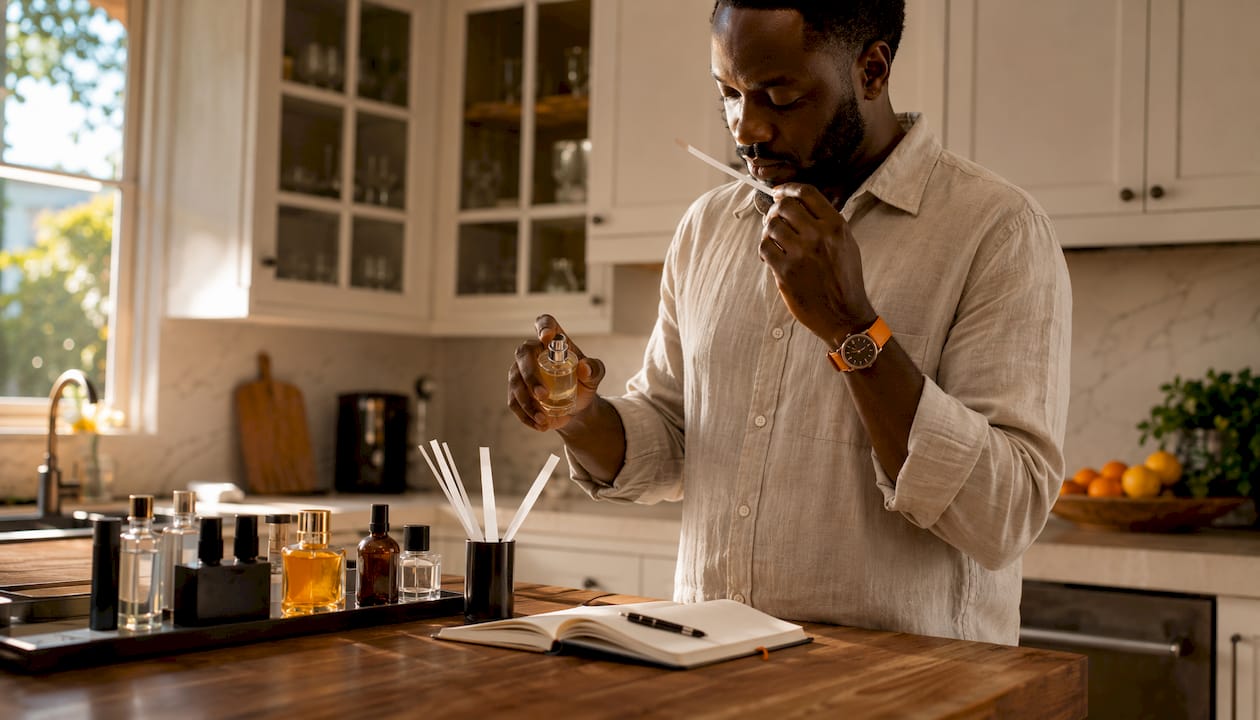
- Paper blotter first. Spray anchor on one strip, modifier on another. Hold together and smell after 30 seconds. This is a fast filter, not a final verdict.
- One-arm skin test. Apply the anchor to one forearm and the modifier to the other. After 10 minutes, bring the arms together and evaluate the combined impression.
- Full blend test. Apply both to the same arm in your intended ratio (2 sprays anchor, 1 spray modifier). Record the ratio and placement in a simple notebook or phone note.
- Wait 15–30 minutes. Top notes fade; the heart phase reveals the true character of the blend.
- Compare to anchor alone. Apply the anchor solo on the other arm as a control. This tells you whether the modifier is genuinely improving the scent.
Skin chemistry affects every result. Oilier skin holds base notes like vanilla and musk longer; drier skin may lose lighter top notes faster. Adjust your modifier spray count accordingly.
Safety note: Always patch-test a new fragrance on a small area of skin and wait 24 hours before a full application. Stop immediately if you notice redness, itching, or irritation. Store fragrances away from heat and direct light to preserve their integrity between test sessions.
Key Takeaways
Successful fragrance layering comes down to one rule applied consistently: one heavy anchor, one lighter modifier, and a total spray count that never exceeds a single fragrance’s worth.
| Point | Details |
|---|---|
| Anchor before modifier | Apply 2–3 sprays of the heavier scent first; add 1–2 sprays of the lighter modifier after 60 seconds. |
| Total spray count | Keep combined sprays equal to what you’d use for one fragrance alone — never double up. |
| Shared notes reduce clashing | Choose two fragrances with a common note (vanilla, musk) to help them lock together. |
| Wait before evaluating | Give any blend 15–30 minutes on skin before deciding if it works. |
| Aromatick for testing | Aromatick’s designer and niche fragrance collection offers authentic options at up to 60% off for building a layering wardrobe. |
Why layering is worth the patience
Most people approach fragrance layering as a formula problem: find the right combination and repeat it. That framing misses the point. Layering is closer to seasoning food than following a recipe. The same two fragrances can produce noticeably different results depending on skin chemistry, ambient temperature, and how much time you give the blend to settle. What smells muddy at five minutes often resolves into something genuinely interesting at thirty.
The anchor-plus-modifier framework works because it mirrors how professional perfumers think about structure. A base note like vanilla or sandalwood isn’t just a pleasant smell; it’s a platform that slows evaporation and gives lighter notes somewhere to rest. When you choose a modifier that shares even one common thread with your anchor, you’re doing the same thing a perfumer does when building a formula around a structural backbone.
The practical implication: resist the urge to judge a layer too quickly, and resist the urge to add more. Under-layering first is almost always the right call. You can always add a spray; you can’t subtract one.
Build your layering wardrobe with Aromatick
Authentic fragrances at up to 60% off retail make Aromatick the practical starting point for anyone building a layering wardrobe without overspending on full bottles before you know what works.

Aromatick carries authentic designer and niche fragrances across a range of families — from clean musks and warm vanillas to citrus-forward and woody anchors — all backed by a 100% authenticity guarantee. Free shipping is available over the qualifying threshold, and every order comes with a satisfaction guarantee so you can experiment with confidence. Browse the niche fragrance collection to find anchors and modifiers worth testing, or explore the full designer range to start building combinations today.
Further reading and sources
- Harper’s Bazaar: Why you should never spray just one perfume
- Elite Traveler: How to Layer Perfume, According to Fragrance Founders
- Decant Sample: Fragrance Layering for Beginners
- The Independent: An expert guide to scent layering
- PerfumeOnSkin: Perfume Layering for Beginners
- Aromatick Fragrance Layering Blog — step-by-step guides and discovery-set recommendations

Leave a comment
This site is protected by hCaptcha and the hCaptcha Privacy Policy and Terms of Service apply.