
Guide to Layering Fragrances: Build Your Signature Scent
TL;DR:
- Fragrance layering involves combining two complementary scents on the skin to create a personalized aroma with increased longevity and depth. Proper skin hydration, application order, and selecting scents with shared base notes are essential for a successful blend. Limiting to two fragrances and waiting 20-30 minutes allow the scent to fully develop and reveal its harmonious character.
Fragrance layering is the practice of combining two complementary scents on your skin to create a unique, personalized aroma that no single bottle can replicate. Known in perfumery as “scent blending,” this technique extends longevity, adds aromatic depth, and gives you a signature profile that evolves throughout the day. Layering enhances texture and depth beyond what single perfumes achieve alone. Rooted in Middle Eastern perfume traditions, the practice has moved firmly into mainstream grooming. This guide to layering fragrances covers everything from skin prep to pairing logic to troubleshooting a muddy blend.
What is the guide to layering fragrances, and why does it work?
Fragrance layering works because skin acts as a living canvas. Heat, moisture, and skin chemistry interact with each formula differently, so two scents worn together produce a result neither could achieve alone. One fragrance can add sweetness or creaminess while the other provides structure, creating a complex overall character. That interplay is the core appeal of scent blending techniques.
The practice also solves a practical problem: single fragrances fade. Layering scents for longevity works because a dense base fragrance anchors the volatile top notes of a lighter scent, slowing their evaporation. The result is a blend that lasts noticeably longer than either fragrance worn solo. For anyone who has reapplied their favorite cologne or perfume by midday, layering is the fix.
Fragrance layering is also deeply personal. Modern layering should be treated as a flexible accessory rather than a rigid formula, adapting to mood, season, and occasion. That flexibility is what makes it worth learning properly.
How do you prepare your skin for fragrance layering?
Skin preparation is the most overlooked step in any layering perfumes guide, yet it determines how well your blend performs. Dry skin absorbs fragrance quickly and projects poorly. Hydrated skin holds scent molecules longer and diffuses them more evenly.
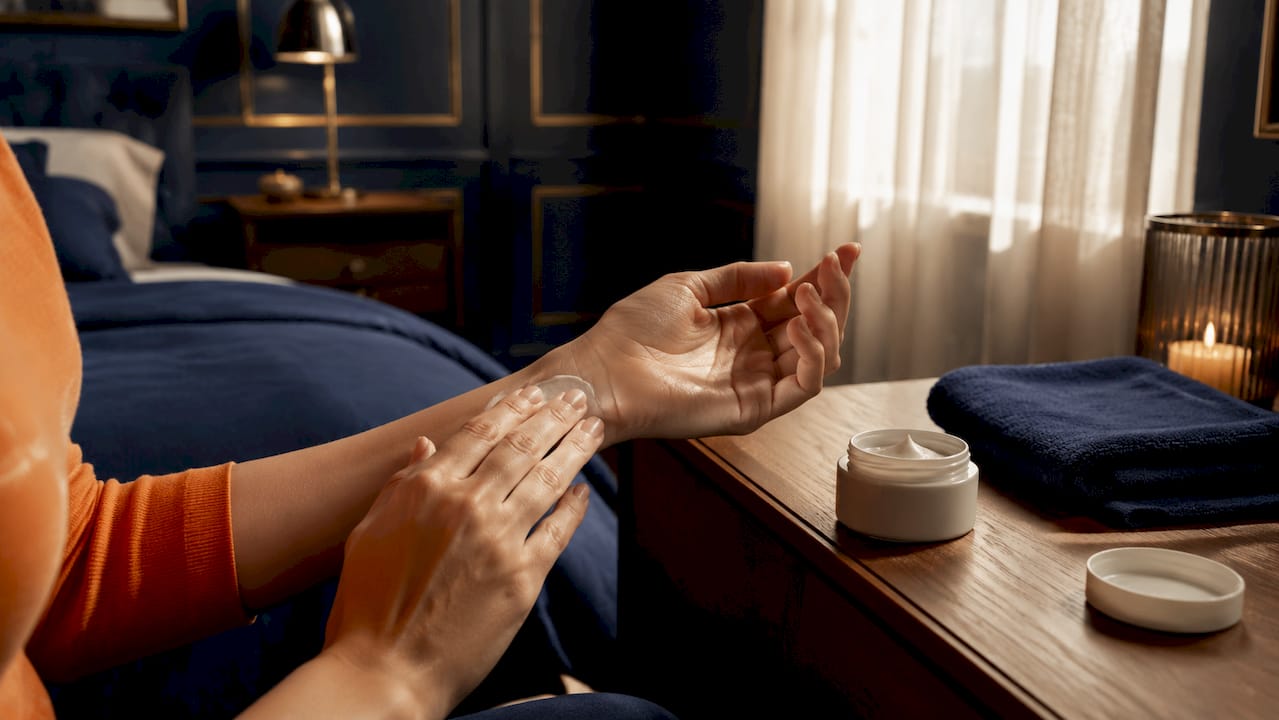
Applying an unscented moisturizer before layering significantly improves projection and longevity. Let the moisturizer absorb for 1–2 minutes before applying any fragrance. Fragrance-free body oils like jojoba or sweet almond oil work equally well. Avoid scented lotions, which introduce a third aromatic variable and muddy the blend before you even start.
Key application points
Apply your layered fragrances to pulse points where body heat activates the scent continuously:
- Wrists (do not rub together; pressing transfers scent without breaking molecules)
- Inner elbows
- Base of the neck and sides of the neck
- Behind the knees for a low, diffused trail
Pro Tip: Spacing your two fragrances across different pulse points rather than stacking them on the same spot lets each scent develop slightly independently before they merge in the air around you. This produces a more nuanced blend.
Choosing your two fragrances
Select fragrances from complementary families. The table below shows common pairings that work well together.
| Fragrance Family | Pairs Well With | Example Effect |
|---|---|---|
| Woody (cedar, sandalwood) | Citrus or fresh aquatic | Grounded yet bright |
| Oriental/amber | Vanilla or spicy | Warm, rich, long-lasting |
| Floral (rose, jasmine) | Musky or woody | Soft, feminine depth |
| Citrus (bergamot, lemon) | Aromatic herbs | Clean, energetic, fresh |
| Gourmand (vanilla, caramel) | Woody or smoky | Sweet with dark contrast |
Limiting layering to two fragrances is optimal for beginners. More than three fragrances at once typically produce incoherent, overwhelming results. Two gives you control, clarity, and room to learn what each scent contributes.
How to layer scents step by step
The order of application is not optional. It determines which fragrance forms the structural backbone of your blend and which one adds the finishing character on top.
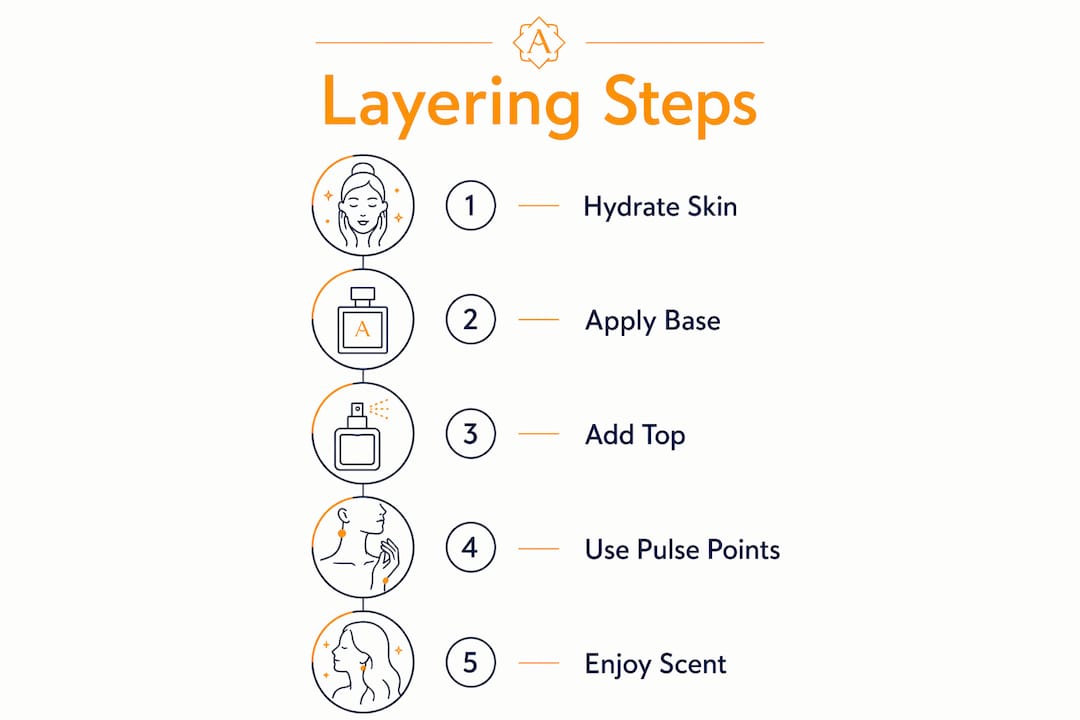
- Hydrate your skin. Apply an unscented moisturizer or body oil and wait 1–2 minutes for full absorption.
- Apply the base fragrance first. Choose the richer, denser scent: woody, amber, oriental, or gourmand. Apply the denser fragrance first to preserve top notes and add body. Two sprays at your primary pulse points is the right amount.
- Wait 10–15 seconds. Let the base fragrance settle on your skin before adding the second layer. This brief pause prevents the two formulas from mixing wet on the skin, which can produce a sharp, chemical opening.
- Apply the lighter fragrance on top. Fresh citrus, clean aquatic, or light floral scents work best as the top layer. Apply two sprays, ideally at slightly different pulse points than the base.
- Wait 20–30 minutes before judging. Fragrance evolves over 30–60 minutes on skin. What smells sharp or mismatched in the first five minutes often becomes a cohesive, beautiful blend once the top notes burn off and the middle notes emerge.
- Adjust if needed. If one scent dominates, reduce its spray count on the next application. Do not add more of the weaker fragrance to compensate.
Pro Tip: Apply your base fragrance to your wrists and inner elbows, then apply the lighter scent to your neck and behind your ears. The physical separation lets each fragrance develop its own character before they blend in the sillage around you.
Understanding scent evolution phases helps you predict how your blend will behave. Top notes (citrus, herbs) dominate the first 15–30 minutes. Middle notes (florals, spices) emerge next and last 1–3 hours. Base notes (woods, musks, resins) anchor the blend for 4–6 hours or longer. When you layer, you are essentially writing a new scent story across all three phases.
What are the best fragrance combinations for layering?
The best fragrance combinations share at least one common base note. Layering fragrances with shared base notes creates architectural cohesion and prevents clashes. A vanilla-based fragrance layered with another vanilla-forward scent produces harmony rather than conflict. The shared foundation gives the blend a unified character even when the top notes differ significantly.
Contrasting top notes are where the creative interest lives. Pairing contrasting top notes like citrus and spicy or floral and woody enhances aromatic complexity. The contrast creates movement and interest in the opening without destabilizing the blend’s core.
Popular layering combinations to try
The pairings below represent proven starting points for both men’s fragrance layering and layering fragrance for women:
- Sandalwood base + citrus bergamot top: Warm, grounded, and fresh. Works year-round.
- Amber oriental + vanilla gourmand: Rich, sweet, and long-lasting. Ideal for evenings.
- Rose floral + white musk: Soft, skin-close, and elegant. A classic feminine combination.
- Vetiver woody + green aromatic: Earthy and clean. A strong choice for men’s fragrance layering.
- Oud resinous + light aquatic: Unexpected contrast that produces a sophisticated, modern character.
The “sweet spot” in scent blending is two fragrances with a shared base and contrasting top notes. This formula gives you cohesion at the foundation and complexity at the surface. Going beyond two fragrances collapses that structure. Three heavy orientals worn together do not produce triple the richness; they produce a muddled, indistinct cloud that reads as one overwhelming note.
You can explore how to choose fragrances that pair well together before committing to a combination, which saves both time and fragrance.
What are the most common fragrance layering mistakes?
The most common mistake in fragrance layering is applying too many scents at once. More than two fragrances rarely produce a coherent result. The olfactory system struggles to separate three or more competing aromatic profiles, and the blend reads as “perfumey” rather than complex.
The second most common mistake is judging the blend too quickly. Avoid judging a layered combination within the first few minutes. The opening phase is dominated by alcohol and volatile top notes that do not represent the final blend. Give the combination 20–30 minutes before deciding whether it works.
Here are the most frequent layering errors and how to fix them:
- Muddy or incoherent blend: You have used too many fragrances or chosen scents with clashing base notes. Strip back to two fragrances and check that they share at least one base note family.
- One fragrance dominates: Reduce sprays or adjust application points rather than adding more of the weaker scent. Applying the lighter fragrance to more pulse points also helps balance the projection.
- Blend fades too quickly: Your skin is dry. Apply an unscented moisturizer before layering. Hydrated skin improves projection and staying power significantly.
- Harsh or chemical opening: You applied both fragrances simultaneously on the same spot. Wait 10–15 seconds between applications and use different pulse points.
- Blend smells great at first but disappears: Your top layer is too light for the conditions. Try a slightly denser second fragrance or apply the top layer to warmer pulse points like the neck.
Pro Tip: Keep a simple fragrance journal. Note the two scents you used, the application order, the pulse points, and your impression at 15 minutes and 60 minutes. Patterns emerge quickly, and you will identify your best combinations within a few weeks.
Fragrance layering is a mood-dependent practice. The combination that works perfectly on a cool autumn morning may feel heavy in summer heat. Treat each pairing as an experiment, not a permanent formula.
Key takeaways
Effective fragrance layering requires two compatible scents, hydrated skin, and the patience to let the blend develop fully before judging it.
| Point | Details |
|---|---|
| Hydrate before layering | Apply unscented moisturizer 1–2 minutes before fragrance for better longevity and projection. |
| Apply dense scents first | Start with woody, amber, or oriental bases, then layer lighter citrus or floral scents on top. |
| Shared base notes prevent clashes | Choose two fragrances with at least one common base note for a cohesive, harmonious blend. |
| Two fragrances is the limit | More than two scents at once typically produces muddy, incoherent results for beginners. |
| Wait before judging | Allow 20–30 minutes for the blend to develop fully before deciding if the combination works. |
Layering is an art form, not a formula
By Rodney
The biggest misconception I see is that fragrance layering is about adding more scent. It is not. It is about giving each fragrance a specific role. One scent is the foundation. The other is the accent. When both fragrances are fighting for the same role, the blend collapses.
What I find most rewarding about layering is the intentionality it demands. You stop wearing fragrance passively and start thinking about what you want to communicate. A woody base with a citrus top says something different from a musk base with a floral top. That difference matters, and learning to hear it is genuinely satisfying.
My honest advice: resist the urge to experiment with your most expensive bottles first. Start with two affordable fragrances from the same family, learn how they interact, and build your instincts from there. The perfume layering process rewards patience far more than it rewards ambition.
The other thing I would push back on is the idea that layering is complicated. Two fragrances, one dense and one light, applied in the right order on hydrated skin. That is the whole system. Everything else is refinement.
— Rodney
Build your layering collection with Aromatick
Fragrance layering works best when you have access to a range of scent families to experiment with. Aromatick carries authentic designer and niche fragrances at up to 60% off retail prices, giving you the variety you need without the department store markup.

Whether you are building a woody and citrus pairing for daily wear or exploring rich oriental combinations for evenings, Aromatick’s designer fragrance collection covers every major fragrance family. The catalog includes both men’s and women’s options, from fresh aquatics to deep gourmands, all verified authentic. Free shipping and a satisfaction guarantee mean you can experiment with confidence. Browse the niche fragrance collection for more distinctive layering options that go beyond mainstream releases.
FAQ
What is fragrance layering?
Fragrance layering is the practice of applying two complementary scents on your skin to create a unique, personalized aroma. The technique extends longevity and adds aromatic complexity beyond what a single fragrance achieves.
Which fragrance should you apply first when layering?
Always apply the richer, denser fragrance first as the base, then add the lighter scent on top. Woody, amber, and oriental fragrances work best as base layers, while citrus and fresh florals suit the top layer.
How many fragrances can you layer at once?
Two fragrances is the recommended limit, especially for beginners. More than two scents typically produce incoherent, overwhelming blends that are difficult to adjust or reproduce.
How long does it take for a layered fragrance to develop?
A layered blend takes 20–30 minutes to fully develop on skin. First impressions during the opening phase are often misleading, so wait before deciding whether a combination works.
Does skin type affect fragrance layering?
Dry skin absorbs fragrance faster and projects less, which shortens the life of any blend. Applying an unscented moisturizer before layering compensates for this and significantly improves both projection and staying power.

Leave a comment
This site is protected by hCaptcha and the hCaptcha Privacy Policy and Terms of Service apply.