
Masculine Scent Profile: What It Is and How to Choose
TL;DR:
- A masculine scent profile features woody, spicy, earthy, and fresh aromatic notes that evoke confidence and refinement. These scents primarily derive from ingredients like cedarwood, vetiver, leather, black pepper, and lavender, with scent identity shaped by cultural messaging and marketing. The true character emerges from the heart notes, which define the scent’s core personality and last longer on the skin.
A masculine scent profile is defined as a fragrance composition built around woody, spicy, earthy, and fresh aromatic notes that project confidence, depth, and refinement. In perfumery, the term “scent profile” refers to the full character of a fragrance, from its opening burst to its lasting dry-down. Understanding what is masculine scent profile means recognizing that these qualities are shaped by specific ingredients, cultural associations, and the structure of the fragrance itself. Cedarwood, vetiver, leather, black pepper, and lavender are the most common building blocks. Ten dominant keywords define masculine scent marketing: man, masculine, power, powerful, bold, woody, freshness, fresh, modern, and elegance. That list reveals how closely scent identity and cultural messaging are intertwined.
What is a masculine scent profile made of?
Masculine fragrances draw from four primary scent families, and most successful compositions blend at least two of them.
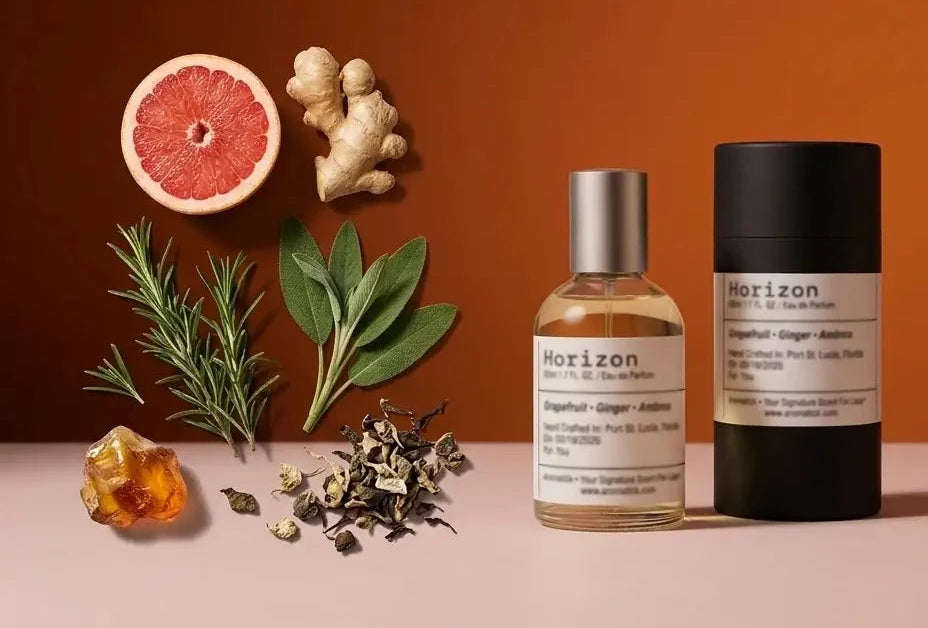
Woody notes form the structural backbone of most masculine fragrances. Cedarwood delivers a dry, pencil-shaving quality. Sandalwood adds creamy warmth. Oud, derived from agarwood resin, brings a smoky, resinous depth that anchors the entire composition. Woody aromatic profiles represent modern masculinity by blending earthiness and fresh energy for versatile lifestyle scents.
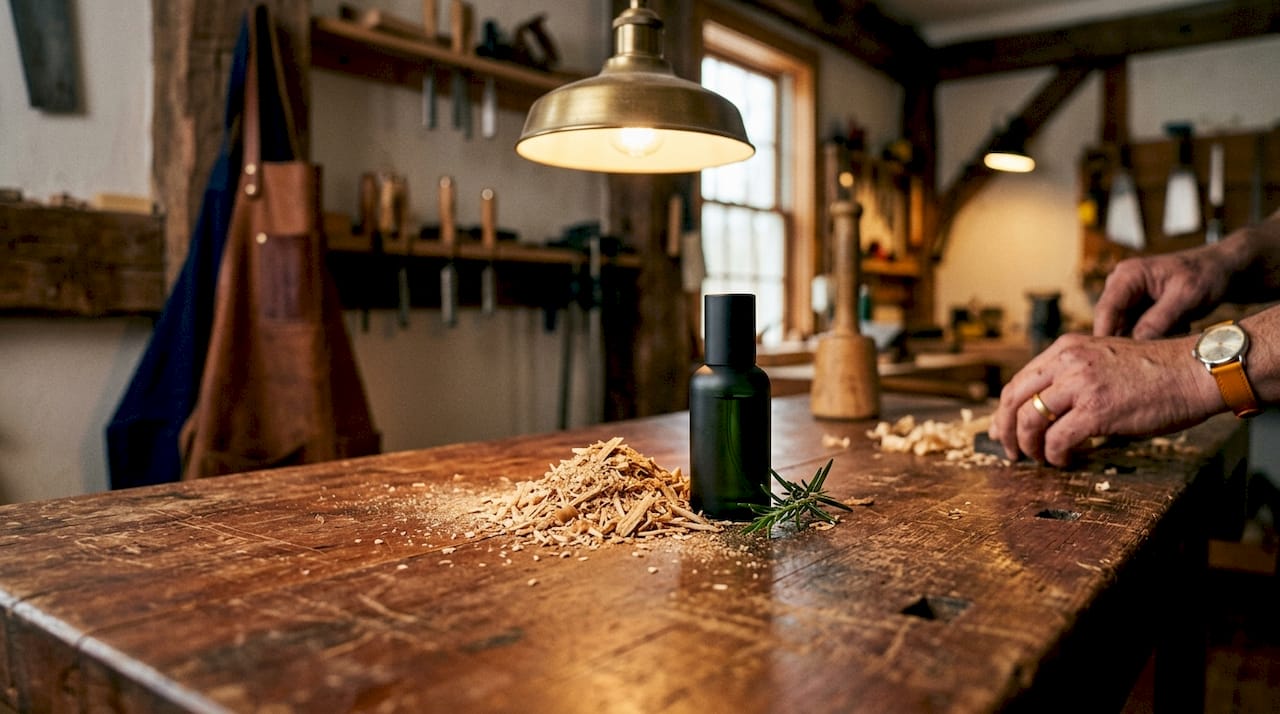
Spicy notes add heat and complexity. Black pepper opens with a sharp, bright bite. Cardamom contributes a slightly sweet, herbal warmth. Cinnamon, used sparingly, gives a rich, enveloping quality without tipping into sweetness. These notes read as bold and assertive, which is why they appear so frequently in masculine fragrance compositions.
Earthy notes ground a fragrance and give it staying power. Vetiver smells like damp soil and smoked wood. Patchouli is deep, slightly sweet, and mossy. Tobacco and leather add a raw, animalic quality that many people associate with strength and maturity. Common masculine fragrance notes include cedarwood, sandalwood, vetiver, patchouli, black pepper, lavender, and rosemary.
Fresh aromatic herbs provide lift and contrast. Lavender is the most widely used aromatic herb in men’s fragrance. Rosemary and sage add a green, slightly medicinal quality that balances heavier base notes. Without these fresh elements, a masculine fragrance can feel heavy and one-dimensional.
- Woody: cedarwood, sandalwood, oud
- Spicy: black pepper, cardamom, cinnamon
- Earthy: vetiver, patchouli, tobacco, leather
- Fresh aromatic: lavender, rosemary, sage
Pro Tip: When testing a masculine fragrance, smell it after 20 minutes on skin. The opening notes fade fast, and the true character of the scent only reveals itself once the alcohol evaporates.
How does the olfactory pyramid shape a masculine fragrance?
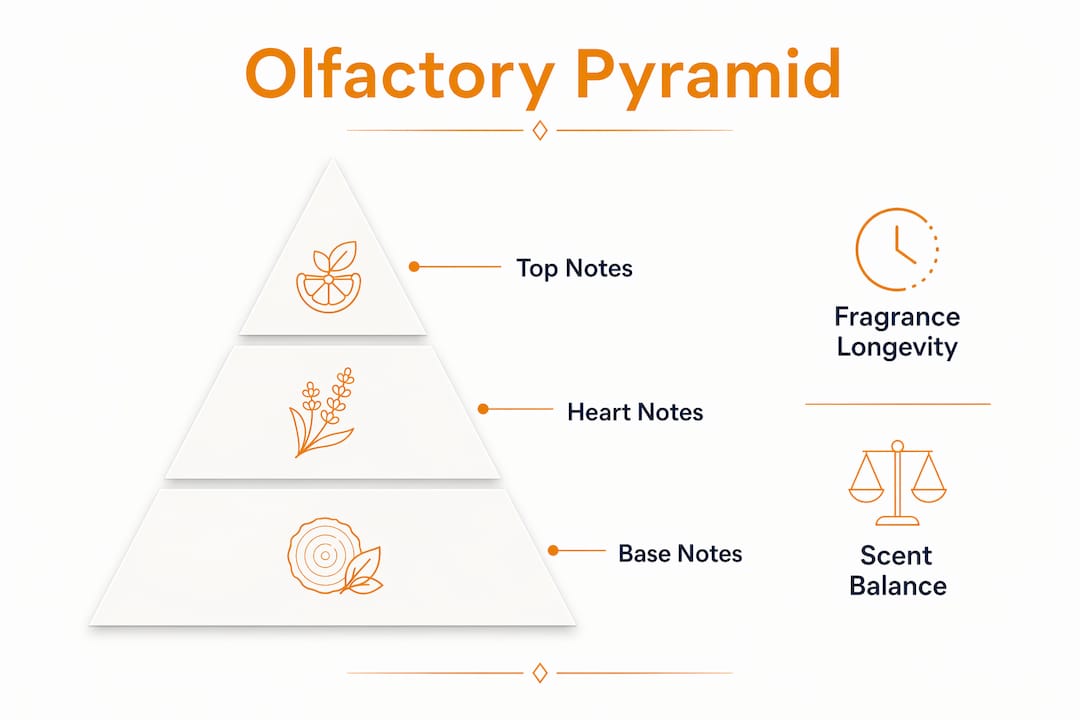
The olfactory pyramid is the standard framework perfumers use to organize a fragrance’s notes by evaporation rate and duration. Every fragrance you wear follows this structure, whether you realize it or not.
-
Top notes are the first impression. They last 15–30 minutes and typically include citrus, light herbs, or aquatic elements. In masculine fragrances, bergamot, grapefruit, and juniper are common top notes. They smell bright and clean but fade quickly.
-
Heart notes define the fragrance’s personality. They emerge after the top notes fade and last 2–4 hours. Heart notes carry the primary identity of the fragrance, representing roughly 50% of the total composition. In masculine scents, the heart often features lavender, geranium, or spicy notes like cardamom.
-
Base notes provide longevity and depth. They last the longest, sometimes 6–8 hours or more on skin. Cedarwood, vetiver, musk, and amber are typical masculine base notes. They do not define the scent’s character on their own. They support and extend the heart.
The most common mistake people make is judging a fragrance entirely by its base notes. The olfactory pyramid allocates 30% to top notes, 50% to heart notes, and 20% to base notes. The heart is where the real identity lives.
Pro Tip: Never buy a fragrance based on how it smells in the bottle or on a paper strip. Spray it on your wrist, wait 20 minutes, and evaluate the heart notes. That is the scent you will actually wear.
What cultural and psychological factors shape masculine scent perception?
The idea that certain scents are “masculine” is not purely biological. Culture, marketing, and psychology all play a significant role in shaping what people perceive as a manly scent.
Marketing has done heavy lifting in gendering fragrance. Masculine scents are marketed through dark bottles, angular designs, and names evoking power, shaping gendered scent perceptions across generations. When you see a black bottle with a name like “Intense” or “Force,” the packaging is doing as much work as the fragrance inside.
There is also a biological dimension that most people overlook. A study involving 74 male scent donors and 797 raters found that male dominance perception is positively linked to testosterone-associated body odor cues. This means people subconsciously read certain scent qualities as signals of social status and strength. That finding explains why woody, earthy fragrances feel authoritative even before cultural conditioning enters the picture.
“Scent perception connects biology and culture in ways that are difficult to separate. The same fragrance can signal dominance in one context and elegance in another, depending on who is wearing it and who is smelling it. The perception of scent-related dominance intertwines biology and social interpretation.”
The concept of what defines masculine scent is also shifting. Unisex fragrances now occupy a significant and growing segment of the market. Scents built around iris, white musk, and clean woods appeal equally to all genders. Modern masculine fragrances celebrate diversity and personal expression beyond traditional stereotypes. That shift reflects a broader cultural move away from rigid gender categories in personal style.
How to select and wear masculine fragrances effectively
Choosing a masculine fragrance is not about picking the most expensive bottle. It is about matching the scent’s character to your lifestyle, the season, and the occasion.
Match scent families to occasions:
- Fresh aromatic fragrances (lavender, rosemary, citrus) work best for daytime, office, and casual settings.
- Woody spicy fragrances (cedarwood, black pepper, cardamom) suit evening wear and cooler months.
- Earthy, leather-forward fragrances (vetiver, tobacco, oud) are best for formal events or cold weather.
- Light woody aquatics work year-round and are the safest choice for unfamiliar social settings.
Balance is the key to a well-composed masculine scent. Effective masculine blends avoid excessive sweetness and excess earthy notes that muddle sophistication. The best compositions balance woods, herbs, resins, spices, and citrus in proportions that feel natural, not forced.
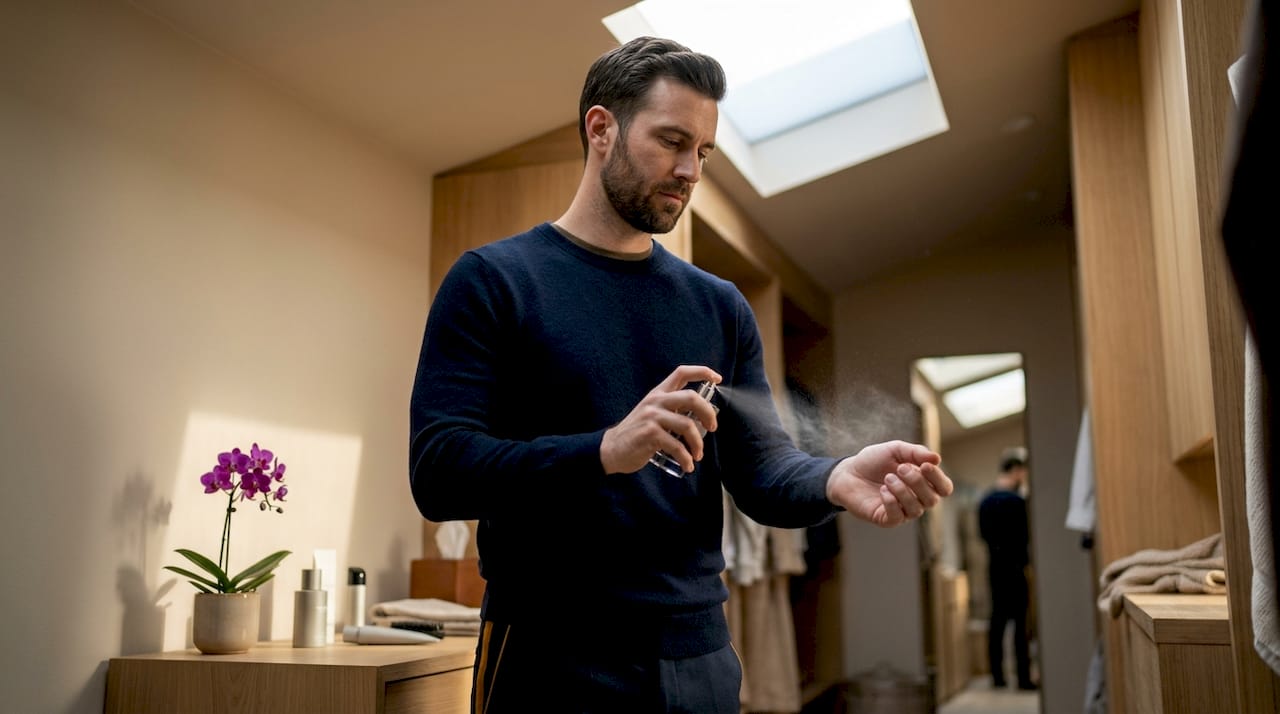
Layering is a technique worth learning. Applying an unscented moisturizer before spraying your fragrance extends its longevity. Spraying on pulse points, such as the wrists, neck, and inner elbows, helps the scent radiate with your body heat. Do not rub your wrists together after spraying. That friction breaks down the molecular structure of the top notes and distorts the opening.
Pro Tip: Start with one or two sprays. A masculine fragrance with heavy base notes projects further than you expect. You can always add more, but you cannot take it back.
If you want a practical starting point for understanding men’s cologne types, exploring fragrance families by category is the most efficient way to narrow your preferences before committing to a full bottle.
How do masculine, feminine, and unisex scent profiles compare?
Understanding what is feminine scent profile helps clarify what makes a masculine one distinct. The differences are real but not absolute.
| Category | Dominant notes | Typical character |
|---|---|---|
| Masculine | Woody, spicy, earthy, aromatic herbs | Deep, bold, grounding, assertive |
| Feminine | Floral, fruity, powdery, sweet musks | Light, soft, delicate, warm |
| Unisex | Clean woods, iris, white musk, citrus | Balanced, neutral, versatile |
Feminine fragrances lean heavily on floral notes like rose, jasmine, and peony, paired with sweet musks and fruity accords. They tend to feel lighter and softer in projection. Masculine fragrances prioritize depth and longevity through woody and earthy base notes.
Unisex fragrances deliberately blur these lines. They avoid the extremes of both categories and build around notes that read as clean and neutral. If you are curious about how gendered scent categories are evolving, unisex fragrances are the clearest example of where the industry is heading.
The honest truth is that fragrance has no gender. Wearing a floral note does not make a masculine fragrance feminine. Many of the most celebrated men’s fragrances contain rose or iris at their heart. The label on the bottle is a marketing convention, not a rule.
Key Takeaways
A masculine scent profile is defined by woody, spicy, earthy, and fresh aromatic notes working together, with heart notes carrying the fragrance’s true identity.
| Point | Details |
|---|---|
| Core note families | Woody, spicy, earthy, and fresh aromatic notes define masculine fragrance character. |
| Heart notes matter most | Heart notes represent 50% of a fragrance and carry its primary identity. |
| Culture shapes perception | Marketing, biology, and tradition all influence what people read as a masculine scent. |
| Match scent to occasion | Fresh aromatics suit daytime; woody spicy blends suit evening and cooler months. |
| Gender labels are flexible | Unisex fragrances prove that scent character matters more than the label on the bottle. |
Scent is personal branding, not a category
The most underrated insight about masculine fragrances is that they function as invisible personal branding. People remember scent more reliably than they remember faces or names. A well-chosen fragrance creates a consistent sensory impression that follows you into every room.
What I find genuinely interesting is how many people default to the “safe” woody aromatic category without ever testing anything outside it. Woody aromatics are excellent. They are versatile and well-constructed. But the men who wear something unexpected, a leather and iris combination, or a smoky oud with a clean citrus opening, tend to leave a far stronger impression.
The fragrance industry is also moving in a direction that rewards curiosity. The rise of niche perfumery has made it easier than ever to find compositions that sit outside the traditional masculine template. Exploring a luxury men’s fragrance with an unconventional structure is one of the fastest ways to develop a genuine scent identity rather than just wearing what everyone else wears.
My honest recommendation: stop thinking about masculine scent profiles as a category to fit into. Think of them as a vocabulary. Learn the notes, understand the structure, and then build a signature that reflects who you actually are.
— Rodney
Find your signature masculine fragrance at Aromatick
Knowing the theory behind masculine scent profiles is only the first step. The real work is finding the specific fragrance that fits your skin chemistry, your lifestyle, and your personal style.

Aromatick carries an extensive collection of authentic designer and niche fragrances for men, all verified genuine and priced up to 60% below standard retail. From classic woody aromatics to bold oud compositions, the designer fragrance collection covers every masculine scent family covered in this article. Free shipping, secure payments, and a satisfaction guarantee mean you can shop with confidence. If you want to start with a recognized name in masculine fragrance, the Hugo Boss collection offers some of the most consistent and well-regarded woody aromatic profiles available at any price point.
FAQ
What is a masculine scent profile?
A masculine scent profile is a fragrance composition built around woody, spicy, earthy, and fresh aromatic notes that project depth and confidence. Common ingredients include cedarwood, vetiver, black pepper, lavender, and leather.
What notes are most common in masculine fragrances?
The most common masculine fragrance notes are cedarwood, sandalwood, vetiver, patchouli, black pepper, cardamom, lavender, and rosemary. These notes appear across woody, spicy, earthy, and fresh aromatic scent families.
How does the olfactory pyramid affect masculine scents?
The olfactory pyramid structures a fragrance into top, heart, and base notes. Heart notes, which represent 50% of the composition, carry the fragrance’s primary identity and last 2–4 hours on skin.
Can masculine fragrances be worn by anyone?
Fragrance has no biological gender requirement. Many masculine fragrances, particularly woody and aromatic compositions, are worn and enjoyed across all genders. The label reflects marketing convention, not a rule.
How do I choose the right masculine fragrance for my lifestyle?
Match the scent family to the occasion. Fresh aromatic fragrances suit daytime and office settings, while woody spicy blends work best for evenings and cooler months. Test on skin and evaluate after 20 minutes before deciding.

Leave a comment
This site is protected by hCaptcha and the hCaptcha Privacy Policy and Terms of Service apply.