
Why unisex fragrances matter: break free from gendered scents
TL;DR:
- Unisex fragrances are returning to their roots, emphasizing personal expression over gender labels.
- The rising popularity among younger consumers reflects a shift towards scent as mood and identity.
- Choosing a fragrance should focus on emotion and chemistry, not traditional gendered categories.
Scents have never truly belonged to one gender. Yet for decades, fragrance marketing convinced us otherwise, sorting perfumes into pink-for-her and blue-for-him categories that felt as rigid as dress codes. Today, that wall is crumbling fast. The global unisex fragrance market is projected to reach $33.42 billion by 2031, driven by a generation that chooses scent based on emotion, not expectation. This article unpacks the history behind gendered fragrances, explains why unisex options are gaining serious cultural momentum, and gives you real, practical guidance for finding and wearing scents that feel authentically yours.
Table of Contents
- How unisex fragrances reclaimed perfumery’s roots
- The cultural impact: Why fragrance choices shape identity
- Unisex fragrances vs. gendered scents: What’s the real difference?
- How to choose and wear unisex fragrances for your signature style
- Why the lines between fragrance and identity are even blurrier than you think
- Explore authentic unisex and niche fragrances with Aromatick
- Frequently asked questions
Key Takeaways
| Point | Details |
|---|---|
| Unisex scents break barriers | They allow anyone to express identity freely beyond traditional gender labels. |
| Market surge shows demand | Unisex fragrances are rapidly growing and reshaping the fragrance industry. |
| Personal chemistry matters | Every scent adapts uniquely on your skin, making it truly yours. |
| Sampling is smart | Trying decants and samples can help you find your perfect unisex signature. |
How unisex fragrances reclaimed perfumery’s roots
Before the fragrance industry divided its shelves by gender, scent was simply scent. Ancient Egyptians, Greeks, and Romans used aromatic oils and resins without any concept of “masculine” or “feminine” formulas. The great perfume houses of 19th-century France created compositions meant to please anyone who wore them. Chanel No. 5, launched in 1921, was boldly abstract and worn across genders.
So what changed? The short answer is marketing. As consumer culture exploded in the 1960s and 1970s, brands discovered that fragrances were gender-neutral until deliberate segmentation strategies created a more profitable, double-sided market. Suddenly, woods and leather were “masculine,” florals and powders were “feminine,” and the industry reinforced those rules through advertising imagery and store layouts. The divide was invented, not inherent.
Understanding the difference between perfume and cologne formats helps clarify this further. Concentration levels and alcohol ratios have no gender, yet cologne bottles were routinely aimed at men and parfum at women, a purely commercial convention.
The contemporary unisex movement is not a trend invented by niche brands. It is, more accurately, a cultural correction. Consider the key moments that mark this shift:
- 1994: Calvin Klein’s CK One launches as the first mass-market unisex fragrance, selling over 100 million bottles worldwide and proving mainstream appetite exists.
- 2000s: Niche houses like Le Labo, Maison Margiela Replica, and Byredo build entire catalogs around genderless scents anchored in memory and mood.
- 2015–present: Mainstream designers including Prada, Gucci, and Yves Saint Laurent introduce explicitly unisex lines, signaling a permanent shift in the industry.
- 2026: Genderless launches now represent a significant share of new fragrance releases each year.
“Modern perfumery is returning to its roots. Scent was always meant to be personal, not prescribed.”
This return to authenticity matters because it expands your options. When you shop without the filter of “men’s” or “women’s,” you access the full palette of perfumery, from warm ambers and mossy woods to airy aquatics and luminous musks, all without artificial restriction.
The cultural impact: Why fragrance choices shape identity
Scent is one of the most personal choices you can make. It travels with you, triggers memories, and communicates something about who you are before you say a word. When fragrance is pre-labeled by gender, that self-expression gets constrained before it even begins.

The rise of unisex fragrances aligns with a broader shift in how younger consumers understand identity. Gen Z and Millennials are the primary force behind this growth, actively rejecting the notion that a product should tell them who they are based on gender. For them, scent is a mood, a memory, or a statement, not a demographic assignment.
Choosing a unisex fragrance is a small but meaningful act of self-definition. Here is a practical way to think about it:
- Start with sensation, not category. Ask yourself what you want to feel: grounded, energized, romantic, clean, mysterious. That emotional goal is your real compass.
- Ignore the aisle label. Walk past the “for him” and “for her” signs. Test what genuinely appeals to your nose.
- Connect scent to context. Think about where you will wear it. Your seasonal fragrance choices can guide you toward lighter, fresher notes in summer and deeper, warmer compositions in winter.
- Explore different formats. Learning the types of designer scents helps you match concentration to occasion, a light Eau de Toilette for daily wear, a richer Eau de Parfum for evenings.
- Notice how others respond. Fragrance is social. Pay attention to how a scent interacts with your presence and environment.
Pro Tip: Think of your signature scent as a wardrobe staple, not a prescription. The best fragrance for you is the one that makes you feel most like yourself, regardless of what the packaging says.
When you free yourself from gendered labels, fragrance becomes a genuine tool for self-expression. That is exactly why the unisex movement resonates so deeply with anyone who values personal authenticity over conformity.
Unisex fragrances vs. gendered scents: What’s the real difference?
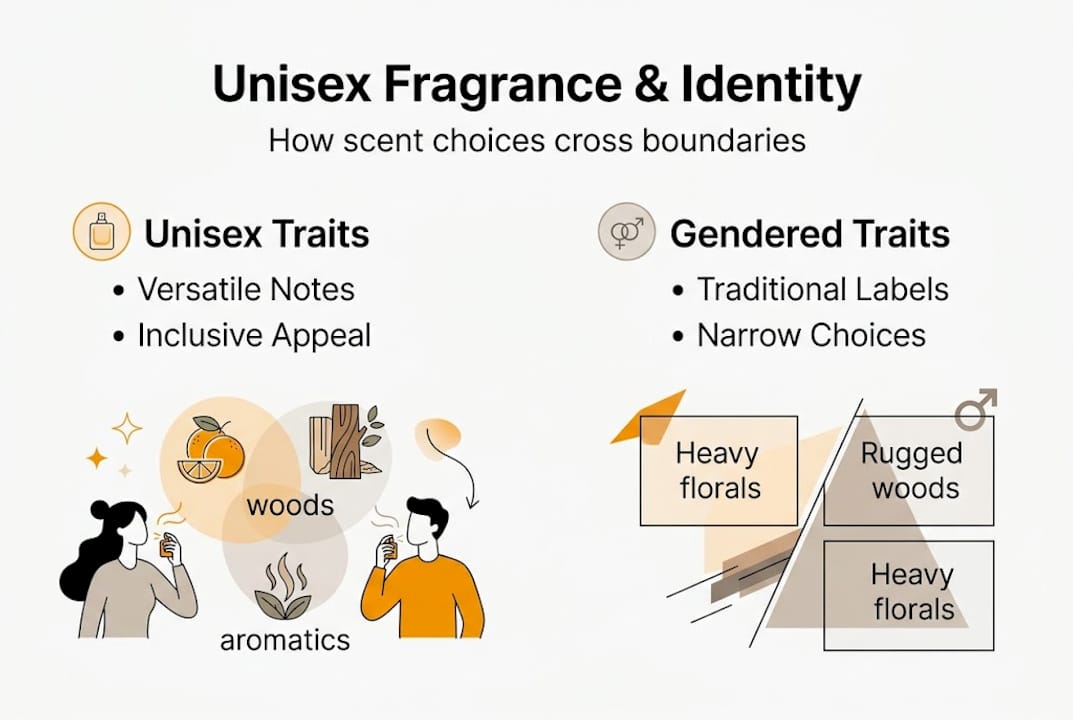
At the formula level, the difference between unisex and gendered fragrances is often smaller than you might expect. Both use the same core building blocks: top notes (the first impression), heart notes (the character of the scent), and base notes (the lasting foundation). What changes is the balance and the branding intention.
Unisex fragrances typically favor balanced compositions. They avoid extreme ends of the spectrum, steering clear of very heavy florals or aggressively sharp woods, and instead find a middle ground that reads as approachable and wearable across a wide range of people. The unisex fragrance market is growing at a CAGR of 6.81%, which signals a significant and lasting shift in how consumers approach scent selection.
Here is a side-by-side comparison to make the differences concrete:
| Feature | Unisex fragrances | Gendered fragrances |
|---|---|---|
| Formula balance | Balanced, moderate notes | Often leans heavily floral or woody/spicy |
| Branding intent | Identity and mood-driven | Gender-coded imagery and language |
| Versatility | High, suits many occasions | Often tailored to specific social roles |
| Price range | Varies widely, niche often premium | Both budget and luxury options |
| Retail placement | Increasingly standalone or mixed | Traditionally separated by aisle |
| Common misconception | “Must smell neutral or boring” | “Always fits the labeled gender perfectly” |
One of the most persistent myths is that unisex means bland. In reality, some of the most complex and celebrated fragrances in the perfume world are officially unisex, including Diptyque’s Philosykos, Escentric Molecules 01, and Tom Ford’s Oud Wood. These are anything but forgettable.
The real distinction is this: gendered scents ask you to conform, while unisex scents invite you to explore. That is a meaningful difference for anyone who takes personal style seriously.
How to choose and wear unisex fragrances for your signature style
Choosing a unisex fragrance does not require a background in perfumery. It requires curiosity and a willingness to trust your instincts over external labels. Here is a step-by-step approach that works for both beginners and experienced collectors.
Step 1: Identify your scent preferences. Are you drawn to warm and resinous compositions, or do you prefer clean and fresh ones? Think about scents you already enjoy in daily life, freshly ground coffee, cedar pencils, citrus zest, sea air. These clues point to your natural affinity for certain fragrance families.
Step 2: Test on your skin. Smelling a fragrance on paper gives you the opening notes, but skin chemistry changes how a scent develops on each person. Always apply to your wrist or inner elbow and wait 20 to 30 minutes before making a decision.
Step 3: Explore layering. Layering fragrances means combining two or more scents to create something entirely your own. Start with a base-heavy unisex fragrance, add a lighter, fresher scent on top, and see how they interact on your skin over time.
Here are some popular note families and their character to guide your exploration:
| Note family | Character | Example ingredients |
|---|---|---|
| Woody | Warm, grounding, sophisticated | Sandalwood, cedarwood, vetiver |
| Citrus | Fresh, bright, energizing | Bergamot, lemon, grapefruit |
| Musk | Clean, skin-like, intimate | White musk, ambrette, cashmeran |
| Aromatic | Herbal, crisp, outdoorsy | Lavender, rosemary, sage |
| Amber | Rich, warm, sensual | Benzoin, labdanum, vanilla |
Where to find authentic and affordable unisex options:
- Sample decants before committing to a full bottle
- Look for discount-authenticated retailers rather than unauthorized resellers
- Check for step-by-step fragrance selection guides that help you narrow down by mood and note family
- Learn about the brand’s sourcing and authenticity guarantees before buying, as explained in the Aromatick brand story
Pro Tip: When testing a new scent, wear it for a full day before deciding. Fragrance evolves in three stages, and what you smell at noon may be very different from what lingers by evening.
Why the lines between fragrance and identity are even blurrier than you think
Most articles about unisex fragrances focus on notes and market data. What they miss is the deeper point: the label on the box matters far less than the chemistry happening on your skin.
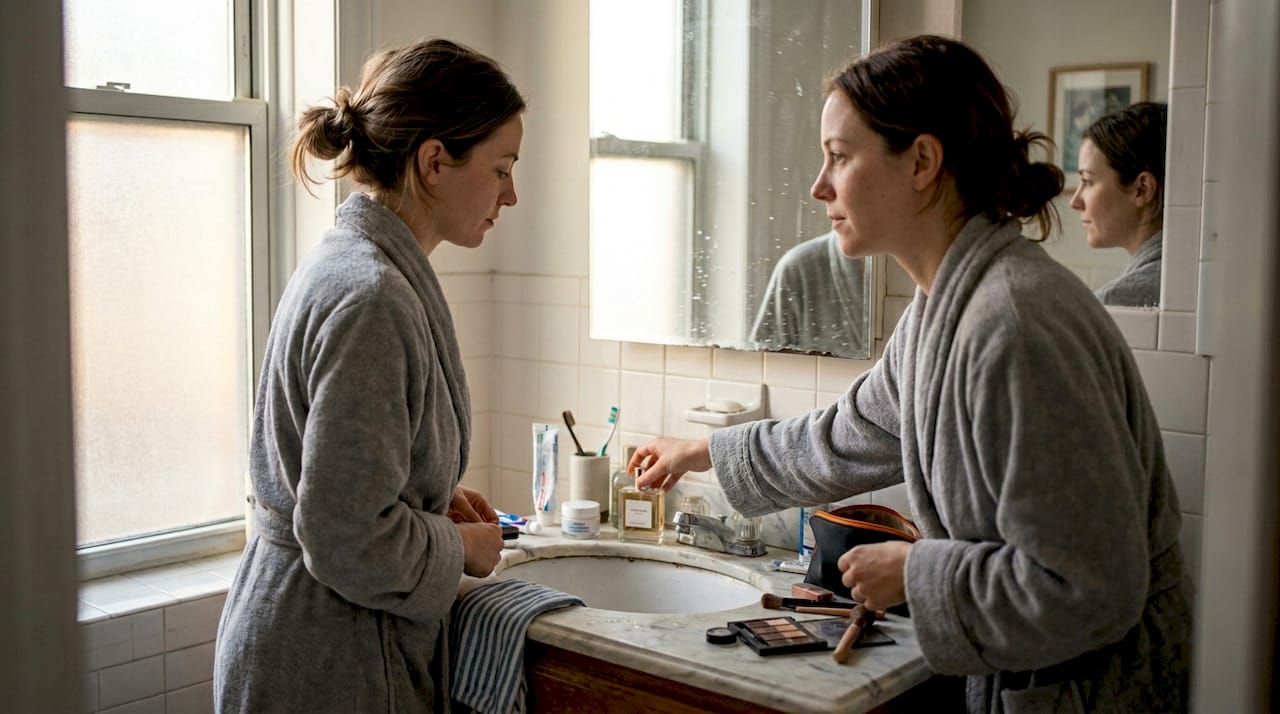
Skin chemistry is the ultimate personalizer. The same bottle of fragrance can smell like warm amber on one person and cool green on another, based on factors like skin pH, moisture levels, and even diet. This means that any fragrance, unisex or not, becomes uniquely yours the moment you wear it.
The practical implication is significant. Clinging to gendered categories closes off an enormous range of scents that might feel perfect on your skin. Real fragrance discovery happens when you approach scent the way you approach a choosing fragrances guide, with curiosity, openness, and a focus on personal experience rather than external expectation.
Unisex is not just a product category. It is a mindset. And once you adopt it, your entire relationship with fragrance changes.
Explore authentic unisex and niche fragrances with Aromatick
Ready to move beyond the labeled aisles and explore scents that actually reflect who you are? Aromatick makes that exploration genuinely affordable.
Our niche fragrance collection features bold, boundary-free compositions from some of perfumery’s most creative houses. If you are looking for accessible everyday options, the Fragrance World collection delivers quality at a price point that lets you experiment freely. And for those drawn to recognized luxury names, our designer fragrance deals offer authentic bottles at up to 60% off retail. Every product is verified for authenticity. Free shipping, secure payments, and a satisfaction guarantee mean you can explore without risk.
Frequently asked questions
What makes a fragrance ‘unisex’?
A unisex fragrance features scent notes and formulas designed around experiences and moods rather than gender, making them enjoyable for anyone regardless of how they identify.
Why are unisex fragrances becoming so popular?
Younger generations are the driving force here. Gen Z and Millennials are actively rejecting gendered labels, which has pushed unisex options to become the fastest-growing segment in the global fragrance market.
How does skin chemistry affect unisex fragrances?
Skin chemistry uniquely transforms how a fragrance develops on each wearer, meaning the same bottle can produce noticeably different results depending on the individual’s skin pH and biology.
Can a unisex fragrance be layered with other scents?
Absolutely. Unisex fragrances are especially well suited for layering because their balanced compositions blend naturally with a wide variety of other scents, giving you room to create something genuinely personal.

Leave a comment
This site is protected by hCaptcha and the hCaptcha Privacy Policy and Terms of Service apply.