

No Cap Perfume: Is It Authentic? How to Tell
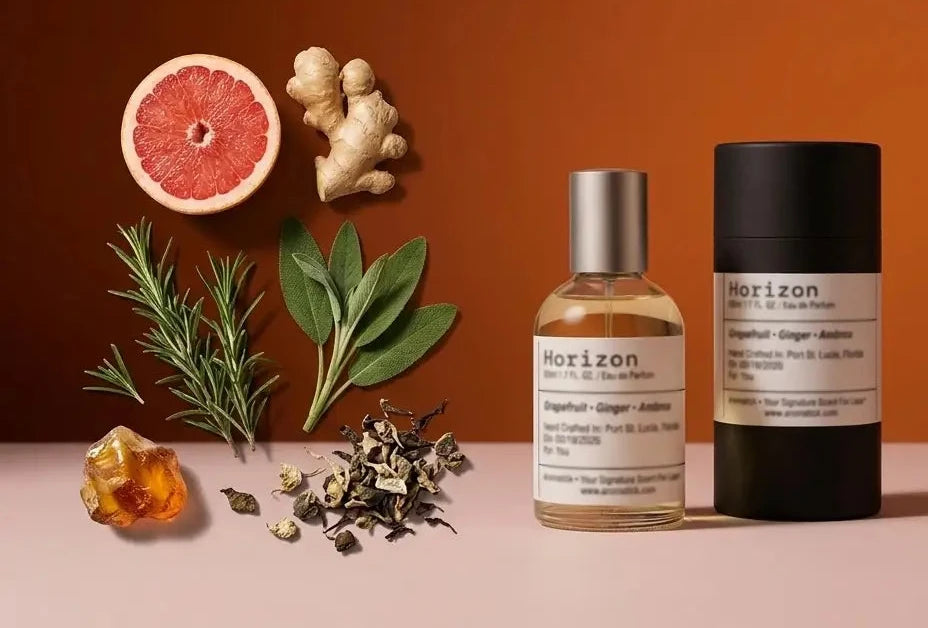
A perfume with no cap can be completely authentic. Missing caps are common on testers and on a few designs that never had one. A cap tells you very little either way. The things that matter are who sold the bottle, how the atomizer, glass, label and batch code look, and whether the seller stands behind the product in writing.
This guide covers why genuine bottles sometimes arrive capless, what a tester is, how to check a bottle without relying on the cap, and what to make of the viral water trick.
TL;DR
- A missing cap alone does not signal a fake. Testers often skip the cap, and some retail designs never had one.
- Judge the seller first, then the price, packaging, spray quality, glass finish and batch code. Several mismatches together are the red flag.
- The spray-in-water “oil trail” trick is not a verified authenticity test. Lab methods such as GC-MS and NMR are what researchers use.
- Counterfeit fragrance is a safety issue as well as a money issue, so buy from a seller with a clear authenticity promise and return policy.
- Store a capless bottle in its box, away from light and heat.
Table of Contents
- Why some genuine perfumes have no cap
- Does a missing cap mean it’s fake?
- How to check a bottle without relying on the cap
- Does the water or residue test prove a perfume is real?
- Why authenticity matters beyond the money
- How to store a perfume with no cap
- Our perspective
- Shop authentic fragrance with confidence
- A quick checklist before you buy a capless bottle
- FAQ
- Sources
Why some genuine perfumes have no cap
There are two main reasons, and neither involves fraud.
Testers
A tester is a regular bottle supplied for in-store sampling. According to Fragrantica, testers are identical to regular merchandise but often lack a cap. When sold online they usually come in a plain white or brown cardboard box instead of the retail carton. The same article notes that brands have no logical reason to make the liquid stronger or longer-lasting in a tester, because changing potency would raise costs. It also says that leaving off the cap helps companies avoid some production cost.
So a tester is usually the same juice in simpler dress. Shoppers who want that trade-off should read our breakdown of tester vs retail perfume.
Designs that were never meant to have a cap
Some retail fragrances ship without a lid. Fragrantica’s storage guide names Calvin Klein CK One as an example. Town & Country reported in 2016 that Escentric Molecules Molecule 01, sold at the Aedes shop in New York’s West Village, comes in a minimal bottle with no cap.
If you see a capless bottle of one of these, the missing cap is simply the design.
Does a missing cap mean it’s fake?
No. Counterfeiters can add a perfect-looking cap to a fake just as easily as a brand can leave one off a real bottle. Treating the cap as the test gives you false alarms on genuine testers and false comfort on convincing copies.
A better approach is to ask whether the whole picture is consistent. A capless bottle sold as a tester, in plain packaging, by a seller that says so clearly, is coherent. A capless bottle in a glossy retail box with a full-retail label, from an anonymous marketplace seller, is not.

How to check a bottle without relying on the cap
No single check is foolproof. Consumer Reports, as cited by NBC News, advises that there is no surefire way to spot counterfeit merchandise online, and that price is no longer a dead giveaway because criminals often pick prices close to the real thing. The safest approach is to know the seller, know the hallmarks of the real product and examine the packaging.
The U.S. Department of Commerce and the USPTO promote four Ps for spotting fakes. Here is how each applies to a capless perfume.
| Check | What to look for | What it means for a no-cap bottle |
|---|---|---|
| Place | A trusted seller with a clear return policy | The most important check. A tester sold by a reputable retailer is explained, not hidden. |
| Price | A deal that seems too good to be true | A tester discount is normal. A price far below every other seller, even for testers, deserves caution. |
| Packaging | Blurred graphics, unbalanced colors, crooked labels, misspellings | A tester box is plain by design, but any printing on it should still be clean and correct. |
| Product | Does it look like what you have bought before? | Compare the glass, sprayer and juice color with a bottle you know. |
Look at the atomizer and glass
Counterfeit bottles often miss small quality-control details. Perfumer Online reports that fakes may have poorly fitting or unusually light caps, atomizers that spray unevenly or leak, and glass that looks cloudy, rough or poorly finished. Its advice is to worry when several details fail to line up and the seller cannot explain the difference clearly. With no cap, focus on the sprayer and the glass: you want a fine, even mist and clean, smooth glass.

Read the batch code
Most genuine bottles carry a batch code, usually printed or etched on the base or on the box. It should be legible and consistent with the brand’s usual format. A code that is missing, smudged or mismatched between bottle and box is worth questioning. Our guide to what perfume batch codes reveal explains how to read them. If you also have a box, packaging details add a second layer of evidence.
Check the seller, not just the bottle
The U.S. Customs and Border Protection (CBP) advises online shoppers to research the product through photos, reviews and seller information, to avoid sites with typos or no refund policy, to pay securely and to inspect the packaging on arrival for missing safety seals or unusual packaging. If you suspect a fake, CBP points shoppers to its Trade Violations Reporting platform and the National IPR Center. For a broader checklist, see our authentic perfume buying guide.
Compare the scent over time
If you know the fragrance, a first spray can reveal a lot. A counterfeit may smell harsh or flat at the opening, then vanish quickly or smell different on the skin after an hour. Scent is subjective and batches vary, so treat this as supporting evidence only, never as proof.
Does the water or residue test prove a perfume is real?
A viral clip claims that spraying perfume into a sink shows a cloudy, lingering trail if the perfume is genuine, while a fake supposedly dissolves quickly. We found no authoritative source that validates this as an authenticity test. How a fragrance behaves in water depends on its formula, its concentration and its solvents, and a real perfume and a copy can both do many things there.
The methods researchers actually use are laboratory-based. A 2023 study showed that GC-MS analysis and an electronic nose could distinguish original perfumes from counterfeits by their volatile compounds. A 2021 study found that 1H NMR spectroscopy with principal component analysis could separate authentic, counterfeit and inspired perfumes, using spectrometers operating between 400 and 700 MHz. Neither can be done at a bathroom sink.
The practical conclusion: don’t spend a bottle on a kitchen experiment. Use the seller, packaging and return-policy checks above, which are the ones the authorities recommend.
Why authenticity matters beyond the money
Counterfeit fragrance is applied directly to your skin. The Department of Commerce says counterfeiting is linked to more than 70 deaths and 350,000 serious injuries a year, and cites a study in which 26% of U.S. consumers had unwittingly bought at least one counterfeit product in 2019. CBP warns that fake perfumes and cosmetics can pose serious health and safety risks, and that it is illegal to import counterfeit merchandise, with individual consumers potentially facing penalties even when an order was a mistake.
The 2023 GC-MS study also found that counterfeit perfumes contained significantly more volatile compounds than originals, and that some allergens appeared at higher levels or only in the imitations. If you have sensitive skin or known fragrance allergies, that is one more reason to buy from sellers who can trace their stock. A dermatologist is the right person to see if a fragrance causes a rash or reaction.
It also helps to know the vocabulary. A guide on dupes, fakes and replicas explains what each term means and what is legal, which is useful when a listing calls a product “inspired by” a famous scent.
How to store a perfume with no cap
Whether it is a tester or a design without a lid, an open nozzle is exposed to air and dust. Fragrantica’s storage guide recommends not leaving perfumes uncapped, keeping the box for bottles that have no lid, and using a suitable old cap if you buy a tester without one. Keep it somewhere cool and dark, such as a drawer, rather than on a sunny windowsill or a bathroom shelf with steam and temperature swings.
Our perspective
Capless bottles confuse people because a cap feels like proof of quality. It isn’t. We think authenticity lives in sourcing, not in plastic.
That is why we put the emphasis on batch-verified fragrances and on being open about what you are buying. Our aim is to offer authentic designer and niche fragrances at 30 to 60% below retail, backed by a satisfaction guarantee, so you do not have to play detective with every bottle.
If you want to try before you commit, our decants let you wear a scent for weeks before buying a full bottle. That is often the smartest way to learn what a fragrance really smells like, and to know it when you meet it again.
Rodney
Shop authentic fragrance with confidence
If you are tired of guessing, start with sellers that publish an authenticity promise and a return policy. At Aromatick, we sell authentic designer and niche perfumes and colognes for men and women, with free U.S. shipping on qualifying orders and a satisfaction guarantee.
Browse designer perfumes and colognes, explore men’s fragrances or find women’s perfume. For a wider view of where to shop, read our guide to buying authentic perfume online, or see our overview of genuine vs counterfeit perfumes.
A quick checklist before you buy a capless bottle
- Confirm the seller is established and has a written return policy.
- Read the listing: does it say tester, unboxed or no cap, and does it match what arrives?
- Compare the price with other reputable sellers of the same fragrance.
- On arrival, check the packaging, label spelling and print quality.
- Look at the batch code on the bottle and box.
- Test the spray: it should deliver a fine, even mist without leaking.
- Inspect the glass for roughness or cloudiness.
- Store it upright in its box or with a suitable cap.
If several items fail and the seller cannot explain why, contact them for a return. You can also report suspected fakes through CBP’s reporting channels.
FAQ
Is a perfume without a cap fake?
Not necessarily. Testers commonly ship without caps, and some retail fragrances are designed without lids. Judge the seller, packaging, atomizer, glass and batch code instead of the cap alone.
Is a tester the same as the retail perfume?
Testers are identical to regular merchandise in how they are made, according to Fragrantica, but often lack a cap and come in plain packaging when sold online. There is no logical reason for a brand to change the strength of a tester.
Does the water test show whether perfume is real?
We found no authoritative source that backs it. Researchers distinguish real from fake perfume with laboratory methods like GC-MS and NMR spectroscopy, which compare chemical composition.
How should I store a bottle with no cap?
Keep it in its box or fit a suitable cap, and store it in a cool, dark place. Avoid sunny windowsills and humid bathrooms.
Sources
- Do Tester Bottles Contain Stronger, Longer-Lasting Scent? (Fragrantica)
- How To Properly Store Perfumes (Fragrantica)
- Escentric Molecules Molecule 01 (Town & Country)
- Shop Smart and Stay Safe This Season (U.S. Department of Commerce)
- CBP reminds shoppers: beware of counterfeits this holiday season
- Shop online? Here’s how to spot counterfeit electronics, cosmetics, clothes (NBC News)
- Detection of Counterfeit Perfumes by Using GC-MS Technique (PMC)
- The First Application of 1H NMR Spectroscopy for the Analysis of Perfumes (PMC)
- How to Spot Fake Perfume Online Before You Buy (Perfumer Online)
- Dupe vs Fake vs Replica: What Each Means and What’s Legal (HerDupes)

Leave a comment
This site is protected by hCaptcha and the hCaptcha Privacy Policy and Terms of Service apply.