
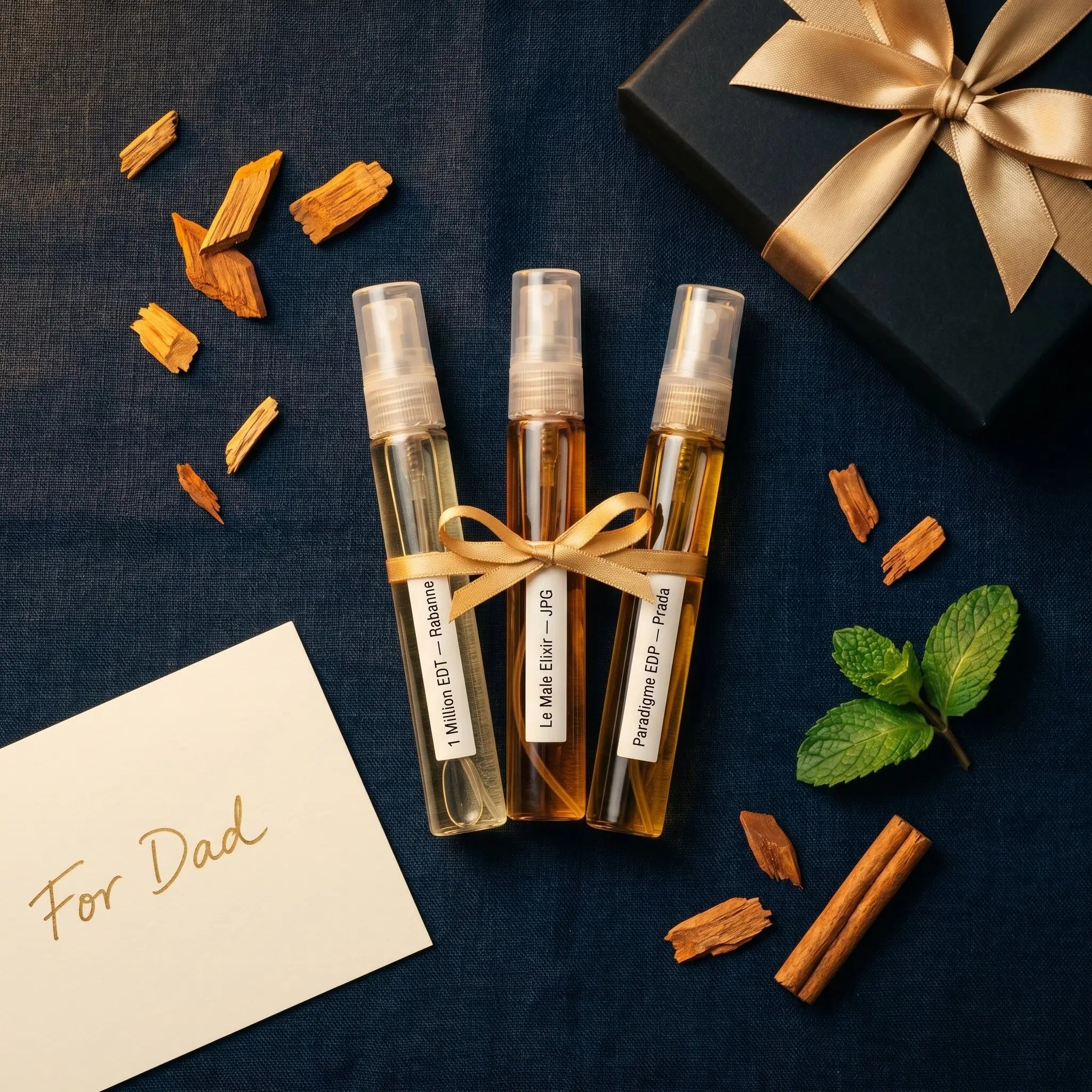

Perfume notes explained: 3 layers, smarter choices
TL;DR:
- Perfume notes are layered scents that change over time, influencing scent and longevity.
- Understanding note structure helps in choosing fragrances suitable for different occasions and personal chemistry.
- Avoid relying on first impressions and always test fragrances throughout the day for the true dry down.
You spray a perfume, love it in the store, and bring it home — only to find it smells completely different an hour later. Sound familiar? This experience is more common than you might think, and it comes down to one misunderstood concept: perfume notes. Most shoppers evaluate a fragrance based on its first impression, but that first sniff only tells a fraction of the story. Understanding how notes are structured, how they interact over time, and how they connect to longevity and value can completely change how you shop for fragrance, whether for yourself or as a gift.
Table of Contents
- What are perfume notes and how do they work?
- How perfume notes influence scent and longevity
- Selecting a fragrance: decoding notes for your needs
- Common mistakes to avoid when choosing by perfume notes
- What most guides get wrong about perfume notes
- Find your signature scent at unbeatable prices
- Frequently asked questions
Key Takeaways
| Point | Details |
|---|---|
| Perfume notes layered | Scents unfold in three stages: top, middle, and base, each with a unique role. |
| Lasting impact from base | A perfume’s base notes provide lasting power, so focus here for longevity. |
| Smart shopping with notes | Knowing perfume notes helps you match scents to budget, personality, and gifting. |
| Avoid common mistakes | Don’t choose only by first impression—let scents evolve and test them on your skin. |
What are perfume notes and how do they work?
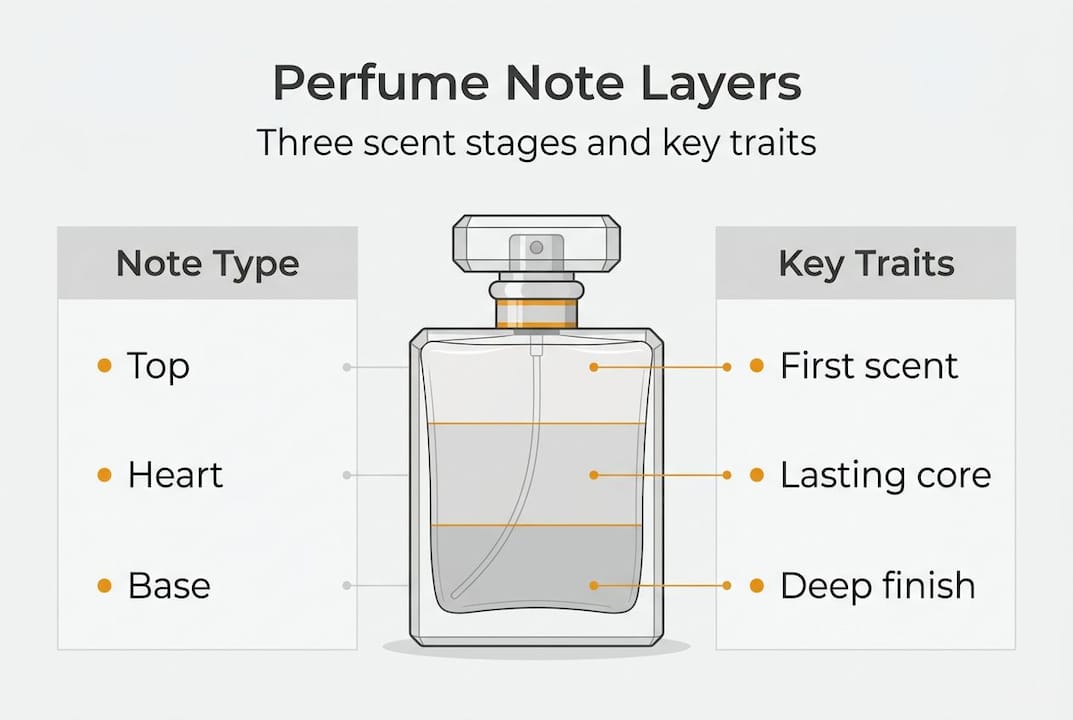
In perfumery, a “note” refers to a distinct scent layer that you perceive at different stages of wearing a fragrance. Think of it like a piece of music: different instruments play at different times, and the full composition only reveals itself as the song progresses. Perfume notes are structured into three layers: top, heart (middle), and base, each with specific durations and typical ingredients.
Here is a quick breakdown of each tier:
| Note tier | When you smell it | Duration | Common ingredients |
|---|---|---|---|
| Top notes | Immediately on spray | 15 to 30 minutes | Citrus, herbs, light florals |
| Heart/middle notes | After top notes fade | 30 minutes to 2 hours | Rose, jasmine, spices, green notes |
| Base notes | Once heart notes settle | 4 to 12+ hours | Musk, oud, sandalwood, vanilla, amber |
The way these layers interact is what gives a fragrance its personality. You might encounter a perfume notes explained breakdown on a product page that lists bergamot at the top, iris in the heart, and cedarwood at the base. Each of those ingredients plays a specific role in the overall scent experience.
Here is how the scent transitions over time:
- First spray (0 to 15 minutes): Bright, sharp, or fresh top notes dominate. These are the most volatile molecules and evaporate quickly.
- Opening phase (15 to 45 minutes): Top notes begin to fade, and the heart notes start to emerge, revealing the true character of the fragrance.
- Mid-wear (1 to 3 hours): Heart notes are fully developed. This is often the most complex and enjoyable phase.
- Dry down (3+ hours): Base notes take over, providing warmth, depth, and staying power.
Pro Tip: When testing a fragrance, do not make a purchase decision within the first five minutes. The top notes are designed to attract attention, but the heart and base notes are what you will actually live with throughout the day.
Understanding this structure is the first step toward making fragrance choices you will not regret.
How perfume notes influence scent and longevity
With a foundation in place, it is time to see why these tiers are not just technical details. They radically shape scent performance and how long a fragrance stays with you.
Top notes create the first impression, but they are the most fleeting. Heart notes define the scent’s core character, the part that makes a fragrance recognizable and memorable. Base notes determine longevity; strong bases extend wear to 6 to 12+ hours, which is why a musk-heavy or oud-forward fragrance tends to outlast a light citrus one.
The concentration of a perfume also plays a major role. Here is how Eau de Parfum (EDP) and Parfum compare:
| Concentration | Fragrance oil % | Typical longevity | Best for |
|---|---|---|---|
| Eau de Toilette (EDT) | 5 to 15% | 3 to 5 hours | Casual, daytime wear |
| Eau de Parfum (EDP) | 15 to 20% | 6 to 8 hours | Everyday and evening |
| Parfum/Extrait | 20 to 30%+ | 8 to 12+ hours | Special occasions, long days |
Higher concentrations amplify base notes, which is why a Parfum version of a fragrance often smells richer and more complex than its EDT counterpart.
Here is how a typical fragrance evolves over a full day:
- Spray (0 to 5 minutes): Bright burst of top notes, often citrus or herbal. Energizing and fresh.
- Early wear (15 to 45 minutes): Top notes recede. Heart notes bloom, revealing florals, spices, or woods.
- Mid-day wear (1 to 4 hours): Heart notes are fully present. The fragrance feels most “you” during this phase.
- Late wear (4 to 8 hours): Base notes anchor the scent. Warmth and depth define the experience.
- Skin scent (8+ hours): Only the deepest base notes remain, often as a soft, personal skin scent.
Base notes like musk, vanilla, and oud are the structural backbone of any long-lasting fragrance. They anchor volatile top notes and ensure the scent evolves rather than simply disappears.
If you want a fragrance that performs all day, our perfume longevity guide walks through exactly which ingredients and concentrations deliver the best results. For deeper insight into how luxury formulas are built to last, explore our breakdown of lasting luxury scents.
Selecting a fragrance: decoding notes for your needs
Understanding how notes shift over time, the next step is using this knowledge to pick scents that fit your needs and lifestyle.
Fragrance pyramids, the triangular diagrams you often see on packaging or product pages, are your roadmap. As our guide to selecting fragrances explains, perfume notes are the roadmap for predicting performance and fit with your personal taste. Reading the pyramid from top to bottom tells you exactly what to expect at each stage of wear.
Here is how to match notes to specific use cases:
- Work or office wear: Prioritize clean heart notes like iris, vetiver, or light woods. Avoid heavy base notes like oud or intense musks that project too strongly in enclosed spaces.
- Date night: Look for warm, sensual base notes such as vanilla, amber, or sandalwood, paired with floral or spicy heart notes.
- All-day wear: Choose a balanced pyramid with moderate top notes, a defined heart, and a soft but persistent base. EDPs tend to work best here.
- Gifting: Opt for universally appealing top notes like citrus or light florals, anchored by classic base notes like musk or cedar. These combinations tend to work across a wide range of preferences.
Here are four steps for testing a fragrance with notes in mind, whether in-store or online:
- Read the pyramid first. Before smelling anything, check the listed notes. If you dislike heavy florals, a rose-dominant heart is a signal to proceed with caution.
- Spray and wait. Apply to your wrist and give it at least 20 minutes before forming an opinion. You are waiting for the heart notes to emerge.
- Check the dry down. After an hour, smell your wrist again. The base notes are now active. This is the scent that will follow you all day.
- Test on your skin, not paper. Blotter strips show raw ingredients, not how the fragrance interacts with your skin chemistry.
Pro Tip: If you are shopping on a budget, focus on fragrances with rich base notes like musk, amber, or woods. These ingredients extend wear time, meaning you apply less and the bottle lasts longer. It is a practical way to stretch your investment without sacrificing quality. You can also learn how to spot authentic scents to ensure you are getting genuine value for your money.
Common mistakes to avoid when choosing by perfume notes
Even empowered shoppers make mistakes. To maximize your investment, here are the errors most worth avoiding.
- Buying based on the first sniff. First impressions are shaped by volatile top notes, but the enduring scent comes from base notes over hours. A fragrance that smells amazing in the first two minutes might feel flat or unpleasant once it dries down.
- Ignoring the dry down entirely. The dry down is where a fragrance truly reveals itself. Skipping this step is like judging a book by its cover.
- Testing on paper only. Blotter strips are useful for a quick elimination round, but they do not replicate how a fragrance behaves on warm skin. Body heat activates base notes and changes how heart notes project.
- Confusing ingredient lists with actual notes. A fragrance may contain rose extract without smelling noticeably rosy. Ingredients interact with each other, and the final scent is a blend, not a sum of parts.
- Overlooking skin chemistry. Two people wearing the same fragrance can smell noticeably different. Your skin’s pH, moisture level, and natural scent all influence how notes develop and linger.
- Rushing the process. Many shoppers test three or four fragrances in quick succession, which overwhelms the nose and makes accurate comparison nearly impossible.
Pro Tip: When you find a fragrance you like in-store, do not buy it immediately. Wear it for a full day and revisit your impression in the evening. If you still love it after experiencing the complete dry down, that is a confident signal to purchase. This approach helps you recognize authentic perfumes that genuinely suit your style rather than impulse buys you later regret.
Avoiding these pitfalls saves money, reduces disappointment, and builds a collection you will actually reach for.
What most guides get wrong about perfume notes
Most fragrance guides treat note pyramids as definitive answers. They present a tidy chart and suggest that knowing the listed ingredients is enough to predict whether you will love a scent. That is an oversimplification, and it sets shoppers up for frustration.
The reality is that note pyramids are a starting point, not a guarantee. Two fragrances can share identical listed notes and smell nothing alike, because the quality of ingredients, the ratios used, and the perfumer’s vision all shape the final result. Skin chemistry adds another layer of unpredictability. A warm, musky base note that smells rich and inviting on one person can turn powdery or flat on another.
The deeper insight here is that your signature scent cannot be found on a chart. It comes from personal trial, wear testing, and re-testing under real conditions. Exploring fragrance note nuances is valuable, but the most reliable tool you have is your own nose and your own skin. Sample widely, wear patiently, and trust your experience over any pyramid.
Find your signature scent at unbeatable prices
Now that you understand how perfume notes shape scent, longevity, and value, you are ready to shop with confidence. The knowledge you have built here translates directly into better choices and fewer regrets.

At Aromatick, we carry authentic designer and niche fragrances at up to 60% off retail prices, so you can explore more without overspending. Browse our designer fragrance collection to find well-structured, long-lasting scents from trusted brands. If you are looking for something distinctive at an accessible price, our affordable UAE fragrances offer rich base-driven formulas that punch well above their price point. Every bottle is genuine, every price is honest, and free shipping is included.
Frequently asked questions
What are the three types of perfume notes?
Perfume notes are structured into three layers: top notes create the first impression, heart or middle notes define the core character, and base notes provide the lasting foundation of the scent.
Which perfume notes last the longest?
Base notes last the longest, typically 6 to 12+ hours depending on concentration, with ingredients like musk, oud, and vanilla being among the most persistent.
How can I use perfume notes to choose a scent as a gift?
Look for a fragrance with approachable top notes like citrus or light florals and classic base notes such as vanilla or cedar, as these combinations appeal broadly across tastes and tend to be well-received.
Why does a perfume smell different on my skin?
Your skin chemistry, including pH, moisture, and natural body scent, influences how notes develop and linger, making each fragrance subtly unique to the person wearing it.
Recommended
- Fragrance Notes Explained: Unlocking Perfume’s Secrets
- How to Layer Fragrances Like a Pro: Secrets to Building Your Perfect
- How to select fragrances: step-by-step guide for authentic choices
- Fragrance Notes Explained: Top, Heart, and Base Notes
- Коледни парфюми: как да изберете перфектния подарък с научен подход

Leave a comment
This site is protected by hCaptcha and the hCaptcha Privacy Policy and Terms of Service apply.