
Extrait de Parfum: Meaning, Characteristics, and Uses
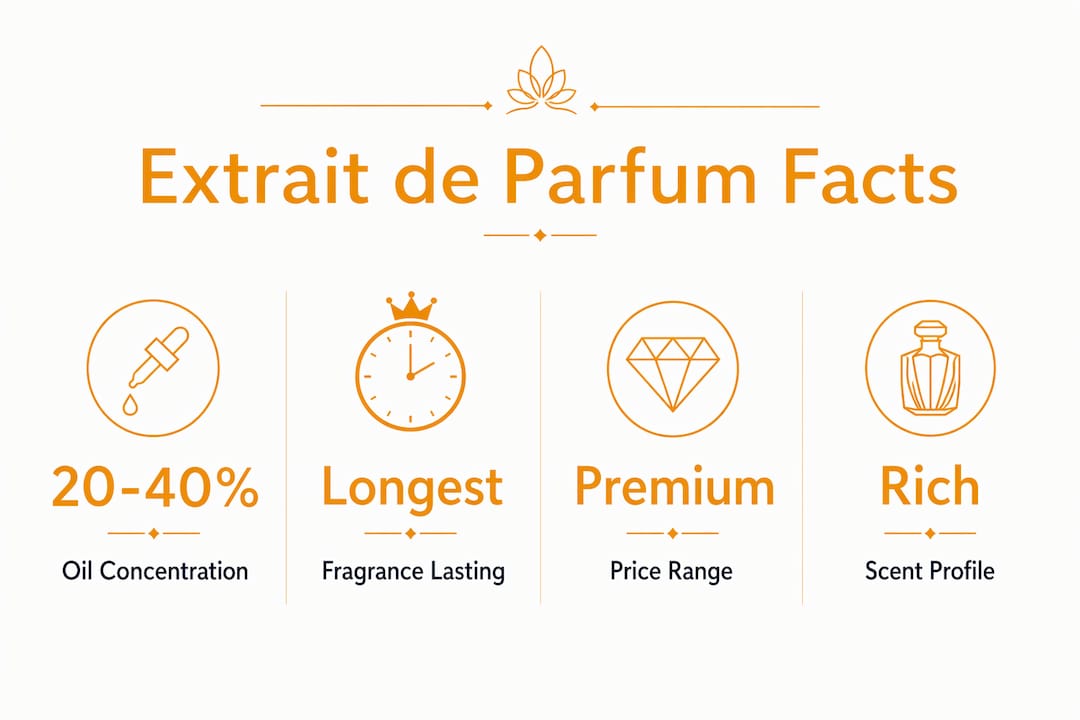
Extrait de parfum is the most concentrated form of perfume available, containing 20%–40% fragrance oils by volume. Also called pure perfume, perfume extract, or simply parfum, it sits at the very top of the fragrance concentration spectrum. That density of aromatic compounds translates directly into a richer scent, a longer wear time, and a more intimate projection than any lighter category can offer.
Here is what defines extrait de parfum at a glance:
- Oil concentration: 20%–40% fragrance oils
- Longevity: 8–12+ hours on skin
- Projection: Close to the skin, creating a dense personal “scent bubble”
- Alcohol content: Lower than all other perfume types
- Common uses: Special occasions, sensitive skin, all-day wear
How does extrait de parfum compare to other perfume types?
The fragrance world organizes concentration into four main categories, and the differences between them go well beyond a simple percentage. Concentration shapes how a scent opens, how long it lasts, and how far it travels.
| Concentration | Fragrance Oil % | Typical Longevity | Projection | Ideal Use |
|---|---|---|---|---|
| Eau de Cologne (EDC) | — | — | Light, airy | Casual, hot weather |
| Eau de Toilette (EDT) | 5% | 3–5 hours | Moderate | Daytime, office |
| Eau de Parfum (EDP) | 15% | 5–8 hours | Moderate to strong | Evening, date nights |
| Extrait de Parfum | 20–40% | 8–12+ hours | Dense, intimate | Special occasions, layering |
A few key contrasts worth understanding:
- Alcohol content: Eau de cologne and eau de toilette are alcohol-forward, which is why they project so freely. Extrait de parfum has the lowest alcohol ratio of any category.
- Longevity gap: An extrait lasts roughly twice as long as an eau de parfum and up to six times longer than an eau de cologne.
- Projection style: More alcohol means more airborne projection. An EDT can fill a room; an extrait stays close to your skin and reveals itself gradually.
- Price per milliliter: Extrait de parfum is the most expensive concentration because raw aromatic materials are costly, and you need far more of them per bottle.
For a deeper look at how these categories stack up day to day, Aromatick’s parfum vs. eau de toilette guide breaks down the practical differences in real wear scenarios.
What makes extrait de parfum worth the premium?
The benefits of extrait de parfum come directly from its formulation, not from marketing language. Higher oil concentration produces a qualitatively different experience on skin.
- Richer, more complex scent profile: With more aromatic material packed into every drop, the fragrance has room to develop through multiple layers of base and heart notes across many hours.
- Gentler on sensitive skin: Less alcohol means less drying effect on the skin, which is a real advantage for anyone prone to irritation from standard eau de toilette formulas.
- Slow, evolving wear: Rather than a bright burst that fades within hours, an extrait unfolds gradually. A vanilla extrait, for example, might open with warm resin, deepen into amber, and settle into a soft musk by evening.
- Intimate projection: The dense scent bubble stays close to your body, making it a personal experience rather than a broadcast.
- Longevity without reapplication: One application in the morning can carry you through an entire workday and into the evening.
Pro Tip: If you need a fragrance to last through a 10-hour day without touching up, extrait de parfum is the most reliable choice. Apply once in the morning and let the concentration do the work.
How to apply extrait de parfum correctly
Because of its high concentration, extrait de parfum rewards a restrained hand. A little goes a long way, and over-application can quickly become overwhelming in warm or enclosed spaces.
- Choose pulse points: Wrists, the base of the neck, chest, and behind the ears are ideal. Body heat at these spots gently releases the dense base notes throughout the day.
- Apply sparingly: One or two dabs or sprays is typically enough. High concentration means the scent will perform without layering on more.
- Skip rubbing: Rubbing the wrists together breaks down the fragrance molecules and disrupts the scent’s natural evolution. Dab or spray, then let it settle.
- Layer with an unscented moisturizer: Applying a fragrance-free lotion to pulse points before your extrait helps the oils bind to skin and extends wear even further.
- Avoid heavy clothing coverage: Extrait de parfum works best when applied directly to skin rather than fabric, where the warmth of your body can activate it properly.
Who should wear extrait de parfum?
Extrait de parfum is not the right choice for every situation or every person. Understanding when it fits makes the investment worthwhile.
- Fragrance enthusiasts who want to experience a scent’s full depth and complexity, particularly its base and heart notes, will find extrait the most rewarding concentration.
- People with sensitive or dry skin benefit from the lower alcohol content, which avoids the drying effect common with lighter formulas.
- Anyone attending a long event such as a wedding, gala, or full-day conference can rely on a single morning application to last the duration.
- Those who prefer intimate scents rather than room-filling projection will appreciate how an extrait stays close to the skin, detectable to those near you rather than everyone in the room.
- Collectors and connoisseurs exploring niche fragrances often gravitate toward extraits because the format showcases a perfumer’s most complex compositions.
Extrait de parfum is generally less suited to casual daytime wear, office environments where strong scents may bother colleagues, or hot and humid climates where the density can become cloying.

Famous extrait de parfum fragrances worth knowing
Some of the most celebrated fragrances in perfumery history have been released in extrait concentration, and the format tends to attract compositions built around depth rather than brightness.
- Chanel No. 5 Extrait: One of the oldest and most recognized extraits in the world, built on a rich aldehydic floral base with ylang-ylang, rose, and sandalwood. The extrait version reveals layers that the eau de parfum edition simply cannot sustain.
- Guerlain Shalimar Extrait: A classic oriental fragrance anchored in vanilla, benzoin, and iris. The extrait concentration amplifies the warm, resinous base that made Shalimar a benchmark for the oriental category.
- Dior Bois d’Argent Extrait: A woody iris composition that deepens considerably in extrait form, with the iris root and musk becoming more pronounced and long-lasting.
- Initio Parfums Privés Absolute Aphrodisia: A niche extrait built on musk, vanilla, and labdanum that exemplifies how dense, rich materials like amber and resin anchor a complex, evolving composition.
- Tom Ford Private Blend Extraits: Several releases in the Private Blend line appear in extrait concentration, showcasing oud, tobacco, and leather in their most saturated form.
What expert perfumers say about extrait formulation
The most important thing to understand about extrait de parfum is that it is not simply a “stronger” version of an eau de parfum. It is a fundamentally different formulation.
“An extrait is good for deep, base-note-heavy scents, like many found in the Middle East and India. The high concentration helps offset the lack of a grand fanfare on the opening, but it still wears closer to the skin and is more of an intimate fragrance. Extraits lack the high-volatility alcohol needed for projecting sparkling top notes, so the formulation shifts focus toward rich base and heart notes like resins, woods, and musks.”
— Shawn Maher, perfumer and founder of Scent Notes
This distinction matters when you are choosing between an extrait and an EDP of the same fragrance. The extrait version may smell noticeably different, not just more intense, because the perfumer has reworked the formula to suit the high-oil base. Expect the opening to be quieter and the dry-down to be richer and more sustained.
The history and origin of extrait de parfum
Extrait de parfum is the oldest form of modern perfumery. Before alcohol-based fragrances became standard in Europe during the 14th century, perfumers worked almost exclusively with concentrated oils and resins, applying them directly to skin and hair. The word “parfum” itself derives from the Latin per fumum, meaning “through smoke,” a reference to the ancient practice of burning aromatic resins and woods.
The oil-based, high-concentration tradition remained dominant in the Middle East and South Asia, where attars (natural perfume oils) have been crafted for centuries using sandalwood, rose, oud, and musk. European perfumery adopted alcohol as a carrier in the Renaissance period, which gave rise to the lighter categories we know today. Extrait de parfum survived as the prestige tier, reserved for the most complex and expensive compositions.
How extrait de parfum is made
The production process for extrait de parfum begins with sourcing high-quality aromatic raw materials, both natural and synthetic. Natural ingredients include flower absolutes (rose, jasmine, ylang-ylang), resins (benzoin, labdanum), woods (sandalwood, oud), and animal-derived musks, though most modern formulas use synthetic musks for ethical reasons.
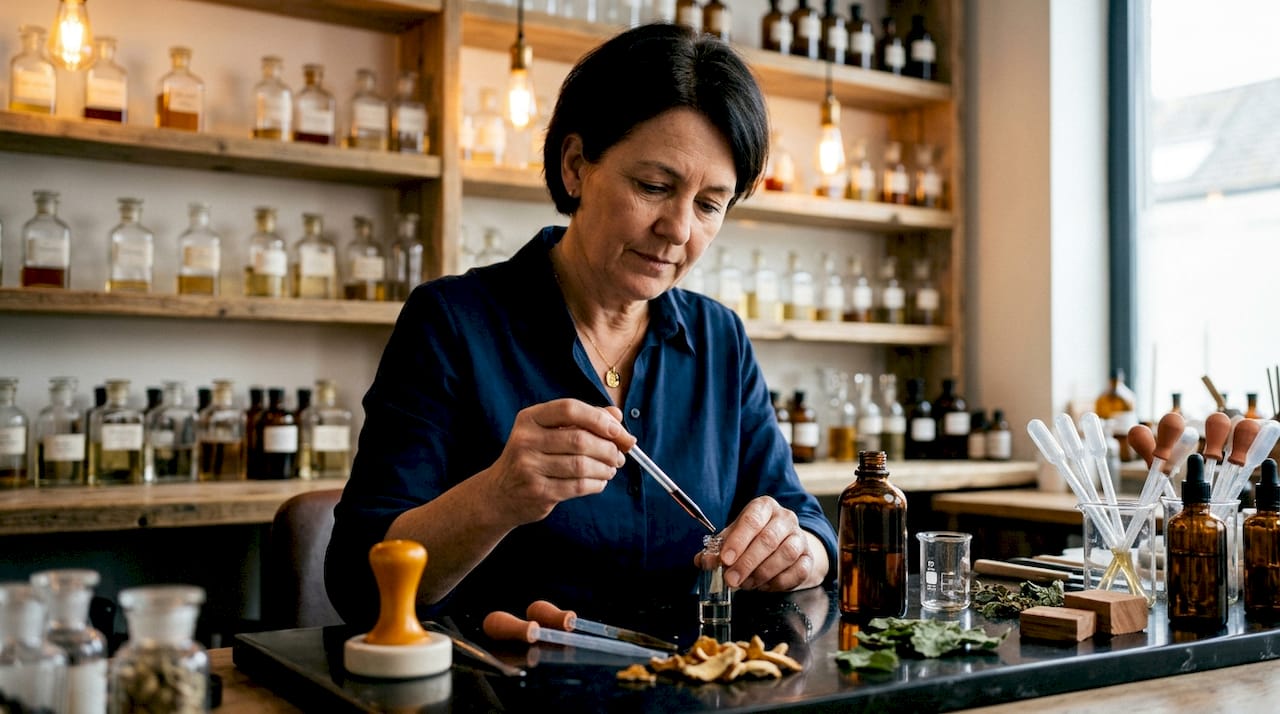
A perfumer, called a “nose,” blends these materials in precise ratios to create the fragrance concentrate. For an extrait, the concentrate is then mixed with a small amount of alcohol and sometimes a carrier oil, at a ratio that keeps the final aromatic compound content between 20% and 40%. The mixture is macerated, meaning it rests for several weeks to allow the ingredients to fully integrate and mellow. After maceration, the formula is chilled and filtered to remove any wax or particulate matter, then bottled. The result is a dense, smooth liquid that carries far more aromatic material per drop than any other perfume category.
How to store extrait de parfum and how long it lasts
Proper storage extends the life of an extrait considerably. Because the formula contains less alcohol than lighter categories, it is somewhat more stable, but the aromatic oils are still vulnerable to heat, light, and air exposure.
- Keep it away from light: UV exposure degrades fragrance molecules. Store bottles in a drawer, cabinet, or the original box.
- Avoid heat and humidity: Bathrooms are a poor storage choice. A bedroom dresser or closet shelf at a stable room temperature is better.
- Seal the bottle tightly: Oxygen oxidizes fragrance oils over time. Always replace the cap or stopper after use.
- Shelf life: A well-stored extrait de parfum typically remains stable for 3–5 years. Some resinous and woody extraits, particularly those built on stable base notes like oud and sandalwood, can last even longer without significant scent change.
Key Takeaways
Extrait de parfum delivers the richest, longest-lasting fragrance experience of any perfume type, with 20%–40% oil concentration that lasts 8–12+ hours and stays close to the skin.
| Point | Details |
|---|---|
| Highest concentration | Extrait de parfum contains 20%–40% fragrance oils, more than any other perfume category. |
| Longest longevity | Expect 8–12+ hours of wear from a single application, roughly twice that of an eau de parfum. |
| Intimate projection | Lower alcohol content creates a close-to-skin scent bubble rather than wide room projection. |
| Reformulated formula | Extraits are purpose-built for high-oil bases, emphasizing base and heart notes over bright top notes. |
| Storage matters | Store away from light, heat, and air to preserve the formula for 3–5 years or longer. |
Ready to explore extrait de parfum for yourself? Aromatick carries a curated selection of authentic designer fragrances at up to 60% off retail, including high-concentration options for both men and women. You can also browse fragrance options at Jeffi for additional extrait picks across a range of houses.

Leave a comment
This site is protected by hCaptcha and the hCaptcha Privacy Policy and Terms of Service apply.