
Authentic fragrances: Quality, safety, and lasting performance
TL;DR:
- Authentic fragrances are formulated with verified ingredients, safety compliance, and transparent supply chains, ensuring quality.
- They offer superior longevity, scent development, and safety standards compared to counterfeit or imitated perfumes.
Spending real money on a perfume only to watch it vanish from your skin within an hour is one of the most frustrating experiences a fragrance lover can face. Whether you’re shopping for yourself or selecting a meaningful gift, the gap between a scent that performs and one that disappoints is wider than most people realize. The market is crowded with imitations, unverified “alternatives,” and products that look convincing in the bottle but fall apart in real wear. Understanding why authentic fragrances deliver a genuinely different experience, from safety and longevity to the sheer pleasure of a scent that evolves beautifully on your skin, is the foundation of smarter fragrance choices.
Table of Contents
- What makes a fragrance authentic?
- Safety and health: Hidden benefits of real perfumes
- Longevity and performance: What sets authentic fragrances apart
- Authenticity versus preference: Is real always better?
- The hidden power of fragrance authenticity: More than meets the nose
- Experience authentic fragrances at incredible prices
- Frequently asked questions
Key Takeaways
| Point | Details |
|---|---|
| Healthier ingredient standards | Authentic fragrances follow strict regulations for safe enjoyment and minimal risk. |
| Long-lasting scent experience | Original perfumes typically last hours longer than their imitation counterparts. |
| Reliable quality, every bottle | Verified authenticity means no surprises—each purchase smells and performs as intended. |
| Reduces chance of adulteration | You avoid the hidden risks of substituted or synthetic ingredients by choosing authentic scents. |
| Personal preference varies | Even with all the benefits, your favorite scent is always a matter of taste. |
What makes a fragrance authentic?
Now that we understand what’s at stake for fragrance fans, let’s break down what truly defines authenticity in the world of scents.
Authenticity in perfumery is not simply about a recognizable label or a familiar bottle shape. It refers to a product that is formulated and manufactured by or for the intended brand, using original ingredients, verified processes, and traceable supply chains. Learning how authentic fragrances are verified reveals that the process involves far more than visual inspection.
One of the most important pillars of fragrance authenticity is compliance with IFRA Standards. The International Fragrance Association (IFRA) is the global body that governs safe fragrance use. Authentic fragrances are formulated and manufactured under quality and safety regimes that rely on IFRA Standards, which set the rules for what goes into a finished consumer product and in what quantities. This is not optional for reputable brands. It is the baseline.
The key elements that define an authentic fragrance include:
- Ingredient identity and purity: Original raw materials, whether natural botanicals or approved synthetic aroma molecules, sourced from verified suppliers
- Regulatory compliance: Full adherence to IFRA guidelines and regional cosmetic safety laws
- Traceability: A documented chain of custody from raw material to finished bottle
- Safe-use constraints: Formulation limits that protect consumers from sensitization or allergic reactions
- Batch codes and documentation: Verifiable production records that allow retailers and consumers to confirm origin
“Authenticity is a system, not just a smell. It encompasses the upstream quality controls, the ingredient sourcing decisions, and the regulatory frameworks that together ensure the consumer gets exactly what they paid for.”
Counterfeits often do a convincing job of replicating the outer packaging. They may copy the bottle shape, the font on the box, and even the color of the juice inside. But replicating the formulation, the ingredient sourcing, and the safety compliance is a different matter entirely. Understanding the difference between genuine vs counterfeit perfumes helps you shop with far more confidence, especially when buying online or at discounted prices.
Fragrance authenticity explained in practical terms means you can trust that what you spray on your skin has been tested, regulated, and produced to a consistent standard. That trust is the real product.
Safety and health: Hidden benefits of real perfumes
With a foundation in official standards, let’s see why authenticity directly impacts your well-being when enjoying fragrances.
This is where the stakes become very personal. Your skin absorbs fragrance ingredients, and what goes into a counterfeit or poorly regulated product is often unknown, even to the people selling it. Authentic fragrances operate under a different set of rules entirely.
IFRA Standards impose quantitative limits for fragrance ingredients in the finished consumer product. This means that even if an ingredient is technically permitted, there is a ceiling on how much of it can appear in a spray-on perfume, a leave-on lotion, or a rinse-off product. These limits exist because some fragrance materials, even natural ones, can cause skin sensitization or allergic reactions at high concentrations. Authentic brands follow these limits as a matter of course. Counterfeit producers typically do not.
Here is a practical breakdown of how safety standards protect you when you choose authentic:
- Banned substance exclusion: IFRA maintains a list of prohibited materials. Authentic perfumes cannot legally contain these. Fakes have no such constraint.
- Concentration limits: Even safe ingredients become problematic at high doses. Authentic formulations stay within tested, safe ranges.
- Allergen labeling: Regulated markets require disclosure of known allergens above certain thresholds. Authentic products comply. Counterfeits rarely do.
- Stability testing: Authentic perfumes are tested to ensure the formula does not degrade into harmful byproducts over time. Fakes skip this step entirely.
- Skin compatibility: Genuine fragrances undergo dermatological testing, particularly for products marketed as skin-safe or hypoallergenic.
Pro Tip: If you’re prone to skin sensitivity, always check whether a fragrance is sold by a verified retailer and look for batch codes on the box. These codes confirm the product came from a legitimate production run and can be cross-checked with the brand.
The adulteration problem is more widespread than many shoppers expect. Research shows that only 51% of lavender essential oil samples studied were genuinely pure, with the rest adulterated or fortified with synthetic components. This kind of substitution is common in the supply chains that feed counterfeit and low-grade fragrance production. When you choose an authentic fragrance, why authenticity protects your health becomes immediately clear: you are choosing a product where every ingredient has been identified, tested, and approved.
Longevity and performance: What sets authentic fragrances apart
While safety is crucial, performance often makes or breaks your satisfaction. Let’s see why original scents go the extra mile.
If you’ve ever spritzed on a fragrance in the morning and found it completely gone by lunchtime, you’ve experienced the performance gap firsthand. This is one of the most measurable differences between authentic perfumes and their imitations, and it comes down to formulation science.
Authentic fragrances are built around a structured composition of top notes, heart notes, and base notes. The base notes, which include ingredients like musks, woods, resins, and ambers, act as the structural backbone of the scent. They anchor the more volatile top notes and allow the fragrance to evolve on skin over several hours. This architecture requires expensive, high-quality fixatives and a skilled perfumer to balance correctly. It is not something that can be cheaply replicated.
Real-world testing confirms this difference clearly. Longevity is where luxury perfumes outshone cheaper counterparts: testers noticed alternatives’ smells were weaker after about an hour, while most originals only started to fade after three or more hours. That is a significant difference in real-world wear, especially for occasions like a long workday, a dinner date, or a special event.
| Feature | Authentic fragrance | Imitation or alternative |
|---|---|---|
| Average longevity | 3 to 8+ hours | Under 1 to 2 hours |
| Scent evolution | Full top, heart, and base progression | Often flat or one-dimensional |
| Projection | Consistent sillage (scent trail) | Weak or inconsistent |
| Ingredient quality | Verified, regulated materials | Unknown, often substituted |
| Safety compliance | IFRA certified | Rarely verified |
Understanding fragrance longevity explained in technical terms also helps you get more from the fragrances you own. Authentic perfumes respond well to proper application techniques because their formulas are designed to interact with skin warmth and chemistry.
Key performance advantages of authentic fragrances include:
- True scent progression: The fragrance opens with bright top notes, transitions through a complex heart, and settles into a lasting base. Imitations often smell similar for the first few minutes, then flatten completely.
- Consistent projection: Authentic perfumes maintain a reliable scent trail, known in the industry as sillage, throughout the wear period.
- Skin chemistry interaction: Quality formulas are designed to adapt to individual skin chemistry, which is why the same authentic perfume can smell slightly unique on different people.
- Stability over time: Properly formulated authentic fragrances maintain their character for years when stored correctly. Fakes often degrade quickly.
Pro Tip: Apply authentic perfume to pulse points like the wrists, neck, and inner elbows. The warmth from these areas activates the fragrance’s structure and helps the base notes develop fully over time.
Authenticity versus preference: Is real always better?
Of course, even with all these advantages, not every authentic scent will suit every nose. Let’s weigh authenticity against real-world preferences.
This is a fair and important question. Authenticity guarantees certain standards, but it does not guarantee that you will love every scent. Personal preference in fragrance is deeply subjective, shaped by memory, culture, skin chemistry, and mood. No amount of regulatory compliance can override what your nose finds appealing.
Blind testing sometimes produces surprising results. At least one alternative was preferred over the original in blind smell tests conducted with panels of over 40 people, though longevity differences still usually favored authentic perfumes. This tells us something valuable: initial scent impression is not the whole story.
“Preference is personal, but performance is measurable. A alternative might win the first sniff, but authentic fragrances consistently win the full day.”
Here is a realistic comparison of where authenticity wins and where personal preference plays a larger role:
| Criterion | Authentic fragrance advantage | Where preference matters more |
|---|---|---|
| Safety | Always favors authentic | Not applicable |
| Longevity | Consistently superior | Not applicable |
| Scent accuracy | True to original formula | Subjective enjoyment |
| First impression | Often comparable | Personal nose preference |
| Value over time | Higher cost per bottle, longer wear | Budget priorities |
The practical takeaway is that spotting authentic scents on a budget does not mean you have to pay department store prices. It means finding verified authentic products through trusted retailers who offer genuine fragrances at accessible prices. When you do that, you get both the performance and the safety without compromise.
Choosing an authentic fragrance also means you can trust what you’re giving as a gift. When you hand someone a bottle of genuine perfume, you’re offering them a product that will perform as expected, smell true to its intended character, and carry no hidden risks. That confidence is something no imitation can match.
The hidden power of fragrance authenticity: More than meets the nose
After looking at all sides of this debate, it’s worth stepping back and reconsidering what truly sets authentic fragrances apart in the bigger picture.
The conversation around fragrance authenticity often gets reduced to price comparisons and label verification. But the real value runs much deeper than that. Authenticity is best treated as a system: it’s not just the final smell, but also the upstream quality controls that reduce variability in the consumer experience. That means every bottle you open should smell the same as the last one, perform the same way on your skin, and carry no surprises in terms of safety.
Think about what that consistency actually means in practice. When you find an authentic fragrance you love, you can reorder it with complete confidence. You know the scent will be identical. You know it has been produced to the same safety standards. You know the base notes will develop the same way on your skin. That reliability is genuinely rare in a market flooded with inconsistent alternatives.
There is also an emotional dimension to authenticity that rarely gets discussed. Wearing a fragrance you trust, one that you know is real, formulated with care, and built to last, changes how you carry yourself. It is a small but meaningful form of self-assurance. For gift-givers, it is the difference between offering something meaningful and offering something that might disappoint.
We believe that the fragrance community deserves access to that reliability without paying inflated retail prices. The overhead costs of traditional department store retail are enormous, and they are passed directly to the consumer. Removing that overhead while maintaining full authenticity is the smarter path, and it’s exactly what makes platforms focused on verified authentic fragrances so valuable. For tips for authentic fragrance shopping that help you navigate this space confidently, the right guidance makes a real difference.
Experience authentic fragrances at incredible prices
Ready to experience all these advantages for yourself? Finding the perfect real fragrance at a price you’ll love is entirely possible when you shop with the right source.
At Aromatick, every product in our catalog is 100% genuine, sourced directly and sold with full confidence in its authenticity. We carry an extensive designer fragrance collection featuring the world’s most celebrated perfume houses, alongside a carefully curated niche fragrance collection for those who want something more distinctive and rare. Discounts of up to 60% off retail prices mean you never have to choose between quality and affordability.
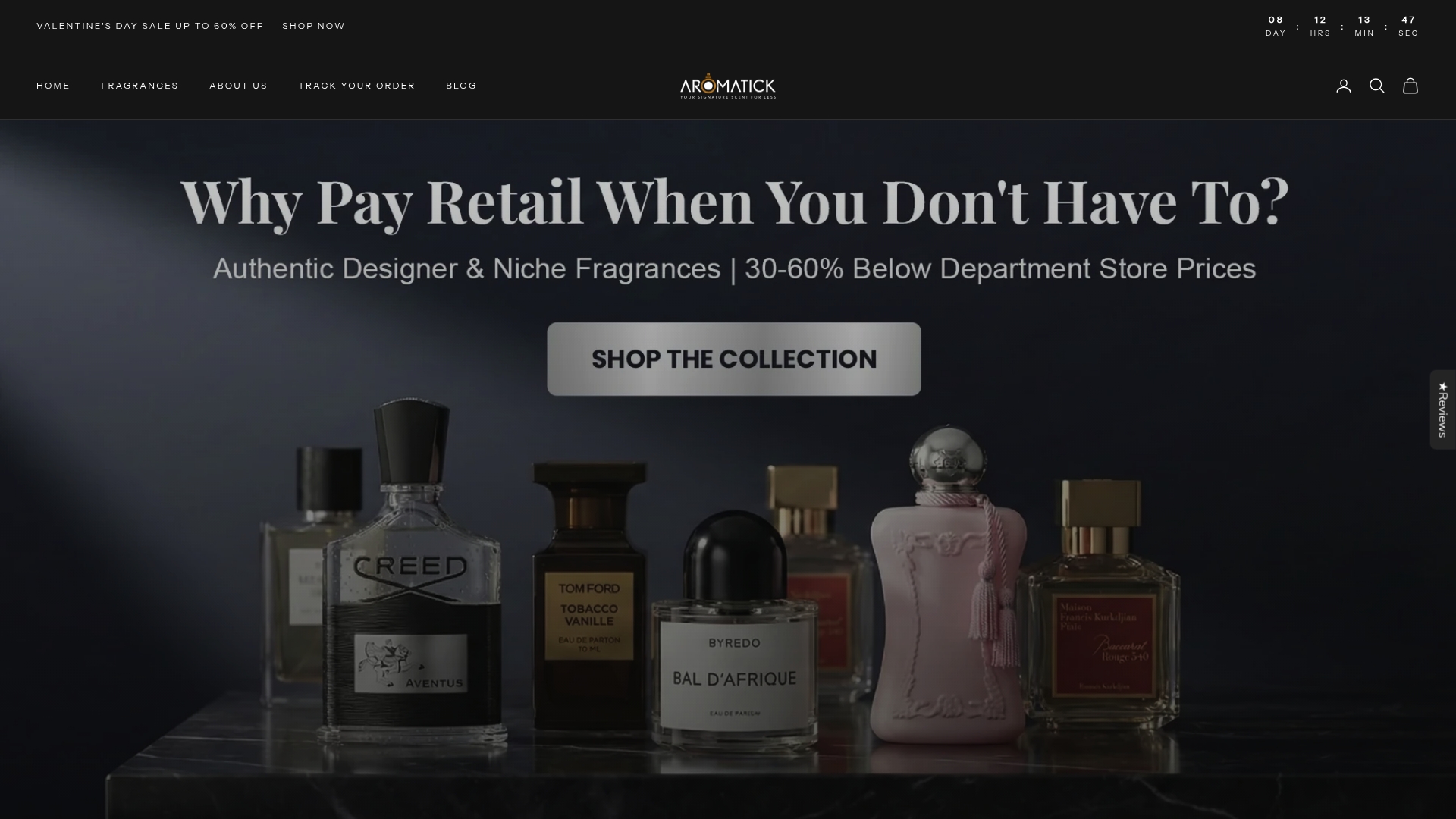
Every purchase is backed by our authenticity guarantee, giving you complete peace of mind whether you’re shopping for yourself or finding a gift for someone special. Free shipping, secure payments, and a satisfaction guarantee round out the experience. Authentic luxury fragrance, delivered to your door at a price that makes sense.
Frequently asked questions
How can I tell if a fragrance is authentic before buying?
Check for proof of IFRA compliance, detailed batch codes, and verified retailer guarantees, since authentic fragrances are formulated and manufactured under quality and safety regimes that rely on IFRA Standards. Avoid deals that seem dramatically too good to be true, and always buy from retailers who are transparent about their sourcing.
Do authentic perfumes really last longer than alternatives or fakes?
Yes, and the difference is significant. Longevity is where luxury perfumes outshone cheaper counterparts, with testers noticing alternatives faded after about an hour while most originals only started to fade after three or more hours.
Are authentic fragrances always safer than generic alternatives?
Yes. IFRA Standards impose quantitative limits for fragrance ingredients in the finished consumer product, meaning authentic perfumes must stay within tested, safe concentration ranges that protect against sensitization and allergic reactions.
Why do some people prefer the scent of a alternative or alternative over the real one?
Personal scent preference is highly subjective and shaped by memory, skin chemistry, and individual taste. Which? states its perfume tests used a blind-smell panel of 40 or more people and found at least one alternative preferred over the original, though authenticity still ensures superior safety and overall performance across the board.

Leave a comment
This site is protected by hCaptcha and the hCaptcha Privacy Policy and Terms of Service apply.