
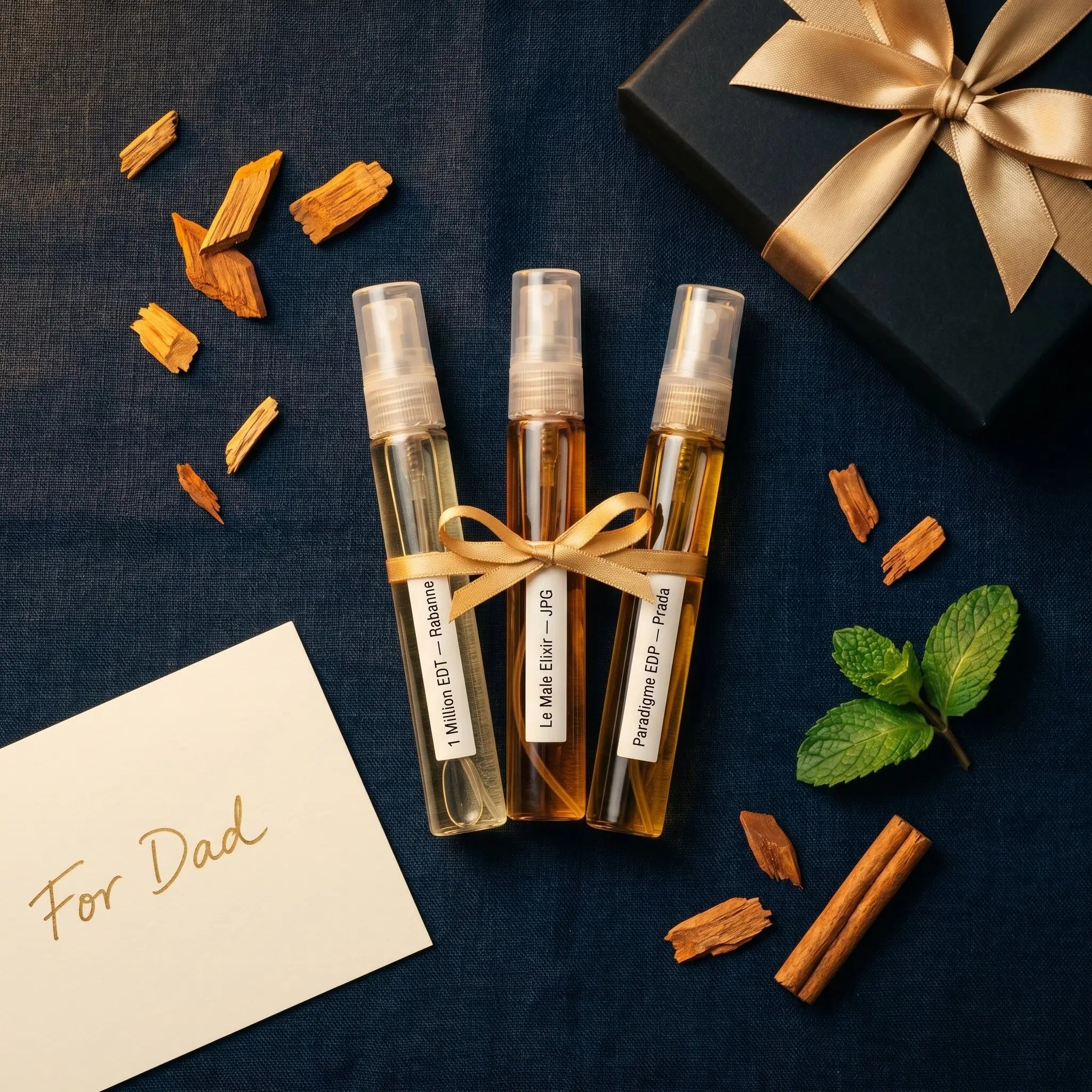

Start With 2–4 Sprays for Most Perfumes: A Quick Cheat Sheet
The practical baseline is 2 to 4 sprays for most eau de parfum and eau de toilette formulas. Drop to 1 or 2 sprays for extrait or pure parfum, since the oil concentration runs much higher, and allow 3 to 5 for lighter colognes or EDTs. Body mists can be applied more freely. Start conservative, apply to pulse points, and add another spray only if you can’t smell yourself after a few minutes.
TL;DR:
- Most eau de parfum and eau de toilette formulas require 2 to 4 sprays, with more concentrated perfumes needing fewer applications due to higher oil content.
- Concentration levels directly influence spray count: extrait de parfum needs 1 to 2 sprays, while cologne can require 4 to 5 for adequate projection.
- Applying fragrance to pulse points like wrists and neck improves longevity and projection, but rubbing after spraying can break down top notes.
- For different settings, use fewer sprays in the office, slightly more for dates and nights out, and even less when traveling to prevent overwhelming enclosed spaces.
- Carrying a small decant or travel size allows for controlled reapplication, especially in professional or social environments where overuse risks clashing with others’ comfort.
Table of Contents
- How Many Sprays of Perfume Do You Need by Concentration?
- Where Should You Spray Perfume for the Best Results?
- Why Does Fragrance Concentration Change the Spray Count?
- How Many Sprays for Office, Date Night, or Travel?
- What’s the Best Way to Apply Perfume for Longer Wear?
- What Trust Signals Should You Look for When Buying Perfume?
- What Mistakes Do People Make When Spraying Perfume?
- What the Numbers Actually Tell You About Spraying Perfume
- Where to Buy Authentic Perfume for Travel Sizes and Full Bottles
- Sources
- FAQ
How Many Sprays of Perfume Do You Need by Concentration?
The number on the bottle’s label (extrait, EDP, EDT, cologne) tells you almost everything about how many sprays you need. Higher oil concentration means more scent molecules per spritz, so it takes fewer applications to reach the same effect.
Fragrance educators and application guides converge on a similar breakdown, and AromaWarehouse’s application guide sets 2 to 4 sprays as the general starting point, adjusting down for concentrated oils and up for lighter dilutions.
- Extrait de parfum / pure parfum: 1 to 2 sprays. Oil concentration is higher in extrait or pure parfum.
- Eau de parfum (EDP): 2 to 3 sprays. Eau de parfum generally has a moderate oil concentration.
- Eau de toilette (EDT): 3 to 4 sprays. Eau de toilette has a lighter oil concentration.
- Eau de cologne: 4 to 5 sprays. Cologne has a relatively low oil concentration.
- Body mist: Body mists can be applied more liberally. Concentration is often under 3%.
| Concentration | Oil percentage | Recommended sprays |
|---|---|---|
| Extrait/Parfum | 20 to 40% | 1 to 2 |
| Eau de Parfum | 15 to 20% | 2 to 3 |
| Eau de Toilette | 5 to 15% | 3 to 4 |
| Cologne | 2 to 4% | 4 to 5 |
| Body Mist | Under 3% | 4 to 5 |
Bottle math backs this up. A 100 ml bottle typically produces roughly 800 to 1,200 sprays, meaning each milliliter yields about 8 to 12 sprays. If you’re spraying 8 to 10 times a day out of habit rather than need, you’re burning through a $150 bottle in weeks instead of months.
Where Should You Spray Perfume for the Best Results?
Pulse points work because they run warmer than the rest of your body, and heat helps fragrance evaporate and project outward. The classic spots are your wrists, the base of your neck or collarbone, the inside of your elbows, behind your ears, and behind your knees.
- Wrists (light touch, don’t rub)
- Neck and collarbone
- Inner elbows
- Behind the ears
- Behind the knees
Glamour’s application guide makes a point worth repeating: never rub your wrists together after spraying. Friction breaks down the top notes, the lightest and often most distinctive part of a fragrance, before they’ve had a chance to unfold on your skin.
For clothing or hair, a light pass or the spray-and-walk method (spritz into the air and step through the mist) gives even, gentle coverage without soaking any single spot.
Pro Tip: Spray your hairbrush instead of your hair directly. Alcohol in perfume can dry out strands, but the scent still clings to the bristles and transfers with a light comb-through.
Why Does Fragrance Concentration Change the Spray Count?
The words on the label aren’t marketing fluff. Extrait or pure parfum sits at the top of the concentration scale, often 20 to 40% aromatic oil, which is why it needs so little product to last all day. Eau de parfum comes in around 15 to 20%, eau de toilette drops to 5 to 15%, and cologne is diluted further still, typically 2 to 4%.
- Higher oil concentration = fewer sprays, longer wear, more skin contact needed for even blooming
- Lower oil concentration = more sprays acceptable, faster fade, lighter feel
Concentration isn’t the only variable. Dry skin holds fragrance poorly compared to well moisturized skin, and hot, humid weather amplifies projection while cold, dry air mutes it. Certain ingredients, like heavy woods and resins, cling longer than citrus or aquatic notes, which fade within an hour or two regardless of how many sprays you used. That’s part of why reapplying midday isn’t a failure of technique. It’s a normal response to how a fragrance’s chemistry interacts with your skin and the room you’re in.
How Many Sprays for Office, Date Night, or Travel?
Context changes the math. A scent that reads as elegant across a dinner table can become overwhelming in a cubicle three feet from a coworker.
- Office: 1 to 3 sprays, applied to pulse points rather than clothing. Cosmopolitan’s guidance notes that daytime and professional settings call for restraint since shared, poorly ventilated spaces amplify sillage fast.
- Date or close contact: 2 to 4 sprays on the neck and wrists. Close proximity means your date will catch the scent’s development over the evening, which is part of the appeal.
- Night out or party: 3 to 5 sprays, or light layering with a matching body product for more projection. Crowded, ventilated venues absorb fragrance quickly, though it’s still worth reading the room before going heavy.
- Travel and flights: Go lighter than usual, 1 to 2 sprays, since cabin air is recirculated and enclosed. Reapply after landing if you want a fresher presence for the day ahead.
What’s the Best Way to Apply Perfume for Longer Wear?
Technique matters as much as spray count. Hold the bottle 5 to 7 inches from your skin, about the width of two hands, and let the mist settle rather than pressing the nozzle directly against you.
- Spray, then let it air-dry completely before getting dressed
- Never rub the spot afterward
- Apply to slightly damp, moisturized skin for better staying power
- Use an unscented lotion first if your skin runs dry
- Layer with a matching body wash or lotion instead of adding more sprays
AromaWarehouse and other application guides agree that rubbing breaks down the top notes almost immediately, which is why a fragrance can smell muted within minutes of “helping it along” with your wrists. Layering with matching products builds depth without piling on extra spritzes, and it’s a cleaner way to extend wear through a long day.
Pro Tip: Keep a rollerball or small decant in your bag for a midday refresh. One or two dabs on the wrist revives a fading scent without the overcorrection of five more sprays from a full bottle.
What Trust Signals Should You Look for When Buying Perfume?
Getting the spray count right only matters if the bottle in your hand is the real thing. Aromatick sells authentic designer and niche fragrances at discounts of up to 60% off department store pricing, backed by a satisfaction guarantee, so the guidance above actually applies to what you’re wearing.
- Check office etiquette guides before choosing a workplace scent strategy
- Read up on parfum versus eau de toilette differences before assuming your bottle needs more sprays than it does
- Patch test any new fragrance before applying it at full strength
- Consider a solid perfume format from a partner like INGRID if you prefer a lower-alcohol, travel-friendly alternative to sprays
Buying a decant or travel size lets you follow the reapplication advice above without committing to (or overspraying from) a full 100 ml bottle before you know how it wears on you.
What Mistakes Do People Make When Spraying Perfume?
The single most common mistake is spraying too close to the skin, holding the bottle an inch or two away instead of the recommended 5 to 7 inches. That concentrates the fragrance into one small, soggy patch instead of an even mist, and it wastes product fast.
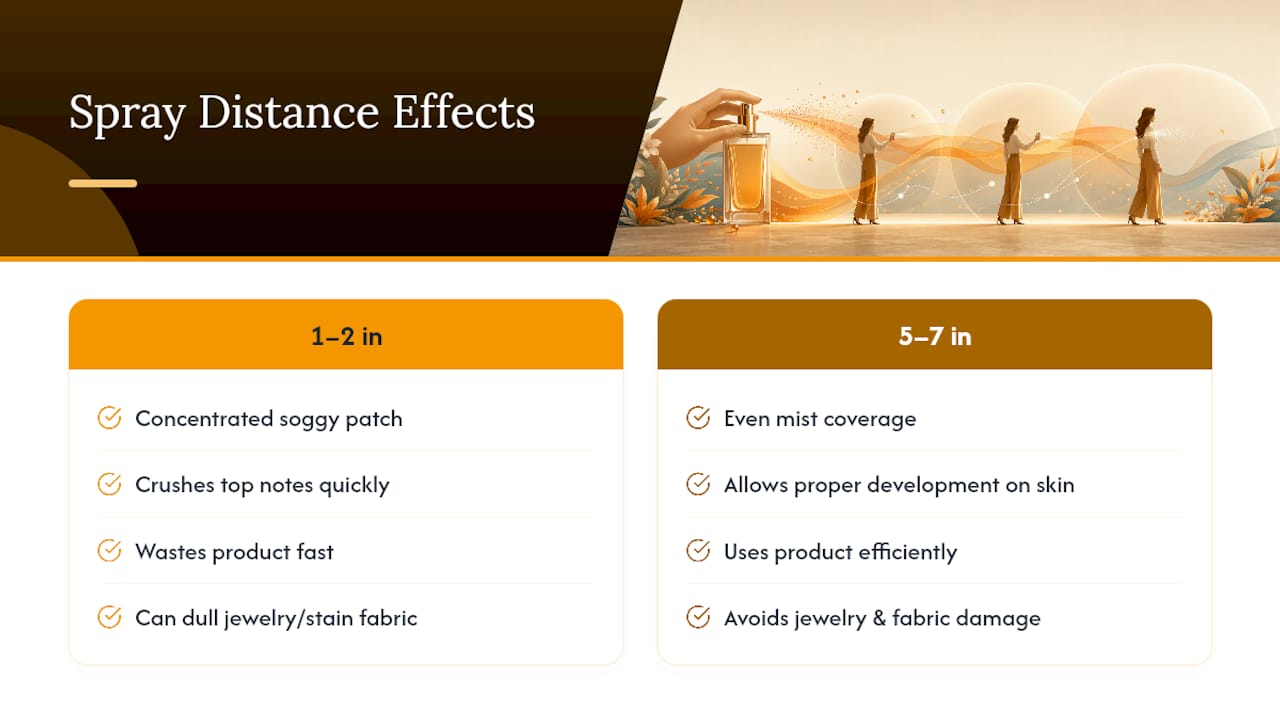
Rubbing wrists together comes second. It feels instinctive, almost like rubbing in lotion, but it crushes the top notes and can make a fragrance smell flat or overly alcoholic within the first ten minutes.
Spraying only on clothing is another frequent misstep. Fabric holds scent differently than skin, sometimes for days, sometimes not at all depending on the material, and it skips the warmth that pulse points provide to help a fragrance develop properly. Delicate fabrics like silk can also stain.
Reapplying without checking first leads to the “nose blindness” problem: you stop smelling your own scent after 20 to 30 minutes and assume it’s gone, then add 3 more sprays on top of what’s already there. Ask someone nearby before adding more, or wait a few minutes and see if it’s really faded or if you’ve just adjusted to it.
Finally, spraying directly onto jewelry or watches can dull metal finishes and damage certain stones over time. Spray your body first, let it dry, then put jewelry on afterward.
What the Numbers Actually Tell You About Spraying Perfume
Most of the confusion around perfume application comes from treating every bottle the same way. The concentration on the label should drive the count, not a flat number pulled from a listicle.
The bigger issue is that people chase projection instead of longevity. Heavy spraying gives an initial blast that fades fast because you’ve overwhelmed your own nose, not because the fragrance is weak. A smaller, well-placed application on pulse points, given time to develop, usually outlasts a heavy-handed one by hours.
What’s underrated is the reapplication strategy. Carrying a decant isn’t a downgrade from a full bottle. It’s the smarter way to control dosage across a long day, especially in professional settings where a midday refresh beats one aggressive morning application that overstays its welcome by 3 p.m.
— Rodney
Where to Buy Authentic Perfume for Travel Sizes and Full Bottles
Once you know your ideal spray count, the next step is making sure the bottle behind it is genuine. Aromatick carries authentic designer and niche fragrances at 30 to 60% off typical department store pricing, which makes it realistic to keep both a full bottle at home and a travel decant for reapplication without doubling your cost.

Every order ships with a satisfaction guarantee and secure checkout, so testing a new concentration, say, moving from an EDT to an EDP, doesn’t feel like a gamble. Browse the designer fragrance collection for well known names at a discount, or check the niche fragrance collection if you’re after something less common for date nights or evening wear. If you already have a signature scent and just need a backup for your bag, pick up a decant sized for daily carry and apply the same pulse point rules on the go.
Sources
FAQ
Is 3 Sprays of Perfume Too Much?
No, for most eau de parfum and eau de toilette formulas, 3 sprays sits right in the recommended range. It would be excessive for a concentrated extrait or pure parfum, where 1 to 2 sprays is usually plenty.
What Is the 5 Spray Rule?
There’s no single official “5 spray rule,” but it’s often used informally to describe a heavier application for evening wear or lighter cologne concentrations, where 3 to 5 sprays is appropriate for adequate projection.
What Is the 3:1:1 Rule for Cologne?
Definitions of this rule vary across sources and it isn’t a standardized industry guideline, so treat any specific version you see online with some skepticism. The safer approach is to follow concentration-based counts: 3 to 5 sprays for cologne, adjusted for the setting.
How Long Does Perfume Last on Skin?
Longevity depends on concentration, skin type, and ingredients, with extrait lasting the longest (often 8 or more hours) and cologne fading fastest (2 to 4 hours). Moisturized skin and pulse-point application both extend wear time noticeably.
How Many Sprays of Perfume Should a Beginner Use?
Start with 2 sprays on pulse points, wait a few minutes, and add one more only if you can’t detect the scent. This “start low, add if needed” approach avoids over-application while you learn how a specific fragrance develops on your skin.

Leave a comment
This site is protected by hCaptcha and the hCaptcha Privacy Policy and Terms of Service apply.