
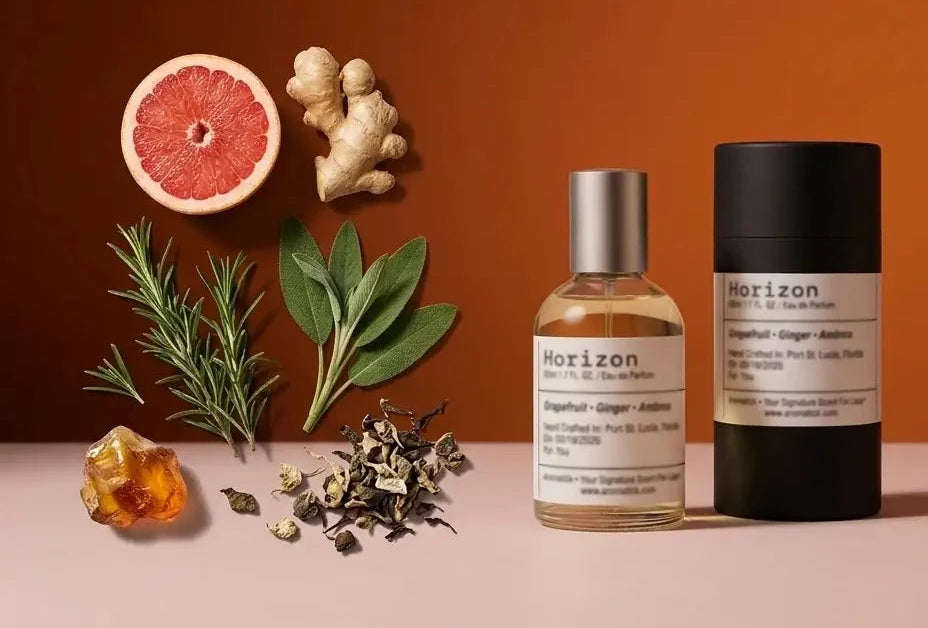
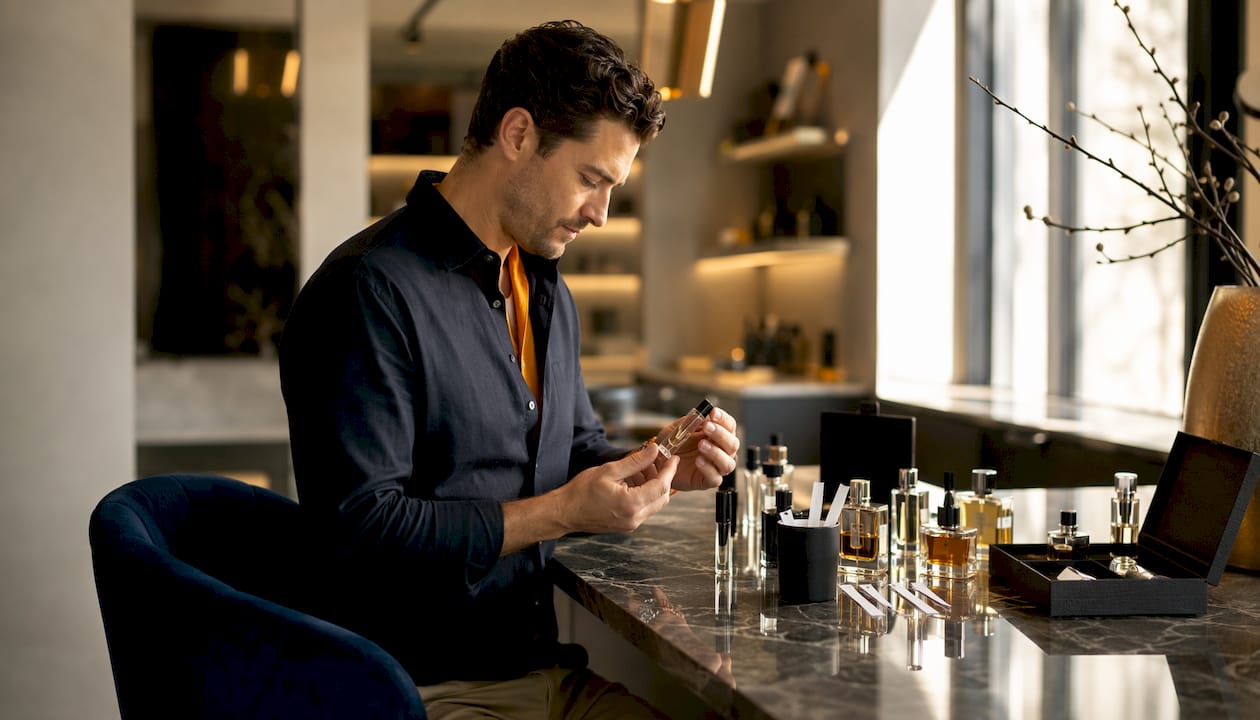
Step-by-Step Cologne Selection: A Practical Buyer's Guide
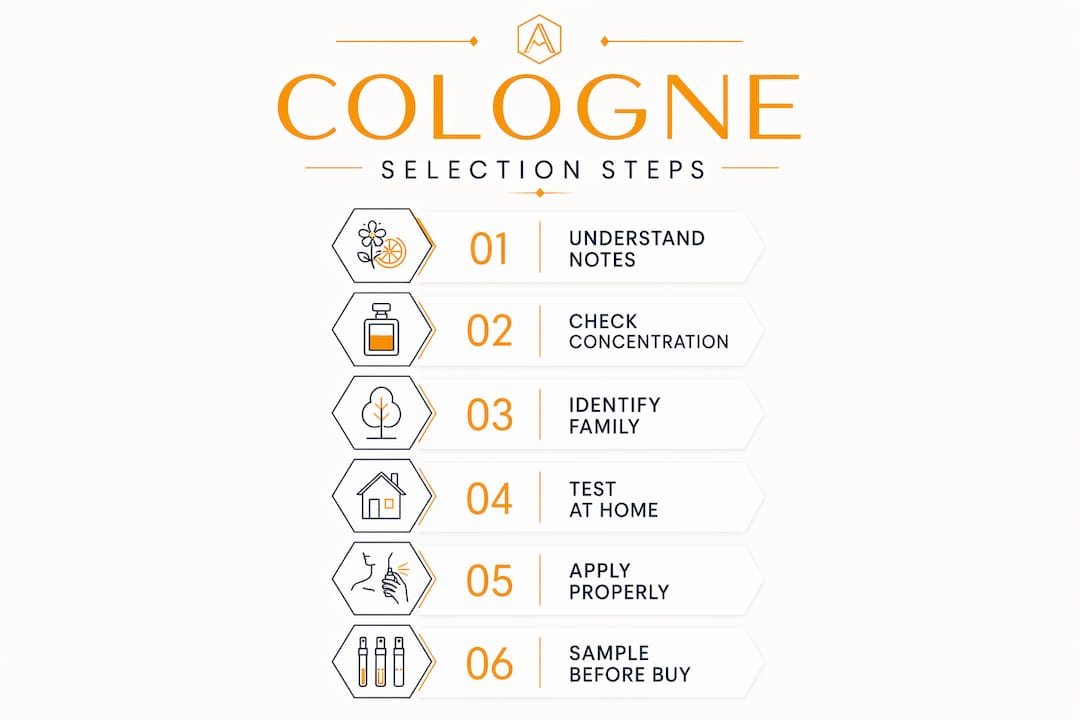
Follow these six steps and you will pick a cologne you actually wear: 1) Define your goal and use cases (office, evening, gym); 2) Identify your preferred fragrance family (Woody, Fresh, Oriental, Floral, or Aromatic/Citrus); 3) Narrow candidates on paper blotters, then choose 2–3 for skin testing; 4) Order decants or a discovery set rather than committing to a full bottle; 5) Run a several days wear test and record impressions at each dry-down stage; 6) Buy the full bottle only after repeat wear confirms you love it. Limit each testing session to a small number of scents, always test on clean, unscented skin, and never rub your wrists together. Aromatick carries authentic designer and niche options alongside decants and discovery sets, making it easy to sample before you spend.
- Define goal and use case
- Identify fragrance family
- Narrow on blotters, then pick 2–3 for skin
- Order a decant or discovery set
- Run a 3–5 day skin test and log impressions
- Buy the full bottle only after repeat wear
Table of Contents
- What do you need to know about fragrance basics before choosing?
- How do you figure out which fragrance family fits you?
- What is the step-by-step cologne selection workflow from goal to purchase?
- How should you test fragrances at home to get an accurate result?
- What are the dos and don’ts of applying cologne?
- Where should you sample before committing to a full bottle?
- Designer vs. niche: which is the smarter buy for you?
- Key Takeaways
- Why the test-first approach is the only approach that works
- Authentic fragrances to sample and buy at up to 60% off
- Useful sources and further reading
What do you need to know about fragrance basics before choosing?
Cologne selection starts with three concepts: notes, concentrations, and the dry-down. Get these right and many other steps in the process become faster.
Notes and the dry-down
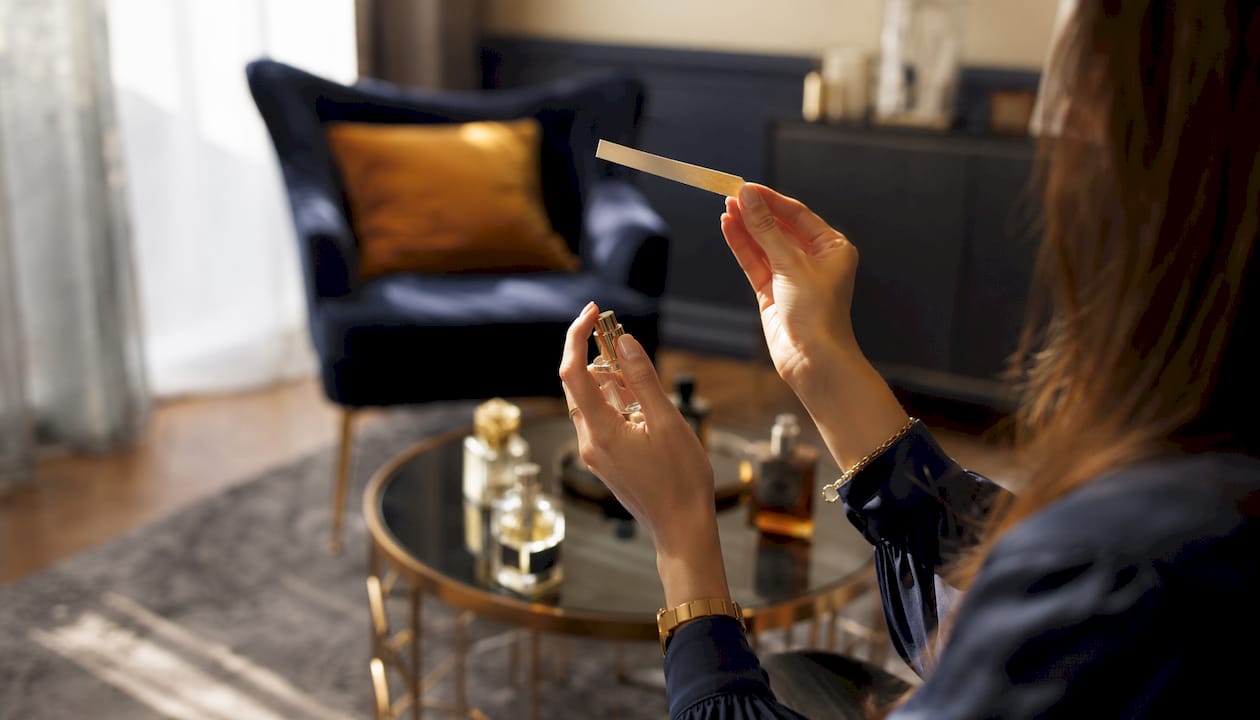
A fragrance unfolds in three layers. Top notes are what you smell in the first 5–15 minutes: bright, volatile accords like citrus or green herbs. Heart notes (also called middle notes) emerge as the top fades, typically after 20–30 minutes, and carry the character of the scent — think rose, jasmine, or spice. Base notes are the foundation: woods, musks, resins, and ambers that anchor the composition and last the longest.
The dry-down is the full arc from spray to base. Skin pH, moisture, and diet all influence how a fragrance evolves on your skin, which is why a scent that smells great on a blotter or on someone else can read completely differently on you. The base notes you live with for most of the day are the ones that matter most for a purchase decision.
The dry-down is the real fragrance. Top notes are the handshake; base notes are the conversation. Never buy a cologne based on the first five minutes alone — wait at least two hours before deciding.
Concentration and longevity
| Concentration | Oil % | Typical Longevity | Projection |
|---|---|---|---|
| Parfum (Extrait) | 20–40% | 8–12+ hours | Intimate to moderate |
| Eau de Parfum (EDP) | 15–20% | 5–8 hours | Moderate |
| Eau de Toilette (EDT) | 5–15% | 3–5 hours | Light to moderate |
| Eau de Cologne (EDC) | 2–5% | 2–3 hours | Light |
Source: fragrance concentration data
Fragrance families at a glance
The fragrance wheel organizes scents into broad families. Knowing which family appeals to you cuts the number of candidates dramatically.
- Woody: Sandalwood, cedarwood, vetiver. Warm, grounding, versatile year-round.
- Fresh/Aquatic: Sea salt, green tea, cucumber. Clean, light, ideal for warm weather and offices.
- Oriental/Gourmand: Vanilla, amber, oud, tonka bean. Rich, warm, best for evenings and cooler months.
- Floral: Rose, jasmine, iris, peony. Romantic, soft, works across seasons.
- Aromatic/Citrus: Bergamot, lemon, lavender, herbs. Crisp, energizing, great for daytime wear.
How do you figure out which fragrance family fits you?
The fastest method is to map everyday smells you already enjoy to their fragrance family equivalent. If you love the smell of coffee and warm baked goods, gourmand or Oriental scents will likely resonate. The scent of a forest after rain points toward Woody or Green/Fougère. Fresh laundry or a cool ocean breeze maps directly to Fresh/Aquatic. This shortcut works because fragrance families act like music genres — knowing your genre eliminates whole sections of the catalog before you smell a single bottle.
| Family | Typical Notes | Best Use Cases |
|---|---|---|
| Woody | Sandalwood, cedar, vetiver, patchouli | Evening, fall/winter, formal |
| Fresh/Aquatic | Citrus, sea salt, green tea, ozonic | Office, summer, gym |
| Oriental/Gourmand | Vanilla, oud, amber, tonka, spice | Evening, date night, winter |
| Floral | Rose, jasmine, iris, peony, ylang-ylang | Daytime, spring, romantic occasions |
| Aromatic/Citrus | Bergamot, lavender, herbs, lemon | Casual daytime, office, warm weather |
For a deeper look at how families are structured, the fragrance family guide at Parfumla breaks down subfamilies and note relationships clearly.
Pro Tip: Instead of comparing brand names, compare note lists. If you already love a scent, pull up its note pyramid and look for other fragrances that share two or more of its heart or base notes. That overlap is a stronger predictor of compatibility than any marketing description.
What is the step-by-step cologne selection workflow from goal to purchase?
This is the full cologne selection guide in practice, ordered so each step feeds the next.
-
Define your goal and use cases. Decide where and when you will wear this scent: daily office wear, weekend casual, evening events, or a gym-friendly refresh. Match fragrance to setting and season — heat amplifies projection, so a heavy Oriental that works beautifully in January can become overwhelming in July.
-
Identify candidate families and notes. Use the family-mapping method above. Aim for a shortlist of one or two families before you smell anything.
-
Narrow with blotters, then move to skin. At a counter or using paper strips at home, spray candidates and wait 30 seconds for alcohol to evaporate. Eliminate anything that reads wrong immediately. Take your top two or three to skin — inner wrist or inner elbow, never both at the same time on the same arm.
-
Order decants or a discovery set. A small travel spray provides enough sprays for a multi-day wear test. Decants and discovery sets let you evaluate multiple candidates without paying full-bottle prices.
-
Run a multi-day wear test and record impressions. Wear one scent per day. Note how it smells at 30 minutes, 2–3 hours, and 6–8 hours. Write down a few words at each checkpoint — not a novel, just enough to compare across days.
-
Decide based on repeat wear and performance. If you reach for the sample again on day three without thinking about it, that is a strong signal. If you are still unsure after five days, the scent is not right for you.
Evaluation checklist
- 30 minutes: Do the top notes feel pleasant? Is the direction right for your goal?
- 2–3 hours: Have the heart notes emerged? Does the character match your use case?
- 6–8 hours: Are the base notes warm and comfortable, or do they feel heavy or flat?
- Projection: Can you smell it at arm’s length? Ask someone nearby for an honest read.
- Longevity: Is it still detectable after 6 hours? If not, consider a higher concentration.
Decision rules: If a 5ml sample satisfies you for casual use, a travel spray may be all you need. If you reach for it daily and it performs well across multiple settings, buy the full bottle. Re-test if you wore it on an unusually active day — sweat and body heat change the dry-down significantly.
How should you test fragrances at home to get an accurate result?
The proper testing protocol eliminates the most common buying mistakes: impulse decisions based on top notes, and purchases that fail because the dry-down was never experienced on skin.
Core rules:
- Test on clean, unscented skin — no scented lotion, deodorant, or body wash on the test area.
- Limit each session to 2–3 fragrances; beyond that, olfactory fatigue produces inaccurate impressions.
- Never rub your wrists together — friction breaks down the molecular structure and distorts the dry-down.
- Use fresh air to reset between scents. Coffee beans do not reliably reset your nose — that is a retail myth.
Testing timeline
| Time Point | What to Observe |
|---|---|
| 15–30 minutes | Top notes: first impression, alcohol burn gone. Is the direction appealing? |
| 1–2 hours | Heart notes: true character emerges. Does it suit your goal? |
| 3–4 hours | Transition to base: does the scent shift dramatically or stay coherent? |
| 6–8 hours | Dry-down: the foundation you live with. Do you still want to smell it? |
Evaluating a fragrance only within the first 30 minutes reveals only about 20% of the composition. Base notes — the part of the scent you wear for most of the day — typically emerge after 2–3 hours. Patience here is not optional; it is the whole point.
Keep a simple olfactory journal: one line per checkpoint, per day. After three days, patterns become obvious. A scent that reads “too sweet” on day one but “warm and comfortable” on day three is worth reconsidering. One that still feels wrong on day four is not your scent. For more structured at-home testing guidance, testing fragrances at home covers the full process with record-keeping tips.
Pro Tip: Apply a small amount of unscented moisturizer to the test area before spraying. Hydrated skin gives fragrance molecules something to anchor to, producing a more realistic longevity read — especially useful if you have naturally dry skin.
What are the dos and don’ts of applying cologne?

Application affects how a fragrance performs as much as the formula itself. Getting it wrong means the scent either disappears in an hour or clears a room.
Where to apply:
- Pulse points generate heat, which diffuses fragrance molecules into the air. Standard pulse points: inner wrists, inner elbows, base of throat, behind the ears, and the chest.
- For longevity, apply to the chest and inner elbows rather than wrists alone — clothing contact on the wrist can wipe the scent off quickly.
Dos and don’ts:
- Do spray from 4–6 inches away to distribute evenly.
- Do apply to clean, moisturized skin for better longevity.
- Do adjust spray count by concentration: 1–2 sprays of Parfum, 2–3 of EDP, 3–4 of EDT for everyday wear.
- Don’t rub the application area — ever.
- Don’t spray into the air and walk through it; most of the fragrance falls to the floor.
- Don’t apply to clothing as a substitute for skin — fabric traps scent differently and can stain.
- Don’t layer two strong fragrances without testing the combination first; layering can amplify allergens and create an unintended accord.
On allergens and skin sensitivity: Some fragrance ingredients — oakmoss, certain musks, eugenol in clove-heavy compositions — are common sensitizers. If you notice redness, itching, or a rash at the application site, discontinue immediately and let the skin clear before testing anything new. Patch-testing a new scent on the inner elbow for 24 hours before full application is a sensible precaution for anyone with sensitive skin.
Where should you sample before committing to a full bottle?
Sampling before buying is the single most reliable way to avoid expensive mistakes. The format you choose depends on how much you want to spend and how long you need to evaluate.
| Format | Typical Size | Sprays (approx.) | Best For |
|---|---|---|---|
| Paper blotter/tester | Strip | N/A | Quick elimination round only |
| 2ml vial sample | 2ml | ~20 sprays | Single-day impression |
| 5ml travel spray/decant | 5ml | ~60 sprays | Full 3–5 day wear test |
| Discovery set (3–5 samples) | Varies | Multiple days | Comparing families side by side |
| In-store tester | Full bottle | Unlimited | Blotter and quick skin check |
A small decant provides enough quantity for a proper multi-day evaluation using moderate sprays daily. That is the minimum format worth ordering if you are serious about a scent.
Authenticity checklist when buying from any retailer:
- Verify batch codes using tools like CheckFresh or Checkfresh.com.
- Look for a clear return or satisfaction guarantee.
- Confirm secure checkout (HTTPS, recognized payment processors).
- Check for verified customer reviews, not just star ratings.
- Buy from retailers who disclose their sourcing — Aromatick, for example, states its commitment to authentic designer and niche fragrances and backs purchases with a satisfaction guarantee.
Decant caution: when buying decants from resellers rather than established retailers, confirm the source bottle is authentic before purchasing. Reputable decant sellers will share batch information on request.
Designer vs. niche: which is the smarter buy for you?
The designer vs. niche distinction matters for budget planning and expectation-setting, not for deciding which smells better.
| Category | Typical Oil % | Price Range (US) | Creativity | Availability |
|---|---|---|---|---|
| Designer EDT | lower concentration | typical mid-price range | Broad appeal, crowd-pleasing | Department stores, online |
| Designer EDP | medium concentration | common price range | Refined, accessible | Widely available |
| Niche EDP/Parfum | higher concentration | premium price range | Experimental, distinctive | Specialty retailers, online |
Designer fragrances are formulated for mass appeal, which means they tend to be polished, wearable, and office-safe. Niche houses prioritize creative expression over commercial reach — you get unusual ingredients, higher concentrations, and often stronger longevity, but also a higher price and a narrower audience. Neither category is inherently superior; the right choice depends on your use case.
Spend more when: you are building a signature scent for special occasions, you want a Parfum-concentration longevity without reapplying, or you have already tested the scent across multiple days and are certain it is right. A mid-range EDP from a designer house is often the smarter buy for daily wear — it performs well, costs less per wear, and is easy to replace. For readers building out a fragrance wardrobe across occasions, a mix of one or two designer EDTs and a niche EDP for evenings is a practical starting point.
Aromatick offers discounts making it easier to try niche EDPs without full boutique price commitment.
Key Takeaways
Choosing a cologne that actually works comes down to one discipline: test on skin across multiple days before you buy, and let the dry-down, not the opening, make the decision.
| Point | Details |
|---|---|
| Limit testing sessions | Test no more than 2–3 scents per session to avoid olfactory fatigue and inaccurate impressions. |
| Always test on skin | Skin chemistry changes every fragrance; blotters show only the opening, not the dry-down you live with. |
| Wear samples across days | A 5ml decant (~60 sprays) gives you a full 3–5 day wear test before committing to a full bottle. |
| Match concentration to use case | EDT for daily/office wear (3–5 hours); EDP for evenings or signature use (5–8 hours); Parfum for special occasions (8+ hours). |
| Aromatick for sampling and buying | Aromatick offers authentic designer and niche fragrances at 30–60% off, with discovery sets and decants ideal for the test-first approach. |
Why the test-first approach is the only approach that works
Most people buy cologne the wrong way. They spray it on a blotter, like the top notes, and hand over their credit card. Three weeks later the bottle sits unused because the dry-down turns out to be something they would never choose to wear. The fragrance industry knows this pattern well, and it is not in a hurry to fix it.
The six-step workflow in this guide is built around one corrective: the dry-down is the real fragrance, and you cannot evaluate it in five minutes. The testing timeline, the 3–5 day wear protocol, and the olfactory journal are not overcomplications — they are the minimum conditions for a reliable verdict. Olfactory fatigue is real, which is why the three-scent-per-session limit exists. The moisturizer tip exists because dry skin shortens longevity and produces a misleading read on base notes.
One note on allergens: if you experience any skin irritation during testing, stop immediately. Patch-test new scents on the inner elbow for 24 hours before committing to full pulse-point application. Sensitivity can develop over time even with scents you have worn before.
Aromatick’s decant and discovery set options exist precisely to support this kind of deliberate, test-first buying. Sampling a scent at full boutique price is a barrier that leads to impulse decisions. Removing that barrier is what makes the workflow practical rather than theoretical.
Authentic fragrances to sample and buy at up to 60% off
Knowing the workflow is one thing. Having access to authentic samples at a price that makes testing practical is another.
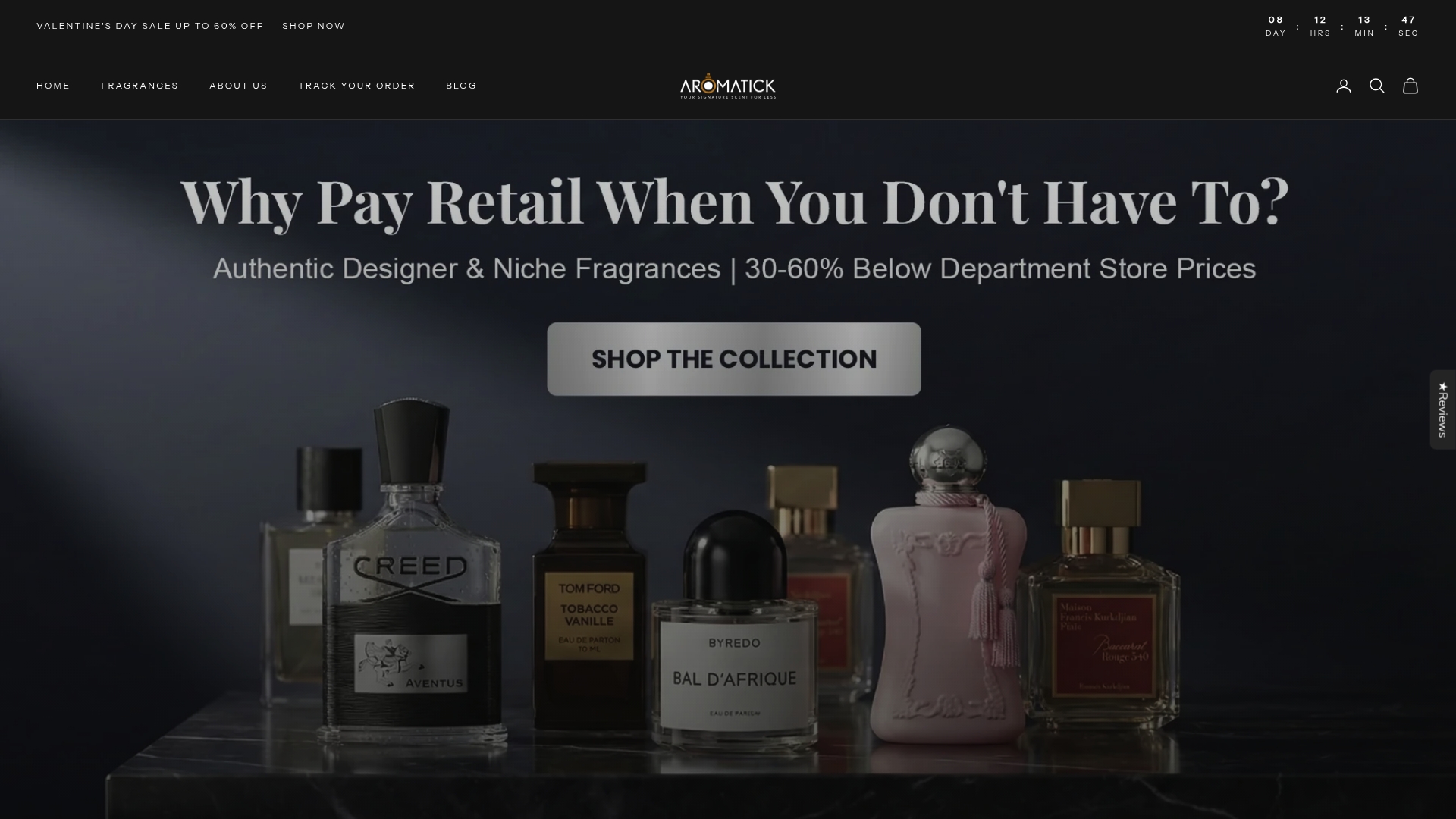
Aromatick’s designer fragrance collection covers hundreds of authentic designer and niche options at 30–60% off retail, with no department store markup. For readers working through the step-by-step selection process, the practical starting points are: order a 5ml travel spray for a single candidate, pick a discovery set to compare three scents from the same family side by side, or grab a small decant for a focused 3–5 day test. Every purchase comes with a satisfaction guarantee and secure checkout. For readers who have already narrowed to a niche direction, the niche fragrance collection offers high-concentration EDPs and Parfums from respected houses at prices that make a first bottle far less of a gamble. Start with a sample, wear it for five days, and buy the full bottle only when you are certain.
Useful sources and further reading
| Source | What It Covers |
|---|---|
| How to Test Perfume Before Buying (Noùmeno) | Testing protocol, dry-down timeline, and the 20% composition rule |
| Fragrance Concentration Cheat Sheet (Fragrance of Aroma) | Oil percentages, longevity, and projection by concentration type |
| How to Choose a Perfume (Scentbird) | Fragrance family identification and genre-based selection method |
| How to Test Perfume at Home (Maison Alhambra) | Moisturizer tip, at-home testing conditions, longevity accuracy |
| How to Test a Perfume Correctly (Florencia) | Coffee bean myth, olfactory fatigue, in-store testing etiquette |
| How to Choose a Fragrance (The Fragrance World) | Decant sizing, 5ml spray count, and multi-day wear rationale |
| How to Choose a Signature Scent (Perfumes News) | Occasion and season matching, use-case-first selection |
%20Define%20your%20goal%20and%20use%20cases%20(office,%20evening,%20gym);%202)%20Identify%20your%20preferred%20fragrance%20family%20(Woody,%20Fre...)
Leave a comment
This site is protected by hCaptcha and the hCaptcha Privacy Policy and Terms of Service apply.