
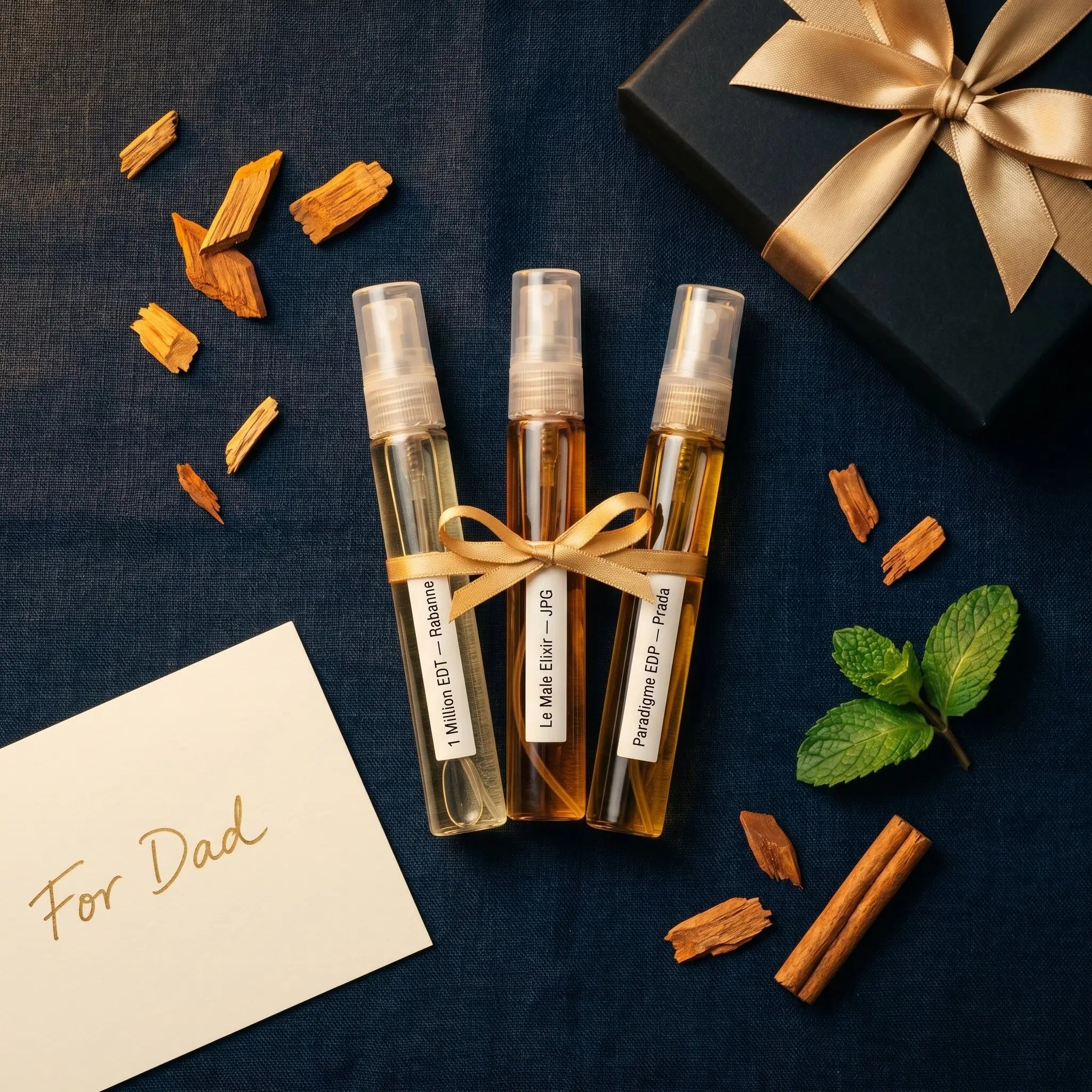

Understand fragrance notes for smarter perfume choices
TL;DR:
- Fragrance notes are layers that evolve over time, shaping a perfume’s character and longevity.
- The traditional pyramid model helps visualize note layers, but modern perfumery favors holistic approaches.
- Understanding notes aids in selecting perfumes suited for occasions, seasons, and personal preferences.
Most people spray a perfume and judge it in the first ten seconds. That first impression is real, but it only tells part of the story. A well-crafted fragrance is designed to evolve on your skin, shifting character over hours in ways that can surprise even experienced wearers. If you’ve ever loved a scent in the store and felt underwhelmed an hour later, fragrance notes are the reason why. Understanding how these layers work gives you a genuine edge when shopping for luxury perfumes or choosing a meaningful gift, especially when you’re investing real money in a bottle.
Table of Contents
- What are fragrance notes and why do they matter?
- The fragrance pyramid: Traditional vs. modern views
- How fragrance notes impact longevity and sillage
- Choosing perfumes and colognes based on fragrance notes
- A fresh perspective on choosing fragrances: Go beyond the notes
- Find your signature scent with exclusive collections
- Frequently asked questions
Key Takeaways
| Point | Details |
|---|---|
| Fragrance notes defined | Top, middle, and base notes create the evolving scent experience of any perfume. |
| Longevity impact | Base notes significantly affect how long a perfume lasts, sometimes lingering for hours. |
| Models are evolving | While the pyramid model is popular, modern perfumery often uses complex structures for unique results. |
| Smart shopping | Understanding notes helps you choose better fragrances for yourself or as gifts. |
What are fragrance notes and why do they matter?
Fragrance notes are the individual scent components that make up a perfume’s full aromatic profile. Think of them as the ingredients in a recipe, each contributing something different at a specific moment. Perfumers organize these components into three distinct categories: top notes, middle notes (also called heart notes), and base notes. Together, they create a scent that changes and deepens over time rather than staying flat from first spray to last.
Top notes are what you smell immediately after application. They are light, volatile molecules that evaporate quickly, typically within 15 to 30 minutes. Common top notes include citrus fruits like bergamot and lemon, fresh herbs, and light florals. They create the crucial first impression but are not meant to last.
Middle notes, or heart notes, emerge as the top notes fade. They form the core character of the fragrance and usually last between two and four hours. Roses, jasmine, lavender, and spices like cardamom and cinnamon are classic heart note ingredients. This is where the personality of the perfume truly reveals itself.
Base notes are the foundation. They appear last, often 30 minutes after application, and they are the ones that stay with you longest. Perfume notes explained in depth show how these heavy, rich molecules anchor the lighter layers above them.
Here is a quick breakdown of each note category:
- Top notes: First impression, evaporate in 15 to 30 minutes, typically citrus or herbal
- Middle notes: Core character, last 2 to 4 hours, often floral or spicy
- Base notes: Foundation and longevity, last 6 or more hours, usually woody, musky, or resinous
Base notes linger 6+ hours, providing depth and longevity through heavy molecules like woods, musks, and resins.
Knowing this structure changes how you evaluate a fragrance. It also explains why sampling a perfume on your skin for at least an hour, rather than sniffing a paper strip, is the only reliable way to judge it. The fragrance note secrets behind great perfumes are hidden in those later stages.
The fragrance pyramid: Traditional vs. modern views
The fragrance pyramid is the most widely used model for visualizing how notes are layered in a perfume. It places top notes at the peak (fast, light), heart notes in the middle, and base notes at the wide base (slow, heavy). It is a helpful teaching tool that gives buyers a mental map of how a scent will unfold.

Blending ratios follow a general guideline: top notes make up 20 to 40% of the essential oil blend, middle notes account for 50 to 75%, and base notes contribute just 5 to 10%. Despite being the smallest portion, base notes carry enormous weight in the final impression because of their staying power.
However, the pyramid has its limits. True perfumery uses molecular weights and Fick’s Law of diffusion to model how scent molecules actually travel through air, which is far more complex than a simple triangle suggests. Modern perfumers increasingly favor holistic or spherical models that treat a fragrance as a unified sensory experience rather than a strict sequence of layers.
| Model | Structure | Focus | Best for |
|---|---|---|---|
| Traditional pyramid | Top, middle, base tiers | Sequential unfolding | Education and basic shopping |
| Holistic/spherical | Unified scent experience | Complexity and balance | Niche and artisan perfumery |
Pro Tip: When reading a fragrance description, don’t fixate on the top notes alone. The heart and base notes are where a perfume spends most of its time on your skin, so they deserve the most attention when you’re deciding whether to buy.
The pyramid remains valuable as an entry point. It helps you ask the right questions when browsing. But understanding that lasting scents explained by modern perfumers go beyond the pyramid gives you a more complete picture of what you’re actually purchasing.
How fragrance notes impact longevity and sillage
Longevity refers to how long a perfume lasts on your skin. Sillage (pronounced see-yazh) is the scent trail a fragrance leaves in the air around you. Both are directly shaped by the types of notes used and how they are balanced in the formula.
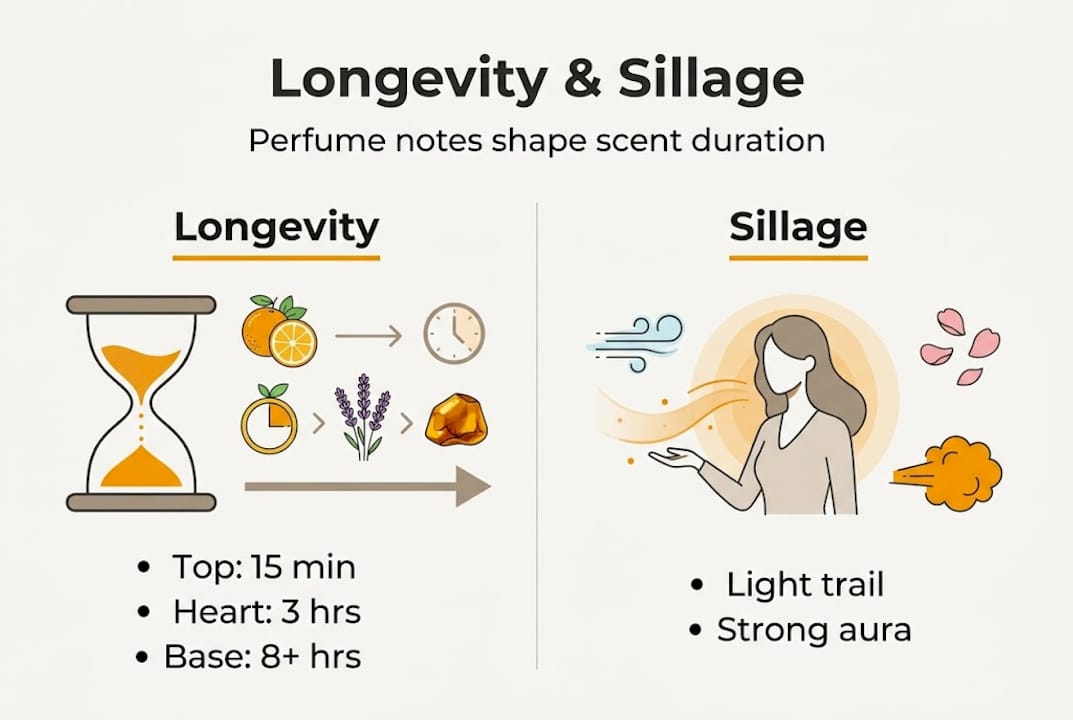
The science is straightforward. Smaller, lighter molecules evaporate faster, which is why top notes disappear quickly. Larger, heavier molecules evaporate slowly, which is why base notes, built from ingredients like sandalwood, vetiver, amber, and musk, can linger 6+ hours on skin and fabric.
Here is how a typical fragrance evolves over time:
- 0 to 15 minutes: Top notes dominate. The scent is bright, fresh, and immediate.
- 15 to 30 minutes: Top notes begin fading. Heart notes start to emerge and blend with the remaining top layer.
- 30 minutes to 2 hours: The heart note phase is in full effect. This is the true character of the fragrance.
- 2 to 6 hours: Base notes take over, adding warmth, depth, and richness.
- 6 hours and beyond: Only the heaviest base molecules remain, often as a soft, intimate skin scent.
| Note type | Duration on skin | Molecule weight | Common ingredients |
|---|---|---|---|
| Top notes | 15 to 30 minutes | Light | Citrus, herbs, aldehydes |
| Middle notes | 2 to 4 hours | Medium | Florals, spices, green notes |
| Base notes | 6+ hours | Heavy | Woods, musks, resins, vanilla |
Sillage is largely driven by the concentration and volatility of the formula. Eau de Parfum (EDP) concentrations tend to project more than Eau de Toilette (EDT) because they carry a higher percentage of aromatic compounds. If strong sillage matters to you, look for choosing lasting scents with prominent base notes and EDP concentration. For something more personal and close to the skin, lighter concentrations with balanced heart notes often work better. Understanding these dynamics helps you avoid buyer’s remorse and find the longevity secrets behind your favorite bottles.
Choosing perfumes and colognes based on fragrance notes
Now that you understand the structure and science, you can use this knowledge practically. Whether you’re shopping for yourself or selecting a gift, reading a fragrance’s notes listing is the single most useful skill you can develop.
Most fragrance retailers list notes in three tiers. Start by reading the base and heart notes first, since those define the lasting character. Top notes are important for the initial experience, but they are not what you’ll be wearing to dinner or a meeting three hours later.
When testing in person, apply the fragrance to your wrist and wait at least 30 minutes before deciding. Skin chemistry varies significantly between people, which means the same perfume can smell noticeably different on two individuals. Paper strips give you a rough idea of the top notes but tell you almost nothing about how the scent will develop.
Here are the key factors to consider when choosing for personal use or as a gift:
- Occasion: Light citrus and floral top notes suit daytime and office settings. Rich woods and musks in the base are better for evenings.
- Season: Fresh, aquatic, and green notes feel natural in spring and summer. Warm, spicy, and resinous base notes align with fall and winter.
- Personality: Bold sillage and complex heart notes suit confident, expressive personalities. Subtle, skin-close base-heavy scents suit those who prefer intimacy.
- Longevity needs: If the wearer needs a scent to last all day, prioritize strong base notes and EDP concentration.
- Budget: Luxury fragrance quality is not always tied to price. Many mid-range and discounted authentic fragrances offer exceptional note complexity.
Pro Tip: For gifting, choose fragrances with balanced, universally appealing notes like soft florals, clean musks, or light woods. Avoid anything too niche or polarizing unless you know the recipient’s preferences well.
Traditionalists uphold the pyramid for harmony, while modernists prefer holistic models for added complexity. Both perspectives are worth keeping in mind when you’re reading reviews and making decisions. A solid selecting fragrances guide can help you navigate both schools of thought. And if you want to go deeper into application technique, learning about wearing long-lasting perfumes will make your investment go further.
A fresh perspective on choosing fragrances: Go beyond the notes
Fragrance notes are essential knowledge, but they can also become a trap. Some buyers get so focused on note lists that they lose sight of the actual experience. A perfume described with bergamot, iris, and vetiver might sound perfect on paper but leave you cold when you wear it. The reverse is equally true.
The most honest truth in perfumery is that resonance matters more than structure. A scent that connects with a memory, a mood, or a moment in your life will always feel more valuable than one that checks every technical box. Notes give you a framework, but they don’t tell you how a fragrance will make you feel.
We’d encourage you to sample widely and trust your instincts. Use note knowledge as a filter to narrow your options, not as a final verdict. Some of the most beloved fragrances in the world defy clean categorization. If you’re exploring niche options, niche selection tips can help you approach that world with confidence. The goal is a scent that feels like you, not one that simply looks impressive on a spec sheet.
Find your signature scent with exclusive collections
Aromatick brings together an extensive range of authentic designer and niche fragrances at up to 60% off retail prices. Now that you understand how top, middle, and base notes shape a perfume’s character, you can shop with real confidence, knowing exactly what to look for before you buy.

Browse the designer fragrance collection for iconic names at accessible prices, or explore the women’s perfume collection for a curated selection of floral, woody, and oriental scents. If you’re drawn to something more distinctive, the niche fragrance collection features artisan and specialty perfumes that reward the knowledge you’ve just built. Every bottle is genuine, every price is honest, and free shipping makes it even easier to find your next favorite scent.
Frequently asked questions
What are the main types of fragrance notes?
Fragrance notes are divided into top, middle (heart), and base notes, each unfolding at different stages after application. Base notes last 6+ hours and provide the deepest, most lasting impression of any perfume.
How do fragrance notes affect how long a perfume lasts?
Base notes, built from heavier molecules like woods, musks, and resins, last the longest, often well beyond six hours, while top notes typically fade within 30 minutes of application.
Why don’t all fragrances follow the classic pyramid structure?
Modern perfumers often move beyond the traditional pyramid because true perfumery relies on molecular weights and diffusion science, making holistic or spherical models more accurate for complex, layered scents.
How can I choose the right fragrance for a gift?
Look for fragrances with balanced, approachable notes like soft florals, clean musks, or light woods, and consider the recipient’s lifestyle and personality to ensure the scent feels personal and wearable.

Leave a comment
This site is protected by hCaptcha and the hCaptcha Privacy Policy and Terms of Service apply.