
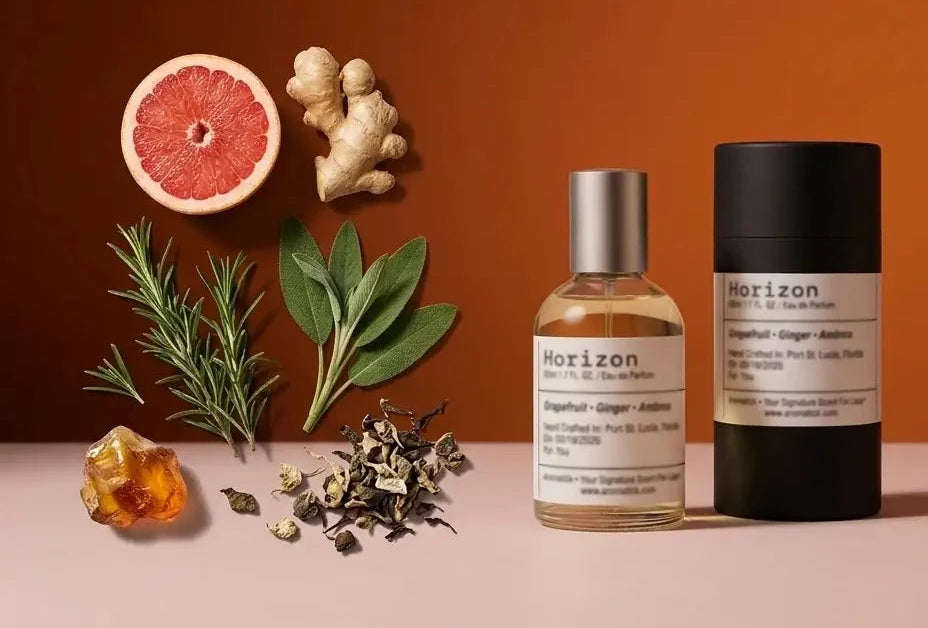

Perfume Expiration: How Long Fragrances Really Last
Yes, perfume expires, though it happens on a slower timeline than most people assume. Unopened bottles stored properly can last several years, sometimes decades, before the formula noticeably changes. Once opened, most fragrances hold up well for a few years and can last longer with good storage habits. The real variable is chemistry and care: oxidation, the same process that browns a sliced apple, gradually breaks down fragrance molecules once air, heat, and light get involved.
- Unopened, stored well: several years to decades
- Opened, average care: 1 to 3 years
- Opened, excellent storage: 3 to 5 years or more
- Cosmetic labeling often uses a Period-After-Opening (PAO) icon, commonly 12M, 24M, or 36M, as a conservative guideline. Aromatick’s own storage guidance can help you push toward the longer end of that range.
TL;DR:
- Unopened perfumes stored properly can last for many years or even decades, while opened bottles with average care remain good for 1 to 3 years.
- Fragrance degradation is primarily caused by oxidation, with citrus and green notes fading faster than woody, musky, or vanilla scents.
- Signs of expiry include sour or metallic smells, liquid darkening, cloudiness, sedimentation, or separation, which can be checked by scent or appearance.
- Proper storage involves keeping bottles in cool, dark places, upright, in original boxes, and avoiding heat, sunlight, and frequent opening to prolong shelf life.
- Authenticity, bottle size, and storage habits significantly influence how long perfume stays fresh, with smaller bottles and optimal storage extending usable life.
Table of Contents
- Perfume Shelf Life: What to Expect Opened vs. Unopened
- How to Tell if a Perfume Has Expired
- What Affects Perfume Longevity
- How to Store Perfumes So They Last Longer
- How to Check a Perfume’s Age Using Batch Codes
- Is Expired Perfume Unsafe to Use?
- Aromatick’s Practical Guidance on Fragrance Care
- What We’ve Learned Handling Fragrance Inventory
- Buy Authentic Fragrances Built to Last
- Key Takeaways
- Sources
Perfume Shelf Life: What to Expect Opened vs. Unopened
The typical figure you see repeated across beauty coverage is a conservative estimate, not a hard expiration date. It assumes average storage conditions, meaning a bathroom shelf or a sunny dresser, and it protects brands from complaints about fragrances that were never given a fair chance. Well-stored opened bottles often last longer, and industry sources note that high-quality alcohol-based perfumes can outlast typical windows under ideal conditions, according to InStyle. Unopened bottles have an advantage: no headspace air, no repeated temperature exposure, and no light seeping in every time you spritz.
- Unopened bottles kept in original packaging can remain stable for many years, sometimes indefinitely, if they never see heat or light.
- Opened bottles with average care (bathroom counter, occasional sun exposure) tend to hold their character for 1 to 3 years.
- Opened bottles with deliberate storage (dark closet, box retained, minimal temperature swings) often reach the 3 to 5 year mark or beyond.
- Fragrance oils and raw materials used in manufacturing have far shorter windows than finished perfumes, since finished formulas benefit from ethanol’s stabilizing and antimicrobial properties.
The practical takeaway: match your purchase size to how often you actually wear a scent. If a bottle sits untouched for months, a smaller size or a decant makes more sense than a 100ml flacon that outlives your interest in the notes.
How to Tell if a Perfume Has Expired
Your nose is the most reliable instrument you own for this. Fragrance molecules that have oxidized don’t just fade, they transform into something that smells noticeably different from the bottle you remember.
- Sour, vinegar-like, or metallic notes replacing the original scent profile
- A smell resembling “stale lemonade” or old cosmetics, a description that shows up repeatedly in expert coverage of fragrance breakdown, according to Britannica
- Liquid darkening to an olive or tea-brown tint, especially near the surface
- Persistent cloudiness or sedimentation that doesn’t clear
- Oil-and-water layering, where the formula visibly separates instead of staying uniform
To check a questionable bottle, spray a small amount on a blotter or a strip of paper rather than your skin. Let it dry for a minute and compare it against your memory of the scent, or against a fresher bottle of the same fragrance if you have one.
Pro Tip: Gently warm a bottle between your palms before testing. A harmless surface haze sometimes clears with slight warmth, but a smell that stays sour or metallic after warming is a genuine sign the formula has broken down.
What Affects Perfume Longevity
Not every fragrance ages at the same pace, and the notes themselves are a big reason why. Citrus and green top notes, think bergamot, lemon, or fresh-cut grass accords, oxidize fastest because their molecules are small and volatile. Woody, resinous, musky, and vanilla-based compositions hold up considerably longer, since those molecules are heavier and more chemically stable, a pattern confirmed by Cosmopolitan’s reporting on fragrance breakdown.
- Note family matters: citrus and green notes fade first; amber, musk, and vanilla resist change longest.
- Natural vs. synthetic materials: naturally derived ingredients often degrade faster than lab-stabilized synthetic aroma molecules built for consistency.
- Stabilizers help: antioxidants, UV absorbers, and EDTA-type sequestering agents slow the chemical reactions that cause off-notes, based on aging research published in a 1987 study on perfume chemistry.
- Packaging and handling accelerate decline: transparent bottles let in light, frequent opening introduces oxygen into the headspace, and heat speeds up oxidation, peroxide formation, and isomerization, the technical terms for molecules rearranging into new, often less pleasant compounds.
Worth knowing: some perfumes actually improve in the weeks after bottling, a process called maceration, before that upward curve reverses once oxidative reactions eventually overwhelm the stabilizers, according to iColor Cosmetics. Understanding how notes influence longevity can help you choose fragrances built to last from the start.
How to Store Perfumes So They Last Longer
Storage habits matter more than most people realize. One consumer survey found that the majority of people keep their fragrances in bathrooms, exactly where humidity and temperature swings do the most damage, according to Southern Living.
- Keep it cool, dark, and dry. A closet drawer or cabinet beats a windowsill or bathroom shelf every time.
- Store bottles in their original box. The packaging blocks light exposure, which is one of the fastest ways to age a fragrance.
- Avoid heat sources and direct sunlight. Cars, radiators, and sunny counters all accelerate the same oxidation process that ages skin and food.
- Keep sprays upright and minimize headspace. Less air trapped inside the bottle means less oxygen available to react with the formula.
- Consider decanting for travel or infrequent scents. Smaller bottles mean less air exposure over the life of the fragrance, and they’re easier to finish before quality declines.
The refrigerator debate comes up often. Some perfumers suggest cold storage extends life for certain fragrances, but others warn it can dull or “shock” the depth of a composition, according to Real Simple. For most people, a cool, stable closet is the safer, more practical middle ground.
Pro Tip: You don’t need an elaborate routine. Keeping the box, minimizing how often you leave a bottle open, and finishing smaller sizes before buying more delivers more real-world benefit than any complicated storage ritual you won’t actually keep up with.

How to Check a Perfume’s Age Using Batch Codes
Most fragrance bottles carry a batch or lot code, usually a short string of letters and numbers stamped or printed on the base of the bottle or the bottom of the box. That code doesn’t spell out a plain expiration date, but it can help you estimate manufacture timing.
- Copy the exact code, including any letters, before searching, since a single misread character throws off the result.
- Use a batch-code lookup tool. Services like CheckFresh cross-reference codes against known brand formats to estimate a production date.
- Expect partial results sometimes. Not every brand uses a publicly decipherable system, and some codes only narrow down a production year rather than an exact date.
- When no code is found, fall back on sensory checks and your own storage history. How long you’ve had the bottle and how you’ve stored it tell you nearly as much as a manufacture date would.
Is Expired Perfume Unsafe to Use?
Alcohol-based perfumes aren’t a breeding ground for bacteria the way food or skincare can be, so “expired” doesn’t mean spoiled in the food-safety sense. The real concern is oxidation byproducts, compounds that can form as the original fragrance molecules break down and occasionally cause skin irritation in sensitive individuals.
- Skip spraying it directly on skin if you notice sharp metallic, vinegar-like, or acidic notes.
- Use it as a room spray or on clothing instead if the scent has changed but doesn’t smell outright unpleasant.
- Patch-test on a small area first if you have sensitive skin or known fragrance allergies, even with a bottle that seems fine.
- When in doubt, discard it. A bottle that smells sharply off has little upside and a small but real downside for reactive skin.
Aromatick’s Practical Guidance on Fragrance Care
Aromatick backs every bottle with a commitment to authenticity, competitive pricing, and a satisfaction guarantee, so you’re not gambling on quality when you shop.
- Read Aromatick’s guide on how to store fragrances and preserve their quality for a deeper walkthrough of protective habits.
- Check out scent longevity tips for daily wear if you want your fragrance to perform better from the moment you apply it.
- For a broader view on protecting valuable items, this luxury accessory storage guide covers principles that apply well beyond fragrance.
What We’ve Learned Handling Fragrance Inventory
The most common mistake isn’t poor storage, it’s overbuying. People pick up a full 100ml bottle of a citrus-forward scent they wear twice a month, and the top notes are gone long before the bottle is. A better habit: buy decants or smaller sizes for anything bright or fleeting, and save full bottles for the woody, resinous fragrances built to age gracefully. Rotate your collection instead of letting bottles sit untouched for a year.
— Rodney
Buy Authentic Fragrances Built to Last
Aromatick sells authentic designer and niche fragrances at 30% to 60% off department store pricing, without cutting corners on where the bottles come from. That combination matters here: a fragrance that starts out genuine and well-formulated simply ages better than one of uncertain origin, and every bottle ships with Aromatick’s authenticity and satisfaction guarantees behind it.
If you’re drawn to the longer-lasting note families this article covered, woody, resinous, musk, and vanilla compositions, browse the niche fragrance collection for formulas built around exactly those stable materials. Prefer a familiar name? The designer fragrance collection covers recognizable houses at meaningfully lower prices, and shoppers looking for a specific profile can check the Hugo Boss collection or Initio Parfums Prives for niche depth. Pick a bottle sized to how often you’ll actually wear it, store it the way this guide outlined, and it will reward you for years rather than months.
Key Takeaways
Perfume degrades through oxidation over time, and proper storage in a cool, dark place can extend an opened bottle’s quality from roughly 1 to 3 years toward 3 to 5 years or longer.
| Point | Details |
|---|---|
| Expect gradual change, not spoilage | Opened perfume typically lasts 1 to 3 years, often 3 to 5 with good care; unopened can last years longer. |
| Trust your nose first | Sour, metallic, or “stale lemonade” smells and liquid darkening signal it’s time to let a bottle go. |
| Citrus fades fastest | Top-heavy citrus and green scents degrade quicker than woody, resinous, or musk-based formulas. |
| Store cool, dark, and boxed | Keep bottles out of bathrooms and sunlight, upright, with the original box for protection. |
| Buy authentic and size-appropriate | Aromatick’s authentic, guaranteed fragrances let you match bottle size to how often you’ll wear a scent. |
Sources
- Does perfume expire? — Britannica
- Does perfume expire? — Cosmopolitan
- Chemical reactions in perfume ageing — Wiley (1987 study)

Leave a comment
This site is protected by hCaptcha and the hCaptcha Privacy Policy and Terms of Service apply.